Perspective

Perspective

GGA Performance Mindset Coach

I wasn’t expecting it.

I was getting ready to board an evening Southwest Airlines flight to Baltimore from my home in Cleveland, preoccupied with thoughts about the latest round of winter weather that had been bearing down on the Mid Atlantic.

With a two-hour-plus drive to my final destination after landing, would I have to contend with rain, snow, sleet, or even worse, highways clogged with cumbersome, slow-moving traffic? I was hoping that this would not be the case. And I also remember being on-edge about it…even wishing that the gate crew would pick up the pace a little so that we get off the ground as soon as possible.

I had scored the A1 boarding position for this flight…so I was looking forward to a prime seat near the front of the plane, ensuring I could make a quick exit when we arrived at BWI. I had my plan in place…all we needed was some solid execution. (C’mon people…let’s get this going!!)

Then we started boarding the plane, and everything changed.

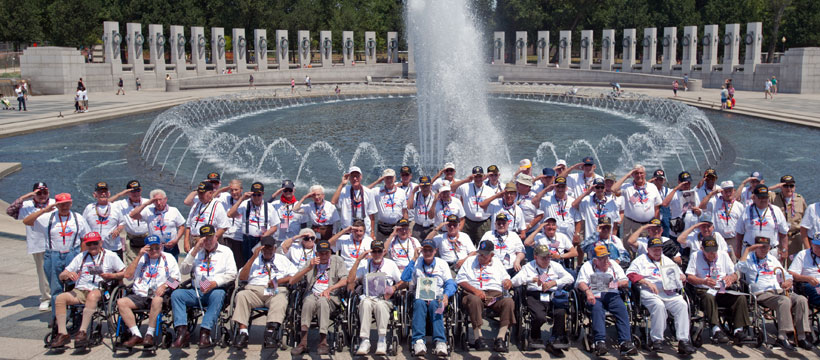
It turns out that our flight was an Honor Flight originating in Phoenix, with Baltimore as its final destination. The plane was carrying about 40 WWII and Korean War veterans and their escorts heading to Washington DC to see the monuments built in their honor – many of them for the first time.

These were the men who fought for our freedoms against incredible odds almost 60 and 70 years ago. These men were in their 80s and 90s…and there was even one who had turned 101 that day. The mood was electric. And I was moved.

I got to shake a lot of hands, and even talk to a few of the veterans…who were so happy and appreciative of the chance to be on this trip. In fact, I’m not sure I’ve ever seen as much pure joy and excitement in a group of adults. It felt like such an incredibly unique and humbling experience.

And then I noticed that I had forgotten about my need to: move things along, get to BWI as fast as possible. And all my worries about the weather, the traffic and getting to my destination faded away.

But what happened?

The experience with the Honor Flight veterans allowed me to shift my perspective and to be just a little more conscious of what life is all about.

And I believe that it is an excellent lesson for anyone about how to show up for anything…including your golf game.

All your worries about getting off the first tee, hitting fairways, making crucial putts pale in comparison to the big things in life. Your families, your relationships, how you influence your employees, your companies and the communities you live in.
Those are the things that are important in life.

So, go for it. Learn to play this game better. Strive for better shots and lower scores. But remember what is essential in your life. Endeavor to be more conscious of what life is indeed about.

A little perspective will help you play this game better and enjoy it more.

Paul Monahan, PCC is a Peak-Performance coach, member of the International Coach Federation and a certified COR.E Performance Dynamics Specialist. He resides in Cleveland, Ohio with his wife Paula and is the proud dad of three young men. He works with elite-level performers and leaders, helping them to expand their awareness so that they perform at their best more consistently.


He can be reached at paul@paulmonahancoaching.com
Phil Mickelson vs. The Single Plane Golf Swing (Moe Norman)

Phil Mickelson vs. The Single Plane Golf Swing

By Chandler Rusk, GGA Master Instructor & Single Plane Experience Schools Director

(Part 1)

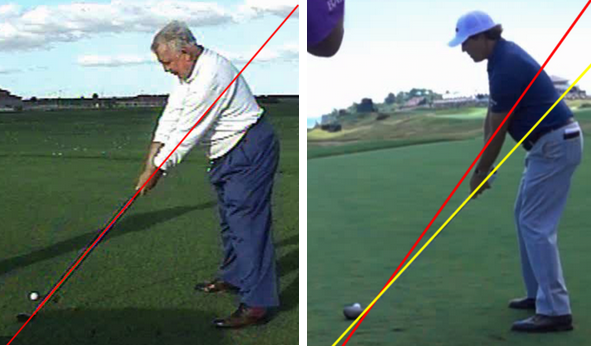
Congratulations to Phil Mickelson on winning his 43rd PGA Tour career victory at the WGC-Mexico Championship! The GGA Team wanted to do a quick analysis of Lefty’s swing compared to the Single Plane Swing.

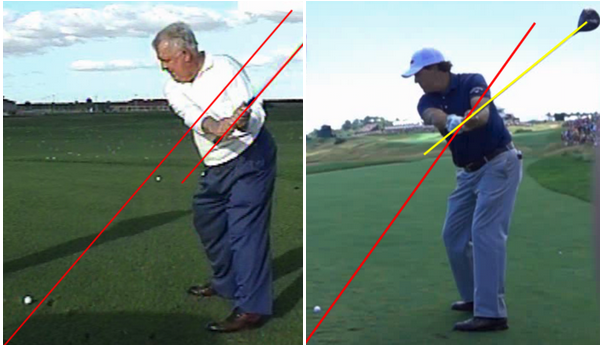
In the pictures above, you can see Moe’s address on the left and Phil’s speech on the right. With Moe, the red line represents the Single Plane where Moe will start his swing and also make an impact.

On the right with Phil, you can see that the yellow line represents where his club shaft starts and the red line is where Phil will make it impact. This is also known as a two-plane golf swing. Starting in one place and affecting in another.

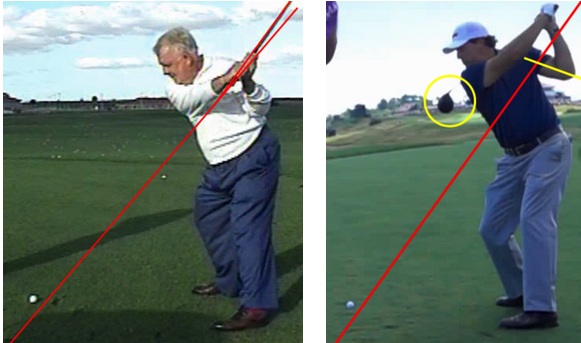
Above is the halfway point in the backswing for Moe and Phil. The difference is that Phil stands closer to the ball with a more upright spine angle at address. When he rotates into the backswing, the arms and hands lift and the club shaft flattens if the hands don’t hinge.

Moe, on the left, begins with more space away from the golf ball and a spine angle that is directly engaged in the object he is hitting (roughly 45 degrees). From there, he merely rotates and folds his trail arm which results in a club shaft perfectly parallel to the plane line.

Here is the top of the backswing in the pictures above. With Moe, you can see how the hands are on the plane line, and the club shaft is matching it. The trailing arm is also folded and in front of the body – entirely on the plane.

Phil at the top of the backswing, you can see how the trail elbow is flying, the hands are above the plane line, and the last over-rotation has caused the swing to be very long and across the border.

Phil is one of the best golfers ever to play the game. His creativity, imagination, and competitiveness is unmatched and not to mention; he can get up and down from just about anywhere. This is his key to success – his short game. Phil has never been in the top 100 in driving accuracy on the PGA Tour. Think of how many tournaments he could have won if he hit the ball more consistent like Moe.

If you have any questions/comments about our Premier Schools, how to become a Member of our Inner Circle, or anything else, please contact School Director Shannon Friday at shannonf@moenormangolf.com or call (405) 250-6960.


Justin Thomas vs. The Single Plane Golf Swing

Justin Thomas vs. The Single Plane Golf Swing

By Chandler Rusk, GGA Master Instructor & Single Plane Experience Schools Director

The way Moe Norman (arguably the most significant ball striker of all-time) positioned his spine at address is a crucial element to WHY he was so consistent.

Studies have been done over thousands of the best ball strikers in the world. Consisting of players from the PGA Tour, LPGA Tour, Champions Tour, European Tour, Web.com, mini-tours, high-level college golfers, and everywhere in between.

This study showed that 99% of good ball strikers have ONE thing in common.

At impact, ALL good ball strikers have 25 degrees of spine tilt away from the target.

Now, how did Moe Norman simplify the ability to get to this 25 degrees?

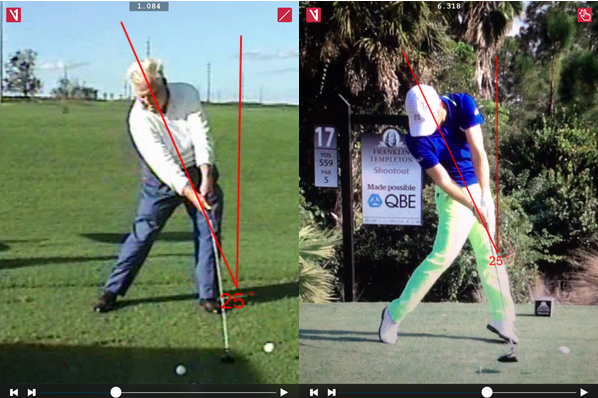
In the images below, you can see Moe’s address position (on the left) and PGA Tour player Justin Thomas (on the right). Moe just started with 15 degrees of spine tilt away as Justin Thomas only starts with 5.

Why is this significant? Because moving the spine from 15 to 25 (10 degrees) is considerably less movement and less stressful on the body than running it from 5 to 25 (20 degrees). See below for impact images.

Justin Thomas, Moe Norman, Single Plane Golf Swing

With Moe (top and bottom images on the left), starting with 15 degrees of spine tilt away allowed his head to stay still throughout the motion. The lower body stabilizes into a flexed lead knee in the downswing which takes his spine from 15 to 25. Also, note that both feet are flat on the ground.

In contrast, Justin Thomas (top and bottom images on the right), with only starting with 5 degrees of spine tilt away, to get to 25 – the lead leg has to snap straight, the head is forced down and back, and the feet are well off the ground.

Justin Thomas, Moe Norman

Moe Norman’s Single Plane Swing Review

  • Start and Impact in a similar position
  • Less moving parts
  • No stress on the body
  • Flexed lead knee at impact which takes the stress off the back
  • Head position is able to remain relatively still
  • Both feet are on the ground allowing the body to maintain posture
  • Elimination of variables leads to incredible consistency

Justin Thomas / Traditional / Conventional Swing Review

  • Spine starts in an upright position (0 to 5 degrees on average)
  • The head is forced to sway in the backswing
  • The lead leg snaps straight in downswing forcing lead hip to raise
  • The head is forced down and back to achieve 25 degrees of tilt away from the target
  • Both feet are off the ground or on toes
  • All the above put extreme stress on lead leg, back, ribs, and neck

Justin Thomas is an incredible athlete with talent and skill beyond his years. He has 1 Major victory and 7 PGA Tour wins. He is 5’10”, 155 pounds, and only 24 years of age. By being young and having a daily workout routine, he has the flexibility and strength to move and contort his body as you can see in the images above. It will be interesting to see what happens when he gets older.

However, for the average golfer, we are not as young or even close to as flexible as Justin Thomas. Therefore, we have to find a solution that allows us to move in a simpler way. Moe Norman’s Single Plane Swing is the solution that will help lead you to a more consistent golf game with fewer variables, less moving parts, and less stress on your body. Not to mention – less frustration and more fun!

To learn how to achieve this spine movement properly: Click Here

Plane the Trail Shoulder – Can it really be that Simple?

By Chandler Rusk, GGA Master Instructor

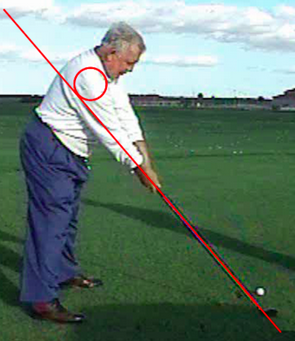
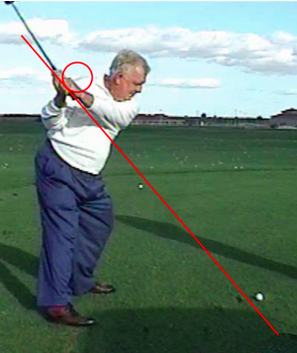
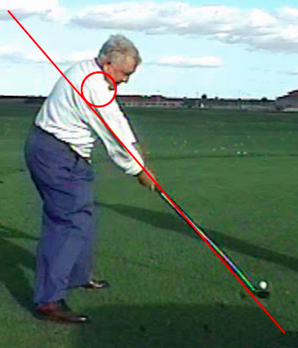
Moe at Address

Moe’s body and arm position at address allowed for him to reduce numerous variables in the golf swing. When you can eliminate variables, you can become more consistent. In the picture above, you can see a red circle on his trail shoulder. The trail shoulder is positioned slightly above the red plane line. Once we establish this address position, it causes a smooth backswing and downswing….

Moe at Top of Backswing

As Moe takes the club back, the trail shoulder rides merely directly up the plane line. How does he do this? By rotating his body and folding his trail arm. At the top of the backswing, you can see that the trail shoulder is slightly above the plane line, mirroring the position it started in higher up. With this simple movement, the hands are on the plane line, and the club shaft is correctly on the plane

Moe at Impact

Do you see anything similar here? That’s correct. The trail shoulder has come right back down the plane line resulting in an up and down motion. Moe called this “the pendulum.”

The only difference between address and impact from this down-the-line perspective is the rotation of Moe’s hips and torso. In this picture to the right, you can see how the hips and chest are rotated open. This has to occur for the hands to lead.

Join Us – Let Us Help You Make It That Simple….

Want to learn how to do this properly and effectively and take your game to the next level? Join us in OKC with the Main Team –  Click Here

If you have any questions/comments about our Premier Schools, how to become a Member of our Inner Circle, or anything else, please contact School Director Shannon Friday at shannonf@moenormangolf.com or call (405) 250-6960

Responsibility Mindset

GGA Performance Mindset Coach.

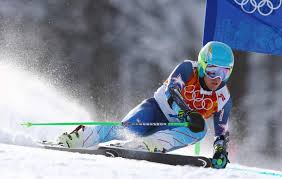
Ted Ligety was among the favorites to win gold in the Giant Slalom this year at the Olympics in Pyeongchang. Having won gold in 2006 in Turin, and again in 2014 at the Sochi Games in 2014, along with world championship titles in 2011, 2013, and 2015, Ligety is known as the King of the Giant Slalom.

But in 2018, there would be no gold medal in Pyeongchang. After a slow first run, Ligety finished the event tied for 15th…far out of the medal standings and a very long way from a gold medal. And he didn’t perform well enough in his second run to move up in the standings.

I don’t think anyone would begrudge Ligety if he were to look for something or someone to blame. “I didn’t have the right equipment.” “The conditions were poor.” “The food in Pyeongchang was terrible.” “My coach didn’t prepare me right.”

But Ted Ligety didn’t say any of those things. In fact, I doubt he even though those things. Ligety only stepped up and took ownership of his results, saying:

“That first run was purely me not having the right approach and going hard enough and going straight and clean enough. That’s all on me. Nothing to blame but myself for that first run.”

And then he said this:

“The second run was a mini-step in the right direction, but not anywhere close to the giant leap I needed to do anything. I tried to step it up a little bit more but didn’t have the speed in the legs today. So, that’s how it goes sometimes.”

I love that. And here’s why:

Ted Ligety knows who was responsible for his results on the hill. It was him. And he was not about to pretend that others (or other things) were to blame just so that he could save face or so that his pain of loss would hurt a little less.

So he stayed true to himself and was honest about his reality.

The highest achievers …athletes, leaders and performers don’t blame others when things go wrong. They seem just to know intuitively that their achievement depends first and foremost upon their actions.

How can this help your golf game?

I believe that any successful endeavor must include a responsibility mindset: a mindset that never blames others or on other things. It is a mindset that is rooted in the belief that we control our destiny and that our thought processes, decisions, and actions are what drive our success or achievements.

We all know someone who blames everyone else (or everything but themselves) for the things that happen to them.

They might even use language like: “He was talking about my backswing…that’s why I hit it in out of bounds.” “She didn’t pack my rain jacket, that’s why I lost the match.” “I missed the putt because these greens are terrible.”

Etc…etc…etc

While that person might believe that all these things are causational, the objective reality is much different.

If I were working with them as their coach, I would challenge their notion of cause and effect …and would help them to understand what was going on. I would point out to them:

You hit it out of bounds because you did not deliver the clubhead squarely to the ball.

You lost the match because your opponent scored more points than you.

You missed the putt because you misread the break.

Why is knowing this important?

Because the sooner you can see your reality more objectively, the sooner you can develop the skills that allow you to perform better. (Like, squaring the clubhead to the ball more regularly, scoring more points in your matches, and reading brakes more efficiently.)

I encourage my clients to learn how to tell the difference between what is TRUE for them versus what is THE TRUTH (objective reality.)

Once they get better at seeing the TRUTH, their mental and emotional dynamics change for the better, and they can work more productively toward their desired goals: more fairways hit, more greens run in regulation, fewer putts per round…etc.

Operating from blame is a trap it limits our potential at any moment.

Operating from objectivity…when we are not weighed down by judgment or our story is liberating.

Free yourself. Be responsible. Stop blaming. Period.

Paul Monahan, PCC is a Peak-Performance coach, member of the International Coach Federation and a certified COR.E Performance Dynamics Specialist. He resides in Cleveland, Ohio with his wife Paula and is the proud dad of three young men. He works with elite-level performers and leaders, helping them to expand their awareness so that they perform at their best more consistently.

He can be reached at paul@paulmonahancoaching.com
Purify Your Swing – a few Q from the Recent GGA Masterclass 

The GGA Masterclasses include six weeks of training. After each week, the students can ask questions about the week’s lessons during a private coaching session. During the Recent “Purify Your Swing Masterclass” I received about thirty significant questions about the Single Plane Swing. Here is a sample of four questions and answers from the session.

Q: “At the top of the backswing, is it best to feel that the lead shoulder has dropped and the trail shoulder has raised?”

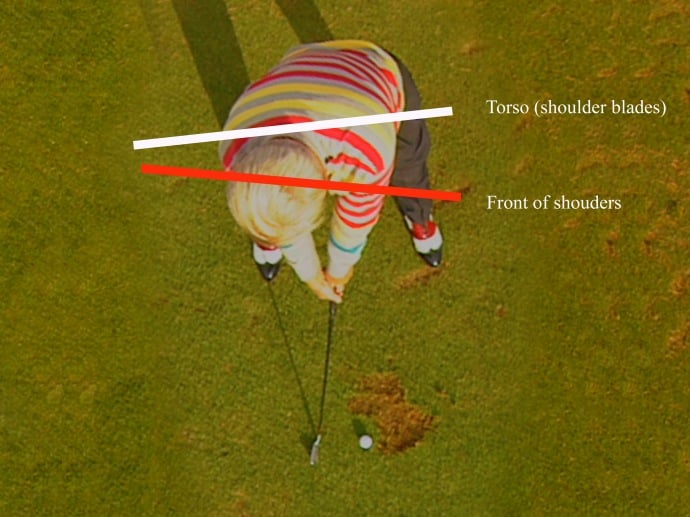
At address, the upper body is tilted forward (toward the ball) and to the side (away from the target). The tilt of the upper body and the trail hand position (lower) raises the first shoulder higher than the trail shoulder. From this address position, the torso turns, and the lead shoulder moves in the same tilt as the spine. It doesn’t feel like the first shoulder drops but slightly moves horizontally. These allow the first shoulder to proceed with the angle as opposed to dropping.

Moe Backswing Sequence 1.jpg

Think of it this way. If you were standing straight up with no tilt of the body and you turned horizontally, your shoulders would move like a “T” that has turned. Now tilt your body and turn like a tilted “T.” The main takeaway is that the tilt of the spine remains intact. These allow the shoulder to move with the angle of the needle as the torso rotates.

Q: “Do you conscientiously turn your hips and lower body while turning the upper body or does the upper body turn the lower body?”

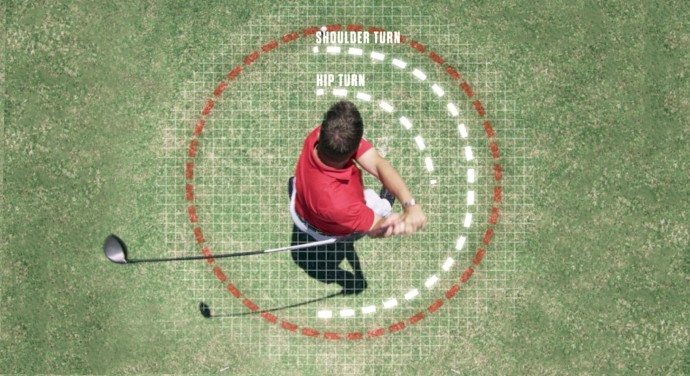
The answer is neither. My most recent video “Inside the Single Plane Swing” explains how the shoulder and hips turn together (with the arms) at the beginning of the back-swing motion. The upper body and lower body are connected. How is this possible? It comes down to your anatomy and proper sequence. Here’s how.

If you sit in a chair and try to turn your shoulders, you will find that you only have approximately 40 degrees of upper torso turn. The pelvis can turn another 30 to 40 degrees. Therefore, at the beginning of the backswing, everything turns together at the beginning until the pelvis reaches its potential. The torso continues to move until it reaches its potential. These are the ideal sequence of movements of the backswing.

Single Plane Moe Norman Golf Swing
Single Plane Golf Swing Top View

Q: “At address, when do you square the clubface to the target? Is it square even though it is several inches behind the ball or do you square it at the ball then move it back. The face seems to open as you move it away from the ball naturally. Do you require it at that position?”

The club is placed behind the ball centered, beneath the nose after you have tilted. The clubface remains square to the target.

Moe Overhead Poster no lines copy

Q: “Is there a drill that would help one reach the bottom of the arc just beyond the ball?”

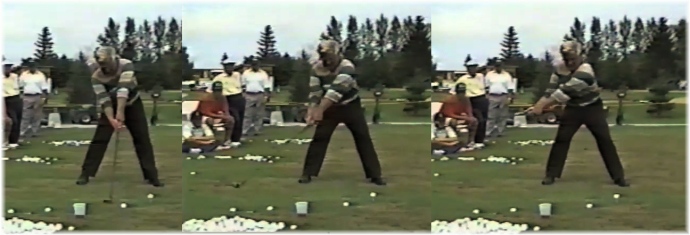
The reason you reach the arc beyond the ball is due to the proper movement into the downswing where the torso is open at impact. You can see in the picture above that Moe takes a divot in front of the ball. Any drill that helps you achieve the ideal impact position will help you learn to lead with the hands and produce a low point in front of the ball. Work on motion and areas and not hitting the ball. Always remember you must swing through the ball and not down at it.

LEARN

THE

SWING

Join 1M+ Subscribers to get your FREE Video Quick Start Guide that reveals how to hit the ball farther and straighter more consistently from now on…

START YOUR NEW GOLF SWING