Your Path to Single Plane Success – Get on it NOW!!

Your Path to Single Plane Success – Get on it NOW!!

By Tim Graves, PGA

A few years ago we introduced the Graves Golf Academy (GGA) “Path to Single Plane Success.” We call this simply the “Path”.

Over the years we have helped thousands of golfers improve their games. The GGA “Path” is the GGA formula for success– the most effective way that we can help you become a better golfer.

By identifying where you are on the path, we can help you improve more rapidly and have more fun. The Path is the greatest experience GGA can provide for you – the aspiring Single Plane Golfer.
Why Does The Path Offer the Greatest Chance of Success?

GGA’s mission is to simplify the complexity of golf. We do this in the following ways:

  • An easier way to swing – The Single Plane Swing
  • A short game methodology that relates to the golf swing
  • Providing DVDs and training tools to help the student’s self-progress
  • Online schools and coaching for faster improvement
  • Golf schools and hands-on Instruction helping match “feel and real”
  • A system to take learning to the course – for lower scores

The GGA Path is an all-inclusive “System” to improvement

How Long Does It Take?

No matter where you are with your golf game, the “Path” IS the shortcut to your improvement. Based on years and years of experience studying tens of thousands of students, we have identified exactly how students improve. All of them have followed the GGA Path. Think of the Path as though you were building a house. What would you do first? Most people say, “Build the foundation.” But the most important thing is the “Plan,” the “Design,” the “Blueprint.” The GGA Path is the Plan. Once you have the plan in place you can take the next steps – build the foundation and move yourself along your personal Path.

Why Does The Path Matter?

The Path comprises the exact steps you need to follow to build a fundamentally solid Single Plane golf game. The Path matters because we know what it takes to have success. We have built the plan. All you have to do is follow the GGA Plan – stay on The Path.

What Is The Best Way To Start?

Contact a GGA Coach. The best way to start is to determine exactly where you are and where you need to be on the path. The GGA Coaches can help you assess where you are now and help you get to the next level.

What is the most important part of the path? 

Each part of the path is a unique building block of understanding, training and coaching. The most important part of the path is knowing where you are and how to move to the next level.

Where Am I On The Path?

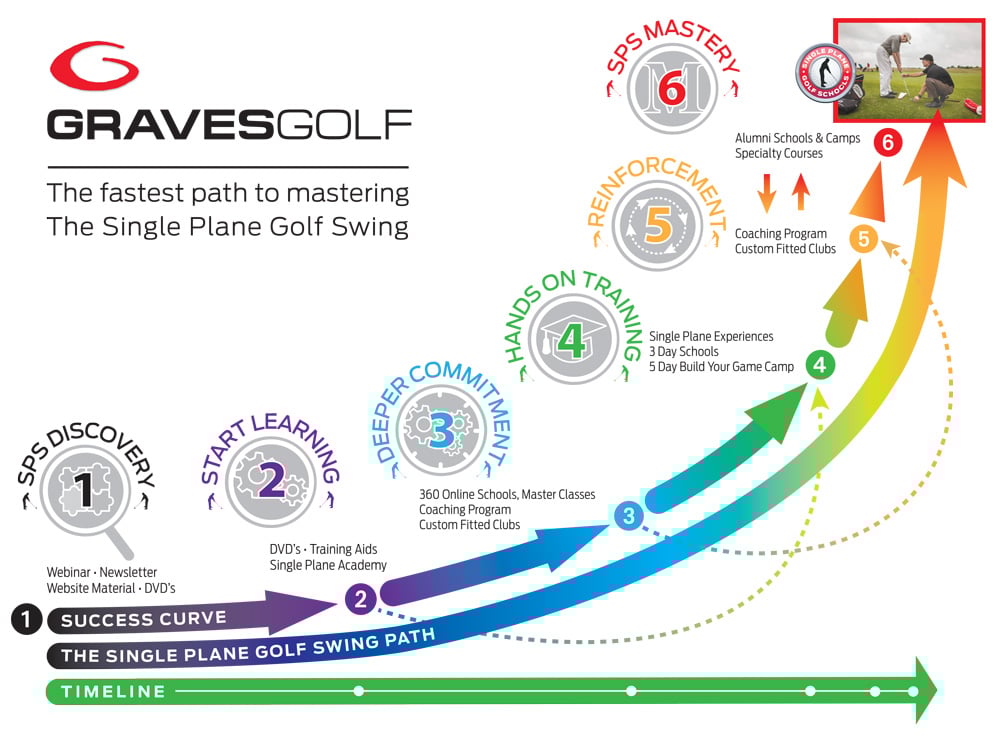
The GGA coaches will help you determine where you are. For example, are you fully familiar with the Single Plane Swing, and the Moe Norman Model? This would place you at step 1.

Are you practicing correctly with feedback tools? Are you using the material provided in the DVD Training when you practice and have you identified your weaknesses? This would place you at step 2.

Have you worked through the SP30 / Online 360 program? Do you understand the TOTAL GGA System of how the long game relates to the short game? This would put you at step 3.

The GGA Path is like building a house, starting with the Planning and Understanding Stage – the building of a foundation of understanding. Constructing the foundation is next. Then, as you progress, you begin to construct framing and walls, add wiring for electricity, plumbing for sanitation and water supply, and other required systems. As you add exterior details, your house takes shape. Along the way, you have your work inspected (inspectors / “coaches”) to make sure you are building everything correctly according to code. Then once everything is built, you fine-tune the details of the paint and trim with the feedback of proper coaching.

Lets look at each step to help you identify where you are in building your Single Plane Golf Swing.

Step 1: Discovery / Single Plane Swing Introduction

At this step, your curiosity, frustration (and maybe pain) has led you to look at the Single Plane Swing as an answer to your problem. You haven’t fully committed at this stage, but you wonder if the Single Plane Swing might be the answer to your golf game’s health.

Step 2: Begin Learning the Fundamentals

At Step 2, you have purchased and studied the Single Plane Solution (SPS) video. You have an understanding of the basics for the Single Plane Swing and the short game. You might not be able to swing like Moe yet, but you understand the basics of the Moe Norman model. At this stage you start to teach yourself the Moe Norman swing by watching the videos.

As you attempt to learn the swing, we suggest that you dive deep into the training with the proper drills and practice techniques. The Graves Golf Academy has specific training DVDs and training products that help you understand the model and practice the ideal way. The GGA training aids help you ensure that you are practicing correctly by giving you feedback in every practice session. Step 2 is all about self-practice and making sure you are practicing correctly. This is where you start building the foundation of the house.

Step 3: Deeper Commitment

Step 3 takes in what we call the “breakthrough” zone. This is where students apply the fundamentals they have learned and their practice starts to pay off. This deeper commitment means a deeper understanding as you move into the next stage of building your game. The GGA online school programs include the 360 Home Study School and the Master Class. This even includes working with a Coach in the Video Coaching program. At this stage you are building the walls and putting on the roof and the structure is taking shape.

Step 4: Hands-on Training – (Progress accelerates)

Step 4 is all about attending a GGA School and working with the Coaches. At this stage GGA Coaches can show you “in person” the exact things that you need to do improve. This is where what you have been feeling as you practice on your own meets reality. This is where we can personally customize and tailor the program for your improvement. Progress accelerates in at this stage. This is where you install the wiring and plumbing and drains and put up the exterior walls of the house. Everything starts to come together.

Step 5: Reinforcement

At stage 5 you have everything you need to know to build a great golf game. Now you need coaching and custom-fitted clubs to practice correctly and put in the dedicated time to improve. This is where the GGA Coaches can help you stay on track and stay accountable. GGA also recommends that at Step 5, if you haven’t done so already, that you take a serious look at your golf equipment to ensure that you are getting the most out of your game. At this stage you are painting your house, getting it inspected and making sure all of the plumbing, electrical and fixtures are up to code.

Step 6: SPS Mastery

At stage 6, you are on your way to SPS mastery by attending Alumni Schools, Camps and Specialty Courses. Your house is built. Now you need to furnish and decorate. But this doesn’t mean the work is done. Anyone who owns a house knows that you can always adjust and improve and make sure that everything is working correctly. This is where the GGA alumni and coaching programs can keep you comfortable with your new game (in your new home).

How do I measure my progress on the path?

Once again, think of your golf game as you would if you were building a house. Do you have a plan? How is your foundation, including your grip and setup? How are your short-game fundamentals? Do you know how to practice or have the tools needed to make progress? If the fundamentals are in place, do you KNOW that you are correct? Do you need help from a coach?

The GGA Coaches can help you determine where you are on the Path and help you Build a Success Plan for 2024.

To set up a time with a GGA coach:  CLICK HERE

Or you can always email me at timg@gravesgolf.com and I will direct you to the appropriate coach(s).

Talk soon!!

Let’s have a great year!!!!

WWDWWD #2

Why We Do What We Do #2

From: Kirk S. <kirk…..@…..>
Date: Sat, Apr 13, 2024
Subject: Graves Golf Training & Staff – Thank You!
To: Tim Graves <timg@gravesgolf.com>

Todd and Tim:

Just an email to thank and commend both of you, and also the Graves Golf Staff Team Members.

My journey with Graves Golf started last year when I attended a Premier and Short Game Course in Phoenix, AZ (September 4-8, 2023). Derek Hahn and Ralph Rabago were the first two team members I had the pleasure of personally meeting, interacting with and receiving instruction from. Both were professional, very knowledgeable, courteous, encouraging and just nice people. Most importantly, I learned how to swing a golf club, how to practice appropriately, and where my resources were to be found which gave me hope in the world of golf (an important part of the Mental Game, or “The Most Important Game,” thank you Paul Monahan).

Before arriving at the September 2023 courses I was ready to give golf up due to numerous surgeries which caused a loss of flexibility, range of motion, and the creation of a great deal of frustration and pain (I and my wife had been taking lessons for 2 years prior with another local golf school organization, but I was getting worse not better). Fortunately I searched the web for help and found Graves Golf. This started my journey with the Single Plane Swing.

Several months after the September courses, I ended up needing another surgery. I have been unable to golf since last November and will not be released to start golfing again until around the end of June 2024. Although this surgery caused frustration, knowing there was hope post surgery is mentally invaluable!

James Bell recently signed me up for the elite membership, and agreed to defer my membership start date until June 2024, which I very much appreciated. Since starting my Elite Membership Trent White and I have had numerous occasions for interaction and some coaching even with my limited abilities. Dave Cotter recently called me to quickly help me get registered for the July 15-19 BYGC in Oklahoma City. Like Derek and Ralph, James, Trent & Dave were professional, very knowledgeable, courteous, encouraging and just nice people. 

Tim & Todd, you have both created a great golf school (the in person, on-demand, Plane Talk, etc.), but also a very “constructive culture” within Graves Golf organization that you both not only model (you are both great golf instructors and Tim has been invaluable helping me with the club lease program), but your staff members are aligned, engaged and are embracing that culture with the behaviors they exhibit. Well done!

Please thank Tanya as well for the email responses and support!

My thanks, and I will be looking forward to future trainings and attending the July BYGC course in July!

Kind Regards,

Kirk S. 

“Recapturing the Feeling of Greatness!”

     Hey all you weekend warriors that might be challenged by some old injuries or challenges from advancing in age. BTW, we all want to be advancing in age, the alternative is not an option. Let me tell you why the Single Plane Swing of Moe Norman is the answer to your golf aspirations. Our attention to the ‘short game’ fundamentals allows you to become extremely efficient player where ‘physicality’ is not required. When executing our single plane putting and chipping techniques, the issue isn’t ‘direction’ it is just the ‘distance’ you want the ball to travel. 

     Now a bit about myself, after being in business for 30 plus years I moved on to a second career in golf instruction. I earned membership in the PGA and have been a Graves golf Instructor for the past 11 years. Just like many of you, I played basketball and baseball all through high school, but my body was built more for football. So, from Southern California it was on to Notre Dame in 1972. (Do the math.)  I was fortunate enough to be on the 1973 National Championship team and a starter at Right Tackle in 1975. Yes, both Rudy and Joe Montana played on MY team. It was a great experience and I wouldn’t trade it for anything. Unfortunately, that ‘fun’ catches up with you as father time moves along. 

     When you can’t run or jump anymore, you stop playing basketball, softball and tennis. What a blessing this was, I was forced to find a sport that I could still play, and still compete and most importantly have fun playing. Golf has allowed me to continue my passion to play, teach and coach. The twelve years I was coaching high school golfers, every player used our Single Plane short game fundamentals. There was never in any ambiguity in my teaching methods, and year after year my teams were the best in the league when they got close to the green. I found I could affect their games the most by continuing to focus on the scoring shots. Our ‘mantra’ was, keep the ball in play and score when you get close. 

     Over the years and through the surgeries, the swing speed has decreased and the distance along with it. The ‘stiff’ shaft has been replaced with a ‘regular’ shaft. I’m sure the senior flex is not long off. The 4 and 5 irons are not in the bag anymore, but the 4 and 5 hybrids work even better. Trying to hit a bucket of 100 balls with my ‘full swing’ is not even contemplated anymore. With the Single Plane Swing, as soon as I feel the correct ‘sequencing’ I’m good to go and now it’s time to practice the ‘short game’. 

Pat J Pohlen, PGA
Head Pro / Director of Instruction -RiverView GC, Santa Ana
Licensed Instructor- Graves Golf, Moe Norman Single Plane Swing
Masters Degree in Coaching, Concordia

Moe Got Mad, Then I Designed Our ABT

Back in the late 90’s, I would often drive to Titusville, Florida and meet Moe Norman at Royal Oak golf club to practice. Tracking him down wasn’t difficult but talking to him was.  Moe didn’t have a phone so I would have to set up the meeting by calling Neil Hunt, the head pro in the Royal Oak shop. I asked Neil to tell Moe that I would be arriving at 10 O’clock.  Neil would then tell Moe when I would be arriving and, like clockwork (forgive the pun), Moe would always be there waiting.

Moe Norman Todd Graves
Moe Norman watching me hit balls.

From where I was staying in Orlando, it was a forty-five-minute drive which sometimes took over an hour.  On this particular day the drive took an hour and a half.  When I arrived, Moe was agitated.

“Ten O’clock, where have you been pal, where have you been?”  Moe asked.

“Traffic Moe.  Terrible traffic on the Bee-Line.” I answered.

The Bee-Line was highway 528 a stretch of road the East from Orlando  directly to the Florida coast.  Moe wasn’t satisfied with my excuse.

Moe mumbled as we walked into the clubhouse to get a coke. “Ten O’clock, Ten O’clock, you know the Bee-Line, always busy, always busy.”

 Moe had an affinity for time often wore two watches and sometimes three. (Thanks to my friend Larry Olson. I’ll save that story for another time).  He always became frustrated when I was even one minute late.

We drank a coke and to distract him I randomly chatted about how busy the world is getting. It took a few minutes to sidetrack him from obsessing on my lateness. Luckily, it worked.

As usual, our conversation hooked back to the golf swing and eventually we walked across the green to the range. Any golf swing discussions captured Moe’s attention.  He loved to talk about it, especially with me.  He knew how fanatical I was about his swing.

In typical fashion, I stood and watched as Moe started with wedge, crisply hitting perfectly straight shots painting a stripe in the sky.  Each ball on exactly the same trajectory.   He moved to a seven iron.  Now the line was lower. I remember the piercing snap of each strike.

After about the fourth shot Moe turned to me and said, “I don’t know how to swing it badly.  This is all I know”.  He immediately turned, with his club in his left hand, dragged another ball from the pile and “thwack” struck another one on a pipeline.

After knowing Moe for almost six years, this was just another display of incredible ballstriking.  I had become used to it, but I never got used to Moe’s definition of it.  He always had a way of describing the indescribable.

What Moe was describing was how he had grooved his swing to a level of consistency where, he had only one neurological pattern.  Like riding a bike.  He didn’t think about any of it.

I knew how Moe became a ball-striking machine.  That was easy to understand.  He hit millions of balls.  As Ben Hogan so eloquently put it “He dug it out of the dirt.”   What I wondered was; how can I do it without working so hard?  What could I do to make it easier?

What is the absolutely, without a doubt, one hundred percent effective, best way to practice?

Here’s the thing. We all know that we have to practice learning something. That is a given. But what is practice anyway? Isn’t practice for learning?  If so, then learning what? It was the “what” that had me asking Moe so many questions.

That’s when I asked, “How did you learn your swing so well that you don’t think about it Moe?”

Hit your positions, practice your positions” Moe said as he raked another ball from the pile – “thack”.

Not just your swing positions, but all positions”, Moe added.

There it was.  Another subtly. Moe was talking about his address position. I was typically focusing on swing positions and Moe was referring to ball position and foot position.  Moe was referring to what I now call the “little-big” things that are so often ignored.

The main little-big things are ball position, foot position, stance width and distance from the ball.  The final little-big thing is to have the proper shaft lean (hands forward) at address.  This only works if you have all of the main things. There were many times when I have a bad round.  I used to blame my swing but soon realized that most of time it was because of an incorrect ball position.

Moe didn’t worry about these things anymore.  At some point, he figured out all of these “little” things when he “memorized” his swing.

This answered my question of what is the absolute best way to practice?  I realized that mastering the little things is exactly how you get better – faster.  When you can stop thinking about the little-big things, you are on your way to perfecting your swing, like Moe.

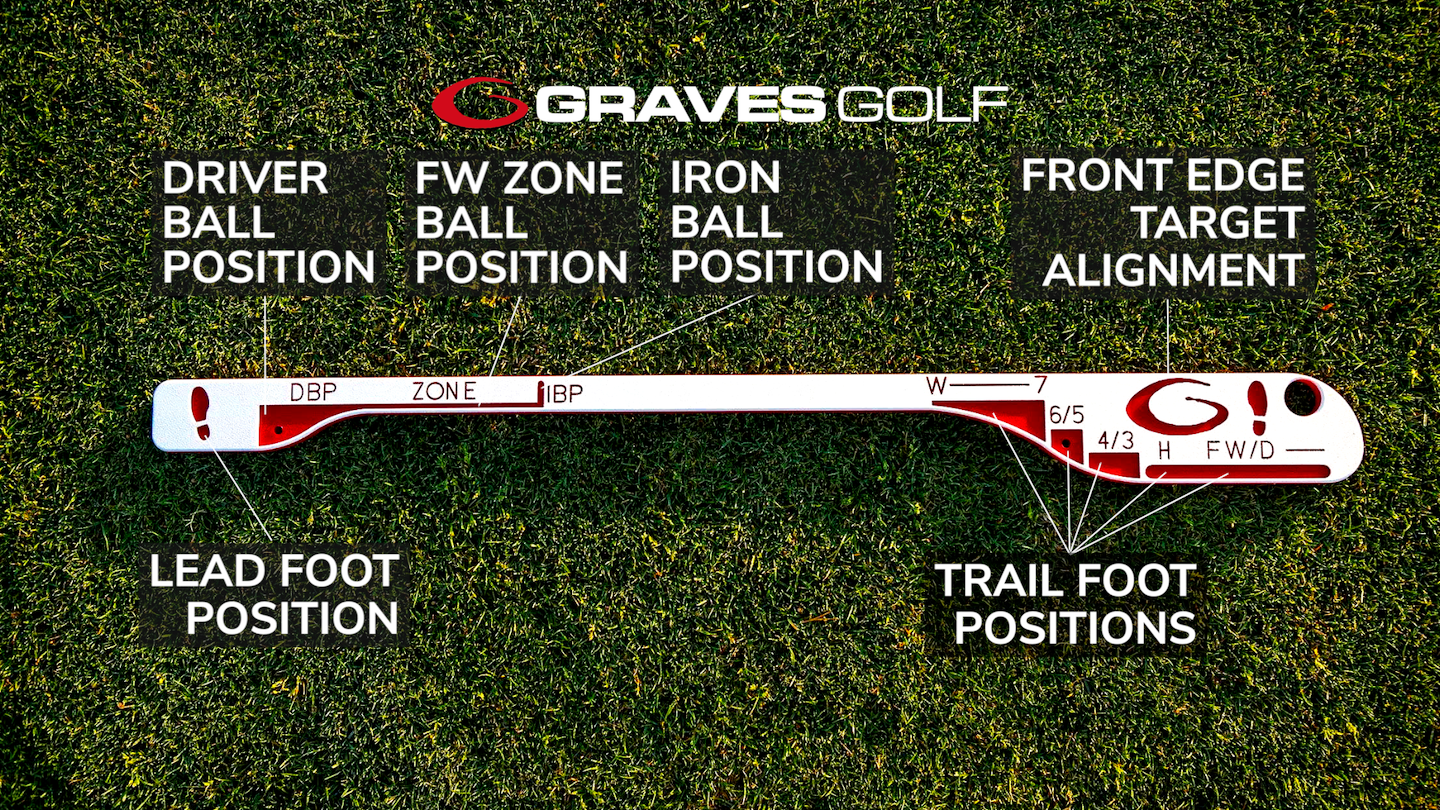
The day I was late with Moe was the day I realized that all I had to do was build something that would help me memorize the little-big things.  That was my inspiration to develop the alignment and ball position trainer, the ABT.  The ABT is designed to be positioned on the ground every time I practice so I could build consistency into my positions.  It helped me focus on my swing and not the little things.

Being late for my practice session with Moe was nerve racking.  Even though the day got off to a rough start, nothing was more fun that discussing the golf swing with Moe and watching him demonstrate ballstriking perfection. Best of all, it inspired the ABT which I still use today.

To see more about our ABT: CLICK HERE

Clark Kent to Superman… The Journey from Red Zone to Green Zone.

By: Nick Castle, Graves Golf Single Plane Experience Director

When you attend one of our golf schools, we want your experience to be not only informative, but transformative.

Regardless if you attend a 1-day SPE, a 3-Day or 5-Day Build Your Game Camp or one of our speciality schools, you will receive a wealth of knowledge and hands-on instruction. However, the most important days of all our schools is the days after the schools end. It’s the days you take the knowledge and instruction you learned and apply it… You take it to the course!

Doing this will make you a better golfer. If you want to take it to the next level, This is not enough. You need to transform from the person that drove to the golf course into the person that is performing on the golf course.

Since I live in California, I will tell you a story about Kobe Bryant A former MVP Basketball player for the Los Angeles Lakers. In an interview, the reporter asked Kobe how he was able to do the things he did on the basketball court? Paraphrasing his response  he said… I didn’t, that was the Black Mamba.

Kobe Bryant, like all other athletes and performers, know to be successful, you need to create a persona that can shed all the outside distractions and just execute in the moment, Be the best that they can be at that point in time.

If you are reading this article, then you also have done this in your professional/personal life.  A first responder at the scene of an emergency. A fighter pilot when they climb into the cockpit. A parent when their child gets injured. At these moments you are not thinking about HOW to do something. You are drawing upon you past experiences and Performing the task at hand.

The next time you play golf. Just before you take your next swing… When you walk from Red Zone into Green Zone.

Take off your Clark Kent thinking glasses, Tell Yourself “YOU GOT THIS” …YOU ARE INVISIBLE…. YOU ARE SUPERMAN! 

Nick Castle, 

Single Plane Experience Director

“The game of Golf is played between your ears. You have to get out of your own way”…Moe Norman

Embrace The Uncomfortable

By: Tim Graves, PGA

Hello Everyone –

Wanted to drop an article about what happened to me last week and maybe help you a little when working on making changes in your swing / game.

This past week I played in the our first PGA South Central Section Western Chapter Tournament of this year. 

This was the first golf tournament I have played in about 5 months.  Probably the longest I have gone without a competitive round in 30+ years (or more).

Needless to say, when I stepped on the first tee, there was a feeling of “uncomfortable” as I hadn’t been on the first tee of a tournament in a few months.  As usual – if you don’t do something “routinely” – there will be a “natural” uncomfortable feeling.  But, this feeling ended pretty fast after the first couple of shots.

The real uncomfortable feeling came 5 holes into the event….  I proceeded to start the tournament, birdie, eagle, birdie, par (easy par 5…), birdie.  I was 5 under through 5 holes.

Many of you are probably thinking – that is a dream start… and yes, it is an amazing start (for anyone), but needless to say, it put me in an extreme “uncomfortable” state.

Why uncomfortable – because it was not normal, it was unusual, it wasn’t something I am used too…  even if I had been playing competitively for the past 4 months, I would still have been in an uncomfortable state as this was an “unusual” situation.

I am bringing this up to help you as as student of the single plane swing.

We know you have many “uncomfortable” feelings when you are changing your swing and creating new habits

The first morning of our schools and camps I  talk to the students about what they are about to go through. One of the topics is the process of learning and how to get through the uncomfortable periods when making these changes.

Please remember – there is a process to creating new habits and being uncomfortable just means you are in a situation you are not used to, it is something new… and that is a VERY GOOD thing when creating new habits…

Why – because the feeling of being uncomfortable shows you are making changes.

Here is what all need to do to create new habits and help you through the uncomfortable feelings:

1.  Learn the Fundamental

You must first learn the fundamental(s) that you need to work on. Whether a long game, short game, mid game, etc… fundamental such as the grip, set up, etc…  you need to study the fundamental you want to work on. Learning doesn’t mean doing at first, it means understanding what is correct and what is not.

2.  Learn the Why

As you are working on creating a new habit, you need to know the why of the fundamental. More than, because we said so, but rather, why the fundamental is important. As you are making the change(s), you will feel uncomfortable at first. If you don’t know the specifics of why you need to make the change, your brain will “give up” when it becomes uncomfortable. (Very common). If you know why – you will be more likely to get through the uncomfortable stage. This is the conscious thought eventually transforming to the unconscious thought. It takes time, but your conscious thought must know the “whys” at first to continue with the change.

3.  Learn How to Practice to Create the New Habit

You can know what fundamental you need to work on, you can know the whys… but if you don’t know how to practice toward creating the new habit, your improvement will be limited, or at least slowed considerably. Whether performing drills, using training aids, or both, it is absolutely critical you learn how to practice toward creating the new habit.

4.  Check Points

During your practice, you must have check points. The check points are set up so you can make sure you are creating the fundamentals correct. The more check points you have, the better. Check many, check often, don’t forget to check. As many already realize, it is much easier to make yourself worse than better – you can prevent this by having check points and checking often while practicing and working toward the new habits.

Use the above help you create new habits and lessen / shorten those uncomfortable feelings.

In conclusion…  I ended up winning the tournament by quite a few shots (4 shots).  I shot 6 under for the round.   It was a nice outcome, but to be honest, it could have been a very special round if I would have dealt with the uncomfortable feelings a little better.  After starting 5 under for the first 5 holes, I played the next 13 in 1 under…

Like everyone dealing with unusual / uncomfortable situations, the more I (and you) put ourselves in those situations, the more we understand why we am uncomfortable, how to practice those situations more and understand how to monitor those circumstances will help me (and you) in the future.

FYI – We have monthly Instructional Webinars called Plane Talk with Graves Golf

If you have questions you would like us to cover / answer in the program or have topics you would like us to cover – please feel free to email those to me at timg@gravesgolf.com

LEARN

THE

SWING

Join 1M+ Subscribers to get your FREE Video Quick Start Guide that reveals how to hit the ball farther and straighter more consistently from now on…

START YOUR NEW GOLF SWING