It’s The Little Things

It’s The Little Things

One of the highlights of the schools for myself and our staff is having lunch with our students, meeting them and sharing stories with them.

During one of the lunches at a past school, I was sitting with the students and a couple of them brought up an interesting topic.

One of the students said, When I was getting ready for the school I was sure you’d find a major flaw in my swing, but you didn’t. Instead you found a lot of “little things” I need to work on.

As he said this, the student sitting next to him, shook his head in agreement and said, I have seen the same thing. He said he had pictured the “entire swing” rather than the “little things” that have such a big effect.

Thought this would be a good topic for this month’s e-tip.

Let’s talk about a few of “The Little Things” that many overlook.

1.  Face Angle.

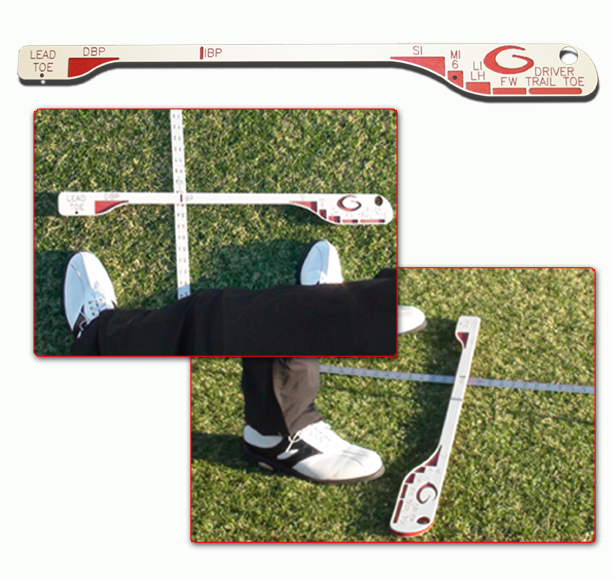
Having a square face to the target at set up is CRITICAL. This is something you need to check every time you practice. In fact, I check every shot I hit during practice. It is relatively simple using the Alignment and Ball Position trainer with a yard stick.

Most students we see error having an open club face. With an open club face, you will hit the ball right with a “glancing blow”. To make up for this, most will not square the face at set up (since they don’t know they have a problem), but rather pull their lead shoulder out causing an outside to in (across the ball) path to try and square the face.

In other words, a “little thing” – not squaring the face at impact can cause a BIG problem – an outside to in path.

We have designed a training tool to make sure your face is square at set up – you can see our Alignment and Ball Position trainer at:  CLICK HERE

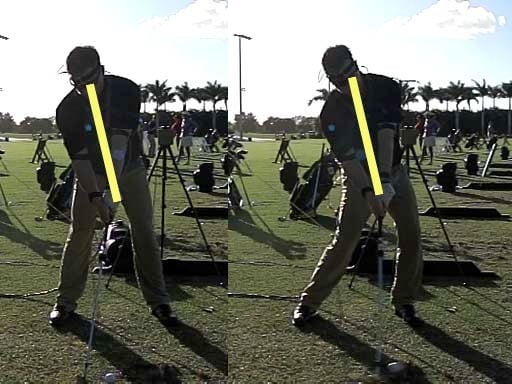
(Video of how to use trainer and pictures on bottom of page showing how to check for square club face.)
ABT
2.  Distance to the Ball

Having the proper distance to the ball is CRITICAL for a proper swing. It allows for the proper spine tilt at set up which allows for the proper movement of the club on the single plane.

Too close to the ball will cause you to stand to upright, not allowing the club to swing “under you”, but rather “around you”.

In other words, too close to the ball will cause you to come across the shot (or outside to in) and for many a “too steep” swing.

The “little thing” – distance to the ball – easy to check, can check often… can cause a BIG problem – improper spine tilt, which doesn’t allow the club to run through the pivot point throughout the swing. Inconsistent results and typically an outside to in path.

Again – Distance to the ball is checked with the Alignment and Ball Position Trainer. (See Above).

3.  Stance Width

Having proper stance width is CRITICAL for a good balanced swing. It allows for balance and speed production. Without these balance golfers have difficulty getting the club in proper positions in the swing. Many times causing a “reverse pivot”, “early release/casting” in the golf swing, etc.

The “little thing” – stance width (too narrow a stance) can cause BIG problems leading to loss of balance, loss of distance, reverse pivot, etc.

Stance Width check – you guessed it – the Alignment and Ball Position Trainer. (See Above).

Would recommend taking some advice from your fellow student(s) – look at the “little things” …

Typically fixing the “little things” will affect and fix what most consider the BIG issues of the golf swing – or at least give you a better chance to fix those issues.

GGA 2014 Year in Review

No better time than the end of the year to talk about this year in review.

Every year we try to update, improve, create, etc. new/improved instructional material, training aids, ways to get out instruction to more in order to help our students. Reason – every day we learn from teaching our students – learn ways to help shorten the process of improvement.

Here is what we introduced in 2014:

New Training Products introduced in 2014:

Perfect-Impact-Training-Club2

Perfect Impact Trainer

Introduced in August:

The Perfect Impact Training Club gives you visual feedback on whether you achieved the ideal club and shaft position at address. Then, as you practice, you will get instant kinesthetic feedback that you have the perfect shaft angle at the most important moment of the golf swing – impact.

The Perfect Impact Training Club teaches you the proper shaft angle at address and the ideal compression shaft angle at impact.

The Perfect Impact Training Club, with its unique shaft and club head design is everything you want in a practice trainer teaching you visually and kinesthetically giving you instant feedback every time you practice.

The Trainer teaches both ideal shaft angle at address and impact.

Designed to achieve the proper Shaft lean forward at impact.

Club shaft visually indicates the proper shaft angle at address.

Clubface is designed to provide instant feedback on proper impact.

Reverse loft below impact zone of club

Promotes the ideal compression angle at ball-impact

Teaches you how to positively hit down on the golf ball and deliver the sweet spot of the club to the ball creating a perfect impact

Lower impact line disappears with proper shaft angle at address.

6 Iron models available – Includes the GGA “Single Plane” Grip to indicate proper hand position and pressure points

Video on how to use Perfect Impact Training Club:  CLICK HERE

Hand Speed Trainer
Hand Speed Trainer

Hand Speed Trainers

Introduced in September:

The Hand Speed Trainer was introduced as a training aid to help students increase/maintain club head speed. The Hand Speed Trainer™ is specifically designed for athletes in virtually every sports arena to functionally train for maximum increases in Speed, Power and Performance. Functional training involves work against resistance so that improvements in strength directly enhance the performance of the athlete’s sport specific required movements.

The HST™ allows you to move at your own pace against resistance that is functional for you, allowing you to challenge your muscles as your training routine becomes easier to perform. Functional training involves small increases in resistance to sport specific muscle groups. Start small, increase slow and watch your game reach new levels!

Video on how to use Hand Speed Trainers: CLICK HERE

GGA MAGAZINE – Single Plane Golfer

First issue was sent in July, fourth going out this week.

Every issue of the Single Plane Golfer is packed with new, cutting-edge instruction, actionable tips you can try out at the range. Get to know Moe Norman with insightful commentaries and little-known stories from the people who knew him best. We’ll even feature inspiring student profiles to keep you motivated.

More information:  CLICK HERE

271

SINGLE PLANE EXPERIENCE SCHOOLS (One Day Schools)

In 2014, we introduced the Single Plane Experience schools in Palm Desert, Orlando and now in Phoenix, AZ.

These one day schools are a great way to introduce a student to the Single Plane Swing.

During this golf school we completely immerse you in the fundamentals of Moe Norman’s ideal Single Plane Swing.  From Moe’s Single Plane grip and address position to his impact and finish, you’ll not only feel what Moe Norman felt as he was making jaws drop with his consistent ball flight, but you’ll be actually doing it.

(Schools will soon be starting in Los Angeles, CA and Naples, FL)

More information:  CLICK HERE

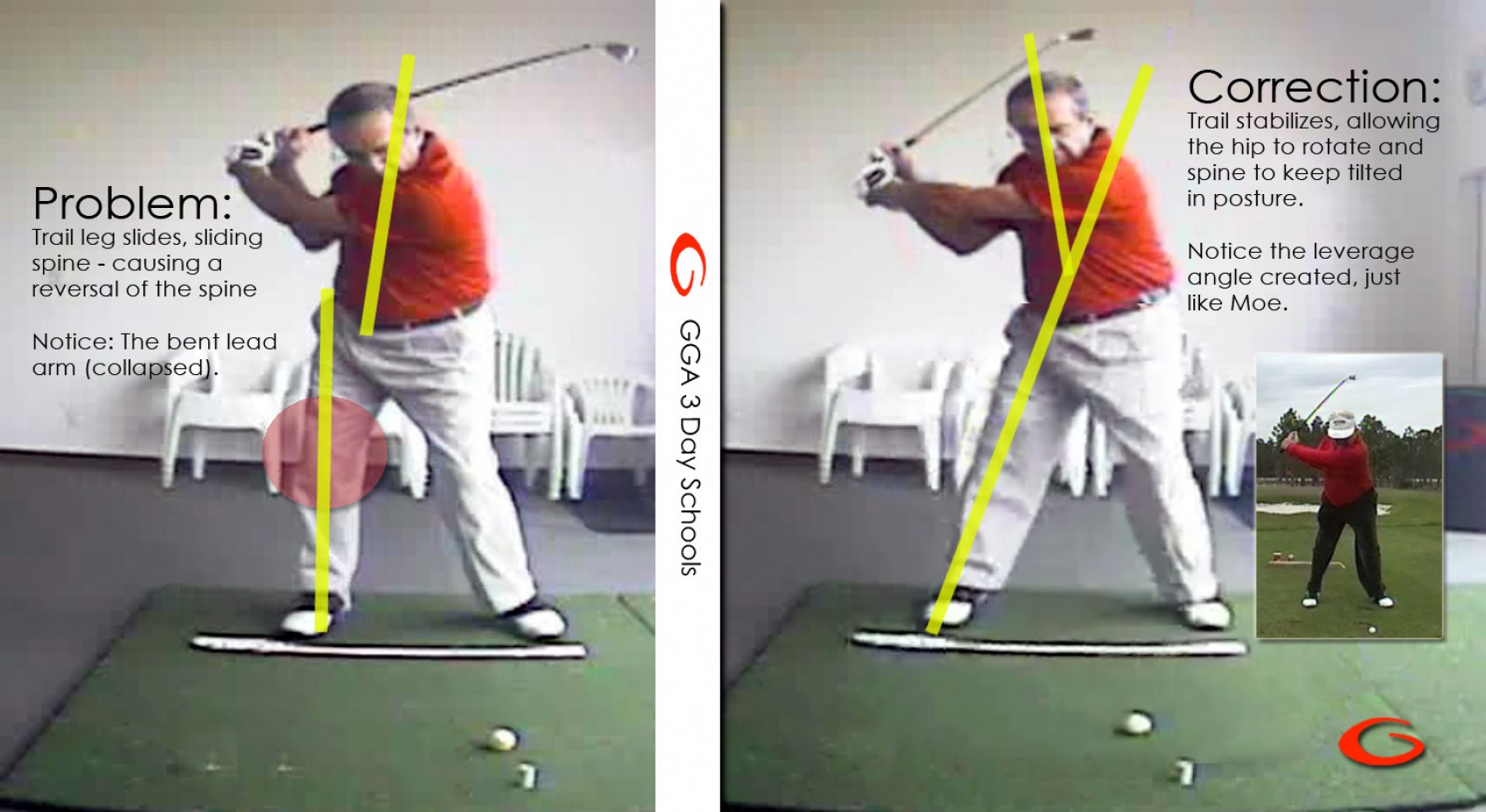
Problem and Correction

WINTER TRAINING PROGRAM

In late November, we started the Winter Training Program –

This series entails filmed practice sessions by Tim and Todd Graves and the GGA Master Instructors that can be performed indoors. Designed specifically for single plane golfers, these sessions will allow you to work on your golf swing all winter and see dramatic improvements on the course when spring hits.

Exclusive to our coaching program members, the series is set up so you can dramatically improve with practice (indoors) over this winter. And if you combine this practice with supervision (coaching), you will be far ahead of where you are now.

See more about Winter Training Program:  CLICK HERE

As you see, we are keeping busy at the GGA!!

And wait till you see some of the new things we have in mind for 2015……

How about a “pocket coach” you can bring on the course with you….?

How about Todd’s new book being published in Jan. about Moe, Moe’s swing and their time together?

Be watching soon, we are very excited about things to come!

Here’s looking to a great 2015!

“Ultimate” Winter Training

Fact: There is no such thing as “status quo” in your golf game. In other words, you are either getting better, or going the other direction. Fact: Studies show that only 10% of golfers who practice improve. 50% of golfers will get worse and 40% will not improve after practicing.Fact: Doing no practice, or improper practice over this winter, you will struggle to just get back to where you are now when the golf season begins in a few months. Fact: The BEST practice is most often performed NOT hitting golf balls. Working on fundamentals, fundamental positions and movements without worrying about ball flight will dramatically improve your golf swing and shorten the time to improve.

Fact: You can dramatically improve with practice (indoors) over this winter. And if you combine this practice with supervision (coaching), you will be far ahead of where you are now.

As the cold weather starts to kick in for most of the country, golfers typically consider it the “off season”. We would agree that it’s definitely the off-season for playing golf, but it’s actually the BEST SEASON to practice and make drastic improvements.

Imagine coming out next playing season striking the ball better than ever, rather than trying to get your game back for the first month while you knock the rust off your swing and wipe the cobwebs from your bag.

The GGA is introducing our first ever WINTER SERIES practice sessions. This series entails filmed practice sessions by Tim and Todd Graves and the GGA Master Instructors that can be performed indoors. Designed specifically for single plane golfers, these sessions will allow you to work on your golf swing all winter and see dramatic improvements on the course when spring hits. Exclusive to our coaching program members, the winter series will last through the end of March 2015.

These sessions will be delivered directly to coaching program members strategically through the months and will involve drills, swing training routines, and much more.

 First 15 Sessions of The Winter Practice Series: 

  1. Setting up your indoor practice station
  2. Drills / Checks for a proper grip
  3. PVC Drill position 0-2
  4. PVC Drill position 2-3
  5. PVC Drill position 3-4
  6. Upper body flexibility
  7. Extended training grip club drill
  8. Lev bag drill/1.5 Drill
  9. Putting Drills- Focusing on speed, face angle, and path
  10. Chipping Drills – working on flexed lead knee (start of downswing)
  11. Lower body flexibility (2nd move of downswing)
  12. Door frame transition with isolated upper body (hip / shoulder seperation)
  13. Perfect Impact drill/toe up and toe over drill
  14. Static drill session checking ALTIR part one
  15. Static drill session checking ALTIR part two

Winter Training Process:

* Receive/view weekly winter practice session (emailed to you and stored in your V1 Golf Account)

(A personalized V1 (Video) account will be set up with you when you join).

* Practice the techniques, positions, drills, etc.. presented in the practice session

* (Optional/Recommended – included in program) – Film yourself performing techniques, positions, drills.

On any smart phone, Ipad, Smart Apparatus, etc.. – VERY easy.

* (Optional/Recommended – included in program) – Email/Send your video clip to the GGA coach.

(Through V1 Software App set up for you)

* GGA Coach/Trainer will send you back video of what to change/work on/additional drills.

* Optional – included in program – Send in as many videos of yourself performing the drills, golf swing…

* GGA Coach/Trainer will review every personalized video you send in and email you recommendations.

* The V1 Software will keep a library for you of all the winter practice tips and videos.

* Continue through winter series.

 Iphone

Also included in the Winter Series/Coaching Program:  

The Single Plane Academy –

(If you are already a member of the Single Plane Academy and join the Winter Series Coaching Program, you will no longer be billed for this membership – it is included in the Coaching Program Package).

  • Exclusive Training Videos
  • Moe Norman Video Archive
  • Downloadable Webinar Archives
  • Monthly Live Webinars

Unlimited Swing Reviews-

  • Guided, structured curriculum
  • Professional video analysis of any faults
  • Drills and Coaching to help you practice
  • A comparison of your golf swing to Moe Norman’s swing

More Information/Registration:  CLICK HERE

Moe’s Genius – Data to Prove it

When I met Moe Norman, I saw a simple golf swing and immediately wondered how someone could intuitively discover such simplicity. After a few years practicing with him, I figured it out – he didn’t ever take a “conventional” lesson. His introverted personality and hard work helped him to bio-mechanically stumble across the best way to use the body to hit a golf ball. Over the past two years, I have spent some with back surgeons, 3D animators and specialists of bio-mechanics to quantify the Moe’s simplicity. Even I was amazed as what I discovered.

According to Dr. Robert Neal of Golf bio-dynamics, after studying thousands of tour players, he has identified the common elements and bio-mechanics of the “conventional” swing. He calls these elements the “corridor”. All good players fall into his “corridor”. For example, according to his “corridor” the sequence of the golf swing in the downswing starts lead leg/hips -1 , torso- 2, arms – 3 and then hands – 4. This is considered the kinematic sequence. This 1,2,3,4 sequence identifies the proper sequence of events in the swing. As you look deeper into the data, each element then has a subsequent “range” that must be met. With Dr. Neal’s “corridor” I could compare his model of the Conventional swing with Moe Norman’s Single plane swing to identify any differences.

Using Dr. Neal’s expertise, Id get his opinion about anything he found significant with the Single Plane Swing. I was surprised that he was unfamiliar with the Single Plane swing – but he knew of Moe Norman. Here are the findings:

Data point 1: Secondary Spine Tilt positioned at address to impact (mimial) (this is the face on view of the spine tilt)

Datapoint 2: Pelvis movement into impact horizontal/down vs. horizontal/vertical.

Datapoint 3: Trail arm rotation non-existent

Datapoint 4: Club hands moving minimally up .5 inches into impact vs. 2 to 3 inches (conventional)

Let me explain these datapoints:

Datapoint 1: FO secondary Spine tilt minimal movement.

“I have less moving parts, my swing is like a pendulum” – Moe Norman

In comparison to the conventional swing where the spine begins almost upright ad address (face on view called secondary spine tilt), during the swing, the lower spine moves laterally toward the target creating dramatically more tilt at impact. Data shows that the conventional golfer is tilted 7 degrees on average where the Single Plane Golfer is tilted 15 degrees. This happens during the stabilizing phase of the swing (backswing). One thing to note is that the head actually moves slightly upward during this phase, where a conventional golfers head usually moves backward and down to accommodate the tilting of the spine (to get behind the ball).

Secondary Spine Tilt Address FOSPS
Spine Tilt Address to Impact Single Plane Swing


Datapoint 2 Pelvis movement downward vs. pelvis movement up. 

“No stress. Buckle, sit, slide, bump” – Moe Norman

A significant difference measured between the conventional golf swing and the Single Plane golf swing was how the pelvis moved into the impact sequence of the swing. During the downswing, the pelvis of the conventional golfer moved 2 to 3 inches upward in the transitional to impact phase of the swing. The single plane swing showed a level to downward movement of the pelvis. This data verifies the upward push of the pelvis onto the spine where as the Single Plane swing the lead kneed staying flexed into impact, reduces compression on the spine.

Furthermore, during the Single plane swing, the pelvis rotation mirrored the shoulder rotation showing a minimal “shear” of the spine vs. pelvis movement from the downwing into impact.

Downward movement
Single Plane pelvis downward motion into impact


Datapoint 3: Zero Rotation of Trail arm into impact

“No twisting, no turning. I can eat off of the clubface (througswing)” – Moe Norman

A significant finding during the Single plane swing was how the Trail arm moves during the swing. During the Swing Motion, The Trail arm Rotation was minimal – if not existent both during the backswing and through swing. I found it extremely interesting that the trail arm did not rotate even on release of the club.

No Rotation
Zero rotation from backswing to through-swing


Datapoint 4: Shaft lift at impact

“I can keep the club square 22 inches past the ball, low to the ground – longer than anyone” – Moe Norman

A conventional golfer must, as they approach impact, lift the shaft to shallow the clubpath. The data shows the average shaft lift for the conventional golfer to be approximately 2 to 3 inches (similar to the amount of lift of the pelvis). The Single Plane swing showed minimal shaft-lift into impact (approximately .5 inches). The shaft lift results show that the ideal spacing (distance from the ball) and setting up the club on the impact plane at address reduces the need for a lifting of the club into impact.

No Shaft Lift
No Shaft lift into impact

The early birds get a head start on the season

For most of the country, it’s now winter. For many of us, the clubs are put away, and we can only dream of getting back on the course, and the Masters can’t get here fast enough. For a lover of the game of golf, this time of year is miserable.

As you may (or may not) know, the entire GGA team heads to Orlando, Florida in late January each year and we have our first 3-day school of the year. When we first put this January school on the calendar, our alumni thought we were nuts.

golf school?  In January?

However, after a few years, we started noticing a trend from those golfers who attended the January school.

They seemed to get a “jump” on the golf season. 

We were getting several comments back from those students that when the weather thawed and they were able to get back on the course, their games were way better than the previous year. They hit the ball straighter, made more putts, chipped the ball closer to the hole, and their enjoyment increased.

Why is this?

It’s simple really. When you come to a golf school during the off season, you simply can’t run back home and jump on the golf course. While many think this is a curse, it’s a blessing in disguise.

You see, after you get home, you’ll have specific things to work on in your swing, your putting, chipping, and pitching. The school will give you ways to practice all aspects of your game away from the course, indoors. This forced indoor practice will help you make more progress in a shorter time frame than you’ve ever experienced before.

So, our data shows that our “January students” come out of the gate running, that these early birds are getting a head start on everyone else. The questions are:

Are you up to being an Early bird?

Our January school for 2015 is scheduled for the 23rd-25th. At this writing, it is approximately 55% filled. If you’re ready to join the early birds, then jump over HERE and get you a spot. In addition, you can see the full details about what will go on in those 3 days on this PAGE.

I look forward to seeing you in Orlando!

P.S. Just as a side note, this January school is also the first school after a break for the GGA Instruction team. After the break, the guys are rested and ready to rock come January.

The Golf Instructor Dilemma

Sometimes I want to hit my head against the wall. I realize that as an instructor I can only have minimal influence and motivation on my students to change. This is a difficult situation as a golf instructor. I see extreme amounts of potential in my students yet they limit themselves. Let me tell you a story of a recent golf school that exemplifies this dilemma.

During school programs, as usual, we review the fundamentals of Moe’s Single Plane swing. This review consists of grip and address – which we find to be a very crucial part of proper swing mechanics – specifically how the hands are placed on the club. How your hands are placed on the club affects wrist movement which dramatically affects the speed of the club. When the hands are misplaced, they do not function correctly causing major mechanical issues, a breakdown of swing mechanics and major losses of speed. As a matter of fact, I consider the hands (the hinging and unhinging) to be THE major source of speed in the swing.

Recently, one of our students was holding the club improperly. To be specific here is what our instruction immediately noticed some problems:

1) His lead thumb was too “short” causing hand hinge problems

2) His tail hand was rotated on top of the grip causing a trail hand/arm rotation

These problems were causing the following:

1) Lack of wrist action – loss of leverage

2) Lack of wrist action – loss of angles of approach into impact

3) Rotation of the club face opening into impact

4) Major losses of speed unsold shots flying to right

Immediately the instruction staff pointed out his grip problem and, in our hands on approach of teaching, grabbed his hands to move them into the correct position.

Student: “Don’t change my grip.  You can teach me whatever you want, but I don’t want to change my grip”

Instructor: “Well, I don’t know how to make you swing better if your hands are on the club incorrectly. I can’t fix your swing if your hands don’t let your wrists and arms move”

Student: “Well, when you move my grip, it feels bad and I hit it worse. So I don’t want to change my grip”.

You might be thinking that this is a rare situation and that students are usually more open to the suggestions of instruction. You might even think “If they paid all that money to go to the school, they should listen to the instruction” but you would be mistaken. This scenario is extremely common. Students often resist the instruction in many forms similar to this – this is what I consider the “Instructors Dilemma”. What i find equally interesting is that kids, new to the game, never resist instruction. They simply “DO” what you ask. Consequently, kids learn skills very rapidly.

So, let me ask you. What should the instructor do in this situation? Should he try to teach the student without making the change? Should he walk away? Should he threaten the student?

There is a well-known story about one of the most well-known golf instructors – Harvey Penick. Mr. Penick was instructing an influential lawyer. Ten minutes into the lesson, as the lawyer was hitting balls, he turns and finds that Mr. Pennick has left the range. He looks everywhere but can’t find him. He walks into the golf shop where the head pro makes a call and the find that Mr. Pennick left the golf course and went home. When asked why he left, Mr. Pennick answered, “He wouldn’t listen”.


LEARN

THE

SWING

Join 1M+ Subscribers to get your FREE Video Quick Start Guide that reveals how to hit the ball farther and straighter more consistently from now on…

START YOUR NEW GOLF SWING