Single Plane

Is Moe’s swing Left or Right Sided?

I hear this question often in one form or another.  Here is and example from a recent Youtube comment:

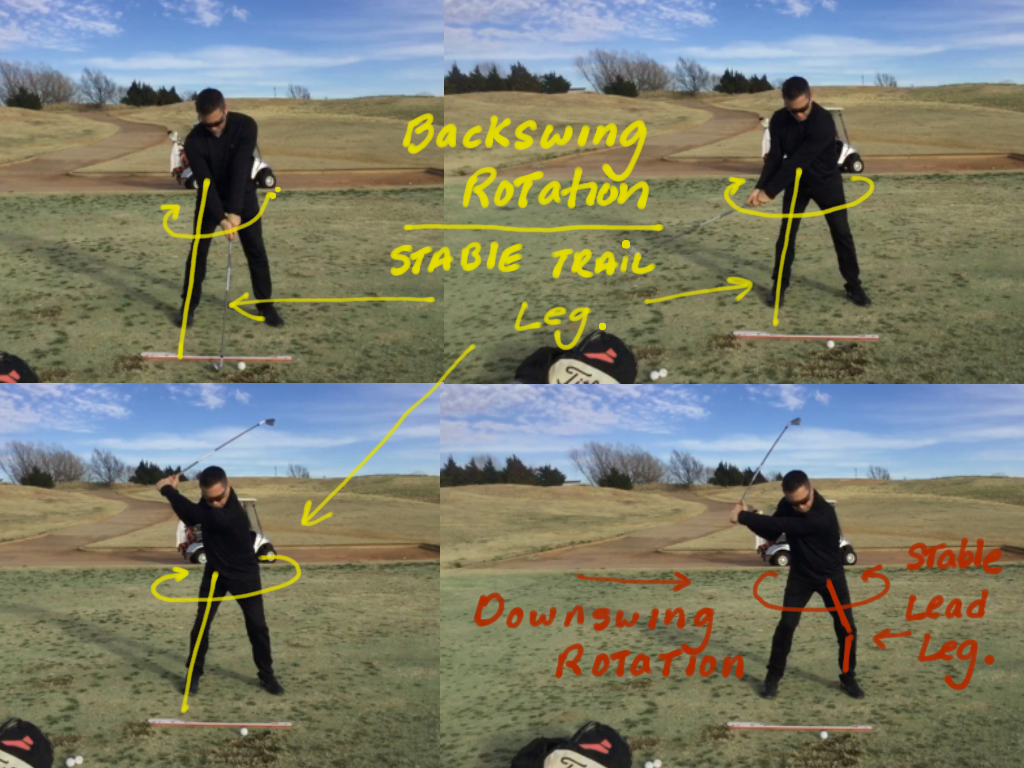
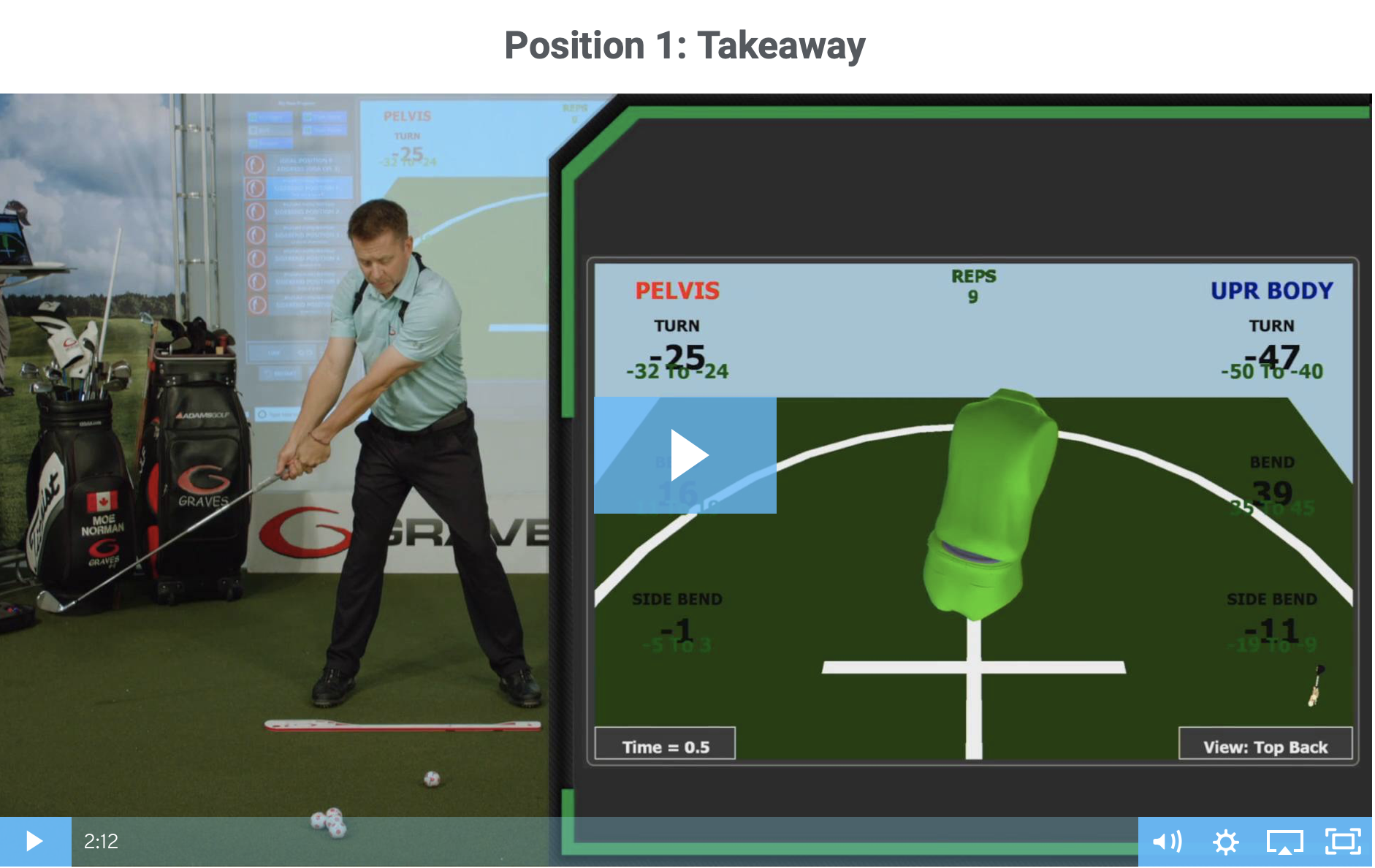
“With the single plane swing is the release a right inward throw or a left outward pull?“   I find these questions difficult to answer with a simple “Right or Left” after spending the last six years studying the “inside” of the Single plane swing with 3D modeling.  The problem with the question is that there is never a moment in the swing where the right side and left side aren’t active.   Just because the part of the body isn’t moving, doesn’t mean its not doing anything.  This becomes particularly obvious when you study motion and the Kinematic Sequence of the body.In other words, if the left side of the body is stopping – the act of stopping is also an activity.   Think of his this way.  When you are driving your car quickly and you stop, what part of the car is doing the most work?  If you guessed the brakes, you are getting the idea of what is happening in the golf swing.  Moving one part of the body correctly requires the body to stabilize other parts to accommodate proper movement.  Let’s look at the example from the YOUTUBE question about the release.   During the release of the golf club the lead arm / hand are slowing down as the bent trail arm is extending.  This happens at the correct time (and place) because the Pelvis has rotated into a flexed and stable trail knee.  When the pelvis is being stabilized, the lead side of the torso can also stabilize allowing the trail side of the body to keep rotating.   You can not “inward throw” or “outward pull” if these variables are not present.  There fore, the answer is that “both” the right inward throw and the left outward pull are occurring – it is just a matter of when and where.  It is not one or the other.   While I have used various analogies to describe specific motions in the swing such as skipping the rock with the trail hand and throwing a frisbee with the lead side, neither one describes the entirety of the motion. I would rather have you think of the golf swing differently.  I would rather have you think in terms of backswing and downswing with a change of direction or transition in-between.   Where I see the golf swing is largely misunderstood is that in each segment, such as the backswing, various parts of the body are moving and stopping.  In other words, it is not one continuous motion. It is actually a series of movements blended into one.   Take for example the backswing motion.  In the first few feet of club movement the pelvis has rotated 20 degrees while the Torso has moved almost 50.  
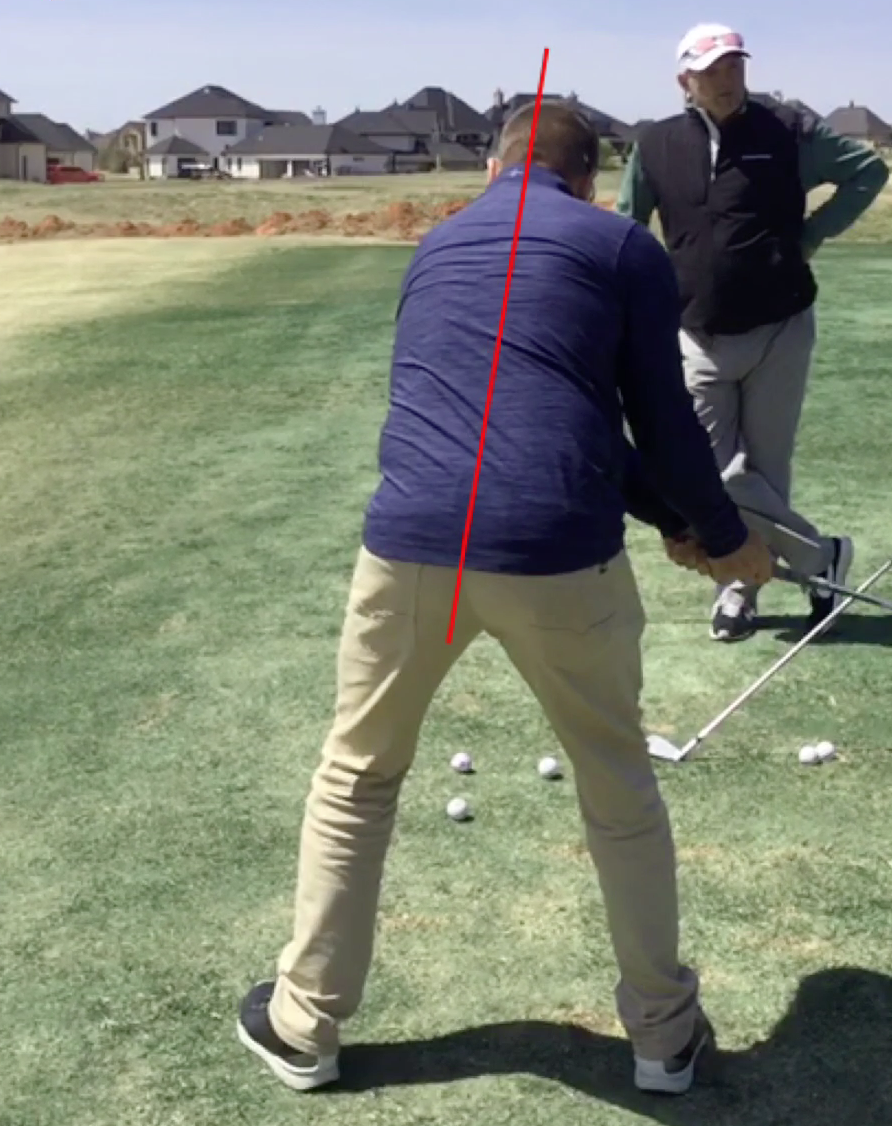
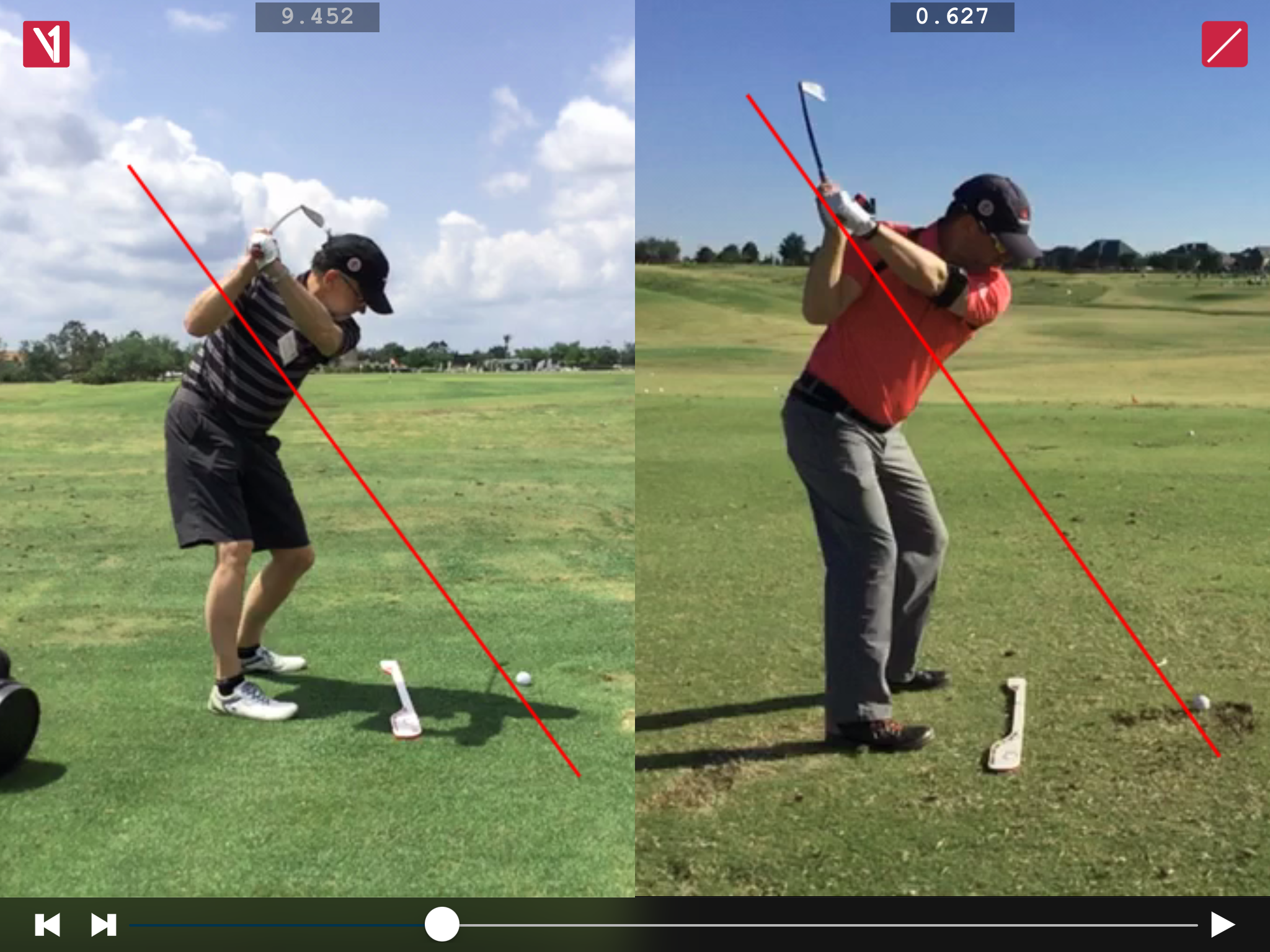
Take a look at the entire video of this back view.  It demonstrates how during the backswing as the body is moving , the trail shoulder stops and the hands and arms continue.  This is why Moe would describe the motion as In and Up.

You can clearly see how at a certain point the trail shoulder stops as the arms move and trail elbow folds up.   This is why it is much more advantageous to study the movement of the body as it compares the model than generalize the movements.
Bacon Strips not Pork Chops

I recently posted a video on youtube discussing Moe’s address position and the importance of Shaft lean into impact. I mentioned the importance of taking a divot and one of the comments on the post mentioned the following:

“But MOE never took a divot, or very rarely did he. He even said it himself”.

I replied: “Moe took divots albeit shallow. As Moe said “Bacon strips, not pork chops”.

Then he replied:

“Todd Graves – maybe sometimes but I can show you a video where he said he doesn’t take divots and that he could , “ put your Casio watch on the ground and I could hit off of it and not break the grass.” Also, I have seen many of his hitting clinics on video and he rarely ever takes a divot. He said he would sweep the grass.”

Let’s set the record straight.

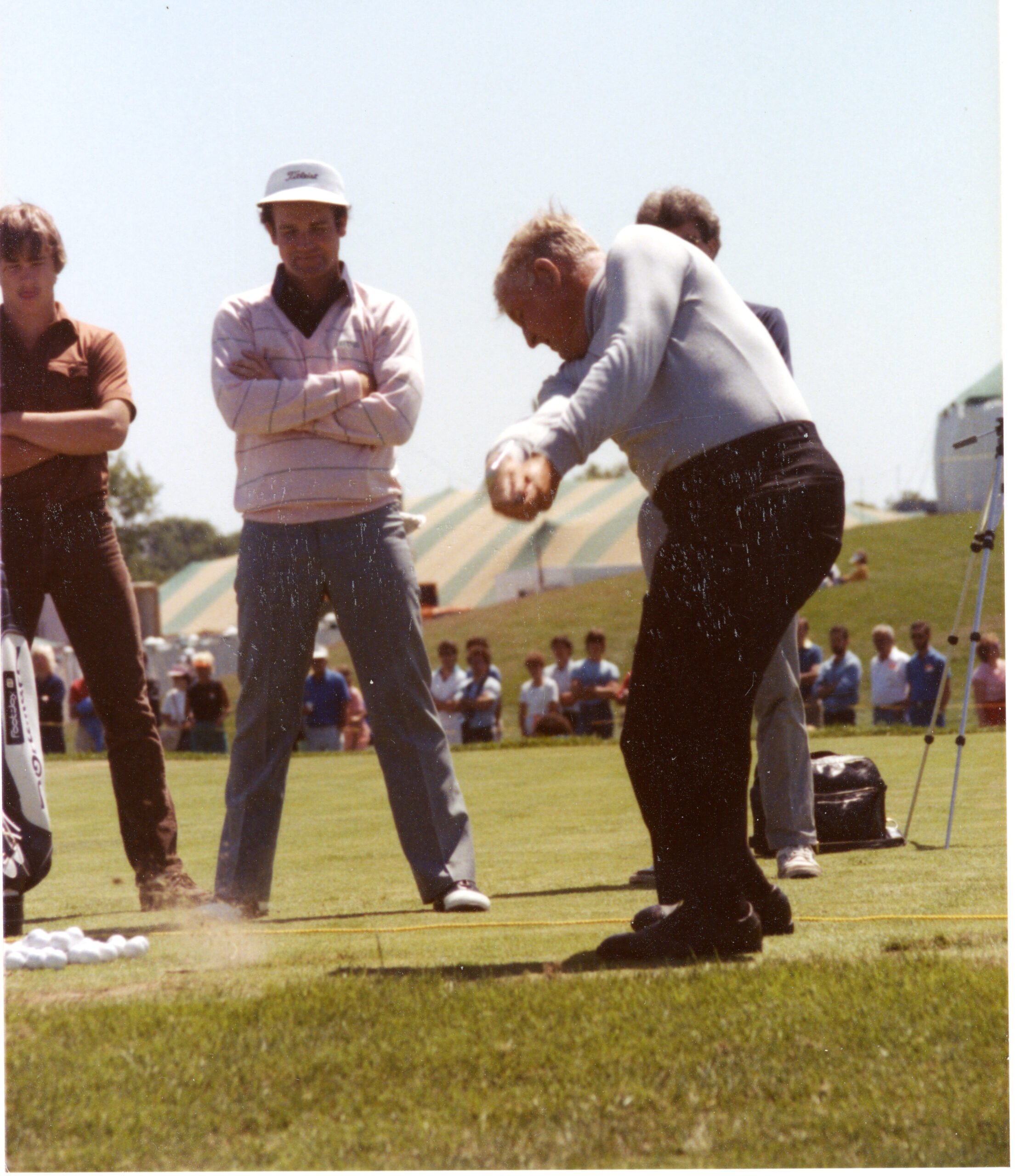
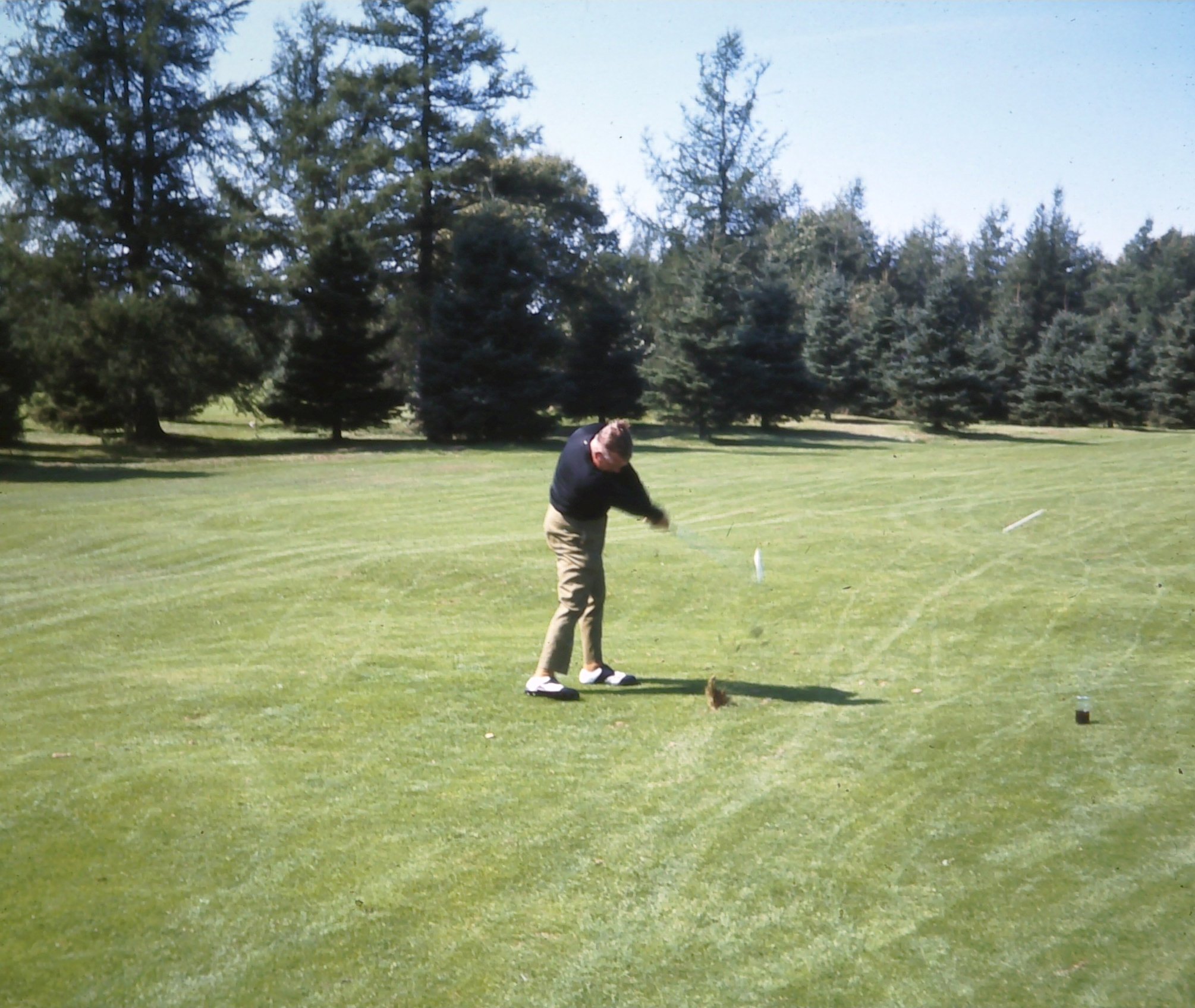
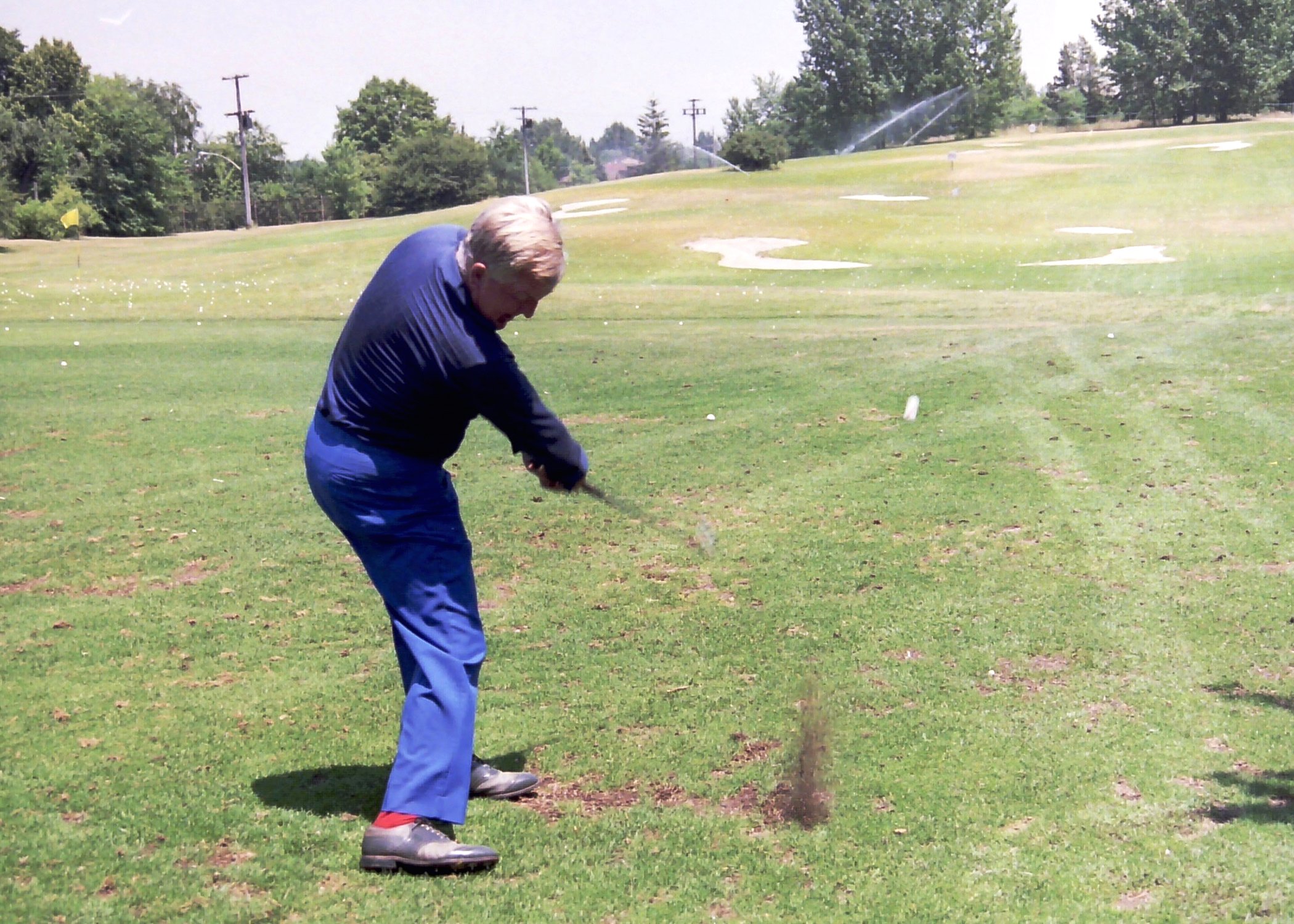
While Moe might have said he didn’t take a divot, what he felt he did and what he actually did were quite different.  I have not doubt that Moe could have hit a golf ball off of a Casio watch face.  This doesn’t mean that you shouldn’t take a divot.  Moe’s swing was perfectly shallow into impact.  He compressed the ball perfectly.  Yet, when the ball was on tight turf, he took a shallow divot.  Here are some pics that tell the story.

Moe NormanMoe Norman Front ViewOnce again, there is a difference between feel and real and you must be cautious between what you hear Moe say and what is actually happening. 


The Keys to the Lower Body – the Brakes of the Single Plane Golf Swing

It is well understood that the movement of the hips and lower body are an important part of swing movement, rotation and speed, one factor that is misunderstood is the importance of the stability of the lower hips as you move throughout the swing.

In essence, the lower body is a support system for the upper body and in many ways, the lower body is the braking system for the engine of the upper body.  So how exactly does the lower body both move and support the upper body?  It’s all in the knees.

Single Plane Swing
Single Plane Backswing Trail knee

As you rotate into the backswing, the trail knee braces the leg so the pelvis can turn.  But keeping the knee still is critical as it limits the amount of hip rotation.  If the one straightens it can cause an over-rotation and too much pelvis movement.  

Once you have reached the top of the backswing with the trial knee stable and hips rotated, the stable trail leg moves your pelvis into the flexed lead knee.

Single Plane Lead Knee
Move into Flexed Lead knee

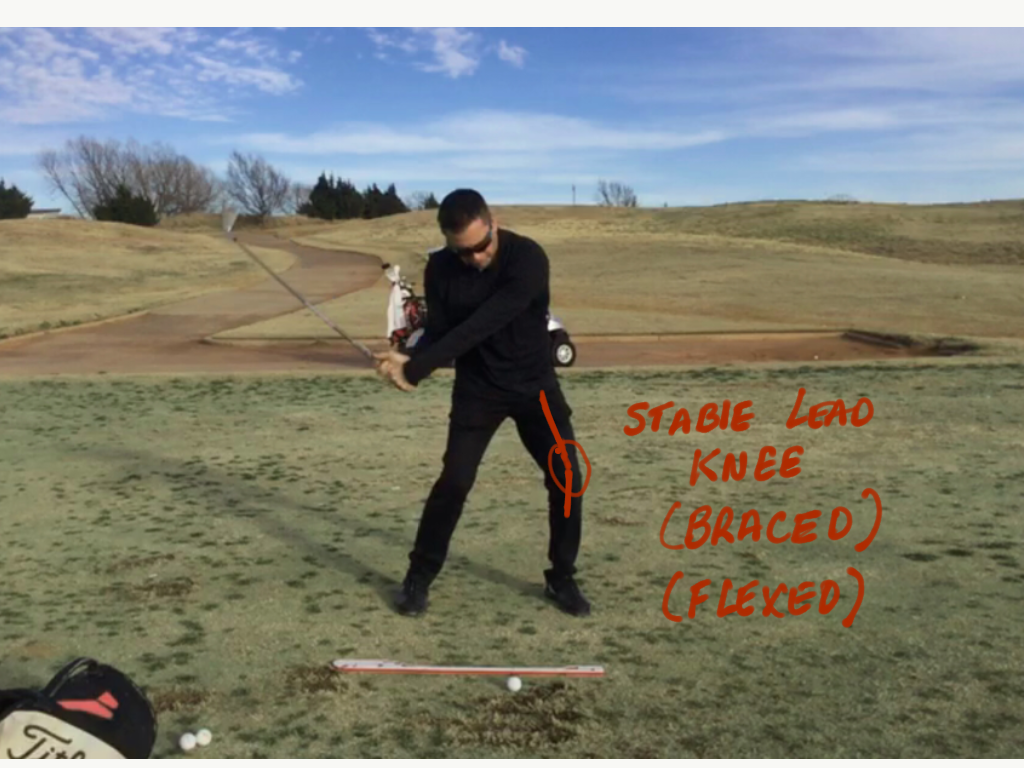
Once your lead knee is flexed, your lead side has put on the brakes.  You must keep the lead knee flexed and in position throughout the rest of the through-swing and into your release.   Keep in mind that as your lead knee is flexed your pelvis can continue to rotate into the through-swing. 

Lead knee flexed, trail foot down

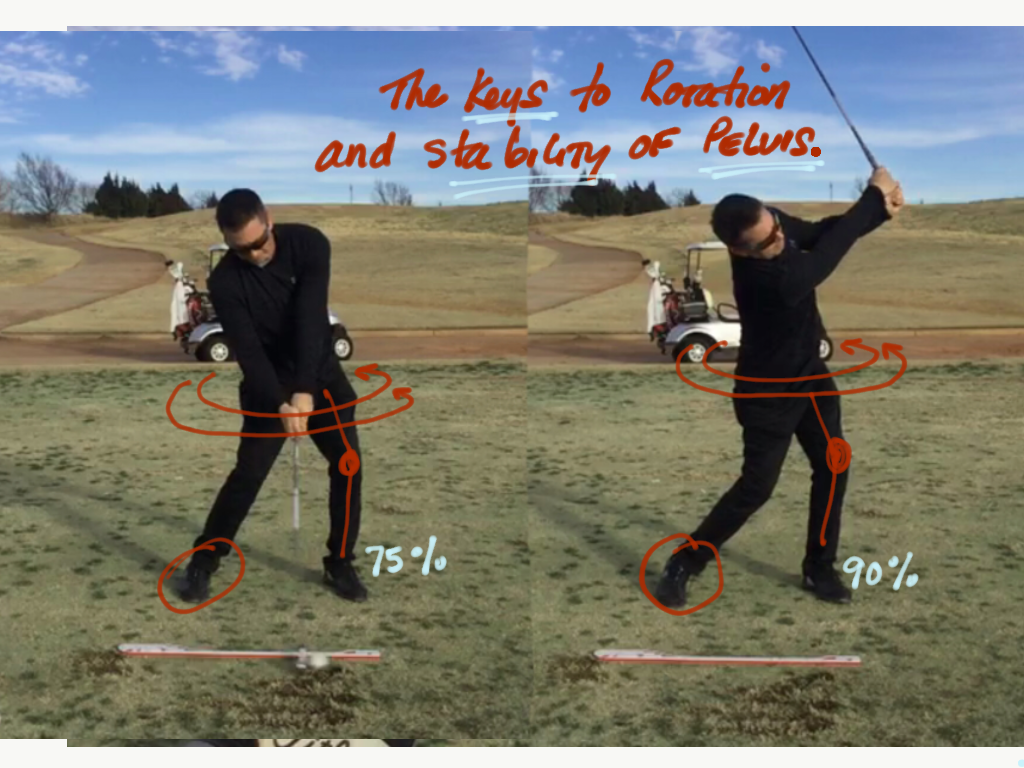
As you continue to rotate through the ball into the finish with the lead knee flexed and trail foot is down, another limit has been created in the movement of the pelvis.  Weight had moved into the lead foot and with the trail foot down and the pelvis limited, the upper body can separate from the lower body and produce maximum amounts of speed. By keeping the lead knee in position and the trail foot down, you have created the braking system for the lower body so that the upper body can generate power.

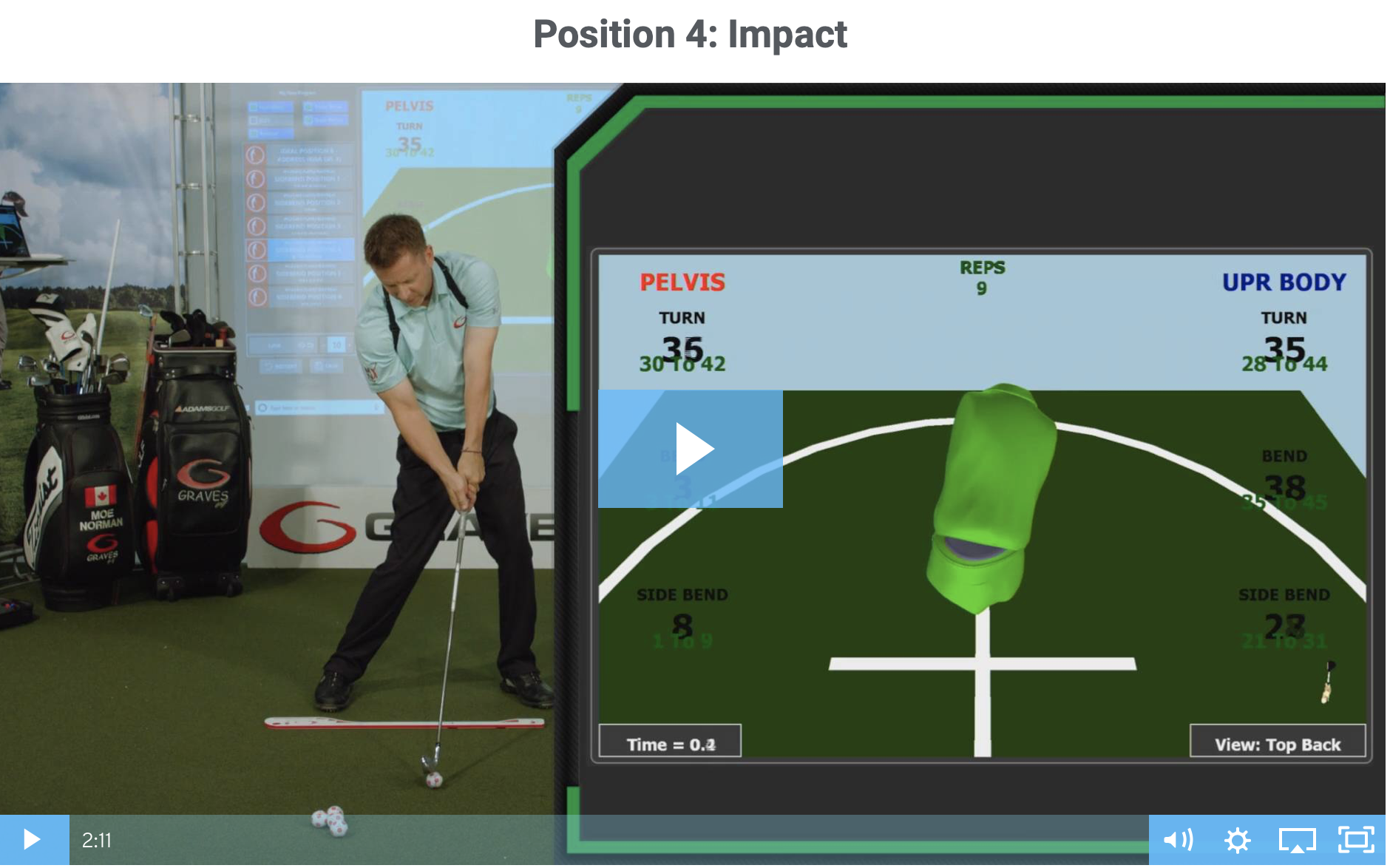
The rotation of the pelvis, while only 40 degrees rotated closed in the backswing and 35 degrees open at impact (at total of 75 degrees) tends to be one of the most difficult movements in the swing as we age therefore it must be something that you continue to develop and maintain as you get older.  (I recommend showing the above photo to your personal trainer and mention that you need to be able to achieve this position).  It will also take stress off of your back. 

To find out more about the Single Plane Swing in 3D, visit Singleplane3D.com.


New Year, New You

Hello Single Plane Golfers. 

Welcome to 2019.  We are readying our company for a fantastic year.  I wanted to share with you some ideas about your training that you start making some plans to play your best golf this year. 

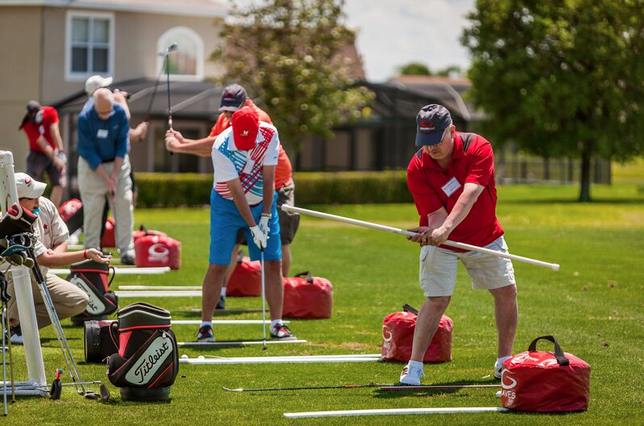
Single Plane Training at a GGA School

Practice is only as good as the quality of it.  Therefore, I wanted to introduce you to my training levels where the highest levels reflect the most productive and effective use of tools, time, energy and effort. 

The Levels of Swing Training & Practice

Level 1: Unproductive Practice

  • On the Range
  • Hitting balls Using ball-results as measurement
  • Estimating and making Assumptions
  • Reliance on Feelings
  • Troubleshooting: Guessing

Level 2: Training Aids and Tools

  •  Using Ball-flight results as measurement
  •  Use of Training Aids
  •  Reliance of Feelings
  • Troubleshooting: Guessing

Higher Levels of Training / Speed up the process of habit building  (Developing Training Routines – all high performers do this)

Level 3: Video Feedback 

  • Using Model as measurement / Comparing on Video
  • Perceptions and Adjustments
  • Must have understanding of Model
  • Must have way to compare directly to model (video)
  • Focus on Model not Ball-flight Results           
  • Troubleshooting: Matching the Model / Adjust

Level 4: Video Feedback and Use Training Aids (Combine Level 2 and Level 3)

  • Using Model as Measurement
  •  Perception and Adjustment
  • Training Aids Allow for Focus on Motion / Ensure correct positions
  • Focus on Model not Ball-flight Results
  • Troubleshooting: Using Aids / Video to Measure and Match the Model

Level 5: Ideal Training – Biofeedback with Training Aids with Video

  • Using Body Motion is the Measurement
  • Instant Motion Feedback
  • You instantly Feel as You Practice
  • Perfectly Match the Model
  • Focus: Process and Motion not Results
  • Use Video Feedback Tools
  • Troubleshooting: Adjust Body Position / Develop Motion, Strength and Flexibility

For more information about Biofeedback training visit : www.singleplane3d.com

Level 6: Direct from Coach: Lessons, GGA Schools, Online Coaching

  • Match the Model
  • Combine Body Motion and Ball-Flight Results
  • Use Training / Video and Bio-feedback Tools
  • Match the Model
  • Troubleshooting: Refer to Coach for Guidance

Highest Level Training / Maintain / Improve – Make it Stronger

Level 7:  Ball Flight Result Practice

  • Model is mastered – Video is Proof
  • Repetition is the Goal
  • Make is Stronger
  • Troubleshooting: Refer to Fundamentals / Minor adjustments

Level 8: Maintenance and Improvement

  • Off the Course Routine to Stay Fit and Flexible
  • Easily Identify if Something is Not Correct
  • Easily Fix Something That is Incorrect
  • Ideal Training Regimen for Off-season and On-Season
  • Occasional Visit / Feedback from Coach to “Check-in”

Obviously the goal is to attain the highest level of practice as much as possible.  When I asked Moe why he kept practicing he would confirm his reason, “To make it stronger”.  Moe was at level 7 and 8.  Interestingly, even though Moe was the best, he kept practicing and knew the importance of repetition.  

The Short Cut….

Do you know the most common question golfers ask us?

“Is there a shortcut to making swing changes and improving my game?”

The simple answer to the question is “Yes!”

The short cut – are you ready for it?…..  is all about FEEDBACK.

Most think it is about practice….  but does practice actually help??

Should instructors encourage you to practice?

You might not believe it, but golf instructors debate about this al the time. Many golf instructors believe that you should avoid the idea of teaching the importance of practice – that it takes away from the enjoyment of the game.  They argue that the game is about teaching golfers how to play not about teaching them how to swing.

Our position is that you really can’t have fun and play well if you don’t have a good swing. Furthermore, building a great golf swing is part of the fun. We also believe that teaching the golf swing is about helping golfers “shortcut” the learning process (practice), not avoiding it. Let’s explain in two sentences.

Golfers struggle and get frustrated (and score badly) because they are unskilled.  

Skill is acquired through practice.

All skills require practice and we can’t think of a game that requires more practice than golf. This might explain so many are frustrated with the game and why in recent years, more have quit the game then started new.  It simply takes too long to get good.   The question we should be asking is not whether we should be teaching golfers to practice but rather how can we help them learn to practice correctly and effectively and get better faster…

Don’t take my word for it, listen to Dan Coyle, author of the book The Talent Code.  Dan, who researched talent hotbeds describes the acquisition of talent in three important processes:

• Deep Practice–Everyone knows that practice is a key to success. What everyone doesn’t know is that specific kinds of practice can increase skill up to ten times faster than conventional practice.

• Ignition–We all need a little motivation to get started. But what separates truly high achievers from the rest of the pack? A higher level of commitment—call it passion—born out of our deepest unconscious desires and triggered by certain primal cues. Understanding how these signals work can help you ignite passion and catalyze skill development.

• Master Coaching–What are the secrets of the world’s most effective teachers, trainers, and coaches? Discover the four virtues that enable these “talent whisperers” to fuel passion, inspire deep practice, and bring out the best in their students.

These three elements work together within your brain to form myelin, a microscopic neural substance that adds vast amounts of speed and accuracy to your movements and thoughts. Scientists have discovered that myelin might just be the holy grail: the foundation of all forms of greatness, from Michelangelo’s to Michael Jordan’s. The good news about myelin is that it isn’t fixed at birth; to the contrary, it grows, and like anything that grows, it can be cultivated and nourished.

The way we see it is that you don’t need to practice harder, you need to practice smarter get help along the way.  We can relate to these three factors in my experience as well.

In our experience the students who are the most willing to practice and enjoy the process have the most success. 

Deep practice is getting into the place where real learning occurs.  This is where feedback happens and feelings are well….felt.  Let me give you an example.

In a recent school, we had been sitting in the meeting room for about an hour.  One student asked “when are we going to hit some balls on the range?”  We responded with a question, “We will let you hit balls on the range when you can reassure me that you are measuring and getting feedback on every swing.  Are you able to do that?”

The reason we have a great golf swings is not because we are more talented than any of our students.  We have simply spent more quality time working on my golf swing.  It come down to the quality of your practice, now how much you practice.

We put in the quality then I made is stronger with repetition.  Most students put in the repetition but not the quality.

Our teaching habits have changed over the years. We find it almost impossible to watch people practice ineffectively.  We start to get nervous and we usually jump in and stop it.  We then ask “what are you working on” and “how do you know if you are getting it?”.

We are now heading into 2022.  You have a choice.  You can go another year wishing your golf game improved and guessing at the outcomes or you can make a transformation in your approach.  This is what we are suggesting is that you take a giant leap by making some major changes. You can do this by understanding Dan Coyle’s three principles of talent.  Learn how to Deep Practice, Get Passionate about it and Get Help from a Master Coach. 

Now take some action on these principles and get practicing – correctly.

To find out more about how to practice correctly, deep practice and your short cut to improvement – please see:  CLICK HERE

The Shortcut to a Great Golf Swing – Single Plane 3D

Stand up and let me ask you three questions.  

Can you rotate your body?  

Can you bend forward?

 Can you bend sideways?

If you answered yes to these questions then you have a great golf swing inside of you right now.  You simply have to get it out.  This is why I developed Single Plane 3D. To get it out faster.

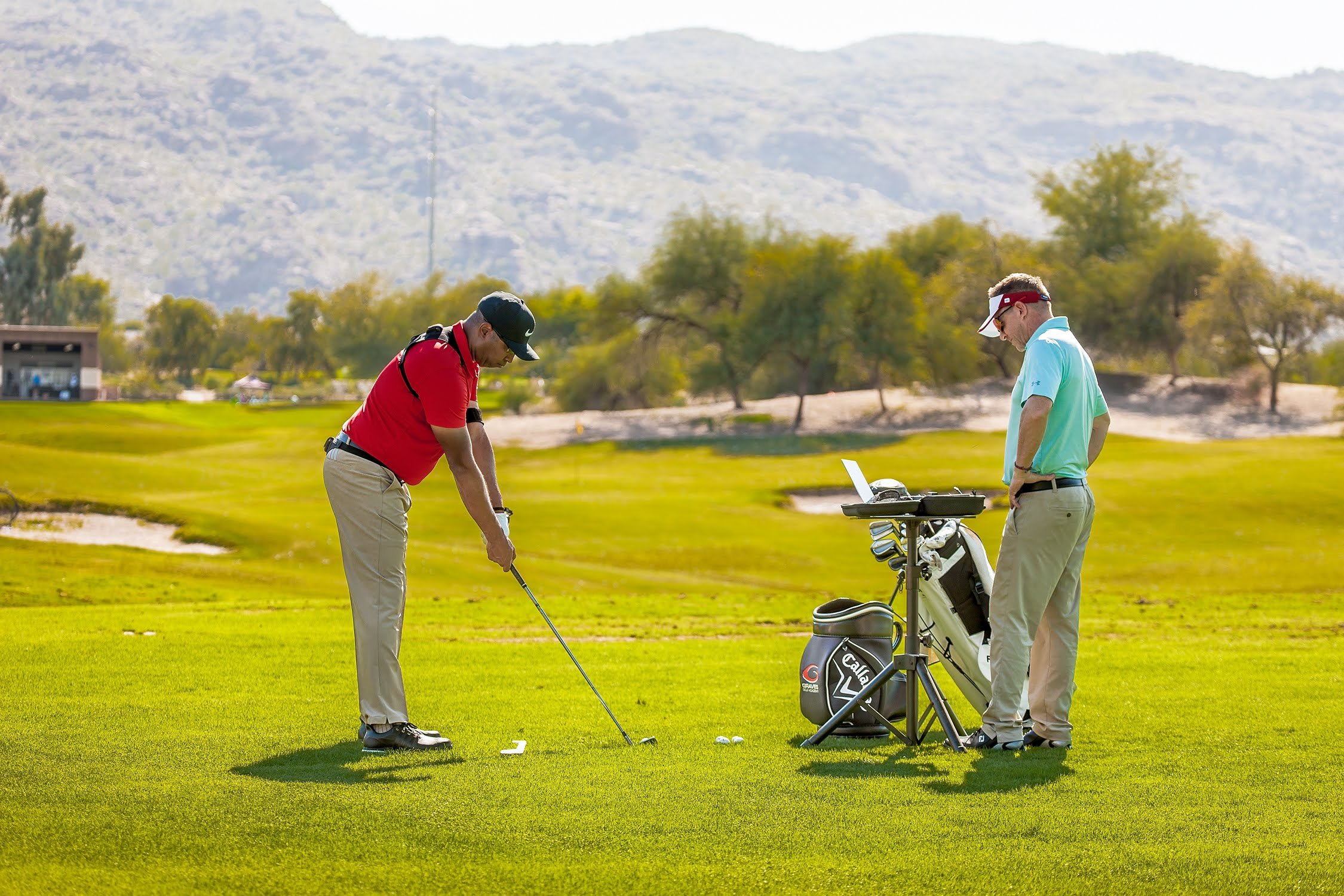
What is Single Plane 3D?  To put it plainly, the Single Plane 3D system is like having a coach with you every time you move your body. When you move incorrectly, the Single Plane 3D system notifies you producing visual and audio signal – in realtime.  Realtime biofeedback when you practice is revolutionary and unlike any practice you have ever experienced because unless a coach has moved your body for you – you have never really experienced biofeedback.  

Single Plane 3D
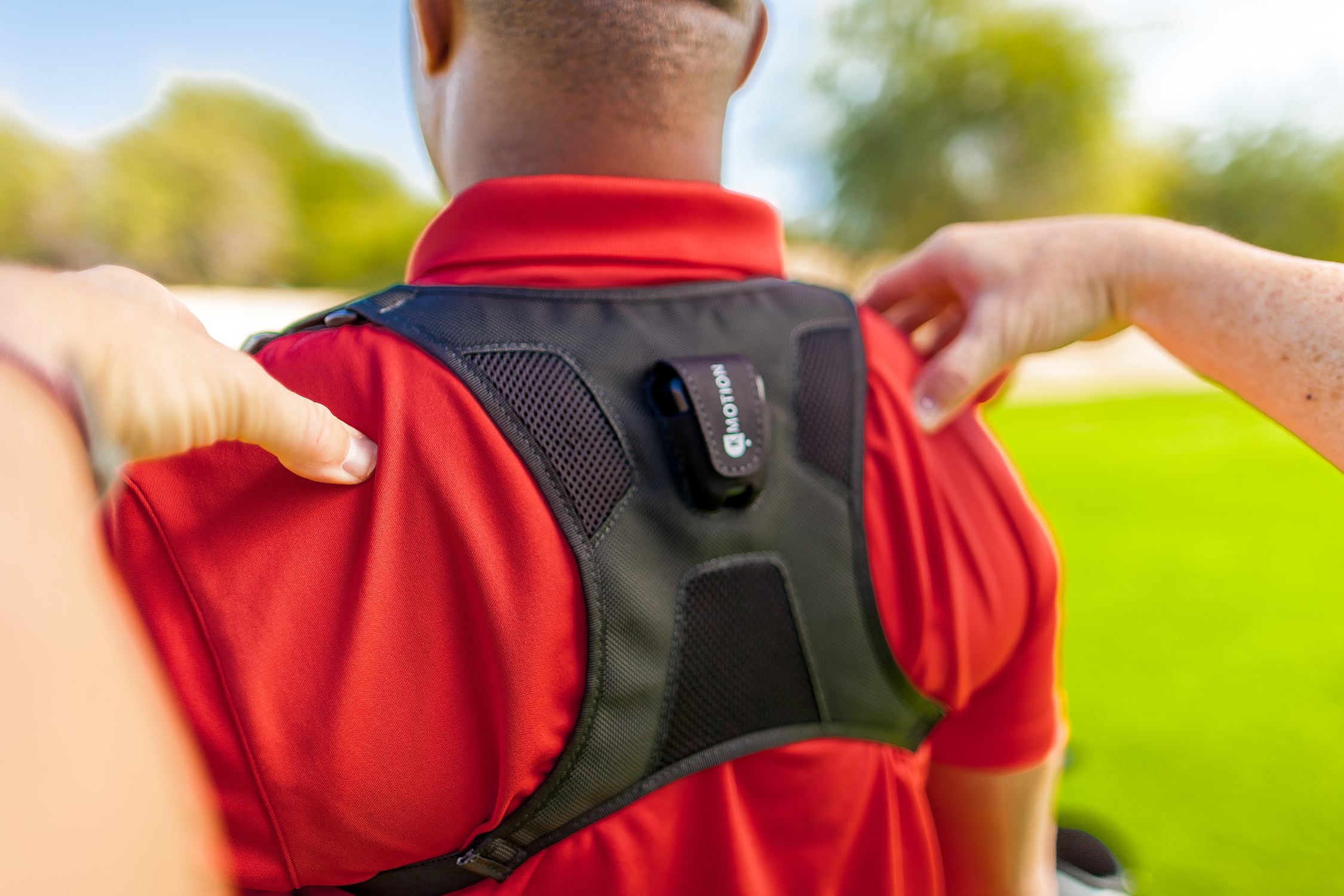
Single Plane 3D Torso Sensor

The 3D system places a sensor on your torso and your pelvis to measure the position of the body relative to Turn, Bend (forward) and sideband (sideways).  When you wear the sensors, the sensors indicate whether you are in the correct position.  If not, arrows will indicate whether you are incorrectly positioned.  When you match the model of the Single Plane Swing, you will hear a TONE that indicates perfect positioning.  This is all happening while you move in realtime. 

I developed the 3D system to solve the problem of practicing incorrectly.  It dramatically improved the quality of my practice which, in turn, sped up the process and became part of my practice regimen.  

This is the regimen and checks that I use to improve and stay on track.  

Movement Practice

You simply can’t move correctly enough.  Moe would often say “Hit your positions, hit your positions”.  You must practice moving into your Single Plane swing positions. To practice my movement I am always moving into my swing positions starting at address.  You can do this with or without a golf club or with a Single Plane Trainer.  I make sure that even if I am not hitting golf balls on the range, I get a few reps of movement practice in each day.  The Single Plane 3D system works you through each position of the golf swing and gives you biofeedback on whether you are hitting your positions.  

Heavily Focus on Address

Single Plane Address
Measuring the Single Plane Address in #D

Moe would often say “If you haven’t got a good address, you haven’t got anything”.  The address position determines how you initiate your movement.  It also determines the initial path of the golf club.  If you make a mistake at address, you must compensate for it somewhere in the golf swing.  The golf swing is moving too fast to make adjustments and without a great address, you can never be a good golfer.  I make sure I practice my address position every day by doing what I call walk-ins.  Walk-ins are when I step into my address position before I hit a shot.  No only am I developing my address position, but I am also getting a feel for when to pull the trigger before I hit the shot.  This is one of my favorite exercises with the Single Plane 3D system.  

Position 1 is key

Over two thirds of the body’s backswing movement occurs from Address to position 1.  I call it “The First Move”.   The first move looks simple and most people take it for granted and get it wrong.  I know personally that if I don’t execute the first move correctly, it throws off the timing of my entire swing.

Rehearse Impact (Position 4)

You must have a way to feel can rehearse the perfect impact position.  I’m not talking about hitting balls but rather making sure you can put your body into the positional moment of impact where you trail foot is down, the lead knee is flexed and your body is tilted and rotated correctly with your trial arm bent.  You should be able to put yourself into this position and hold it for a few seconds.  If your body hasn’t learned the impact position, it will be unlikely that you will hit this position when you swing in full speed.  You can also practice impact with a leverage bag and club.  Impact is the one of the first metrics I measure with the Single Plane 3D system.

The Finish Position (Position 6) is a Bellweather 

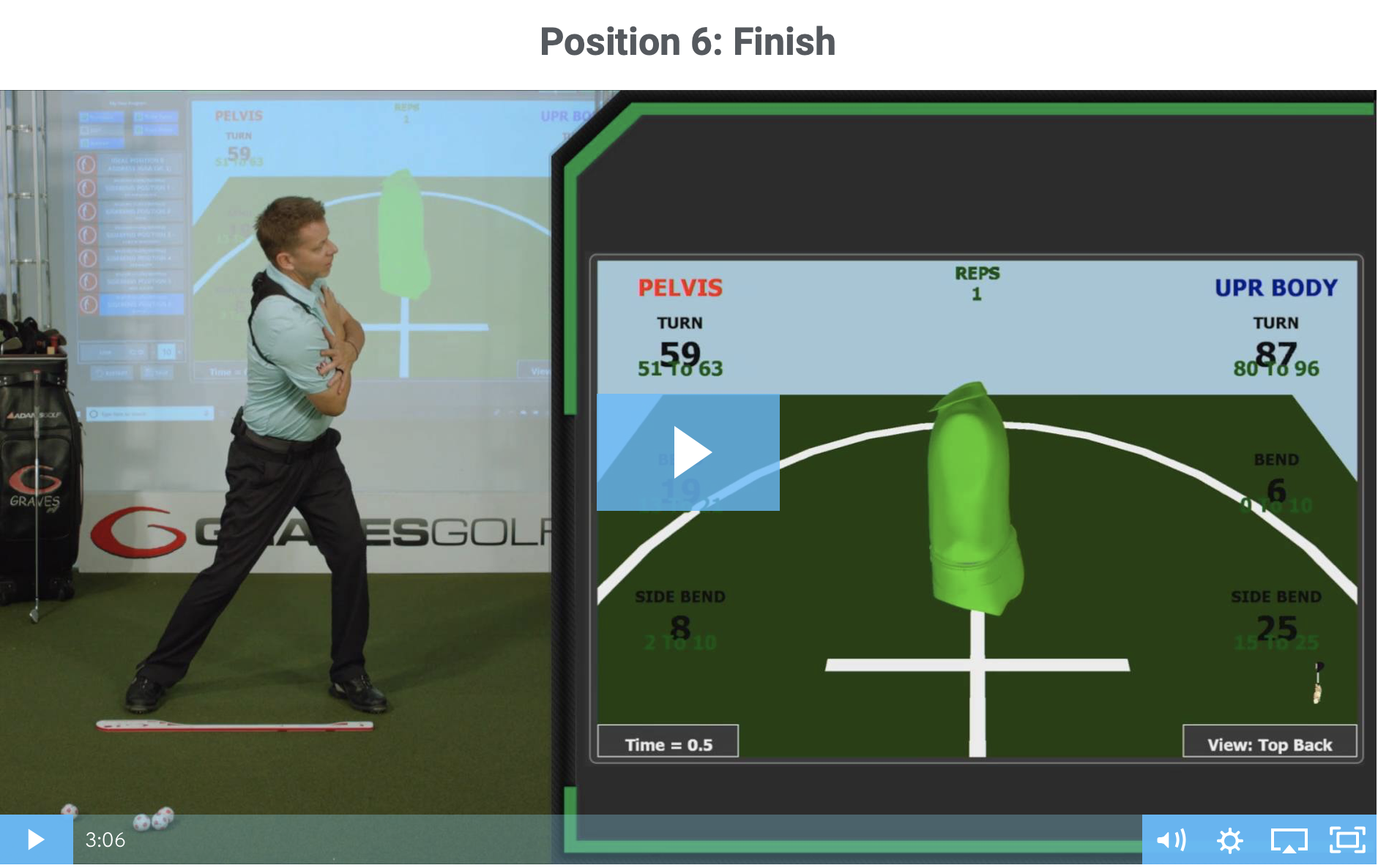
If you can’t reach the finish position, you will most likely miss impact.  This is something I learned from developing the Single Plane 3D system.  I found that people had the most trouble with the finish position because this position requires the most amount of differential between the upper and lower body.  This differential is called separation where the upper body rotation separates from the lower body rotation.  I continually practice this position without a golf club to develop my rotational ability and “free up” my body.  When my body is free to finish the swing, I can maximize my speed.

While the Single Plane Golf swing is an easier way to “get it”, it still takes practice and to most people, practice is monotonous and difficult. Now I have a way you can double-down on your practice, save enormous amounts of time and dramatically speed up your learning.  

“How long is this going to take? is the most common question I get asked.  You have probably asked that question as well.  That’s because when it comes to playing golf, all of us want to hit great shots as soon as possible. I am the same way, I get it.  

The problem is not that it takes much time to learn the Single Plane Swing but mainly golfers practice incorrectly.  I guarantee that at least half of your practice time or more is simply – wrong.  Just think how many hours you are wasting by practicing incorrectly. What if you used that time effectively? Practicing the wrong way is vicious circle The more you incorrectly train, the worse you become.  This is why most golfers dread going to the range – because it’s not fun and most of the time, they don’t get better.

The answer to this dilemma is exactly why I developed Single Plane 3D – the only way to get biofeedback while practicing – and know that you are practicing perfectly.   I dedicated a website to 3D training. You can even see the quantification of the exact rotations, bends and sidebands of the model here:

https://singleplane3d.com/sp-swing-model/

The shortcut to a great golf swing is practice the correct swing perfectly. So do yourself a favor and take a look at www.singleplane3d.com.   On the website you will find everything you need to know about taking your game to new levels and learning how to practice perfectly. 

LEARN

THE

SWING

Join 1M+ Subscribers to get your FREE Video Quick Start Guide that reveals how to hit the ball farther and straighter more consistently from now on…

START YOUR NEW GOLF SWING