Single Plane

Be Different

By: Tim Graves, PGA

We have discussed this before, but I am constantly reminded and want to bring up again and again and again when I watch “typical” golfers practice at local ranges and golf courses…. the importance of being DIFFERENT than the typical/average golfer.

First – want to remind you of a few stats.

1. The average male golfer shots a 97, female average is 107.
I assume everyone wants to be different than this – wants to shoot better scores….

2. Less than 20% of golfers get some type of “formalized” instruction, whether a lesson, clinic or school. And 75% of these 20% are ladies or juniors.
Meaning – most golfers are trying to improve on their own.

3. Of all golfers who purchase video type instruction, less than 10% ever watch the video(s). (Not just true for golfers, but video instruction in general.)

4. A very small percent (unknown exact percent) have a particular “model” they follow in their golf instruction.
Meaning – a majority of golfers are GUESSING when they are trying to improve.

5. Fifty percent of golfers who practice will get no better, 40% will get worse.
Meaning – only 10% of golfers who practice will improve.  90% will see no improvement or make themselves worse.
Meaning – a high majority of golfers have no idea how to practice.

6. The typical golfer spends 95% of their time practicing their long game, and less than 5% of their time practicing their short game.

If you ask me, I want to be different than the “average” golfer listed above and want to make sure every time I practice I am getting better – EVERY TIME!!

So – What do we need to do to be different?

1. Have a model you study, have a model you practice. 

Hopefully every one of you is dedicated to the Moe Norman Single Plane theory. That is a BIG start…. being dedicated to this system – you are starting to be different than most golfers who are guessing on trying to improve.

The model/theory can be studied/learned by watching our Single Plane Solution instruction.

(And be one of the ten “percenters” – actually watch the Instruction – LEARN something, study the model, get a good picture in your head what you are working on/towards.)

Understand and learn (everything can be found in the single plane solution) the:

  • Grip
  • Single Plane Address Position
  • The Pivot Point™
  • The Mid-Spine Intersect™
  • The Seven Positions and Movements of the Single Plane Golf Swing
  • The Transition Moe – Moe’s Vertical Drop

2. Work on positions in the swing, short game, etc… Don’t guess on what you are working on.                     

Many times, if not most of the time, working on these positions can and should be done with drills that don’t involve hitting golf balls.

Learn / study the following:

  • How Moe addressed the ball and why a bad foundation causes inconsistency and poor ball-striking.
  • How to feel and master the perfect address position.
  • How to learn the ideal positions the golf swing.
  • How to make the proper swing positions with the PVC Drill.
  • How to know what ideal positions feel like with a golf club.
  • How to work on the proper lower body, leg and knee movement during the swing.
  • How to feel the proper shoulder and club plane.
  • The importance of proper spine positioning.

3. Every time you practice – make sure you are practicing CORRECTLY. 

As stated above, 90% of golfers when they practice, get no better or make themselves worse. Do not be in the 90%.

When you practice – use training aids, check your practice with these training aids and check positions of the training aids.

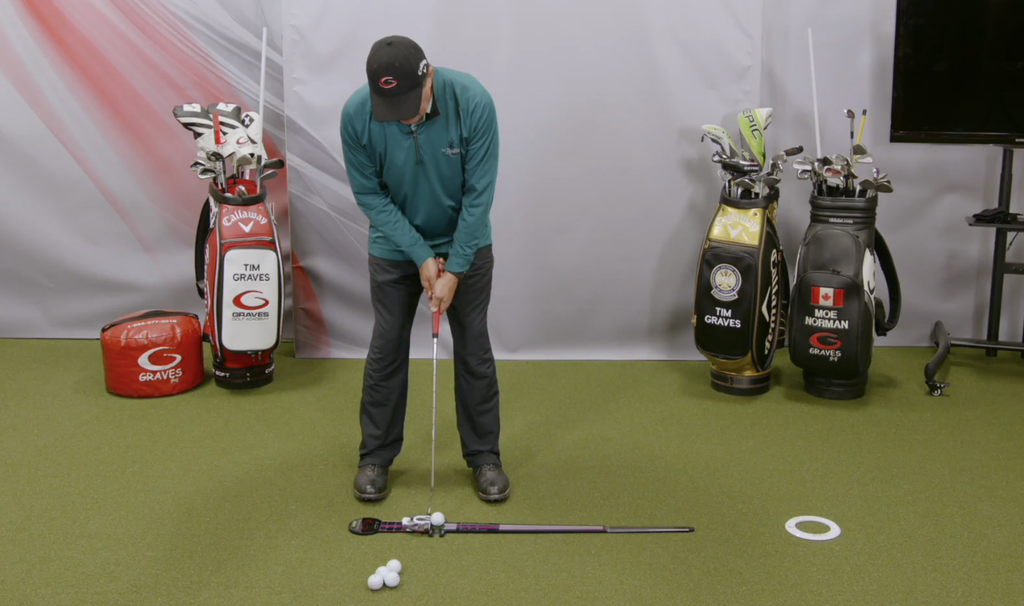
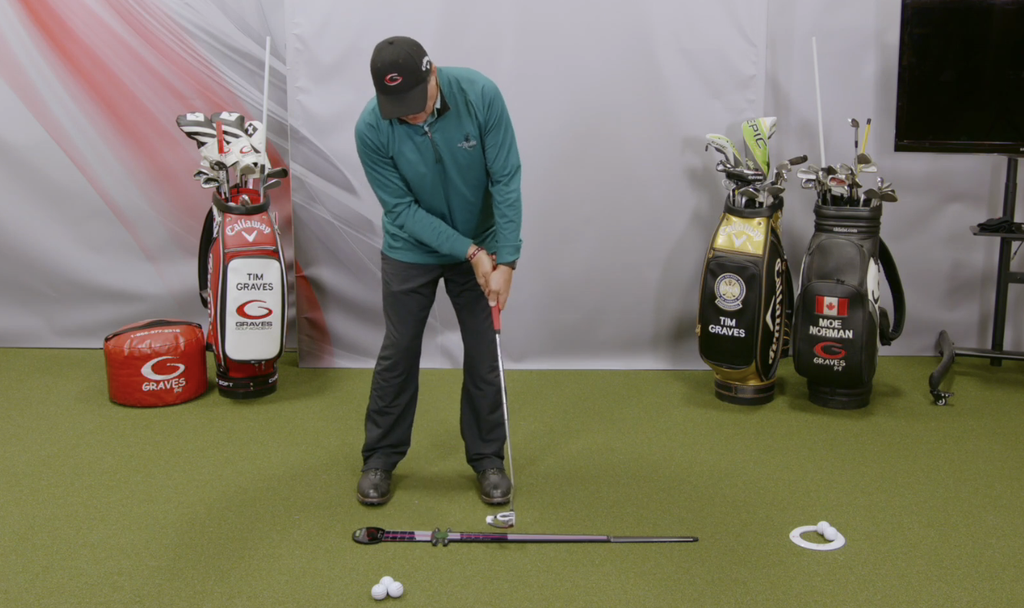
These training aids include the Alignment and Ball Position Trainer, Grip Training Club, Leverage Bag, Short Game Trainer, and a few others.

4. Set Goals for Yourself

I would guess that less than 1% of golfers have ever sat down and listed a set of goals for themselves and their golf game. You might think this is only for the good / great players – UNTRUE. It is/should be for everyone.

Maybe you’ve never broken 100 – write down that goal and then list how you are going to do it.  Write down 5 or 10 things that will help you reach that goal. Maybe working on your short game more, maybe working on a certain fundamental flaw you have, etc. etc…  Maybe just practicing a little more during the week on CORRECT fundamentals … write down how you think you can reach these goal(s).  Try and make a plan for yourself.

5. Actually practice your short game.

Practice your putting, chipping and your pitching.

70% of your scoring occurs within 100 yards of the green. But a majority of golfers spend less than 5% of their time practicing this part of their game…. If you want to improve, you MUST spend time practicing the scoring part of the game.

Remember my saying – “I have never seen a good player with a bad short game, and I have never seen a bad player with a good short game.”

Long story made short… (as they say) – Please, please, please be different than the “typical” golfer. And that is a REALLY good thing. If there is anytime you want someone to think you are “different” – it is in your golf game.

“Different” golfers are in the 10% group, “different” golfers have a plan, “different” golfers know how to practice, “different” golfers will get better every time they practice, “different” golfers know they are getting better – they have a plan, “different” golfers actually practice their short game.

So, I am telling you to be DIFFERENT when it comes to golf…. and yes, that is a VERY good thing.

Remember – Always Practice with a Purpose

Give Yourself the Best Chance

By Tim Graves, PGA

Hello Everyone, I thought I’d write a little about wedges, spin and the importance of having a good wedge game.

First – as most of you have read from me before – the wedge game is a CRITICAL part of the golf game. When I am talking about wedges, I am basically talking about anything inside 100 yards for most.  (For some will be a little further, for some a little shorter). This is a part/large part of the “scoring” part of the game.

Second – Again – as most of you have heard me say before – no one should have an advantage over you in this part of the game. Meaning – it is not a strength issue, but rather a practice/technique, etc… issue. In other words, you can have a GREAT wedge game as long as you work on it properly and have the proper equipment to give you the best chance.

Third – You need to make sure your equipment allows you to maximize your wedge game. As I have come to find out, it seems a majority of golfers don’t understand wedges, how they can work for them and how to use them…

So, let’s talk about wedges and hopefully working with your equipment can help improve your game, or at least, give you the best chance to score your best.

  1. I believe you should carry the maximum amount of wedges “your bag” will let you carry. Meaning – as you can only carry 14 clubs – I would recommend carrying at least 4 wedges (including your pitching wedge). If possible, carry 5. (Pitching, Attack, Gap, Sand and Lob). Reason – the more wedges you carry the better your yardages will be between the wedges.  In other words, you will less gap in yardages between the wedges the more you carry.
  2. Different wedges are made to use for different shots. Let’s talk about the sand wedge first (typically 54 to 56 degrees).
    Most sand wedges have at least 10 degrees of bounce or more and a S or C type Grind on the wedge. The Bounce is the angle on the sole from the back of the club to the front. Every club in your bag has a little bounce, the sand wedge has increased bounce (typically 2 to 3 times as much) to help you keep the club from digging in the sand (soft surface) too much. Meaning, it is a very good bunker/sand or medium to high grass club, but not so good at hitting short shots from “tight” (minimal grass) or hard lies. The added bounce on the club will make the club skip/bounce on hard ground and will cause blade/thin type shots. Most see this when hitting chips/or shot shots off of tight lies. It is not recommending to chip or pitch with a sand wedge from tight/hard lies. The grind on the club allows for the club to be played in many different situations including tight lies, rough, high rough, bunker, etc..
  3. The lob wedge (typically 58* +) is a great wedge for high pitch/lob type shots.  Reason – appropriate bounce, added loft and typically a little “wider” sole. Most lob wedges have a slightly wider sole which will help the lob wedge slide across the ground and get more weight on the ball to help get the ball up fast. The bounce should be at least 10* and it must have a C type grind on the sole which will keep the leading edge of the club down when pitching from tight lies.
  4. It is recommending to have steel shafts in your wedges (sand and lob and sometimes Attack and Gap).  Reason – you want the added weight in the clubs. These clubs are the shortest clubs in the bag (besides putter) and are often hit with 1/2 shots, out of rough, out of sand, etc. etc…  The added weight is a big advantage when hitting the clubs in these situations.  Makes it easier to hit out of rough, sand, etc. Don’t have to swing so hard, club head will get through grass, sand much easier with added weight. Graphite is a great material to protect the body when the club is being swung fast and allows you to hit the club further. No needed with the wedges – wedges are “control” type clubs – the added weight in steel is STRONGLY recommended in the wedges.

Last – let’s talk about spin. We all want to create spin on our wedges. Without spin, it is very difficult to get the ball close to the hole. Most won’t be able to create spin to stop the ball completely, but everyone can and should create spin to slow the ball down which helps get it close to the hole.

The primary variables of spin are angle of attack/speed, club type, and ball type. The more speed, the more spin you can create.  The softer (or more layers) the golf ball, the more spin you will create. Finally, the softer the metal of the club, the more spin you will/can create.

Another important variable and the one of improved grooves on the wedges. The most updated and improved grooves in wedges are in the new Callaway Opus Wedge. The New Opus SP Wedges feature: Spin Gen Face Technology which provides spin and control in your wedges by combining 3 key elements on the face; an all-new tighter pitch which puts more grooves on the face, offset groove-in-groove for spin when opening the face, and a new aggressive face blast providing spin and bite on partial shots. These three elements work in conjunction to provide a crisp, tour level spin.

To make a “long story short” it is recommending everyone carry wedges that give them their best advantage in their scoring part of the game.

The recommended wedges are those that are a “forged” (soft metal) type, steel shafted, with the best / most updated grooves (maximum spin grooves).

If you have any additional questions about the wedges, groove rules, etc… please don’t hesitate to give us a call or email anytime.

If you would like to order new/additional wedges give us a call. All wedges need to be custom built to the golfer’s specifications – absolutely critical to have a proper fit.

To see more about the recommended wedges: CLICK HERE

Remember – Always Practice with a Purpose.

Also, Remember – A little improvement every time you practice adds up to a lot of improvement over time.

Mental Game School Follow Up

By: Tim Graves, PGA

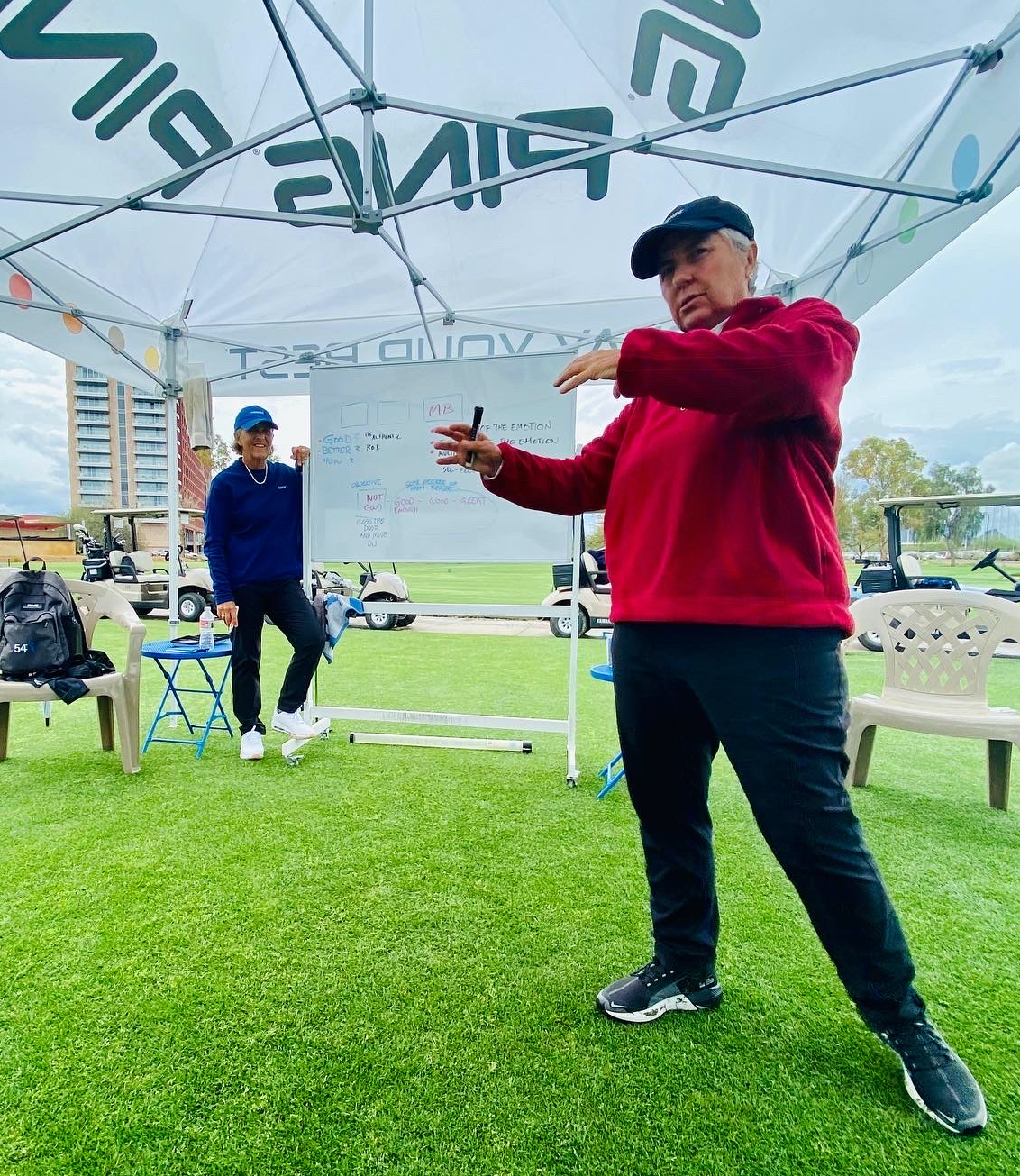
Last week we held one of our Mental Game (Alert Attitude of Indifference) Schools. Myself (Tim Graves) and Paul Monahan (Graves Golf Mental Game Coach) run the school with help from our great teaching staff.

Shortly after the school, Paul sends a follow up email to all the students.

It is such an AWESOME email, I want to share with all / you.

I understand, there are many points in the follow up email you will not “understand” unless you attended the school, but there is also a lot of information thought you might find interesting.

Good afternoon!

It was great working with you last week at the AAI School in Edmond. 

Thanks for “emptying your cup” so that you were ready to take on new ideas – and/or revisit the concepts you already knew.

Our goal was to create unique experiences so that important insights would emerge for you about what it takes for you to elevate your mental games skills so that golf for you is full of more higher quality shots, less struggle, and more fun.

That said, learning and exploring at the school is one thing – but applying what you learned is another – and is key to transforming your game.

So, I thought I would share a couple thoughts about how you can make the most of your time at the AAI School, now that you are back home.

First: Revisiting The Big Ideas:

  • Golf is simple. We often make it too hard.
  • Golf is an athletic endeavor, not a cognitive one.
    • Channel your inner athlete, quiet your inner thinker: 
    • Use your “athletic feels” and awareness of things like: balance, tempo, tension, visualization.
  • Use systems and processes to shut down the overthinking:
    • Red Zone, Green Zone, Gray Zone.
    • Choreographed pre-shot routine. 
  • Play faster. Practice slower.
  • Gamify your practice. Always.
  • See the outcome of every shot as feedback, not failure. 
  • Celebrate and emotionalize your functional shots. 

Next: What to do with it all?

Take a deep breath. You don’t need to “eat this elephant” in one sitting. Just go one bite at a time:

  • Reread your notes.
  • Pick one of the ideas that resonated for you and lean-in to the concept every day for a week.
    • For example, practice using the framework Red Zone, Green Zone, Gray Zone for every shot you hit. Practice or play.
  • Then pick another one and just focus on that.
  • And so on.

Within a 30 days, you will have VASTLY grown your mental game skills – you will be playing better, struggling less, and enjoying more.

Over the next few of weeks, I will continue to stay in touch with you as you playfully integrate these important ideas into your practice and on-course experiences.

In the meantime, remember this: passion has a half-life. If you are excited about your experience last week, understand that the time to do something about it is NOW. 

If you let this moment slip, you will simply not make the transformation in your game that is possible for you.

Get after it. Now.

Have a great week!!  (Have a great July 4th Weekend!)

– Paul

*****

If you would like more information about upcoming Mental Game Schools, please go to: https://singleplanegolfschools.com/schools/aai-mental-game

Playfullness

By Paul Monahan, Graves Golf Mental Game Coach

The reflection below is Chapter 2 from my book: The Most Important Game: Play Better. Struggle Less. Enjoy More. 

I thought I’d spiral back to it now as more and more golfers – especially in the more northern climates – begin to step back into regular practice and play.

I love this chapter for a couple reasons. First, it is a simple story reminding us to reconnect with the joy and playfulness we brought to our experiences when we were kids. Second, two terrific characters are involved. Tom Lagos was a fellow Ohioan who attended many GGA schools over the years and was a joy to golf with. Sadly, he passed away a year or so after this article was published. Gary Gustafsonanother perennial GGA 5-Day school guyhas a great attitude and an incredible work ethic.

Playfulness

Recently, I heard a celebrity speaking about golfing with his buddies. He mentioned one person in his circle of golf friends whom he particularly admired because of the playfulness the person brought to the course.

The celebrity said his buddies wished they could be more playful, especially on the golf course. He said that the guy he admired almost always played well, seemingly without a lot of effort.

Playfulness is one of those things that eludes most adults.

If you think about it, it’s not anyone’s fault; it’s a product of the society and culture in which we grew up, which rewards serious, adult-like, responsible behavior.

But studies show that the more we can tap into our childlike playfulness, the better we perform—particularly when it comes to skills-based, physical endeavors.

Last spring, Tim Graves invited me to teach at a 5-Day Build Your Game Alumni Camp in Orlando. If you ever get a chance to visit a 5-day camp, do it. The camps offer a fantastic experience. Teaching at one of the camps allowed me to teach performance mindset concepts to the attendees and work on my Single Plane Swing.

Among the many fantastic learning dynamics Todd and Tim create in the 5-day camps are live scenarios designed to replicate competitive situations and related pressure we may encounter in our weekly games at home.

One of the scenarios is a bracketed putting contest called “21” that lasts from Wednesday to Friday. The winner earns lots of cool swag and bragging rights for a whole year.

I played in the contest that week, facing the eventual winner in the semi-final round, the virtual putting buzzsaw, Gary Gustafson.

After an incredible hour-long quarterfinal match against Tom Lagos, an excellent competitor, Gary crushed me, 25–2 in about fifteen minutes!

After our match, I asked him about the secret to such a fantastic performance. Gary shared that, while watching the game between Tom and me, he noticed a five-year-old boy putting on the other end of the practice green. The boy was with his mom, goofing around on the putting green. We had seen him, too. He was a pretty cute kid and a tremendous little putter!

Gary noticed two things about the boy’s putting. First, he was putting remarkably well for his age, and second, he was putting rather quickly.

Gary equated the boy’s speed with playfulness. In other words, the boy didn’t overthink each putt. Gary noticed the boy’s joy and ease each time he stepped up to the ball, took a look at the hole, and pulled the trigger.

So, Gary approached his upcoming match in a spirit of playfulness akin to the little boy’s. He stepped into his putts carefully and deliberately, trusted his line, and pulled the trigger, resisting the urge to overthink the setup.

Man, did his strategy work. His putting was amazing!

Throughout our (very short) match, Gary made a bunch of long putts and plenty of shorter ones. When he wasn’t making putts, he came super close, so he picked up points. His strategy was impressive. I had a pretty good seat for that show.

I think Gary’s approach is a good lesson for all of us, regardless of the level of competition or the situation. The strategy is good whether playing golf, in critical leadership moments or negotiating a sale.

We nearly always perform better when we trust our ability to do the thing and step into it without much overthinking. Todd Graves calls it “playing empty.”

While multiple dynamics determine success in a skills-based performance such as golf, a spirit of fun and playfulness goes a long way to enhance one’s performance.

So, try this the next round you play or the next time you practice. Be intentional about not overthinking. Adopt a playful mindset and step into your shots.

Play the game. Have fun. Don’t overthink it.

There’s a reason we call it playing golf, right?

Paul Monahan, an author, speaker and Peak-Performance coach. He recently published: The Most Important Game. Play Better. Struggle Less. Enjoy More  … a collection of essays designed to inspire fresh thinking and more fun playing the game you love. He resides in Cleveland, Ohio with his wife Paula and is the proud dad to three young men.

Take Off Your Watch – Tips for Improving

By Tim Graves, PGA

Wanted to go over a few suggestions to help you practice more efficiently and effectively.

(Excerpts taken from the Talent Code by Dan Coyle)

Graves Golf Academy Teaching
  1. Take Off Your Watch

Practice (Deep Practice) should not be measured in minutes or hours, but in the number of high-quality repetitions you make.

Instead of counting minutes or hours, count the number of “perfect” repetitions you make (drills you perform).

Example – instead of planning on hitting golf balls for an hours, plan on making 25 quality swing with each club.

Ignore the clock and get to your sweet spot zone, even if it’s only for a few minutes, and measure your progress by what counts – number of times doing drill correct or number of correct repetitions.

2. Break Every Move (Golf Swing) Down Into Chunks

Every skill/habit is built out of smaller pieces – what scientists call chunks.

Chunks are to skill what letters of the alphabet are to language. Individually, don’t mean much, put together forms sentences, paragraphs, etc…

To begin “chunking”, first engrave the blueprint of the skill on your mind – then ask yourself:

1.  What is the smallest single element of this skill I can master/or in the golf swing, what is the most important element I need to learn.

– The Grip

2.  Practice one chunk by itself until you’ve mastered it, then connect more chunks, one by one.  Second “chunk” of the golf swing –

– The Set Up

3.  No matter what skill you set out to learn, the pattern is always the same. See the whole thing. Break it down to its simplest elements. Put it back together, repeat.

Next chunks:

– The Backswing

– Top of swing/Transition

– The Downswing

– Leverage

– Impact

– Release

Work on each “chunk” individually – one at a time. Working to master/perfect before going on or working on another. This will save you a lot of time and frustration in the “long run” …

Remember as stated many times – learning the golf swing/making changes is NOT a sprint, but rather a marathon. And if treated that way, your changes/new habits you create, will be there for the “long run”.

Watch upcoming newsletters for additional practice tips for improvement.

Questions or comments please email Tim at timg@gravesgolf.com

Struggle is Your Friend

By: Paul Monahan, Graves Golf Mental Game Coach

I hope you have had some great experiences on the golf course this year.

However, I know that if you are at all like me, you may be experiencing some struggle in your game right now.

Or, perhaps your game is solid, but you just can’t seem to put it together on the course, or in competitive events – where it seems to matter most.

I totally get that.

Today I went back in the blogs to find this message about struggle and it’s value on our journey to mastery.

Check it out here:

The Sun’ll Come Out…

“It’s always darkest before the sunrise.”

Have you ever heard that before? I have. And honestly, I’m not sure if it’s technically true.

However I think that the metaphor still works for me. It goes something like this:

Occasionally, it seems like we will never emerge from our struggle. While plodding away in the darkness (a metaphor for struggle) things can begin to feel very heavy. And this can cause us to lose hope in ever transcending the darkness (or ultimately overcoming the struggle).

But then something magic happens. After working a long time on something, breakthroughs happen. Insights appear. Hope grows. The struggle ends.

And then the sun comes out. And life is good again.

My wife and I recently spent the weekend in Nashville with our son Kevin who is a young musician and producer. (It was dark and rainy in Nashville…which made me wish for the sun…and partially inspired the idea for this blog.)

For people like Kevin and his peers in the music biz – smart, talented people working very hard on their passions, but having not yet reached the level of success they are aiming to reach one day – the darkness of struggle can be an impediment to realizing dreams.

What is so inspiring about being around Kevin and his music-industry friends though, is that they are so committed to the work that they never stop moving forward. Yes…they are tempted sometimes to compare themselves to others…but the ones who thrive in these conditions are dedicated to the process of improvement. They just don’t get stuck (very often – or for very long) in WHERE they are at any given time. They TRUST in the process so much that in essence, success is already theirs.

Even if it seems dark right now. Even if there is no guarantee that “the sun will out” on their career.

And this is exactly as it should be. Struggle is necessary to grow talent.

Dan Coyle (Author, Cleveland, OH resident and friend to the Moe Norman Single Plane Swing Community) revealed a decade ago in his book The Talent Code the importance of embracing struggle when learning new skills. Coyle references advances in science which show that struggle actually BUILDS and REINFORCES the physical network of neurons in our brain which allow us to successfully build the skill needed to perform at high levels.

(In The Talent Code, Coyle also reveals the importance in practice.)

As you think about preparing for another year of golf, you no doubt may be faced with the idea of struggle as you work on matching the Single Plane Swing model and ultimately plaingy better golf.

Since we never know how long this is going to take – there are many factors and variables to consider – it certainly can seem like the struggle to improve (or maybe just stink a little less?)  is never-ending. If you are feeling that, I want you to know that that is ok.

You are exactly where you should be.

Having said that, there are a couple things you can do.

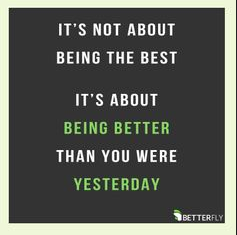
  • Stop comparing yourself to other golfers. Compare yourself today to the golfer you were yesterday. This is the only comparison that matters.
  • Reframe the Single Plane Swing journey. Remember that it is not about IF you can get this…it’s only about WHEN. (And then drop any attachment you have to WHEN success will come for you. )
  • When things get really heavy for you, step outside of yourself and focus on serving others for a little while. (When we operate from the perspective of “service to others,” our mindset is much more positive and productive.)
  • Enjoy the journey. The small victories.
  • Know that success is already yours. And remember that growth comes from struggle.

Struggle is what is required for growth. Struggle is what is required to layer your neurotransmitters with the amazing brain protein sheath (myelin) that will make the changes to your swing long-lasting. Struggle in practice is what is required to ensure that you can take your swing onto the course and actually play better.

So if it feels a little “dark” right now. That’s ok. It’s actually supposed to.

With some continued focus, intentionality and practice and maybe a little reframing, the sun’ll come out for you and your swing. I have no doubt.

Have a great week!

-Paul

LEARN

THE

SWING

Join 1M+ Subscribers to get your FREE Video Quick Start Guide that reveals how to hit the ball farther and straighter more consistently from now on…

START YOUR NEW GOLF SWING