Think

Expectations (Replay)

By Paul Monahan, Graves Golf Mental Game Coach

Replay:

It is fascinating to me how MUCH our expectations can negatively impact our experiences…as well as our ability to perform at our best.

While watching the last round of the Waste Management Phoenix Open, I heard one of the CBS announcers – I think it was Peter Kostis – comment on the challenging day that John Rahm was having.

After three solid rounds, Rahm began his final series in second place, with a chance to win another event this year after a phenomenal previous year in which he earned his first victory as well as ten top ten finishes.

But after 16 holes, Rahm was at two-over par when he probably needed to be a 3 or 4 under parto be in contention to win. Rahm’s frustration was pretty evident.

At that point, Kostis commented that he thought Rahm’s biggest challenge would be managing his expectations.

What did he mean? Simply that Rahm had such an incredible previous year, that he would have to be careful not to create expectations in his mind about the results he would be able to achieve in any given week.

We perform best when we drop our expectations when we metaphorically leave our expectations in the car. These allow us to see our reality (the game, the shots, the putts…etc.) more objectively…and not have our perspective clouded by our stories.

A little over a week ago I had the chance to attend the Graves Golf Academy 3-Day School in Orlando…

During this first day of the school, Tim Graves and his staff emphasize the importance of starting the Single Plane Swing process with the shortest of golf moves possible – the putt – by leading a putting lesson.

As I interacted with some students during the putting lesson, I noticed how many were struggling with their mental game. And I know it sounds strange…we were practicing putting.

The guidance from Tim was this: work on matching the putting stroke model and don’t worry about sinking putts. We don’t care about sinking putts; we want to make sure that we are hitting “checkpoints.” If we get good at executing the checkpoints, we will make putts, for sure.

But here’s what I saw: guys were getting frustrated because they weren’t sinking putts. (And some guys were extremely frustrated.)

These were brilliant, accomplished people. They know how to listen and follow direction. But …they were stuck in their expectations.

When we get stuck in our expectations, when we view reality through the lens of hope, the only way we can be satisfied is if those expectations are met. (Makes sense…right?)

But if our expectations are not met then what happens? You guessed it: disappointment – or even worse: apparent frustration.

The guys on the putting green were missing putts they expected to make. And so, they experienced those misses as disappointment and frustration. (They even forgot about the purpose of the practice, to begin with.)

But what if they had been able to set their expectations aside?

They likely would have been able to perform better throughout the exercise and would have:

  • Remembered the purpose of the practice session
  • Not worried about the result
  • Focused on process
  • Worked on matching the putting model
  • Enjoyed the experience
  • Learned
  • …and maybe even been a little more fun to be around

I often tell my clients, the tighter your grip on your stories or expectations about what should happen, the more difficult it is to experience your reality in productive ways…especially when things don’t go as you think they should.

If you want to get better at this game, (or anything) you must learn to drop your attachment to results and instead, stay focused on the elements that produce the desired results. Like; gripping the club correctly, starting with a proper address, and matching the swing model.

When you miss a putt or hit a ball poorly, remember: that is a neutral event. It is neither good nor bad…it is. Learn to see the things that happen in your environment as they are…and not worse than they are. Learn to see them as a chance to learn something and master a new skill. No matter what happens.

Like John Rahm or the participants of our GGA Schools, we all would benefit by loosening our grip on our expectations…or dropping them altogether.

Paul Monahan, PCC is a Peak-Performance coach, member of the International Coach Federation and a certified COR.E Performance Dynamicsä Specialist. He resides in Cleveland, Ohio with his wife Paula and is the proud dad to three young men. He works with elite-level performers and leaders, helping them to expand their awareness so that they perform at their best more consistently.

Miss It Fast

Moe Norman – through his brilliance, his pursuit of excellence, and his perspective on life and golf  –  said a lot of memorable things the course of his life.

One of my favorites is: “Miss it fast.”

What does it mean? And how does it relate to your golf game?

Turns out that the concept: Miss it Fast is amazingly simple, and yet rooted in the complex dynamics of the human brain. You see, even if Moe was not aware of it, the knowledge of what “Miss if Fast” yields for athletes like golfers is supported by the latest research and science in human performance.

And it has surprising implications for your mental game.

Last weekend, at the 2-Day Mental Game Playing School at Prairie Landing Golf Club in West Chicago a whole group of Single Plane Swing golfers had the opportunity to gain a much deeper understanding of what Moe meant by Miss it fast.

One of the key concepts we spent a lot of time on was this: The golf swing is a physical movement. There is a part of your brain that is dedicated to replicating the physical movements you repeat over and over again …it’s called procedural memory.

When you rely on procedural memory to execute a golf shot you give yourself the best chance of pulling off the shot the way you intend to. However, when another important part of your brain – the thinking and analytical part – gets involved, you can often struggle to create high-quality shots.

What to do?

Create routines or distractions so that you prevent too much thinking and analysis (… produced in the part of the brain associated with Working Memory.) Hitting the ball relatively quickly is a perfect example of this kind of distraction.

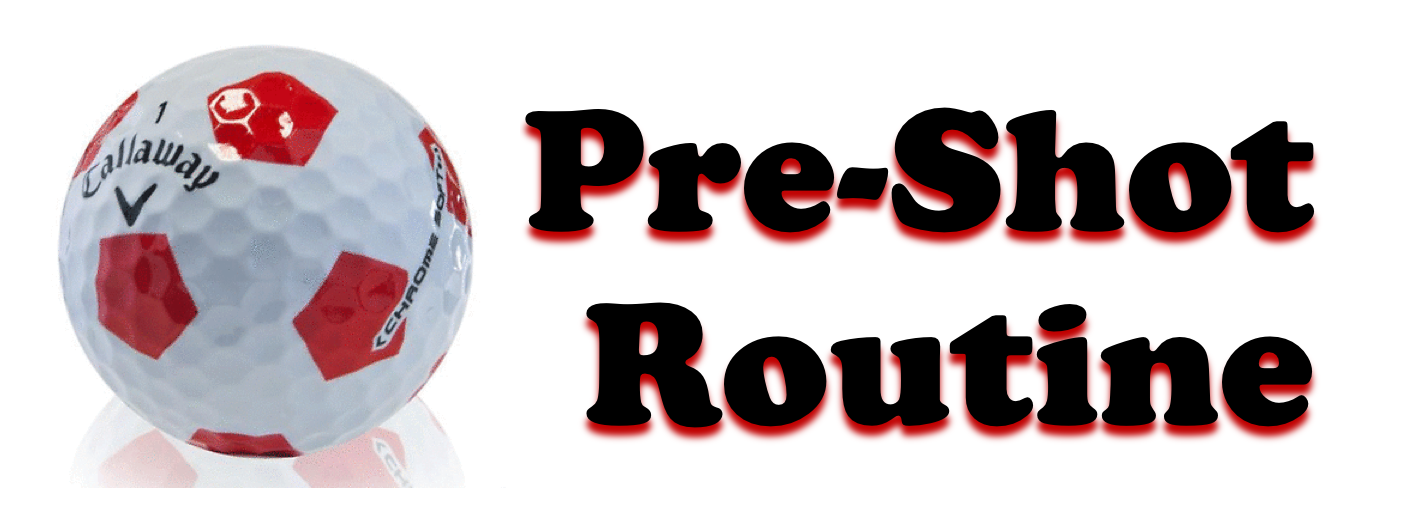
One super-effective portion of the instruction last weekend was dedicated to teaching a tightly-rehearsed 5-7 second pre-shot routine based on the fundamental concept that dwelling over your shot for 10-15 seconds is a sure-fire way to take you out of Procedural Memory and into Working Memory (where analysis, fear and anxiety lurk.)

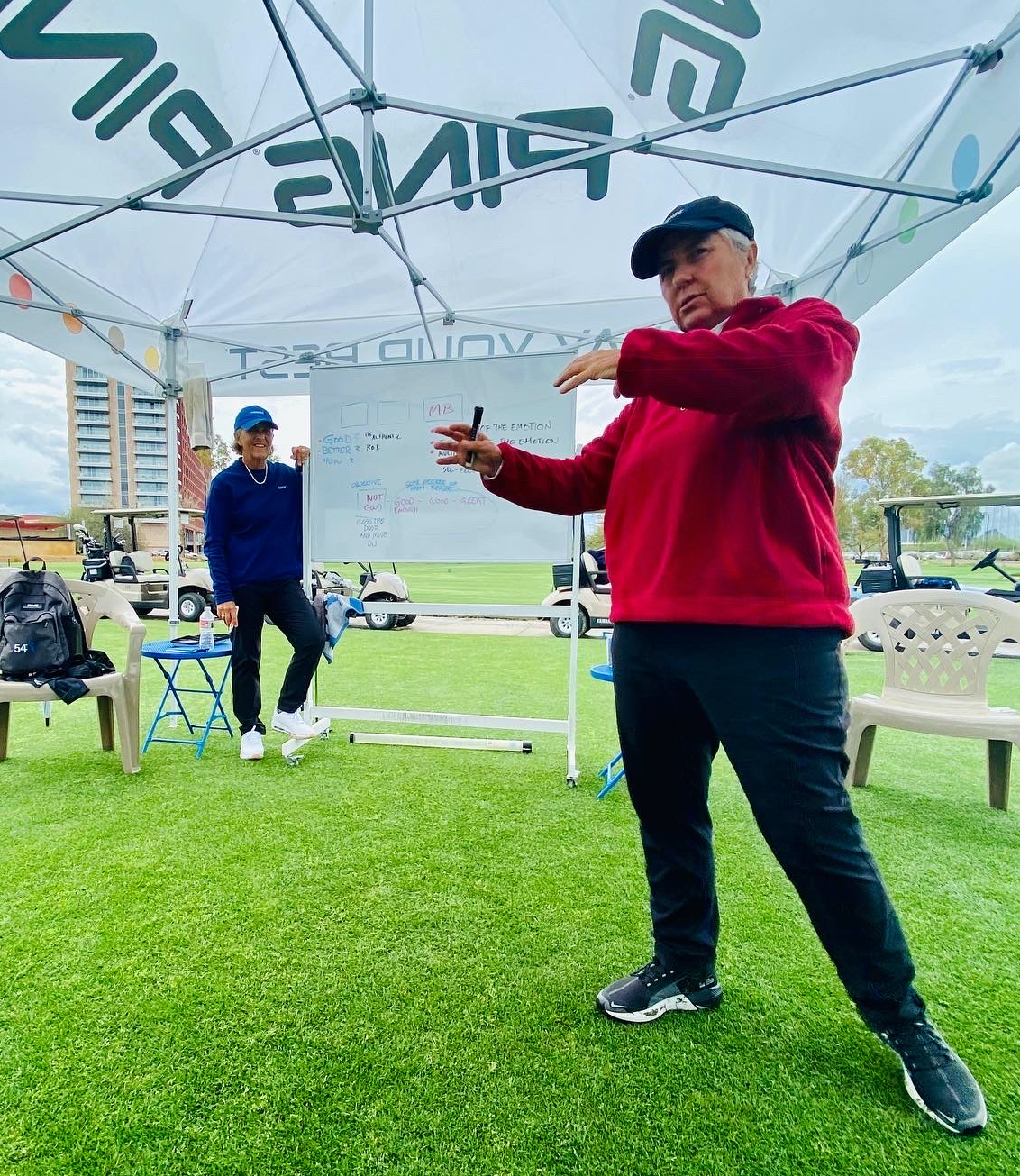
Tim Graves led the group through an exercise that allowed the guys at the school to see first-hand how much a short, crisp pre-shot routine can impact the mental game.

Elite-level golfers know that a routine like this supports great shots – but they may not know exactly why.

The reason is that when you keep your pre-shot routine short and structured you prevent the over-analysis, anxiety and resulting tightness in the swing that comes from THINKING TOO MUCH about the shot you are about to hit.

When Tim talks about “playing empty” they are talking about hitting shots when you are operating from Procedural Memory…and not Working Memory. They know – as did Moe – that if you dwell and linger over shots before you hit them – your capacity to hit great shots is significantly diminished.

So if you want to enhance your mental game, consider practicing your pre-shot routine. See if you can build a deliberate – but not rushed – routine that allows you to step into the ball and pull the trigger within 5-7 seconds. I think what you will find is that you won’t get “stuck” in your thinking nearly as often as you may be getting stuck today.

Miss it fast!

-Paul

Paul Monahan, Graves Golf Mental Game Coach

The Grand Illusion

By, Paul Monahan, Graves Golf Mental Game Coach

Famous author C.S. Lewis wrote an article in 1948 about how to cope successfully in an “Atomic age.” It was only a few years since the emergence of the first atomic bombs –  the entire world was nearly paralyzed with fear over what the future would be like – and whether the human race could survive.

Lewis’ message in his article was meant to help people to gain a little CONTEXT in the midst of a fearful time so that they could live more satisfying lives. He had noticed that the anxiety people were experiencing was debilitating. And so, he urged the reader to think in more objective ways (and ultimately more productive ways) about risk and mortality.

He pointed out that there were lots of risks that people had accepted in their lives – driving in automobiles, living in cites with high crime, coping with sickness and diseases…etc.  – and these did not paralyze them. They went on living.

He reminded people that they likely did not have control over whether or not they died in an atomic bomb blast…so why worry about it?

He asked: “Why should living in the atomic age be any different than what they had already been experiencing? Why not just live your life the way you wanted to in the first place?” He implored the reader to: play with your kids, engage in your work and your passions, enjoy your family, and focus on the things you can control. This is what Lewis said would allow you to live life to the fullest.

Easier said than done sometimes. (Like in pandemics, maybe?) But it makes complete rational sense – does it not?

In my experience spending time with performance experts from all over the world and in multiple domains – US Navy Seals, Corporate CEOs, Major League Baseball teams, the NHL, the NBA, Aussie Rules Football, New Zealand Rugby League, Big Wave Surfing, Country Music and even Electronic Gaming just to name a few –  I have learned that one of keys to performing at your best in any moment lies in your ability to contextualize.

If you can put your challenges into proper perspective as you move through the day today – engaged in your work, interacting with your spouse, practicing your single plane swing, or playing a round of golf – you will have a much better chance of staying connected to your potential and performing at your best.

Yes. It actually is that simple.

What does contextualizing look like on the golf course?

Instead of berating yourself for the wayward drive off the number one tee box, you accept that miss-hits will happen for you – especially on the first hole. Instead of getting mad about your ball hitting the cart path and bouncing out-of-bounds, you laugh at the unpredictability and variability inherent in the game. And instead of steaming over a missed five-footer, you accept that you may have not yet mastered a successful putting formula from that distance.

But why do we struggle mentally and emotionally on the golf course anyway?

Because we want to WIN. (Or because we just don’t want to LOSE. Same coin, different side.)

I know many who would say – “I play golf for fun. I don’t need to win.” I get that… But let me tell you: you ARE playing to win… or to NOT lose. You just label it differently. Winning for you is mastering the bunker shot. It’s launching a 4 hybrid to 8 feet on that long par 4. It’s sinking a 30 foot double-breaker. It’s driving past your friends in the center of the fairway.  And losing is hitting it out of bounds off the tee box three holes in a row. Losing is three-putting six greens. Losing is hitting a bucket of balls and not hitting ONE ball pure.)

Struggle is technically biological – it shows up when we think we won’t get what we want. (“If I miss this putt, I will lose the momentum going into the last hole…and lose the match!”)  Then our survival brain kicks in and the wheels come off of our game. (Amirite?)

So, how’s this for some contextualizing the next time you are in struggle…and stuck on winning/not losing:

There is no such thing as winning or losing.  They are illusions. Constructs of our imagination… brought to life through language.

Winning and Losing is what I call The Grand Illusion.

That’s right. And here’s the good news – you never have to worry about winning or losing ever again. Instead, just go play the game the best way you know how today …and accept (even embrace) what happens. Chances are that you will stay much more aware, present and playful …and shoot a lower score because of it.

Think of your golf experiences as just one more step on your journey to single plane swing mastery…without the baggage and meaning of terms like winning and losing. How much calmer mentally and emotionally would that make you?

“But wait, Paul,” you say. “You mean to tell me I should stop thinking about winning? Are you crazy? How am I ever going to win anything with that strategy!!??”

In the world of elite performance, there is AWARENESS of winning and losing, for sure. But the best performers can continually and quickly put all their challenges or disappointments into context. And while inside of their performances they can separate their identity from the concept of winning or losing. Why…because they know that they cannot completely control whether they win or lose.

(One possible exception in golf was Tiger Woods. In the first fifteen years he played on the PGA tour, Tiger Wood’s skills were so far above his peers, that he actually got away with focusing on winning in nearly every moment. He was known to be singularly focused on winning …and he talked about it all the time. But he got away with that because his skills were so much better than his competitors. Read The Big Miss by Hank Haney for more insight into Tiger’s mental game during the 2000’s )

 In the past ten years, as his skills have waned, you may have noticed Tiger talking a lot more about the journey – and contextualizing more often. Which is a good thing for him – it keeps him in the game. Otherwise, he would self-destruct due to the struggle that comes from not getting what he wants. These days I believe that Tiger is playing a mental game that more closely matches the rest of the PGA Tour field than at any time in his career. Just a guess…I could be wrong.)

So what is left? Show up and do your best in that moment. Focus on what you can control.

When I played in my club championship earlier this year, I drew a much better player from my flight in the first round. On paper, advancing past this player was a long shot, so I set aside my attachment to winning and focused on what I could control – like how I showed up mentally and emotionally. And how I reacted to what was happening in front of me.

(Yes, for those that have worked with me and heard me talk about this – I DID pour out LOTS of love and positive intentions toward my competitor that day!)

The result: I played 4 strokes better than my handicap, and was tied thru 17 when my opponent pulled off an amazing shot to win on the 18th hole. Losing was not what I wished for. But I was proud that I realized my full potential that day because of how I showed up. And I am a better player today because of what I experienced: focusing on the things I can control – and letting go of the things I cannot.

High performers understand that the thing they want is more likely to show up when they loosen their mental and emotional grip on it. When they “want it a little less.” (Sounds counter-intuitive – I know.)

Moe Norman was very intentional about achieving this level of calm, often saying that his goal was to play with an “alert attitude of indifference.” (At Graves Golf Academy, we conduct an entire two-day playing school based upon this concept!)

As you start a new year – full of promise and potential – I want to encourage you to keep in mind that success in golf and in life comes – in part – from being great at contextualizing…from putting your challenges and setbacks (and achievements) into proper perspective.

And keep in mind that winning and losing is an illusion that you need not fall prey to!

-Paul

Opportunities are Everywhere

By: Paul Monahan, Graves Golf Mental Game Coach

Note: Two years ago, following a week at the Alumni Camp in Orlando, I wrote about how we have opportunities all around us to practice tuning-up our mental game. As you get back on the course in more normal settings over the next few weeks – wherever you are – keep in mind that there are LOTS of opportunities to strengthen your mental game:

Just had a great week in Orlando at the GGA 5-Day Alumni Camp.

It was a fun week of learning, instruction, growth, as well as some great conversation about what it takes to perform at a high level.

My job at the camp last week was to help the attendees to expand their awareness of the mental and emotional dynamics that allow them to show up at their best.

Said a little differently, I was there to help them learn how to tune into their energetic presence…the mix of physical, mental emotional and other elements that merge to form what I refer to as performance energy.

I believe that the key to performing at your best consistently over time is to build awareness of self… and a knowledge of how the things around you are impacting your thoughts.

How does the experience of standing on the first tee with an audience of other golfers watching you impact your ability to access your skills? Does it make you feel nervous? And if it does, can you identify the actual thinking that produces that nervousness?

If you can identify the thinking, then you are well on your way toward increased awareness. And then you can do something about thoughts that are unproductive, versus ideas that are supportive of your efforts, goals, objectives…etc.

For example, you might realize that you are nervous because you don’t want to be embarrassed by duffing your tee ball into the woods. You don’t want the harsh judgment of others. Understandable.

But what’s another way to look at that? Perhaps all the guys behind you want nothing better than to see you hit it well. They too are capable of hitting it into the woods – by in their minds, they are behind you, pulling for you to hit a great shot.

Or perhaps, they don’t care that much at all. So then you can forget about all that worry and anxiety. After all, it’s just misplaced energy.

All that is left, then is for you to step up and hit it where you want to. (And accept that you can handle the results…no matter where the ball goes.)

We talked a lot last week about increasing awareness of what is happening on the golf course to play better golf.

But here’s the interesting thing: you can practice increasing your awareness all day long, anywhere you go. In traffic. At work. In your interactions with colleagues or those closest to you. There are opportunities ALL DAY LONG to tune into the thought patterns that are driving how you interpret your experiences.

My message to the group last week is the same message I give you here: if you want to improve how you play on the golf course, practice growing your awareness of self in every moment you can. Not just on the golf course, putting green, or during play, but in every situation you experience.

Try it this week. You will be surprised at how easy it is.

The opportunities are everywhere.

Heard It a Thousand Times … The Grip…

By Tim Graves, PGA

From: jay@log….
Subject: The GRIP!
To: Tim Graves <timg@gravesgolf.com>

I’ve heard it more than a thousand times

I finally figured out just how the grip ‘feels’.  And now I am able to  confirm that I have the grip correct.

Positioning on the handle…

Correct overlapping of the trail hand little finger…

Lead hand thumb comfortably in the crease of the palm pad of the trail hand…

I was amazed when I finally ‘felt’ the proper fit of my hands on the club handle.  I always fidgeted with my grip before coming to address—and thought it was correct.  But when I accidentally did it right, I ‘felt’ it immediately.

After all the hands-on instruction, I never really got it.  And I just sort of stumbled into it while fidgeting.  The result was immediate transformation and much improved direction, distance and accuracy with all clubs—especially my driver.

Thanks for harping on the importance of the Grip.

Merry Christmas to You and Yours!

Jay C. / Pie Town, NM

*****
Additional Grip Help / Instruction: Go to: https://gravesgolf.com/product-support/

Click on GGA Grips (2 Instruction Videos about proper grip / hold of club)

Smooth Authority

By Tim Graves, PGA

Mark W. (East Saint Louis, MO)

To: Timg@Gravesgolf.com

Hey Tim;

I just wanted to say thank-you and to share my experience playing yesterday due to some freakishly warm weather in St. Louis.

This month I have been working on my putting, chipping and pitching (into a tarp) in the basement for a few minutes daily and tracking the time spent. It’s amazing how spending 7 to 12 minutes a day per discipline can add up – so far this month I’ve practiced my putting stroke alone for 3 hours plus (23 of 27 days). I have incorporated your teachings on ball position, shaft lean and hands down the line and continue to work to ingrain them.

Your tips during the FF <Fast Forward> presentation – specifically the single trail hand drill that Tiger used, and the short backstroke to promote acceleration – were golden. Yesterday – the first real round in over 6 weeks – I had 30 total putts with no three putts. What’s more – I had several 4-6 footers that due to your acceleration drill went in the hole with smooth authority!

Thank-you for all that you do to share your insights – very grateful for you and the GG team.

Mark

Enjoy your day – “The Best Is Yet To Come”

Fast Forward Information:

http://gravesgolf.com/fast

LEARN

THE

SWING

Join 1M+ Subscribers to get your FREE Video Quick Start Guide that reveals how to hit the ball farther and straighter more consistently from now on…

START YOUR NEW GOLF SWING