Tim Graves

Struggle is Your Friend

By: Paul Monahan, Graves Golf Mental Game Coach

I hope you have had some great experiences on the golf course this year.

However, I know that if you are at all like me, you may be experiencing some struggle in your game right now.

Or, perhaps your game is solid, but you just can’t seem to put it together on the course, or in competitive events – where it seems to matter most.

I totally get that.

Today I went back in the blogs to find this message about struggle and it’s value on our journey to mastery.

Check it out here:

The Sun’ll Come Out…

“It’s always darkest before the sunrise.”

Have you ever heard that before? I have. And honestly, I’m not sure if it’s technically true.

However I think that the metaphor still works for me. It goes something like this:

Occasionally, it seems like we will never emerge from our struggle. While plodding away in the darkness (a metaphor for struggle) things can begin to feel very heavy. And this can cause us to lose hope in ever transcending the darkness (or ultimately overcoming the struggle).

But then something magic happens. After working a long time on something, breakthroughs happen. Insights appear. Hope grows. The struggle ends.

And then the sun comes out. And life is good again.

My wife and I recently spent the weekend in Nashville with our son Kevin who is a young musician and producer. (It was dark and rainy in Nashville…which made me wish for the sun…and partially inspired the idea for this blog.)

For people like Kevin and his peers in the music biz – smart, talented people working very hard on their passions, but having not yet reached the level of success they are aiming to reach one day – the darkness of struggle can be an impediment to realizing dreams.

What is so inspiring about being around Kevin and his music-industry friends though, is that they are so committed to the work that they never stop moving forward. Yes…they are tempted sometimes to compare themselves to others…but the ones who thrive in these conditions are dedicated to the process of improvement. They just don’t get stuck (very often – or for very long) in WHERE they are at any given time. They TRUST in the process so much that in essence, success is already theirs.

Even if it seems dark right now. Even if there is no guarantee that “the sun will out” on their career.

And this is exactly as it should be. Struggle is necessary to grow talent.

Dan Coyle (Author, Cleveland, OH resident and friend to the Moe Norman Single Plane Swing Community) revealed a decade ago in his book The Talent Code the importance of embracing struggle when learning new skills. Coyle references advances in science which show that struggle actually BUILDS and REINFORCES the physical network of neurons in our brain which allow us to successfully build the skill needed to perform at high levels.

(In The Talent Code, Coyle also reveals the importance in practice.)

As you think about preparing for another year of golf, you no doubt may be faced with the idea of struggle as you work on matching the Single Plane Swing model and ultimately plaingy better golf.

Since we never know how long this is going to take – there are many factors and variables to consider – it certainly can seem like the struggle to improve (or maybe just stink a little less?)  is never-ending. If you are feeling that, I want you to know that that is ok.

You are exactly where you should be.

Having said that, there are a couple things you can do.

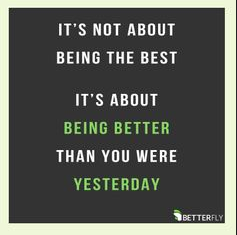
  • Stop comparing yourself to other golfers. Compare yourself today to the golfer you were yesterday. This is the only comparison that matters.
  • Reframe the Single Plane Swing journey. Remember that it is not about IF you can get this…it’s only about WHEN. (And then drop any attachment you have to WHEN success will come for you. )
  • When things get really heavy for you, step outside of yourself and focus on serving others for a little while. (When we operate from the perspective of “service to others,” our mindset is much more positive and productive.)
  • Enjoy the journey. The small victories.
  • Know that success is already yours. And remember that growth comes from struggle.

Struggle is what is required for growth. Struggle is what is required to layer your neurotransmitters with the amazing brain protein sheath (myelin) that will make the changes to your swing long-lasting. Struggle in practice is what is required to ensure that you can take your swing onto the course and actually play better.

So if it feels a little “dark” right now. That’s ok. It’s actually supposed to.

With some continued focus, intentionality and practice and maybe a little reframing, the sun’ll come out for you and your swing. I have no doubt.

Have a great week!

-Paul

Making Your Lob Wedge Your Best Friend

By Tim Graves, PGA

First, I want to say, I believe the lob wedge is one of the most important clubs in your bag.

In fact, I believe it is the 3rd most important club in your bag (refer to past e-tips for #1 (Putter) and # 2 (Driver).

Besides your putter and your driver, this is probably the club you will use the most in a given round… if you know how to use it and use it correctly…

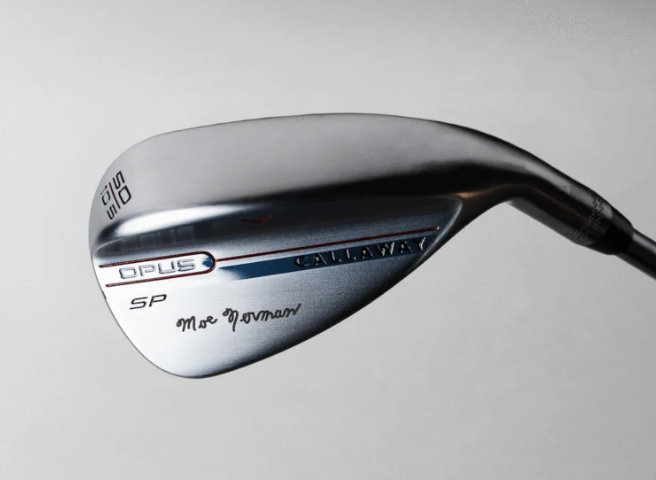
The perfect Lob Wedge: The perfect lob wedge (in my opinion) has the following characteristics:

  1. 58* of loft or more
  2. Forged type club (the softest material in a wedge that helps create spin and a very soft feel at impact – allows for the ball to land softly on the green).
  3. C – type grind on the sole of the club. This grind on the club allows to hit off of all different surfaces (soft, hard, etc..) and allows for different ball positions instance to hit low to high (lob) type shots. The C type grind on the sole keeps the leading edge of the club low to the ground when the ball position is “pushed forward” for higher / lob type shots.
  4. Medium to Wide sole on the club – the wider the sole – the easier it is to “slide” across tight lies.
  5. Needs to have swing weight heavier than most clubs in bag besides the sand wedge (swing weight typically between D-4 and D-6) – most lob wedges are built this way as the added weight helps cut through many surfaces (high grass, sand, etc..) and helps create better “feel” around the greens.
  6. Steel shafted. Again – the weight helps as described.
  7. Slightly rounded leading edge on the club – only slight, but this slight rounding also helps cut through different surfaces.
Screen Shot 2015-10-17 at 8.53.57 PM

How to play the Lob Wedge:

For a full shot, (for many ranges from 30 to 60 yards, maybe slightly longer) – the ball is placed in the middle of the stance and swung with a good on the plane single plane swing. (Like any other club in the bag – ball position center of stance).

For a short pitch or high lofted shot (not lob or flop shot yet…):

  1. The ball is placed slightly forward in the stance (forward of center). As higher you want the ball – the more forward you put in the stance.
  2. The weight (body’s weight distribution) is 50/50. You do not put more weight on the lead foot.
  3. Stance is slightly open – about 10 to 20* at max.
  4. The hands are slightly ahead of the ball at set up.
  5. Choke down slightly for more control and better feel.
  6. You swing the club with VERY soft hands. This means light grip pressure on the club.
  7. You work on the fold/fold type swing. Meaning you fold your trail arm in the backswing and lead arm in the through the swing. Nice and easy….
  8. You accelerate through the shot – your hands should finish at shoulder level or above. If you think the swing is too long for the shot – shorten the backswing, but still keep a solid and extended through the swing.
  9. Swing toward the hole – as Moe said: “Try to pull the flag out with the head of the club”. This was his analogy of making sure the club is swung down the line toward the hole.
  10. Make sure the weight is evenly distributed throughout the shot and the feet stay down throughout the shot.

For a flop shot (high lofted short shot): Follow the points above except the following:

  1. Ball position – as forward in stance as comfortable. Off lead heel or further forward is good.
  2. The weight distribution is still 50/50 or slightly toward the back foot. Keep weight balanced throughout the shot.
  3. The club slides under the ball… Think of sliding under the ball rather than hitting down on the shot.

To be honest, after teaching 1,000s of students in the past, this is always a difficult shot to master – it takes time, but once you get the “feeling” it actually becomes pretty easy and a great “shot saver” in the round. Here are a few faults many students have difficulty with while they are trying to learn the flop shot:

  1. Weight transfer – you need to keep your weight back to center during the shot – exaggerate this as much as possible. It is almost impossible to get the club to slide under the ball if you are transferring your weight too much forward.
  2. SOFT HANDS – if you think you have lightened the grip pressure enough – do it some more. The softer the grip pressure the easier it is to fold/fold in the shot which brings consistency and great feel with this shot.
  3. Acceleration – shorten the backswing enough that you feel you need to be pretty aggressive in the through the swing. A backswing that is too long creates deceleration in the through swing which leads to fat and/or thin shots.
  4. The swing toward the hole – great area to practice on swinging toward the target. Chances are if you are coming across your full shots (cut/slice) you are also doing the same in your pitching/flop shots.

In a good high pitch/flop shot the ball should land relatively soft on the green with minimal roll. In fact, if you listen to the shot, you will hear a “thud” when it hits the green. A good shot comes in soft, has minimal role… many pros call it landing like a “butterfly with sore feet”.

Hopefully, this helps those who are looking to help their short game – especially that all needed lob shot around the green.

Please feel free to contact me at timg@gravesgolf.com with any short game questions, questions about your wedges or any other club fitting questions.

Remember my saying: “I’ve never seen a good player with a bad short game and have never seen a bad player with a good short game.”

For your perfect wedge fit: CLICK HERE

5 Most Common Mistakes in Golfer’s Bag

By Tim Graves, PGA

I wanted to start a section in each newsletter that talks about custom club fitting.  In upcoming newsletters, I will be describing / breaking down each club in the bag and why and how that club should be custom fit (in much more detail).

As most of you know (by now..), your clubs must fit the swing you are working toward.  If they do not fit you, it is very difficult to make swing changes and / or those swing changes will be slowed dramatically.   I like to call it “taking the excuses out of the bag”.

But, before I start going through each club in the bag (future articles), I wanted to start with the “Top 5 Club Fitting Mistakes” you see in many golfers bags.

 1.  Driver

The first most common custom club fitting mistake with the driver is not enough loft for the driver for a golfer’s fit.  The optimal loft of a driver for a golfer will give that golfer maximum fly and maximum roll for their swing speed.

Examples:

Hit a 6 iron 150 to 160 yards:  Driver should have 10.5* loft

Hit a 6 iron 120 to 130 yards:  Driver should have 12* loft

2nd most common mistake with drivers is shafts that are too heavy for the golfer.  Golfers want more distance and forgiveness with their driver.  With the appropriate loft, a lighter shaft will help many golfers get more distance with their driver.

40 to 50 grams is considered a “Light weight” shaft and 50 to 55 grams is considered a “mid weight” shaft.  Many golfers have 60 gram or heavier shafts in their drivers and need lighter weight shafts (especially those with senior and regular flex) and wanting more distance with the tee ball.

2.  Fairway Woods

The most common mistake with fairway woods is golfers do not have enough loft (for maximum distance off the ground) with their longest fairway wood.

In other words, most golfers SHOULD NOT carry a 3 wood (unless they use this 3 wood primarily off a tee).

To hit a 3 wood (15 to 16* loft) appropriately (maximum fly and roll) you need to be able to hit you 6 iron at least 175 yards on the fly…

Most will hit a 5 wood (or 7 wood) further than their 3 wood off the ground.  They need the loft of the 5 wood (18 / 19*) for maximum fly and roll.

(FYI – even most professional golfers will hit a 17* / 18* fairway wood off the ground as their longest fairway wood… then why do so many average golfers hit a 15* fairway wood off the ground and get “poor” results..)

3.  Hybrids

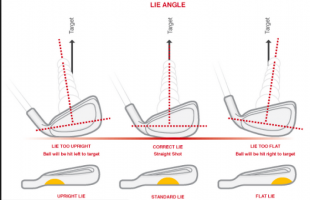
The most common mistake is golfers DO NOT have their hybrids fit / customized for their individual lie angle.  Golfers MUST have the lie angle adjusted / fit for their size and swing.  For most, lie angles of their hybrids are too upright, and golfers “heel dig” their hybrids and either top, pull or hit poor shots with them.  This is why so many golfer can hit their hybrids “okay” out of the rough, but have difficulty hitting them off of fairways or “tight” lies.

Hybrids MUST be fit for the lie angle for an individual golfer.  If not, the hybrid is working AGAINST the golfer.

Very few golf equipment companies fit / adjust lie angles for an individual’s size (Callaway is one, that is why their customization process is rated so high).

4.  Irons

Honestly, there are many common mistakes when it comes to golfers irons (length, lie angle, flex, etc..) but for this article – will focus on one…

The most common mistake with irons is golfers do not have correct shafting in their irons.

Correct shafting in irons (and all clubs) allows for the correct height and flight of the golf ball for the golfer.  Having the correct / appropriate height gives the maximum and optimal distance for irons for that golfer.

And correct shafting “protects” golfers.  For a majority of golfers (over 40 years of age… younger for some) – they need a shaft that does not damage or protects the body.  Graphite shafting in irons protects the body.

Graphite shafting for golfers has the following characteristics:

  1.  Much easier on body – will protect elbows, shoulders, wrists, back, etc..
  2.  Will be more forgiving on golf shots (thin and heavy shots will go further, react better with graphite).
  3.  Are more consistent – especially over time.  Graphite is by far the most consistent material in shafts compared to steel.
  4.  Will allow for increased distance as graphite shafts in irons can be lighter and kick the ball up higher than steel.

5.  Wedges

The most common mistake with wedges in most golfer’s bags is wedges not being fit at all…

For most golfers, when talking about the Gap, Sand and / or Lob wedge, they think they can purchase these clubs “off the shelf” in their local club shop and they are good to go….  that can not be further from the truth.

Wedges must be fit to an individual for length, lie angle, shaft flex (and weight), grip size, lofts, etc..

Think about it… you are hitting a chip or pitch (1/2 shot or less) with your wedge and you “heel or toe dig” the wedge because it isn’t fit properly.  That club is going to twist in your hands… you will push, pull, chuck, or even shank the shot.. not because of poor technique, but because of an improperly fit wedge.

It always amazes me how many golfers I watch “chunk” chip / pitch shots (in my pro-ams) with improperly fit wedges for them and they get so upset…. without realizing they really have very little chance of hitting those short game shots well with improperly fit wedges…

Again – as I like to say… “You must take ALL excuses out of the bag”

If you have any questions about your fittings / individual fit, please feel free to email direct at timg@gravesgolf.com

If you would like a free individualized custom fit for you – please see:  CLICK HERE

or

Please feel to email me at timg@gravesgolf.com

Can’t Break Bad Habits

By Tim Graves, PGA

Don’t Waste Time Trying to Break Bad Habits – Instead Build New Ones

I bet I talk about this so many times in our schools, many of our students probably get “sick” of hearing it.

When it comes to dealing with bad habits, many of us attack the problem head-on, by trying to break the habit.  This tactic, of course, doesn’t work.  And we are left with the old truth – habits are tough (if not impossible) to break.  The blame lies with our brains.  While we are really good at building circuits (creating habits), we are awful at unbuilding them. Trying as you might to break a bad habit, it is still there, waiting patiently for a chance to be used.

So, what do we do?

The solution is to ignore the bad habit and put your energy toward building a new habit that will override the old/bad habit.

To build new habits, start slowly. Expect to feel stupid, clumsy, uncomfortable, and even frustrated at first…. after all, the new “wires” in your brain haven’t been built yet. Your brain still wants to follow the old “comfortable” pattern. Build the new habit by gradually increasing the difficulty, little by little. It takes time, but it’s the ONLY way new habits are created and grow.

To Learn it More Deeply, Teach It

I absolutely love this one.

Here is the issue. Every good golfer, every golfer who learns something new/reaches a goal, etc… must be their own best teacher. If you cannot teach yourself, your ability to make changes, create new habits, reach goals, etc. will occur in a much slower rate.

This is not saying you must create everything yourself, but it is saying you must take what you learn and translate into self-teaching.

Think about it – how much time to you spend practicing, and how much of that practice time is with someone teaching you?

If you are like most, 90% + of your practice time is on your own, trying to create new habits, etc. on your own. Meaning, you must be able to make sure you are doing things correct, must be able to make sure you are “going down the correct path”.

A great way to determine if you can teach yourself it ask yourself “Could I teach this (new habit I am trying to learn) to someone else?”

This works because when you communicate a skill to someone, you come to understand it more deeply yourself. Also, when you see someone struggle, and help them through it, you improve your ability to deal with your own struggles.

The saying “Those who can’t do, teach” should be rewritten as “Doers who teach do better!”

Give a New Skill a Minimum of Eight Weeks

When it comes to growing/creating/developing new skills, eight weeks seems to be an important threshold. It’s the length of many top-level training programs around the world, from the Navy Seals’ physical – conditioning program to the mission training for the Mercury astronauts. A recent study at Massachusetts General Hospital showed the practicing meditation for twenty-seven minutes a day created lasting brain changes in (you guessed it) eight weeks.

Of course, this doesn’t mean that you can be proficient in any skill in eight weeks. Rather, it underlines two more basic points:

1)  Constructing and honing new habits takes time, no matter who you are, and

2) Resilience and grit are vital tools, particularly in the early stages of learning. Don’t make judgements too early.

Keep at it, even if you don’t feel immediate improvement. Give your talent (your brain) the time it needs to grow and create new habits.

Please feel free to contact anytime – we are always happy to help and answer your questions.

Timg@gravesgolf.com

Common Fault & Fix: Shaft Alignment at Set Up

By: Tim Graves, PGA

Fault 1

The Fault – Not establishing the “Rod” Position

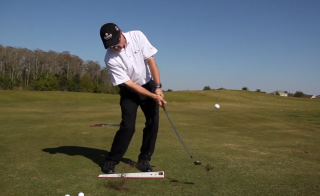
When the club shaft is out of alignment with the lead arm at address, we consider this an incorrect position. This alignment is very important when it comes to the Single Plane Swing because it puts the body in a position to move into a perfect takeaway every time.

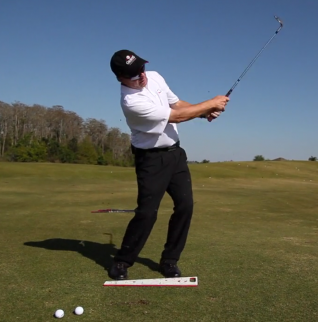
As seen in the photo above, note the following:

  1. The club shaft is not in alignment with the lead arm.
  2. The hands are behind the golf ball as opposed to ahead.
  3. The club head is directly behind the golf ball
  4. The lead hand wrist is cupped as opposed to being flat

With this incorrect alignment, here are some compensations that golfers will develop:

  1. Improper takeaway due to the hands being behind the ball at address
  2. Early release of the golf club
  3. Hitting behind the ball at impact
  4. Hitting the top of the ball at impact

Ultimately leading to:

  1. Loss of Distance
  2. Loss of Accuracy
  3. Inconsistency
Fix 1

Checkpoints, and Correction for not establishing the “ROD” position

  1. Facing a mirror, get in your set up position.
  2. Place the club head directly beneath your nose, and look at the alignment of the club shaft and lead arm.
  3. The club shaft should be in a direct line with the lead arm, which points to the lead shoulder.
  4. The hands will be ahead of the club head
  5. The butt end of the grip will point towards the lead side of the body

With this correct alignment, golfers will develop:

  1. Proper takeaway due to the hands being ahead of the ball at address
  2. Hitting the ball first at impact
  3. Being able to create a divot (with irons, hybrids and fairway woods) past the golf ball
  4. Solid impact with proper and good compression of the golf ball
  5. Proper and full release of the golf club

Ultimately leading to:

  1. Maintaining and increasing distance
  2. Increase in accuracy
  3. Consistency

LOWERING SCORES USING GRAVES GOLF BY DESIGN (Putting)

By Tim Graves, PGA

I’m not gonna preach at you today about how important your putting stroke is.

If you’ve been around for a bit, you know that I’m VERY passionate about putting!

When it comes to creative and simple ways to check each aspect of your putting stroke away from the golf course, I’ve tried them all.

It was through many years of trial and error that I developed what I consider a great, as well as simple way, to check each aspect of your putting stroke away from the golf course.

You see, to practice efficiently, you must check a couple key areas:

  1. Squareness of putter face
  2. Eyes over the ball (target line)
  3. Squareness of shoulders at address
  4. The path of the putter head during the stroke

Being able to check these fundamental positions each and every stroke is key to having productive practice sessions.

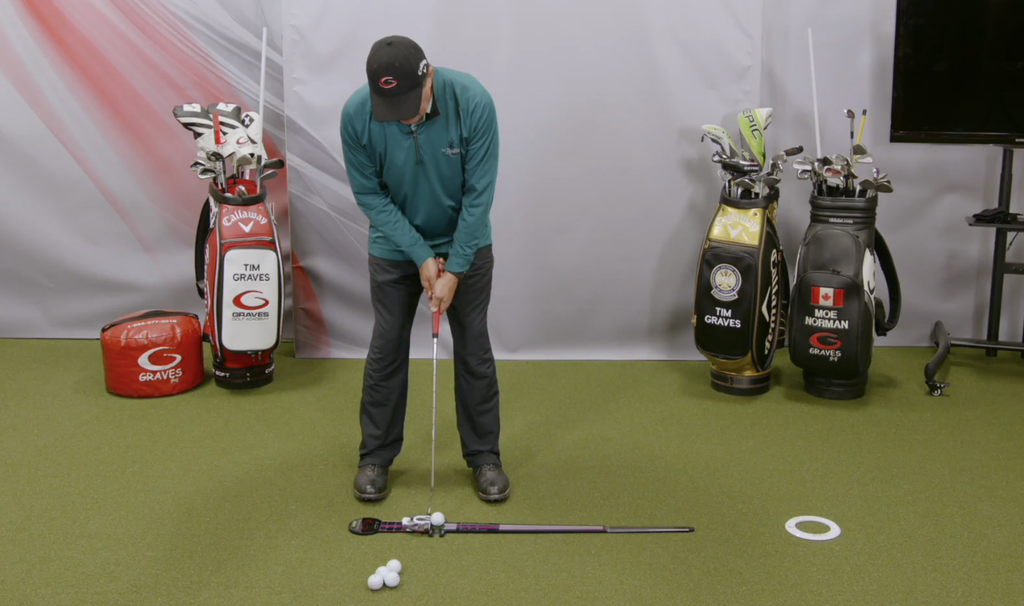
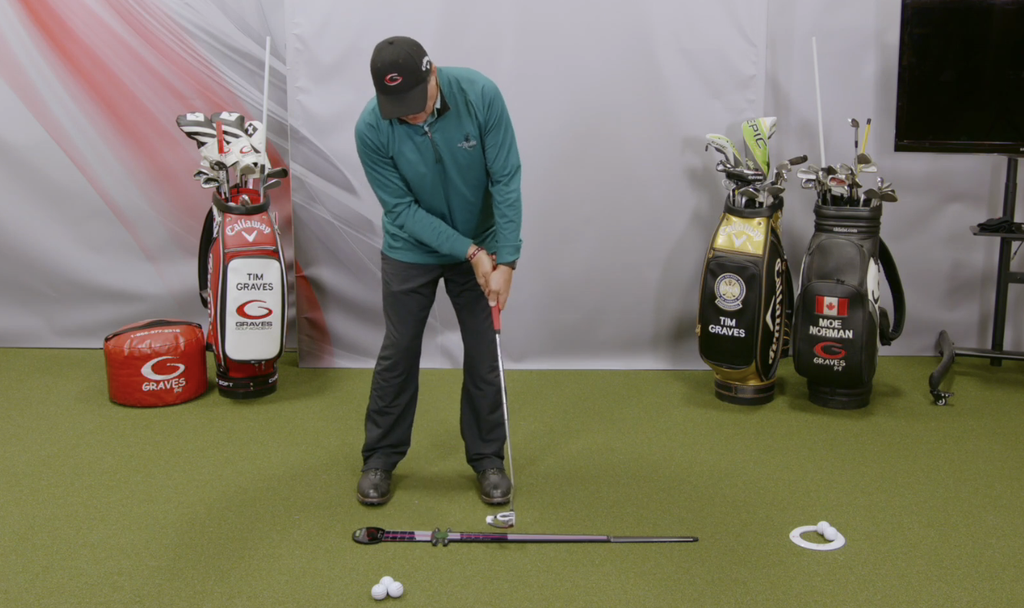
With the development of the H3 Putting Mirror, I now have a way to ensure each fundamental of my putting stroke is perfect.

Simply put, this is a vital tool during my off season practice.

If you aren’t using an H3 Putting Mirror, I have to ask you, bluntly,

“Why?”

Even a 3-5 minute practice session in your living room with the H3 Putting Mirror will ensure:

  1. Your eyes are over the ball (target line), which will help you see the line, as well as create an ideal stroke.
  2. Ideal shoulder alignment that you can check in the mirrored surface.  Square shoulders produce an ideal stroke.
  3. You’ll see a perfectly square club face, as well as the ideal stroke with the guidelines on the H3.
  4. Raised edges will make you catch the ball on the upstroke, creating a perfect roll every time.
  5. CNC milled holes to develop a putting gate to further hone the perfect stroke each and every time.

THE 3 Ps OF PUTTING AND USING THE H3 PUTTING TRAINER

What are the 3 Ps of putting?…  simply stated, it is “Practicing your Putting with a Purpose”

Folks, it is actually pretty simple and painless, you just have to DO IT RIGHT!!!

Now, before you think to yourself, “Yeah, I know, Tim always says how important putting is, but I really need to work on my full swing first”, please read the following stats and “studies” that have been conducted and then I will explain how you can literally improve your game overnight…

First – You must first realize the importance of putting. 43% of scoring occurs on the putting green for the average player (male shooting 97, female shooting 107). As the scoring increases, so does the % of putts. For a scratch golfer, the percentage lowers to about 40%, but no lower.

Graves Golf By Design statistics are as follows:

30 handicap golfer (aver score of 100) – average 45 putts per round

20 handicap golfer (aver 90) – 40 putts per round

10 handicap golfer (aver 80) – 35 putts per round

Scratch golfer (aver 70) – 30 putts per round

Professional golfer – 28 putts per round

Second – You would think “that only makes sense” as the 30 handicap golfer will hit it further from the hole than the 20 handicap golfer, thus have more putts…. but you would be wrong. If you think of the way golf is played and the way putting stats are kept (just add up how many putts you have once the ball is on the green) – the 20 handicap golfer actually will hit more greens in regulation than the 30 handicap golfer (the 30 handicap golfer will be chipping from the side of the green, etc..). Meaning, if you take the average distance to the hole once the player hits the green, typically the 20 handicap golfer will be further than the 30 handicap golfer… in theory if both had equivalent mid/short games – but here lies the problem.

Third – There are only 3 areas that matter in putting (or any part of the golf swing) – Path, Face Angle, and Speed. Putting is affected by these 3 areas and only these 3 areas. Meaning, everything you work on in putting (for example the grip, set up, etc..) affects either path, face angle and/or speed. The better your path, the better your putting, the better your face angle at impact, the better your putting, the better your speed, the better your putting.

Fourth – READ THIS VERY CAREFULLY: Studies have shown that of 10 golfers who practice their putting, 5 will get no better, 4 will actually get worse, ONLY 1 will improve after practice. Please read this again – of those who practice their putting, 10% will improve after the practice, 50% will not, and 40% will ACTUALLY MAKE THEMSELVES WORSE. (This study was performed numerous times testing golfer’s putting prior to their practice session and after.) As is said by the individuals who performed these studies, “Golfers can add, subtract, multiply and divide, and they DON’T like these odds.” I don’t know about you, but if I have a 90% chance of not improving when I practice, “I ain’t practicing” (as they say in Oklahoma…)

Okay – now that everyone is on a “downer” about their putting practice, we’re here to fix that.

Over the years of playing and practicing with some of the best players in the world (including Moe, Tiger and many others), competing against many of these players, studying numerous techniques of the short game, etc… etc. we have created/perfected a method to improve your putting.

H3 Putting Trainer – How to Practice Your Putting with a Purpose EVERY TIME you practice. (In other words, every time you practice, you will one of the 10% who improves!!)

This is a Putting Trainer that works – WE GUARANTEE IT!!! This is how you (and most professionals) improve your putting. The system is not hard – in fact, it is very simple and doesn’t take that much time. Every minute you practice using the H3 Putting Trainer, it will improve your putting… which in turn will improve your scoring and decrease your handicap – SIGNIFICANTLY!!

Here are highlights of the H3 Putting Trainer:

    * Mirror for proper eye and shoulder alignment 

    * Beveled leading edge for easy ball placement 

    * Easy to see red line for proper path and face alignment

    * Red line to check ball under eye line and head still during putting stroke

    * Blue alignment lines to help the putter go back square

    * Blue alignment lines to square your shoulders

    * Putting gate holes to use tees to get path correct in back stroke (set up for different sized putters)

    * Putting gate holes to use tees to get path correct in through stroke (set up for different sized putters)

    * Raised edges for proper stroke.  Upstroke at impact, and proper back stroke

Here is what the H3 Putting Trainer checks (check points) every time you use it:

  • Square putter face at set up
  • Eyes over the golf ball (ball under eye line)
  • Golf Ball is forward of center at set up (creates overspin)
  • Golf Ball is set up in the middle of the putter (sweet spot)
  • Shoulders are square at set up
  • Only the shoulders move / rock in putting stroke.   Remainder of body still.
  • Hands lead maintaining shaft lean through impact 
  • Golf ball is impacted at center with no side spin (only overspin) and on center of putter 
  • Golf ball is hit on an upward blow
  • Hand are leading (H1)
  • Hands down the line (H2)
  • Hip check reminder (H3)

Everyone – no matter where you game is now – needs to improve their putting. You need to create more consistency in your putting. As shown, it is absolutely the faster way to lowering your scoring.

Remember the 3 Ps of Putting – Always Practice Your Putting with a Purpose and the best way to practice with your putting with a purpose is to use the H3 Putting Trainer.

H3 Training Aid:  CLICK HERE

LEARN

THE

SWING

Join 1M+ Subscribers to get your FREE Video Quick Start Guide that reveals how to hit the ball farther and straighter more consistently from now on…

START YOUR NEW GOLF SWING