golf swing

5 Most Common Mistakes in Golfer’s Bag

By Tim Graves, PGA

I wanted to start a section in each newsletter that talks about custom club fitting.  In upcoming newsletters, I will be describing / breaking down each club in the bag and why and how that club should be custom fit (in much more detail).

As most of you know (by now..), your clubs must fit the swing you are working toward.  If they do not fit you, it is very difficult to make swing changes and / or those swing changes will be slowed dramatically.   I like to call it “taking the excuses out of the bag”.

But, before I start going through each club in the bag (future articles), I wanted to start with the “Top 5 Club Fitting Mistakes” you see in many golfers bags.

 1.  Driver

The first most common custom club fitting mistake with the driver is not enough loft for the driver for a golfer’s fit.  The optimal loft of a driver for a golfer will give that golfer maximum fly and maximum roll for their swing speed.

Examples:

Hit a 6 iron 150 to 160 yards:  Driver should have 10.5* loft

Hit a 6 iron 120 to 130 yards:  Driver should have 12* loft

2nd most common mistake with drivers is shafts that are too heavy for the golfer.  Golfers want more distance and forgiveness with their driver.  With the appropriate loft, a lighter shaft will help many golfers get more distance with their driver.

40 to 50 grams is considered a “Light weight” shaft and 50 to 55 grams is considered a “mid weight” shaft.  Many golfers have 60 gram or heavier shafts in their drivers and need lighter weight shafts (especially those with senior and regular flex) and wanting more distance with the tee ball.

2.  Fairway Woods

The most common mistake with fairway woods is golfers do not have enough loft (for maximum distance off the ground) with their longest fairway wood.

In other words, most golfers SHOULD NOT carry a 3 wood (unless they use this 3 wood primarily off a tee).

To hit a 3 wood (15 to 16* loft) appropriately (maximum fly and roll) you need to be able to hit you 6 iron at least 175 yards on the fly…

Most will hit a 5 wood (or 7 wood) further than their 3 wood off the ground.  They need the loft of the 5 wood (18 / 19*) for maximum fly and roll.

(FYI – even most professional golfers will hit a 17* / 18* fairway wood off the ground as their longest fairway wood… then why do so many average golfers hit a 15* fairway wood off the ground and get “poor” results..)

3.  Hybrids

The most common mistake is golfers DO NOT have their hybrids fit / customized for their individual lie angle.  Golfers MUST have the lie angle adjusted / fit for their size and swing.  For most, lie angles of their hybrids are too upright, and golfers “heel dig” their hybrids and either top, pull or hit poor shots with them.  This is why so many golfer can hit their hybrids “okay” out of the rough, but have difficulty hitting them off of fairways or “tight” lies.

Hybrids MUST be fit for the lie angle for an individual golfer.  If not, the hybrid is working AGAINST the golfer.

Very few golf equipment companies fit / adjust lie angles for an individual’s size (Callaway is one, that is why their customization process is rated so high).

4.  Irons

Honestly, there are many common mistakes when it comes to golfers irons (length, lie angle, flex, etc..) but for this article – will focus on one…

The most common mistake with irons is golfers do not have correct shafting in their irons.

Correct shafting in irons (and all clubs) allows for the correct height and flight of the golf ball for the golfer.  Having the correct / appropriate height gives the maximum and optimal distance for irons for that golfer.

And correct shafting “protects” golfers.  For a majority of golfers (over 40 years of age… younger for some) – they need a shaft that does not damage or protects the body.  Graphite shafting in irons protects the body.

Graphite shafting for golfers has the following characteristics:

  1.  Much easier on body – will protect elbows, shoulders, wrists, back, etc..
  2.  Will be more forgiving on golf shots (thin and heavy shots will go further, react better with graphite).
  3.  Are more consistent – especially over time.  Graphite is by far the most consistent material in shafts compared to steel.
  4.  Will allow for increased distance as graphite shafts in irons can be lighter and kick the ball up higher than steel.

5.  Wedges

The most common mistake with wedges in most golfer’s bags is wedges not being fit at all…

For most golfers, when talking about the Gap, Sand and / or Lob wedge, they think they can purchase these clubs “off the shelf” in their local club shop and they are good to go….  that can not be further from the truth.

Wedges must be fit to an individual for length, lie angle, shaft flex (and weight), grip size, lofts, etc..

Think about it… you are hitting a chip or pitch (1/2 shot or less) with your wedge and you “heel or toe dig” the wedge because it isn’t fit properly.  That club is going to twist in your hands… you will push, pull, chuck, or even shank the shot.. not because of poor technique, but because of an improperly fit wedge.

It always amazes me how many golfers I watch “chunk” chip / pitch shots (in my pro-ams) with improperly fit wedges for them and they get so upset…. without realizing they really have very little chance of hitting those short game shots well with improperly fit wedges…

Again – as I like to say… “You must take ALL excuses out of the bag”

If you have any questions about your fittings / individual fit, please feel free to email direct at timg@gravesgolf.com

If you would like a free individualized custom fit for you – please see:  CLICK HERE

or

Please feel to email me at timg@gravesgolf.com

Can’t Break Bad Habits

By Tim Graves, PGA

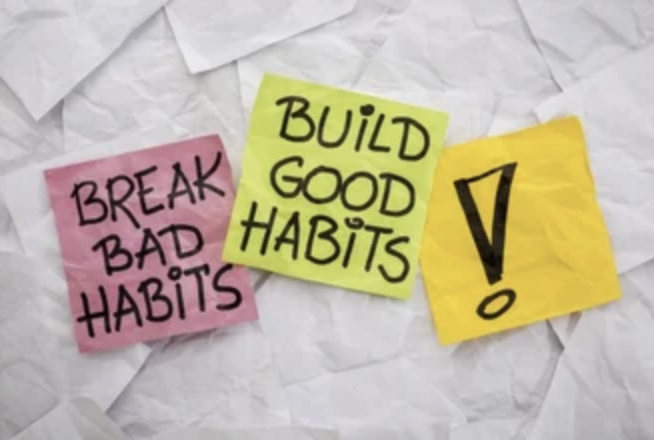
Don’t Waste Time Trying to Break Bad Habits – Instead Build New Ones

I bet I talk about this so many times in our schools, many of our students probably get “sick” of hearing it.

When it comes to dealing with bad habits, many of us attack the problem head-on, by trying to break the habit.  This tactic, of course, doesn’t work.  And we are left with the old truth – habits are tough (if not impossible) to break.  The blame lies with our brains.  While we are really good at building circuits (creating habits), we are awful at unbuilding them. Trying as you might to break a bad habit, it is still there, waiting patiently for a chance to be used.

So, what do we do?

The solution is to ignore the bad habit and put your energy toward building a new habit that will override the old/bad habit.

To build new habits, start slowly. Expect to feel stupid, clumsy, uncomfortable, and even frustrated at first…. after all, the new “wires” in your brain haven’t been built yet. Your brain still wants to follow the old “comfortable” pattern. Build the new habit by gradually increasing the difficulty, little by little. It takes time, but it’s the ONLY way new habits are created and grow.

To Learn it More Deeply, Teach It

I absolutely love this one.

Here is the issue. Every good golfer, every golfer who learns something new/reaches a goal, etc… must be their own best teacher. If you cannot teach yourself, your ability to make changes, create new habits, reach goals, etc. will occur in a much slower rate.

This is not saying you must create everything yourself, but it is saying you must take what you learn and translate into self-teaching.

Think about it – how much time to you spend practicing, and how much of that practice time is with someone teaching you?

If you are like most, 90% + of your practice time is on your own, trying to create new habits, etc. on your own. Meaning, you must be able to make sure you are doing things correct, must be able to make sure you are “going down the correct path”.

A great way to determine if you can teach yourself it ask yourself “Could I teach this (new habit I am trying to learn) to someone else?”

This works because when you communicate a skill to someone, you come to understand it more deeply yourself. Also, when you see someone struggle, and help them through it, you improve your ability to deal with your own struggles.

The saying “Those who can’t do, teach” should be rewritten as “Doers who teach do better!”

Give a New Skill a Minimum of Eight Weeks

When it comes to growing/creating/developing new skills, eight weeks seems to be an important threshold. It’s the length of many top-level training programs around the world, from the Navy Seals’ physical – conditioning program to the mission training for the Mercury astronauts. A recent study at Massachusetts General Hospital showed the practicing meditation for twenty-seven minutes a day created lasting brain changes in (you guessed it) eight weeks.

Of course, this doesn’t mean that you can be proficient in any skill in eight weeks. Rather, it underlines two more basic points:

1)  Constructing and honing new habits takes time, no matter who you are, and

2) Resilience and grit are vital tools, particularly in the early stages of learning. Don’t make judgements too early.

Keep at it, even if you don’t feel immediate improvement. Give your talent (your brain) the time it needs to grow and create new habits.

Please feel free to contact anytime – we are always happy to help and answer your questions.

Timg@gravesgolf.com

LOWERING SCORES USING GRAVES GOLF BY DESIGN (Putting)

By Tim Graves, PGA

I’m not gonna preach at you today about how important your putting stroke is.

If you’ve been around for a bit, you know that I’m VERY passionate about putting!

When it comes to creative and simple ways to check each aspect of your putting stroke away from the golf course, I’ve tried them all.

It was through many years of trial and error that I developed what I consider a great, as well as simple way, to check each aspect of your putting stroke away from the golf course.

You see, to practice efficiently, you must check a couple key areas:

  1. Squareness of putter face
  2. Eyes over the ball (target line)
  3. Squareness of shoulders at address
  4. The path of the putter head during the stroke

Being able to check these fundamental positions each and every stroke is key to having productive practice sessions.

With the development of the H3 Putting Mirror, I now have a way to ensure each fundamental of my putting stroke is perfect.

Simply put, this is a vital tool during my off season practice.

If you aren’t using an H3 Putting Mirror, I have to ask you, bluntly,

“Why?”

Even a 3-5 minute practice session in your living room with the H3 Putting Mirror will ensure:

  1. Your eyes are over the ball (target line), which will help you see the line, as well as create an ideal stroke.
  2. Ideal shoulder alignment that you can check in the mirrored surface.  Square shoulders produce an ideal stroke.
  3. You’ll see a perfectly square club face, as well as the ideal stroke with the guidelines on the H3.
  4. Raised edges will make you catch the ball on the upstroke, creating a perfect roll every time.
  5. CNC milled holes to develop a putting gate to further hone the perfect stroke each and every time.

THE 3 Ps OF PUTTING AND USING THE H3 PUTTING TRAINER

What are the 3 Ps of putting?…  simply stated, it is “Practicing your Putting with a Purpose”

Folks, it is actually pretty simple and painless, you just have to DO IT RIGHT!!!

Now, before you think to yourself, “Yeah, I know, Tim always says how important putting is, but I really need to work on my full swing first”, please read the following stats and “studies” that have been conducted and then I will explain how you can literally improve your game overnight…

First – You must first realize the importance of putting. 43% of scoring occurs on the putting green for the average player (male shooting 97, female shooting 107). As the scoring increases, so does the % of putts. For a scratch golfer, the percentage lowers to about 40%, but no lower.

Graves Golf By Design statistics are as follows:

30 handicap golfer (aver score of 100) – average 45 putts per round

20 handicap golfer (aver 90) – 40 putts per round

10 handicap golfer (aver 80) – 35 putts per round

Scratch golfer (aver 70) – 30 putts per round

Professional golfer – 28 putts per round

Second – You would think “that only makes sense” as the 30 handicap golfer will hit it further from the hole than the 20 handicap golfer, thus have more putts…. but you would be wrong. If you think of the way golf is played and the way putting stats are kept (just add up how many putts you have once the ball is on the green) – the 20 handicap golfer actually will hit more greens in regulation than the 30 handicap golfer (the 30 handicap golfer will be chipping from the side of the green, etc..). Meaning, if you take the average distance to the hole once the player hits the green, typically the 20 handicap golfer will be further than the 30 handicap golfer… in theory if both had equivalent mid/short games – but here lies the problem.

Third – There are only 3 areas that matter in putting (or any part of the golf swing) – Path, Face Angle, and Speed. Putting is affected by these 3 areas and only these 3 areas. Meaning, everything you work on in putting (for example the grip, set up, etc..) affects either path, face angle and/or speed. The better your path, the better your putting, the better your face angle at impact, the better your putting, the better your speed, the better your putting.

Fourth – READ THIS VERY CAREFULLY: Studies have shown that of 10 golfers who practice their putting, 5 will get no better, 4 will actually get worse, ONLY 1 will improve after practice. Please read this again – of those who practice their putting, 10% will improve after the practice, 50% will not, and 40% will ACTUALLY MAKE THEMSELVES WORSE. (This study was performed numerous times testing golfer’s putting prior to their practice session and after.) As is said by the individuals who performed these studies, “Golfers can add, subtract, multiply and divide, and they DON’T like these odds.” I don’t know about you, but if I have a 90% chance of not improving when I practice, “I ain’t practicing” (as they say in Oklahoma…)

Okay – now that everyone is on a “downer” about their putting practice, we’re here to fix that.

Over the years of playing and practicing with some of the best players in the world (including Moe, Tiger and many others), competing against many of these players, studying numerous techniques of the short game, etc… etc. we have created/perfected a method to improve your putting.

H3 Putting Trainer – How to Practice Your Putting with a Purpose EVERY TIME you practice. (In other words, every time you practice, you will one of the 10% who improves!!)

This is a Putting Trainer that works – WE GUARANTEE IT!!! This is how you (and most professionals) improve your putting. The system is not hard – in fact, it is very simple and doesn’t take that much time. Every minute you practice using the H3 Putting Trainer, it will improve your putting… which in turn will improve your scoring and decrease your handicap – SIGNIFICANTLY!!

Here are highlights of the H3 Putting Trainer:

    * Mirror for proper eye and shoulder alignment 

    * Beveled leading edge for easy ball placement 

    * Easy to see red line for proper path and face alignment

    * Red line to check ball under eye line and head still during putting stroke

    * Blue alignment lines to help the putter go back square

    * Blue alignment lines to square your shoulders

    * Putting gate holes to use tees to get path correct in back stroke (set up for different sized putters)

    * Putting gate holes to use tees to get path correct in through stroke (set up for different sized putters)

    * Raised edges for proper stroke.  Upstroke at impact, and proper back stroke

Here is what the H3 Putting Trainer checks (check points) every time you use it:

  • Square putter face at set up
  • Eyes over the golf ball (ball under eye line)
  • Golf Ball is forward of center at set up (creates overspin)
  • Golf Ball is set up in the middle of the putter (sweet spot)
  • Shoulders are square at set up
  • Only the shoulders move / rock in putting stroke.   Remainder of body still.
  • Hands lead maintaining shaft lean through impact 
  • Golf ball is impacted at center with no side spin (only overspin) and on center of putter 
  • Golf ball is hit on an upward blow
  • Hand are leading (H1)
  • Hands down the line (H2)
  • Hip check reminder (H3)

Everyone – no matter where you game is now – needs to improve their putting. You need to create more consistency in your putting. As shown, it is absolutely the faster way to lowering your scoring.

Remember the 3 Ps of Putting – Always Practice Your Putting with a Purpose and the best way to practice with your putting with a purpose is to use the H3 Putting Trainer.

H3 Training Aid:  CLICK HERE

Expectations (Replay)

By Paul Monahan, Graves Golf Mental Game Coach

Replay:

It is fascinating to me how MUCH our expectations can negatively impact our experiences…as well as our ability to perform at our best.

While watching the last round of the Waste Management Phoenix Open, I heard one of the CBS announcers – I think it was Peter Kostis – comment on the challenging day that John Rahm was having.

After three solid rounds, Rahm began his final series in second place, with a chance to win another event this year after a phenomenal previous year in which he earned his first victory as well as ten top ten finishes.

But after 16 holes, Rahm was at two-over par when he probably needed to be a 3 or 4 under parto be in contention to win. Rahm’s frustration was pretty evident.

At that point, Kostis commented that he thought Rahm’s biggest challenge would be managing his expectations.

What did he mean? Simply that Rahm had such an incredible previous year, that he would have to be careful not to create expectations in his mind about the results he would be able to achieve in any given week.

We perform best when we drop our expectations when we metaphorically leave our expectations in the car. These allow us to see our reality (the game, the shots, the putts…etc.) more objectively…and not have our perspective clouded by our stories.

A little over a week ago I had the chance to attend the Graves Golf Academy 3-Day School in Orlando…

During this first day of the school, Tim Graves and his staff emphasize the importance of starting the Single Plane Swing process with the shortest of golf moves possible – the putt – by leading a putting lesson.

As I interacted with some students during the putting lesson, I noticed how many were struggling with their mental game. And I know it sounds strange…we were practicing putting.

The guidance from Tim was this: work on matching the putting stroke model and don’t worry about sinking putts. We don’t care about sinking putts; we want to make sure that we are hitting “checkpoints.” If we get good at executing the checkpoints, we will make putts, for sure.

But here’s what I saw: guys were getting frustrated because they weren’t sinking putts. (And some guys were extremely frustrated.)

These were brilliant, accomplished people. They know how to listen and follow direction. But …they were stuck in their expectations.

When we get stuck in our expectations, when we view reality through the lens of hope, the only way we can be satisfied is if those expectations are met. (Makes sense…right?)

But if our expectations are not met then what happens? You guessed it: disappointment – or even worse: apparent frustration.

The guys on the putting green were missing putts they expected to make. And so, they experienced those misses as disappointment and frustration. (They even forgot about the purpose of the practice, to begin with.)

But what if they had been able to set their expectations aside?

They likely would have been able to perform better throughout the exercise and would have:

  • Remembered the purpose of the practice session
  • Not worried about the result
  • Focused on process
  • Worked on matching the putting model
  • Enjoyed the experience
  • Learned
  • …and maybe even been a little more fun to be around

I often tell my clients, the tighter your grip on your stories or expectations about what should happen, the more difficult it is to experience your reality in productive ways…especially when things don’t go as you think they should.

If you want to get better at this game, (or anything) you must learn to drop your attachment to results and instead, stay focused on the elements that produce the desired results. Like; gripping the club correctly, starting with a proper address, and matching the swing model.

When you miss a putt or hit a ball poorly, remember: that is a neutral event. It is neither good nor bad…it is. Learn to see the things that happen in your environment as they are…and not worse than they are. Learn to see them as a chance to learn something and master a new skill. No matter what happens.

Like John Rahm or the participants of our GGA Schools, we all would benefit by loosening our grip on our expectations…or dropping them altogether.

Paul Monahan, PCC is a Peak-Performance coach, member of the International Coach Federation and a certified COR.E Performance Dynamicsä Specialist. He resides in Cleveland, Ohio with his wife Paula and is the proud dad to three young men. He works with elite-level performers and leaders, helping them to expand their awareness so that they perform at their best more consistently.

Quantum – Why So Many Positive Testimonials

A “Quantum Leap” in greens hit in regulation…

By Tim Graves, PGA

We’ve been talking with Patrick Davis (Callaway Engineer whose team was responsible for designing the Quantum clubs) about the new Quantum Golf Clubs with the Modern 360 Undercut that gives you 6 to 10 extra yards on mishits ...

But there’s a second technology in these irons that’s just as important.

It’s called the Tri-Sole Design.

And when Patrick explained it to me, I immediately thought, “This is why players are going to feel more confident over the ball” and “Why getting so many positive testimonials already“.

The Tri-Sole is a progressive keel and chamfer that runs down the front half of the sole. It changes through the set—your 4-iron has a different sole design than your 9-iron.

The key feature? It lifts the leading edge off the ground.

Patrick told me, “We noticed players having better games than we anticipated, which doesn’t always happen. We’re excited when it happens, but as engineers, we’re gonna go, why?

So Patrick and his engineers interviewed the players who tested these irons.

Here’s what the players said: I feel like I can get down on the ball more because I’m not catching as much turf.

I feel like I can swing harder because my divot pattern’s just a little bit cleaner and I’m making better contact.

I’m building confidence.”

The irons made them feel like they could be more aggressive.

And here’s the data that backs it up …

Patrick’s team saw impact locations rise about one full score line during testing.

One full score line.

That means more center-face contact. More of those “crisp” feeling shots. Fewer thin hits off the leading edge.

Meaning – if you hit the irons a little thin (minimal divot) you will not lose much distance…. much less then before with other clubs.

Patrick said, “We can put all the AI at face. But if the consumer doesn’t perceive the club as easier to hit, easier to launch, they’re never gonna have the confidence when they pick it up.

This is where perception meets performance.

The Tri-Sole makes the club FEEL easier to hit. And when you feel confident, you play better.

Now here’s the question everyone asks me, Tim, which Quantum iron model should I get?

Callaway makes three models. Let me break them down for you.

1. Quantum Max

Patrick described it as “kind of smallest, most compact” of the three models.

It’s got a medium-width sole. 

Who it’s for: Players who take a divot and want forgiveness without a huge, chunky look.

2. Quantum Max OS

The “OS” stands for Oversized.

Patrick told me, “This is the Big Bertha vibe. It’s got a wider sole. It’s got more offset. It’s got a bigger head. It’s got a thicker top line.”

He also said, “Everything’s about confidence and launch in this club.”

The wider sole helps you get the ball in the air even if you don’t take a divot or minimal divot. You can bounce it. You can skip it. You don’t even need to use the turf—you’re still going to benefit from this design.

Who it’s for: Players who make minimal to no divots and need help getting the ball in the air. This is the model I recommend for most Single Plane golfers who don’t make a divot.

3. Quantum Max Fast

This is the lightweight iron. The entire platform is 20% lighter.

Why does this matter?

If you’ve lost swing speed over the years—and let’s be honest, we all do—this iron helps you get that speed back.

Patrick said, “That doesn’t mean they’re a beginner golfer. It’s maybe somebody that’s lost speed over the years that’s trying to find that back.”

Who it’s for: Senior players, lady golfers, or anyone who’s lost 5-10 mph of swing speed and wants to regain distance.

Here’s the key …

If you make NO divot or a very minimal divot, we’re going to recommend the Max OS or Max Fast (depending on your swing speed).

If you make a divot, we’re going to recommend the Max.

The sole width, the offset, the weight distribution—it all matters based on how YOU interact with the turf.

Go watch video with Patrick

Patrick holds up all three iron models and shows you the sole differences, the top line thickness, and exactly who each model is designed for.

If you are interested in the new Quantum clubs (Irons, Hybrids, Fairway woods or Driver) please contact me at timg@gravesgolf.com

To get your personalized single plane custom club fit: CLICK HERE

It is a free service set up for you.

The Short Cut

By Tim Graves, PGA

Do you know the most common question golfers ask us?

“Is there a shortcut to making swing changes and improving my game?”

The simple answer to the question is “Yes!”

The short cut – are you ready for it?…..  is all about FEEDBACK.

Most think it is about practice….  but does practice actually help??

Should instructors encourage you to practice?

You might not believe it, but golf instructors debate about this all the time. Many golf instructors believe that you should avoid the idea of teaching the importance of practice – that it takes away from the enjoyment of the game.  They argue that the game is about teaching golfers how to play not about teaching them how to swing.

Our position is that you really can’t have fun and play well if you don’t have a good swing. Furthermore, building a great golf swing is part of the fun. We also believe that teaching the golf swing is about helping golfers “shortcut” the learning process (practice), not avoiding it. Let’s explain in two sentences.

Golfers struggle and get frustrated (and score badly) because they are unskilled.  

Skill is acquired through practice.

All skills require practice and we can’t think of a game that requires more practice than golf. This might explain so many are frustrated with the game and why in recent years, more have quit the game then started new.  It simply takes too long to get good.   The question we should be asking is not whether we should be teaching golfers to practice but rather how can we help them learn to practice correctly and effectively and get better faster…

Don’t take my word for it, listen to Dan Coyle, author of the book The Talent Code.  Dan, who researched talent hotbeds describes the acquisition of talent in three important processes:

• Deep Practice–Everyone knows that practice is a key to success. What everyone doesn’t know is that specific kinds of practice can increase skill up to ten times faster than conventional practice.

• Ignition–We all need a little motivation to get started. But what separates truly high achievers from the rest of the pack? A higher level of commitment—call it passion—born out of our deepest unconscious desires and triggered by certain primal cues. Understanding how these signals work can help you ignite passion and catalyze skill development.

• Master Coaching–What are the secrets of the world’s most effective teachers, trainers, and coaches? Discover the four virtues that enable these “talent whisperers” to fuel passion, inspire deep practice, and bring out the best in their students.

These three elements work together within your brain to form myelin, a microscopic neural substance that adds vast amounts of speed and accuracy to your movements and thoughts. Scientists have discovered that myelin might just be the holy grail: the foundation of all forms of greatness, from Michelangelo’s to Michael Jordan’s. The good news about myelin is that it isn’t fixed at birth; to the contrary, it grows, and like anything that grows, it can be cultivated and nourished.

The way we see it is that you don’t need to practice harder, you need to practice smarter get help along the way.  We can relate to these three factors in my experience as well.

In our experience the students who are the most willing to practice and enjoy the process have the most success. 

Deep practice is getting into the place where real learning occurs.  This is where feedback happens and feelings are well….felt.  Let me give you an example.

In a recent school, we had been sitting in the meeting room for about an hour.  One student asked “when are we going to hit some balls on the range?”  We responded with a question, “We will let you hit balls on the range when you can reassure me that you are measuring and getting feedback on every swing.  Are you able to do that?”

The reason we have a great golf swings is not because we are more talented than any of our students.  We have simply spent more quality time working on my golf swing.  It come down to the quality of your practice, now how much you practice.

We put in the quality then I made is stronger with repetition.  Most students put in the repetition but not the quality.

Our teaching habits have changed over the years. We find it almost impossible to watch people practice ineffectively.  We start to get nervous and we usually jump in and stop it.  We then ask “what are you working on” and “how do you know if you are getting it?”.

We are now heading into 2025.  You have a choice.  You can go another year wishing your golf game improved and guessing at the outcomes or you can make a transformation in your approach.  This is what we are suggesting is that you take a giant leap by making some major changes. You can do this by understanding Dan Coyle’s three principles of talent.  Learn how to Deep Practice, Get Passionate about it and Get Help from a Master Coach. 

Now take some action on these principles and get practicing – correctly.

To find out more about how to practice correctly, deep practice and your short cut to improvement – please see:  CLICK HERE

LEARN

THE

SWING

Join 1M+ Subscribers to get your FREE Video Quick Start Guide that reveals how to hit the ball farther and straighter more consistently from now on…

START YOUR NEW GOLF SWING