Single Plane

The Concomitant Relation of Swing Plane, Lag and Release

I don’t know a golfer on the planet who doesn’t want to add 20 yards on the end of their average drive.  This equates to a club-head speed increase of approximately 8 miles per hour which, for most golfers, is a dramatic 10% increase.

Increasing your club head Club-head speed by 10% is a function of many factors which contribute to how efficient we use our bodies to release the speed in the correct location of the golf swing.  In other words, if you have great technique, you can easily produce speed.

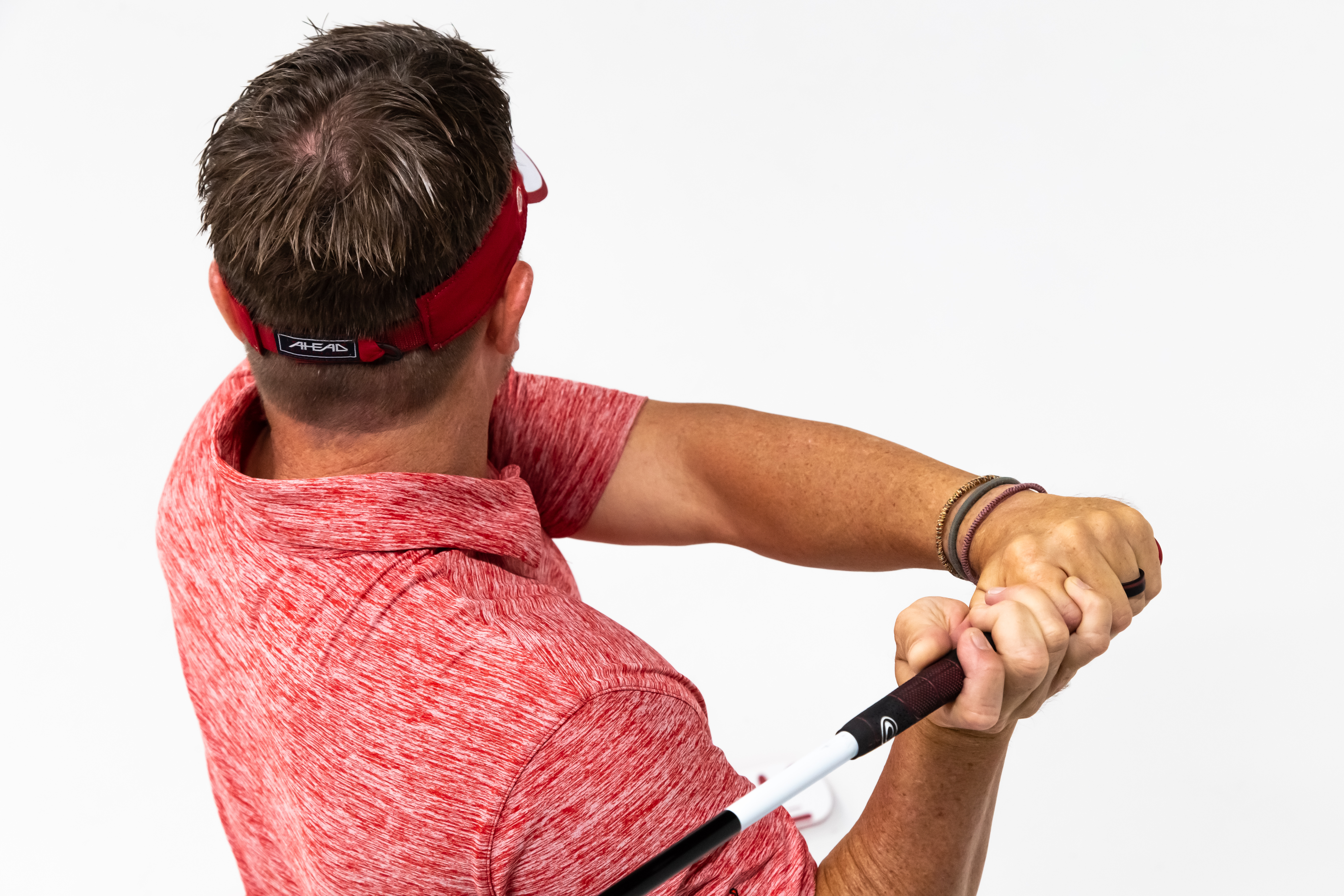
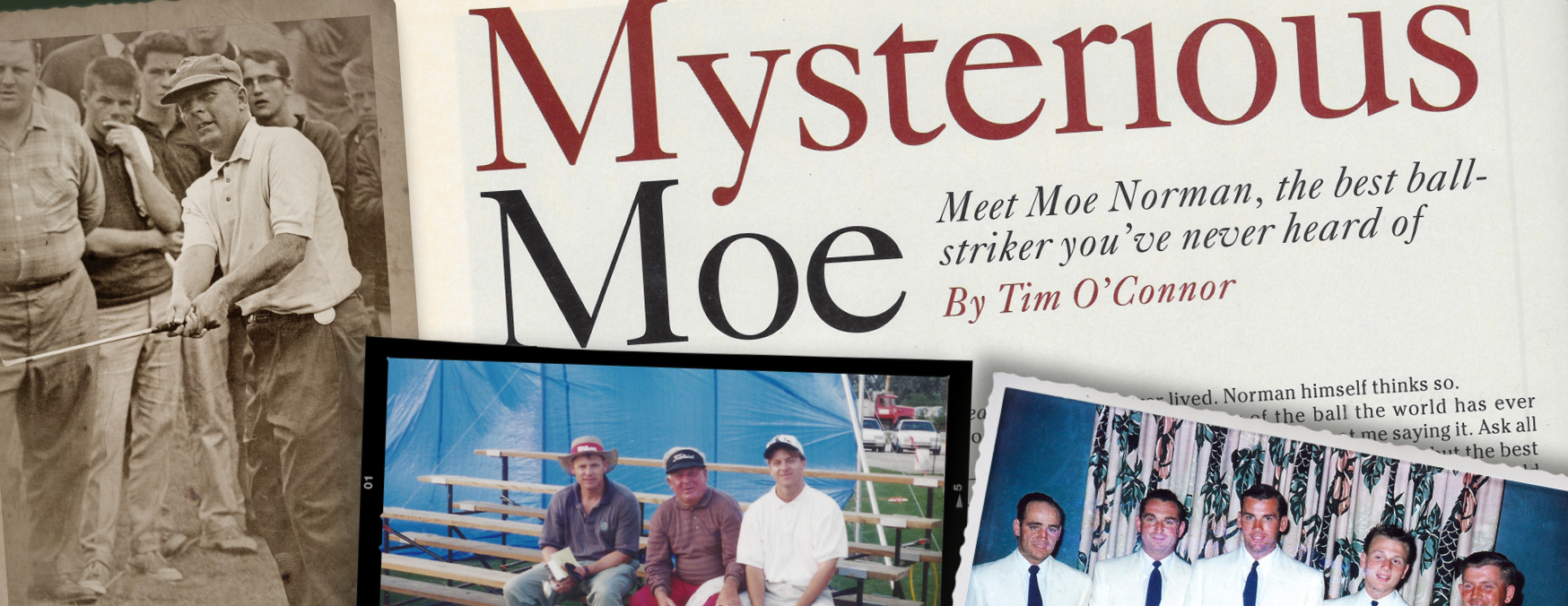
Moe would often discuss how he would “lead and lag” and included this as one of his magic movements of his swing.  In this picture he was exaggerating his demonstration of this feeling.

Moe Norman
Moe Demonstrating Leading and Laging

This feeling is only felt (excuse the redundancy), by proper movement and hitting the ideal positions of the body where the arms and hands can efficiently move. To understand why the technique of these factors are directly connected is so important, you must realize the relationship between Swing Plane, Lag and Release.

Swing Plane

Swing Plane is created by positioning our bodies correctly so that when the arms moves the club, they moves in a way where the club-head can move on an arc and path that can accumulate speed.  This accumulation of speed is also called “timing” where, as the body rotates and the arms move and hands hinge, the club is moving in a semi-circular path around the rotating body.

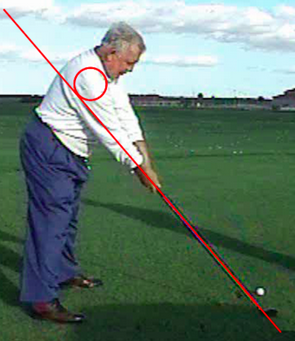
The initial swing plane is referenced at address (the Single Plane) where the club shaft is aligned with the trail arm. This extension of the arms creates a spatially wide radius for the hands to move the club around the body.

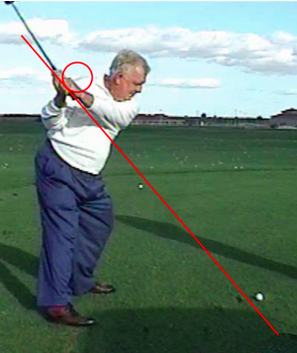
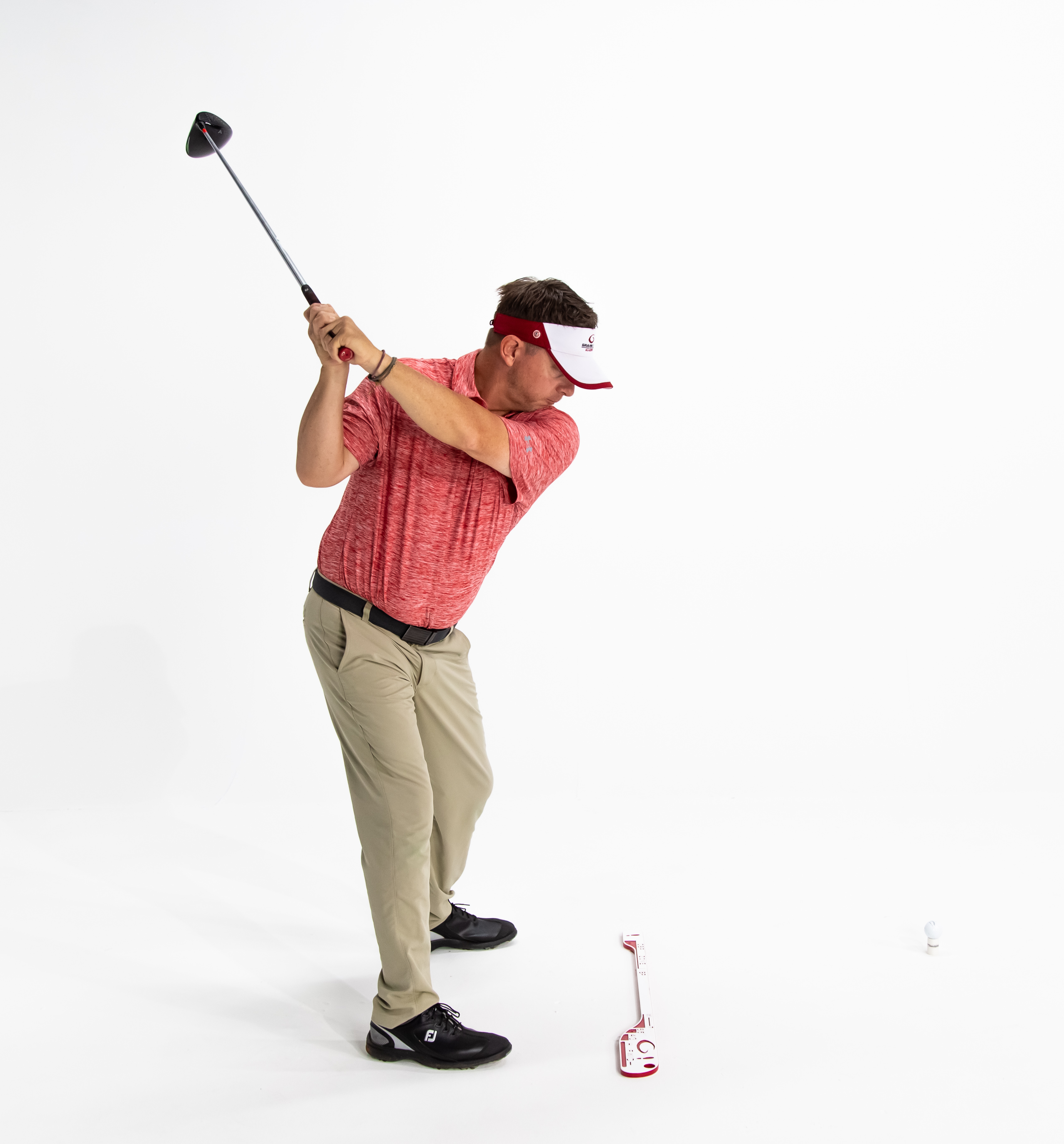
Single Plane Top of Backswing
Swing Plane at Top of Backswing

When you move the hands and arms correctly with the rotation of the body, the extension and timing of the hands and arms move in a way where the club can make a path of least resistance back and down.  A better way to say this might be to say – that the club is able to move on it’s fastest and most efficient path.

Lag

Technically, lag is where one thing leads as another thing follows another or lags behind.  Therefore, during a downswing, the body moves first, the arms and hands move next and the club follows.  One important aspect of lag is the leverage angle formed by the hand hinge which creates and angle allowing the club-head to lag behind the hands. This angle, after lagging behind in the downswing, will release to produce speed.

The angle formed by the hand hinge allows the club head to lag far behind the arms when the arms pull the club down in the downswing.

This angle is related to the grip and how the hands put pressure on the club as well as wrist hinge and how the trail arm folds.


The Pressure Points of the Hands

Feeling Swing Plane and Lag

When the arms pull the club, the club head will lag behind the hands where the mass of the club head is being pulled by the shaft.  This creates a Feel where you are pulling on the club but the club-head is staying behind. The pull of the club is related to how the pressure points of the hands are aligned to the shaft and the face angle.

The hinge of the lead arm pulls on the shaft when the torso rotates and pulls the arm.  The trail hand supports the club and will eventually “skip a rock” as it moves through to release the club through impact.


The Body Pulls the Lead Arm, which pulls the hand which pulls the club


Release

Release is dependent on a number of factors including how the body leads in the downswing and the lag being maintained in the downswing. When the body rotates ant the trail arm extends the club is released through the ball.  The trail arm has extended from its bent position (see picture above) and at the point of release, both arms are straight.  


The Position of release is dependent on how well the arm stayed bent in the downswing and the stability of the lead leg so that the upper body can continue to turn as the trail arm extends.

In summary, Swing Plane, Lag and Release are all related to producing speed and timing of the golf swing.  When you begin to move correctly and the club moves on plane, the hands hinge correctly and your body is able to efficiently “pull’ the club into the downswing.

As you pull and the pulling side of the body begins to stop, the trial side and take over as it rotates.  The trail arm extends and releases the leverage created in the backswing and downswing.

Similar to cracking a whip, release is a place where the speed of the club reaches its fastest point after impact.


The Two Lines and Tension Points of the Single Plane Swing

I spend much of my time stressing the importance of the Single Plane starting position.  It has been my experience that when I am unstable or uncomfortable at address, my ability to strike the ball solid and consistently decreases dramatically.  When I feel perfect at address, I am a great ballstriker.

I believe that many golfers take the address position for granted and focus more attention on the motion of their body during the swing.

The address position is more than just standing beside the golf ball holding the club.  There are important elements that must be present to engage the body ensuring that the first motion into the backswing, what I call the first move, sets the entire golf swing into the proper sequence.

Club to Body Spatial Relationsihip

At address, there are two straight lines formed between the arms and the club.  These two lines form a “club to body” relationship.  The relationship is spatial allowing the arms to easily return the club to impact.  Let’s take a close look at these two lines and the relationship that is formed.

Down-the-Line (Single Plane) – the First Line

Single Plane Address Line from Down the Line

This angle shows the alignment of the club with the trail arm into a straight line.  The club is NOT aligned with the lead arm from this angle.  If I removed the trail arm from the club, the club would align below the lead arm.

Single Plane showing Trail Arm and Lead Arm

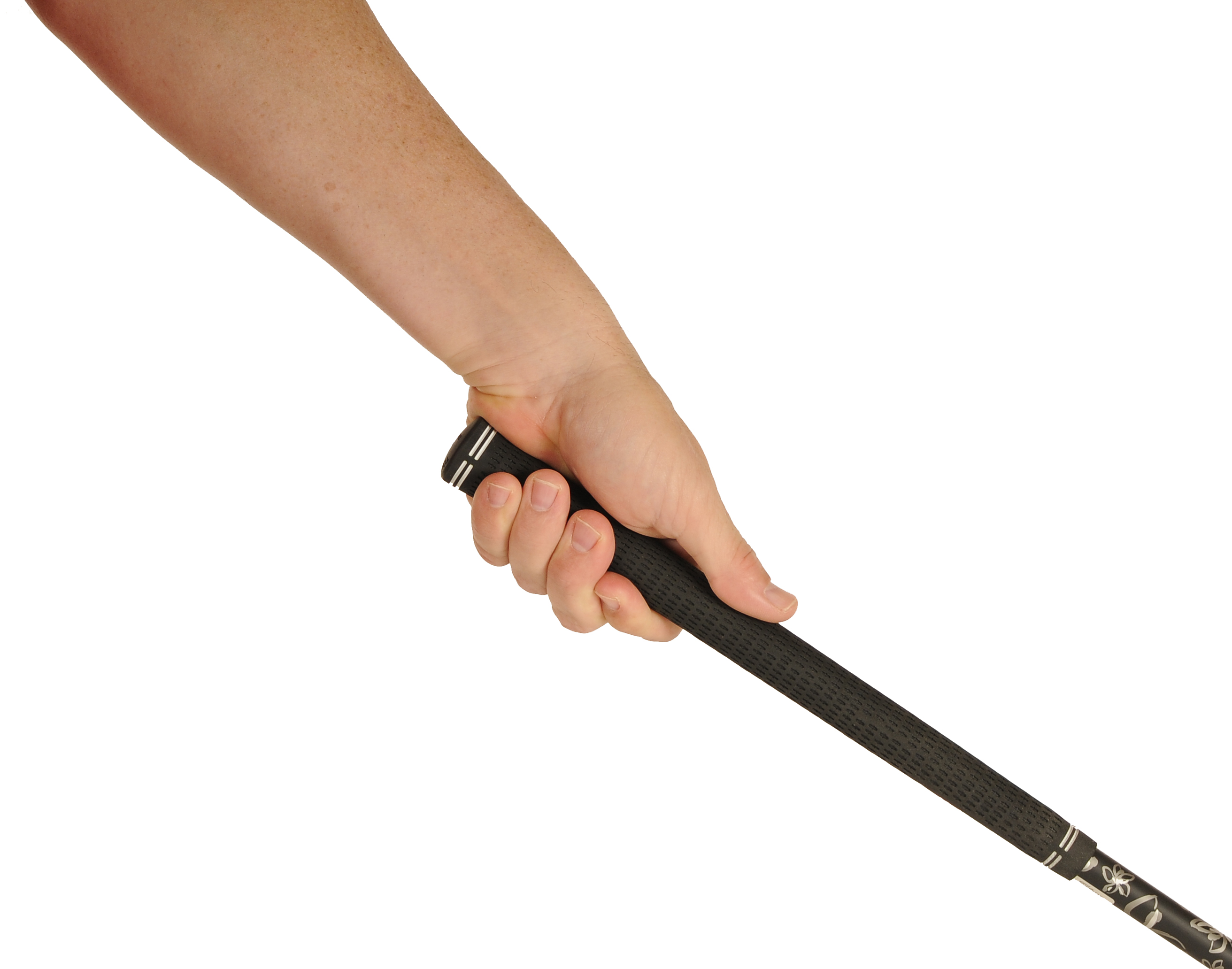
This is due to the club being held in the fingers of the lead hand into the heel pad.

Single Plane Lead Hand Fingers
The Single Plane Swing and Lead hand position

Face-on-View – The Second Line

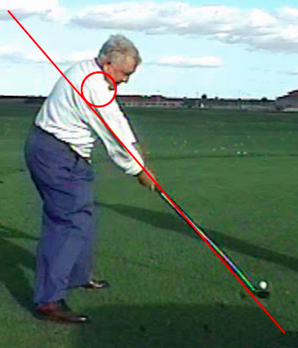
The second line can be seen from the face-on perspective where the club shaft aligns with the lead arm to the lead shoulder.

Single Plane Face on View

This alignment is a function and created by the tilt of the body.  The tilt of the body lifts the shoulder where you can see the extension which is where tension is felt. This is the area where the body feels engaged and ready to move.  The motion of the swing starts at the lead shoulder area because of this tension.

Single Plane Lead Shoulder Position

When the body is engaged, there is tension as various points feeling as though at these places you are in a “ready” state.  As the body prepares to make the first move into the backswing, with the proper tension at these places, the body is stable.  Stability at the correct places allows for the proper movement sequence.

Single Plane Swing Places of Tension

With the tension and stability in the correct areas of the body, there are also places that are relaxed, mostly in the trail side.  Instead of tension, these areas are “soft” and relaxed. See the diagram where the blue shaded areas mark the places in the body were there is very little tension. Single Plane Relaxed areas

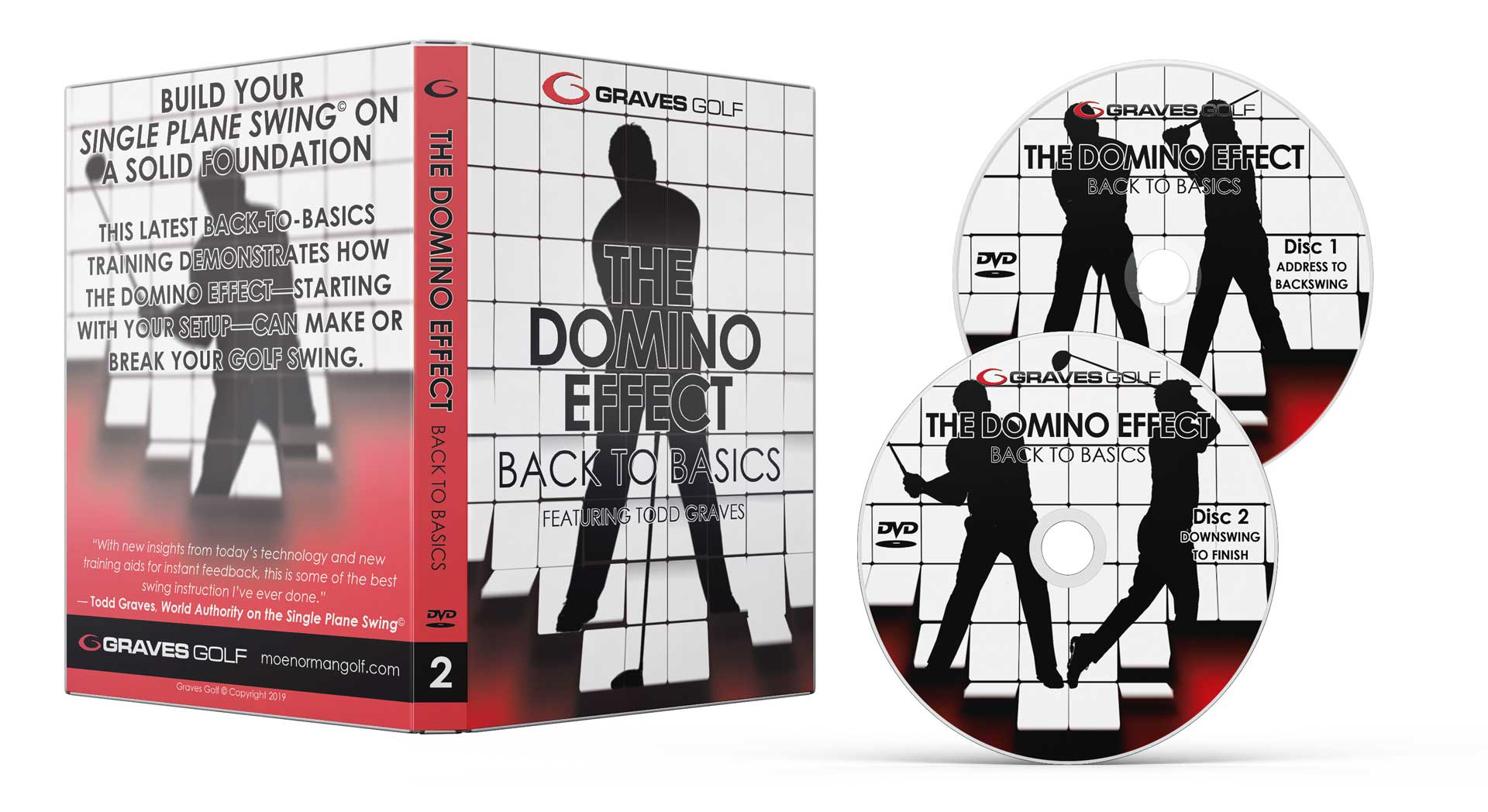
With the body engaged and relaxed in the correct places, you are ready to initiate the correct movement into the backswing.  Each aspect of the body’s position promotes proper movement.  The details of these aspects are an important part of biomechanics and swing sequence.  You can find out more about how each detail of the swing affects the swing in its entirety in my latest DVD product, the Domino Effect, Back to Basics where I discuss, in detail, each aspect of the Single Plane Golf Swing.

The Domino Effect – Back to Basics

Graves Golf Domino Effect


Moe Norman’s Lead Thumb – The Long and Short of It

The lead hand grip is more than just where you place the club in the hand. How your place the hand is just as important. If the golf swing were a jigsaw puzzle, I would consider the lead hand position my final piece.

When I first learned Moe’s Single Plane swing, was always intrigued by how comfortable he appeared at address.  He was neither relaxed nor was he tense.  it seemed that he was both.  His lead arm was straight and rod-like as it aligned and extended with the club.  His trial arm was straight but more underneath and soft.

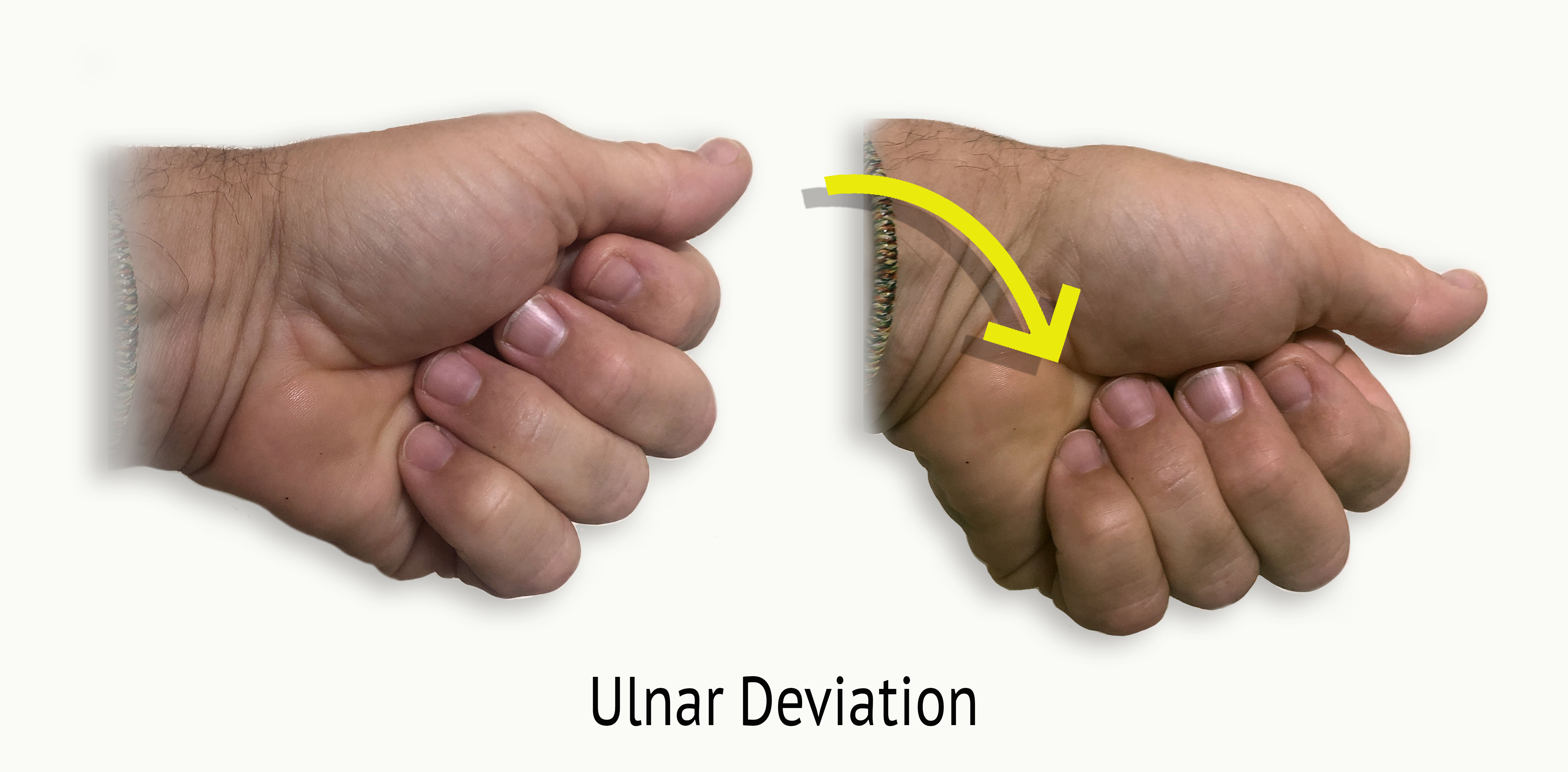
The tilt of his body created a perfect alignment of the club to his lead shoulder as he lead arm extended. Much of his lead arm alignment was related to his unhinged or ulnar deviation and lead thumb positioned down the grip.


Here is a picture of the Single Plane address where you can see the extension of his lead arm.

Single Plane Address Position

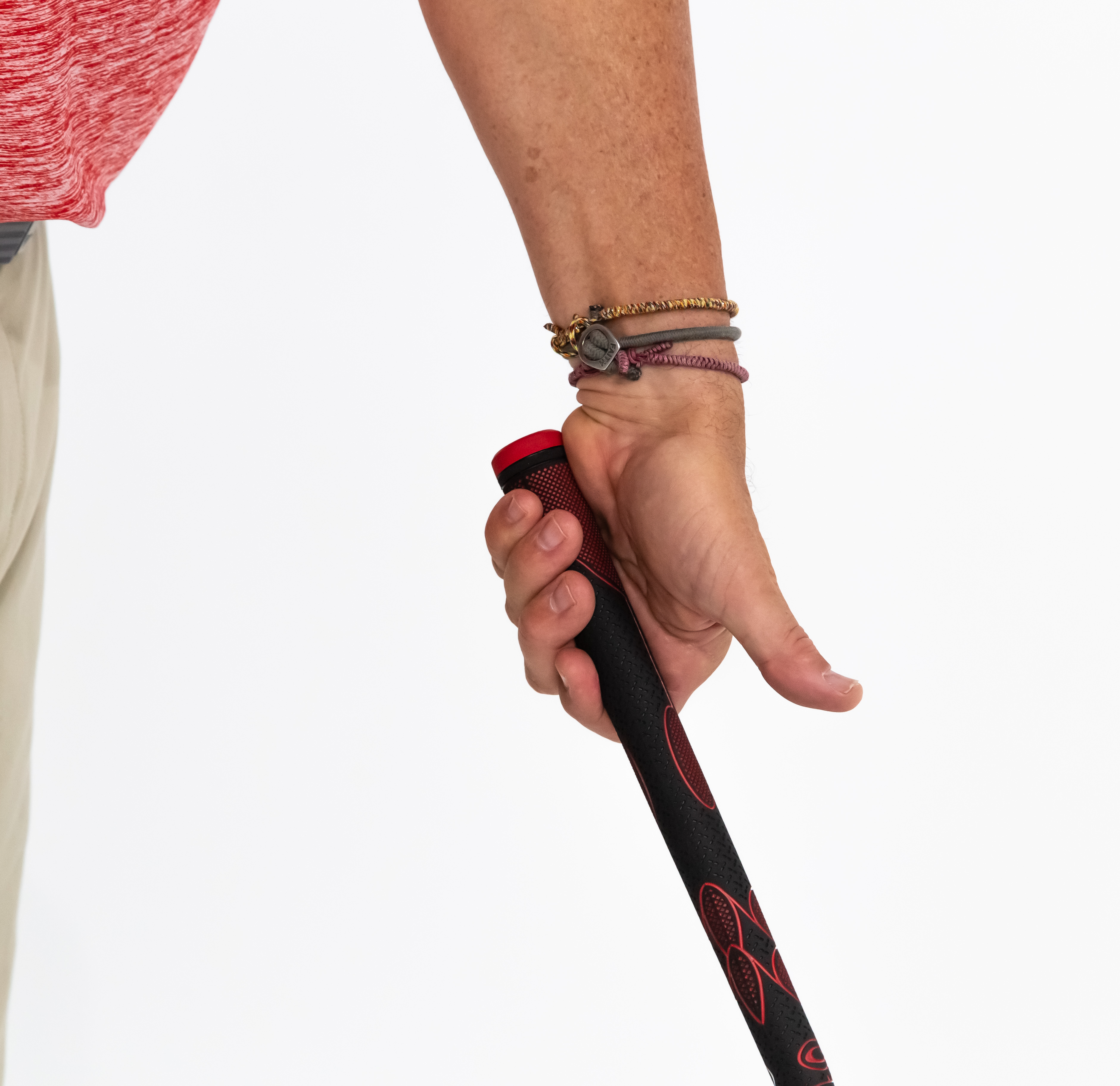
And how the hand is positioned when holding the club.

When the wrist is in the proper position, there should be no stress on the top of the wrist due to the  extended lead thumb position. The thumb is long but not extended too far down the shaft.  There is a gap between the thumb and the knuckle of the index finger where the fingers are tightly wrapped together under the club.

Single Plane Grip Position

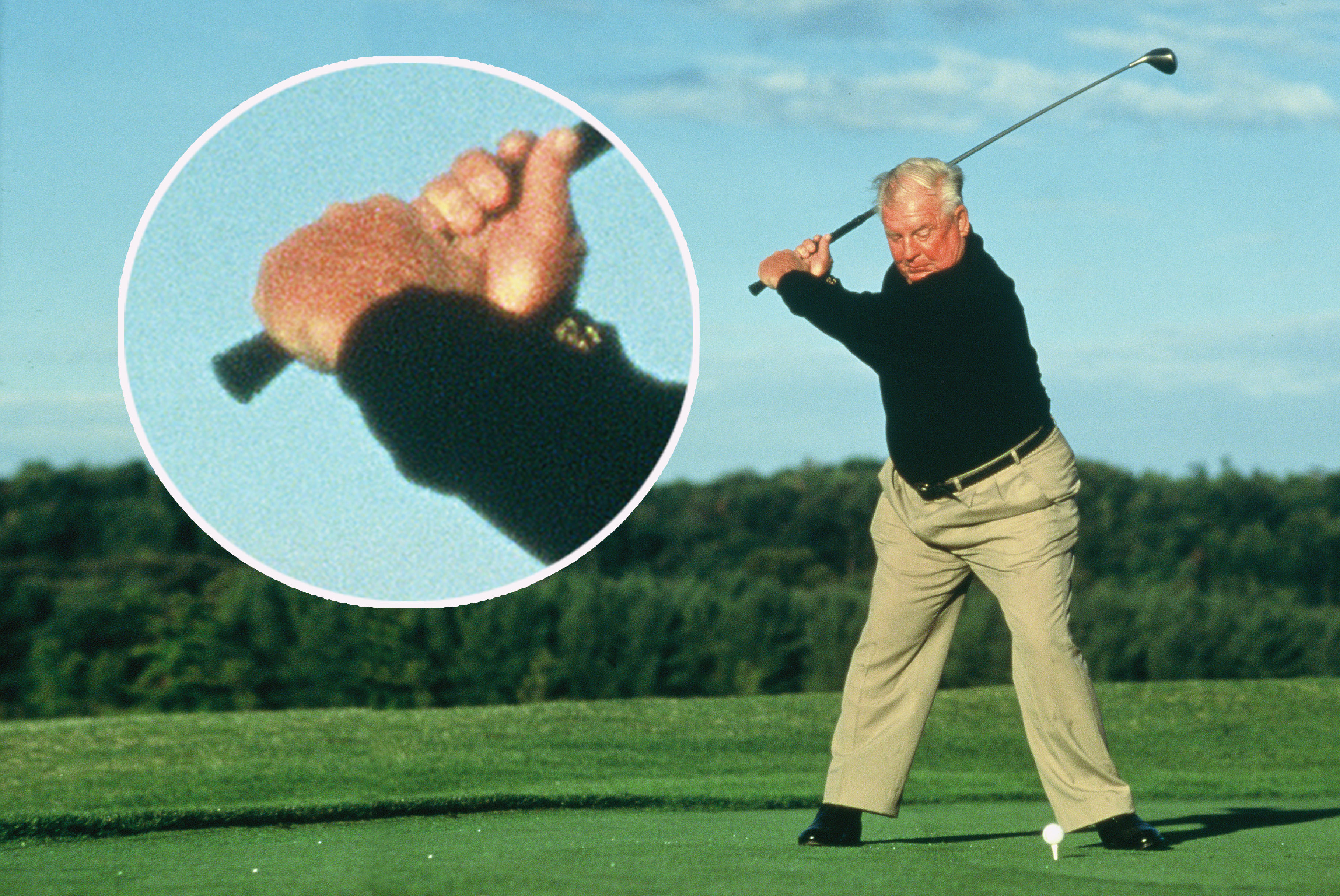
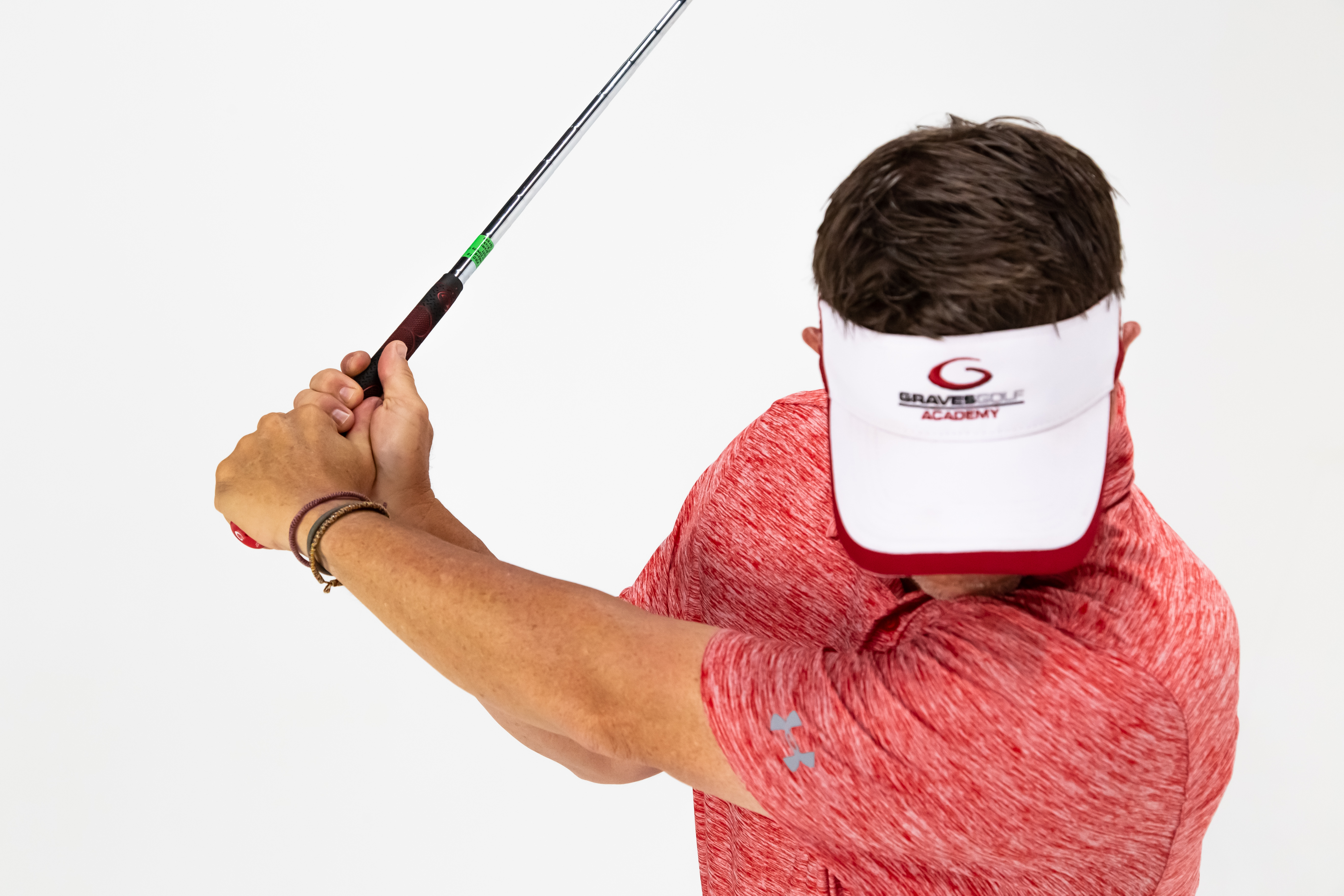
The extended thumb and wrist position at address translate into the proper hand action at the top of the backswing where the hinge of the hands leverage and support the club.

Moe Norman Hand Position at Top of backswing

Another view of the hand position at the top of the backswing shows the pressure in the trail hand as well.Single Plane Top of Backswing


Single Plane Top of Backswing

When the hands are positioned correctly they can work together and hinge correctly to the top of the swing.  This allows the club face to move correctly where it moves in rotation with the lead arm.

Single Plane Top of Backswing

Achieving the ideal lead hand position was the final piece of my Single Plane puzzle.  With a little attention to the detail of where you place your lead hand, it might be your final piece too.

You can find out more about the lead hand position and every detail of the Single Plane Golf Swing in my latest DVD product, The Domino Effect – Back to Basics.

The Domino Effect – Back to Basics DVD

Body Match-ups and the Domino Effect

Our recent Instructional Series “The Domino Effect, Back to Basics” is an apotheosis of my time in development of the Single Plane 3D – my deepest dive (to date) into measuring the mechanical model of the Single Plane Swing.  Single Plane 3D allowed me to quantify the exact positions, called metrics, of the body throughout the swing motion.  It also helped me understand body match-ups.


A Match-up is the relationships between body metrics whereby one body movement affects another.  For example increasing rotation of the torso decreases the forward bend.  Another match-up would be how one body segment affects another.  And example would be how increasing pelvis rotation will also increase torso rotation. Understanding match-ups is how the idea for the Domino Effect began.

It becomes overwhelmingly obvious that if you move incorrectly at any point during the swing, you must also proud a “make up” move somewhere in the swing motion.  The corrective movements that “make-up” for the mistakes, create inefficiencies.  The inefficiencies can devastate golf swings and power. This is why Moe would often stress the importance of what he called “The Purity of Technique.”

It is not necessarily more movement that produces speed. Speed is a result of efficient movement.  Great golf swings are powerful because they contain power through efficiency and technique – not effort.  One of the most common match-ups can be seen in the movement of the head throughout the golf swing.  I am not one to teach that the head stays still throughout the golf swing.  Ideal Single Plane Mechanics show that the head should stay in in the same area throughout the backswing and downswing but should move censurably forward after impact.  The forward movement of the head after impact allows the torso to continue rotating past the ball – allowing the arms to produce impact and speed at the proper places through impact.

The Domino effect can clearly be observed in the sequence of events through the ball where the rotation of the torso matches the movement of the head.  The motion of the arms match the rotation of the torso and so on.

Single Plane Head Movement

Head movement is just one of the many body motion match-ups evident throughout the swing motion.  These match-ups are cause / effect relationships that start at address.  To find out more about my latest product that can help you learn the golf swing – from the beginning and avoid costly mistakes, check out The Domino Effect – Back To Basics.

The Domino Effect – Back to Basics DVD


The First Domino

In air navigation there is a rule of thumb called “1 in 60”.  The 1 in 60 rule states that for 60 miles a pilot has traveled, for every mile that he is off-course is equal to 1 degree.  This means that the farther you travel, the more off-course you would be.

The 1 in 60 rule is analogous to the golf swing where, for every mistake you make at the beginning forces you to compensate and correct throughout the entire motion.  The problem with corrections during the golf swing is compounded when the entire golf swing is happening in less than a second.  When you make a mistake early in the swing motion it creates a domino effect throughout the golf swing.

Take the address position for example.  If you mis-align your hips, it affects your lower back (spine) affecting your shoulder position.  You shoulder position affects the way your arms extend and your arm extension affects how you hold the golf club.  Everything works together and the little things can cause big problems.  Moe would often refer getting the little mechanical elements correct as “the Purity of Technique” – something I always personally strive for.  Many of the problems in the golf swing are caused at the very beginning – the address – the first domino.

Let’s take a look at the Purity of Technique at address.

From the Down-the-Line Perspective, the clubshaft aligns with the trail arm and the lead arm is visible (1).  There is no gap between the arms and the legs are relatively straight (but not locked)(2).  The handle of the club (butt-end) is not visible under the trial arm (3).  The plane of the club-shaft runs to the middle of the back (4).

Gripping the club correctly isn’t enough to ensure the proper address position.  As a matter of fact, you can’t have a correct grip if the body position isn’t arranged properly – what Moe called Orientation.

Orientation relates to how the body is oriented that allows you to grip and stand correctly to the ball at the start.  The way to achieve the perfect grip is by positioning the body correctly as well.

Single Plane FO Driver

The tilt of the upper body orients the lead shoulder higher and extends the arms (1). This lowers the trail shoulder and places the trial hand into an “underneath” rotation (2).  The club (head) is placed below the nose to allow the club to fully align with the lead shoulder (3). The lead foot is turned out slightly (4). With these details in place, the V of the trial hand points to the trail shoulder and the V of the lead hand points near the middle of the chest. Notice how I positioned the body before I discussed where the V’s were pointing.   The V’s point correctly because of ideal body orientation.

Single Plane Driver Points

Like dominos where the first domino sets off a chain reaction.  When it comes to the purity of technique, your address position is your first domino.  and every detail matters.  This is the Domino Effect.

You can find out more about in my latest video Series “The Domino Effect” back to basics by going here:

THE DOMINO EFFECT DVD


Is Moe’s swing Left or Right Sided?

I hear this question often in one form or another.  Here is and example from a recent Youtube comment:

“With the single plane swing is the release a right inward throw or a left outward pull?“   I find these questions difficult to answer with a simple “Right or Left” after spending the last six years studying the “inside” of the Single plane swing with 3D modeling.  The problem with the question is that there is never a moment in the swing where the right side and left side aren’t active.   Just because the part of the body isn’t moving, doesn’t mean its not doing anything.  This becomes particularly obvious when you study motion and the Kinematic Sequence of the body.In other words, if the left side of the body is stopping – the act of stopping is also an activity.   Think of his this way.  When you are driving your car quickly and you stop, what part of the car is doing the most work?  If you guessed the brakes, you are getting the idea of what is happening in the golf swing.  Moving one part of the body correctly requires the body to stabilize other parts to accommodate proper movement.  Let’s look at the example from the YOUTUBE question about the release.   During the release of the golf club the lead arm / hand are slowing down as the bent trail arm is extending.  This happens at the correct time (and place) because the Pelvis has rotated into a flexed and stable trail knee.  When the pelvis is being stabilized, the lead side of the torso can also stabilize allowing the trail side of the body to keep rotating.   You can not “inward throw” or “outward pull” if these variables are not present.  There fore, the answer is that “both” the right inward throw and the left outward pull are occurring – it is just a matter of when and where.  It is not one or the other.   While I have used various analogies to describe specific motions in the swing such as skipping the rock with the trail hand and throwing a frisbee with the lead side, neither one describes the entirety of the motion. I would rather have you think of the golf swing differently.  I would rather have you think in terms of backswing and downswing with a change of direction or transition in-between.   Where I see the golf swing is largely misunderstood is that in each segment, such as the backswing, various parts of the body are moving and stopping.  In other words, it is not one continuous motion. It is actually a series of movements blended into one.   Take for example the backswing motion.  In the first few feet of club movement the pelvis has rotated 20 degrees while the Torso has moved almost 50.  

Take a look at the entire video of this back view.  It demonstrates how during the backswing as the body is moving , the trail shoulder stops and the hands and arms continue.  This is why Moe would describe the motion as In and Up.

You can clearly see how at a certain point the trail shoulder stops as the arms move and trail elbow folds up.   This is why it is much more advantageous to study the movement of the body as it compares the model than generalize the movements.

LEARN

THE

SWING

Join 1M+ Subscribers to get your FREE Video Quick Start Guide that reveals how to hit the ball farther and straighter more consistently from now on…

START YOUR NEW GOLF SWING