Putt Your Way to A Great Golf Swing – Indoor Training (Starting This Week)

Putt Your Way to A Great Golf Swing – Indoor Training (Starting This Week)

This Wednesday (October 6th) we are holding our first indoor / training webinar (Graves Golf Gold Members 10%ers Hour) for the Fall 2021 season.

During this webinar I will discuss how working on your short game (putting, chipping and pitching), if done properly, can and will dramatically improve your long game.

It always surprises me how many don’t understand this concept – working on proper short game fundamentals will improve your long game.

Click HERE for your FREE PUTTER FITTING

So – thought would talk about the first (putting) and how working on putting can help your long game.

Fundamental #1 – Hands Leading

In every shot in golf – your hands should lead at impact. In other words, your hands will be ahead of the golf ball at impact including putting. Then why do most average golfers set up with their hands behind the ball when putting?

When you set up over a putt, your hands must be ahead of the golf ball. The butt end of your putter grip should be forward of your belly button.
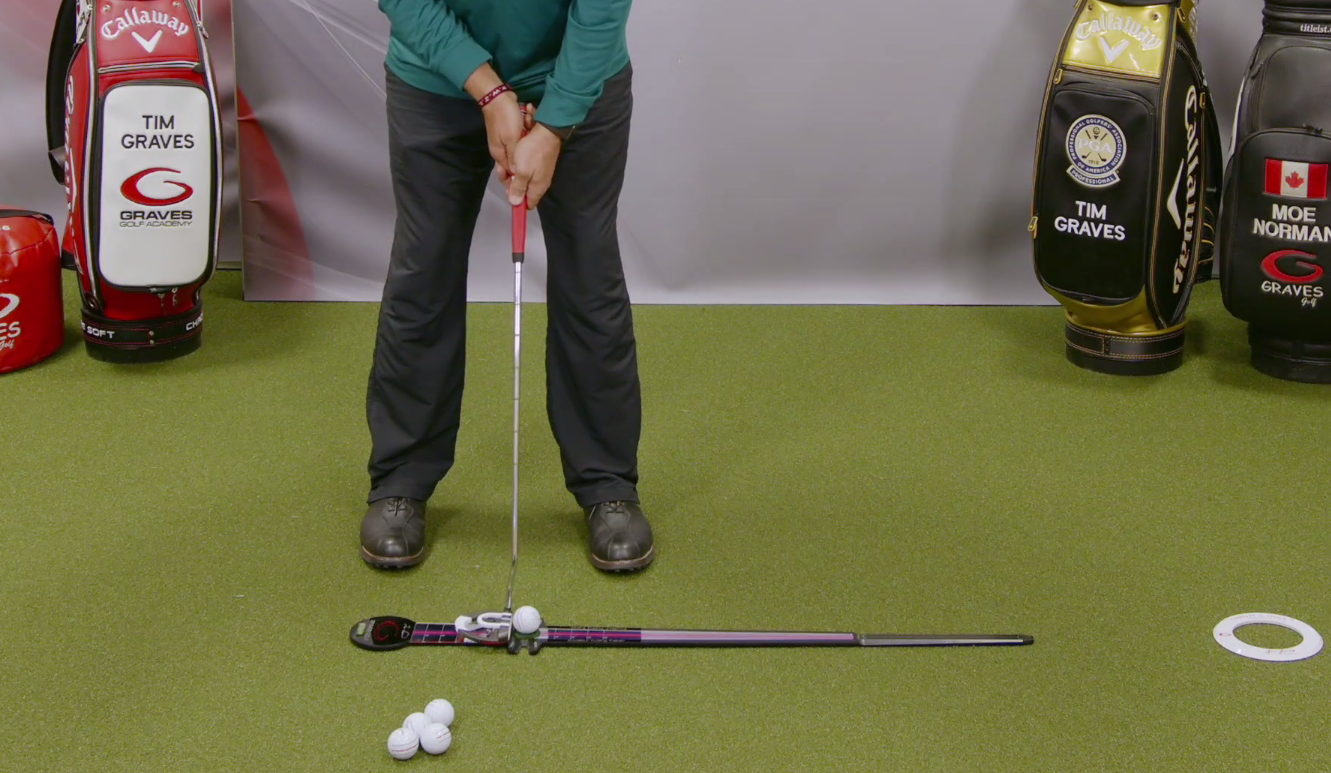
If your hands do not lead when you putt, it is guaranteed your hands will not be leading in your full swings. If your hands are not leading, you are training your body to make impact with the golf ball with the hands behind the ball. (Aka casting in the full swing).

Fundamental #2 – Face Square at set up and Impact

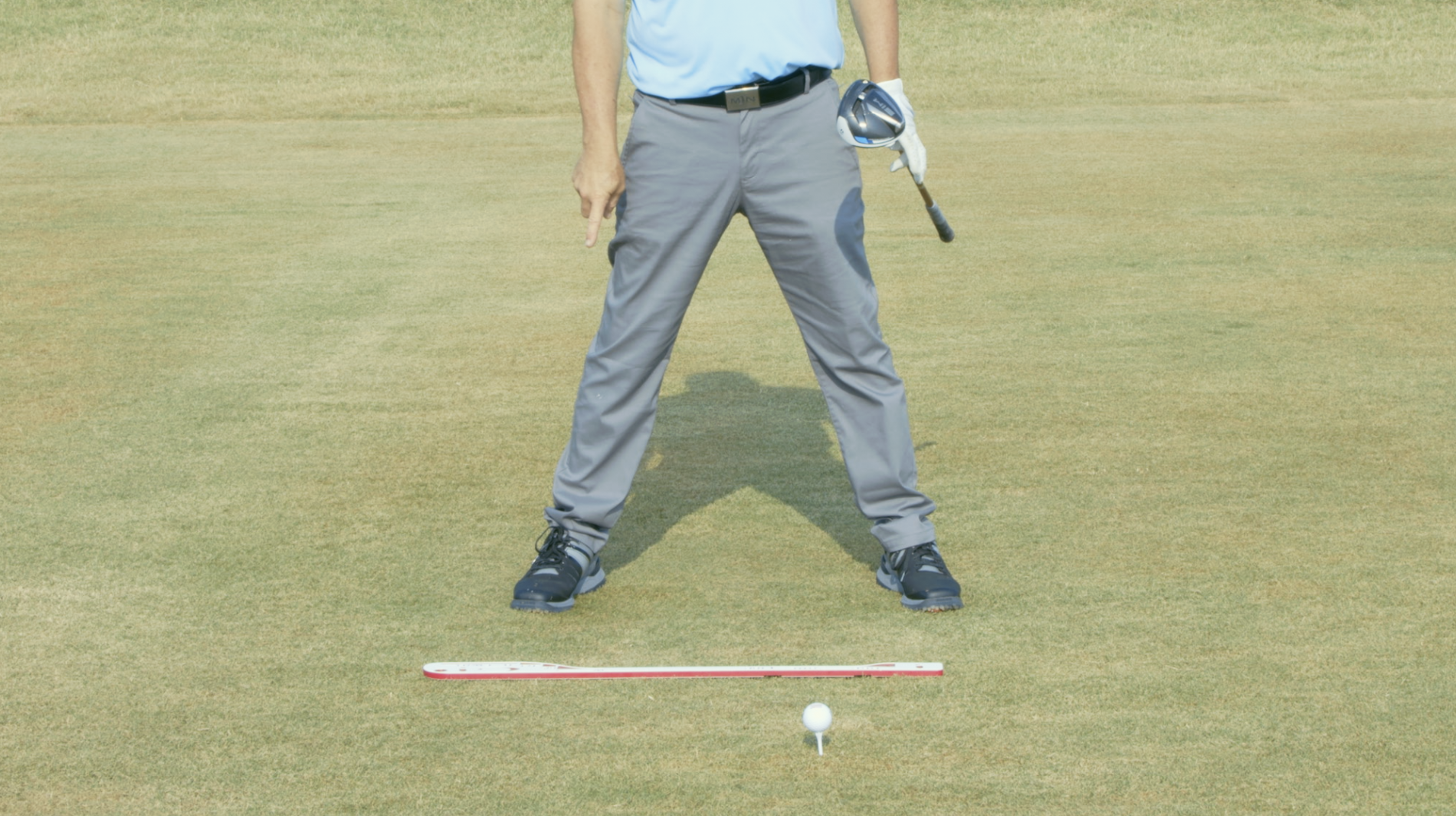
How are you checking to make sure your club face (putter face) is square at set up and impact?

It is strongly recommended you use a check system to make sure your putter is square at set up and impact (square to where you are trying to hit the ball).
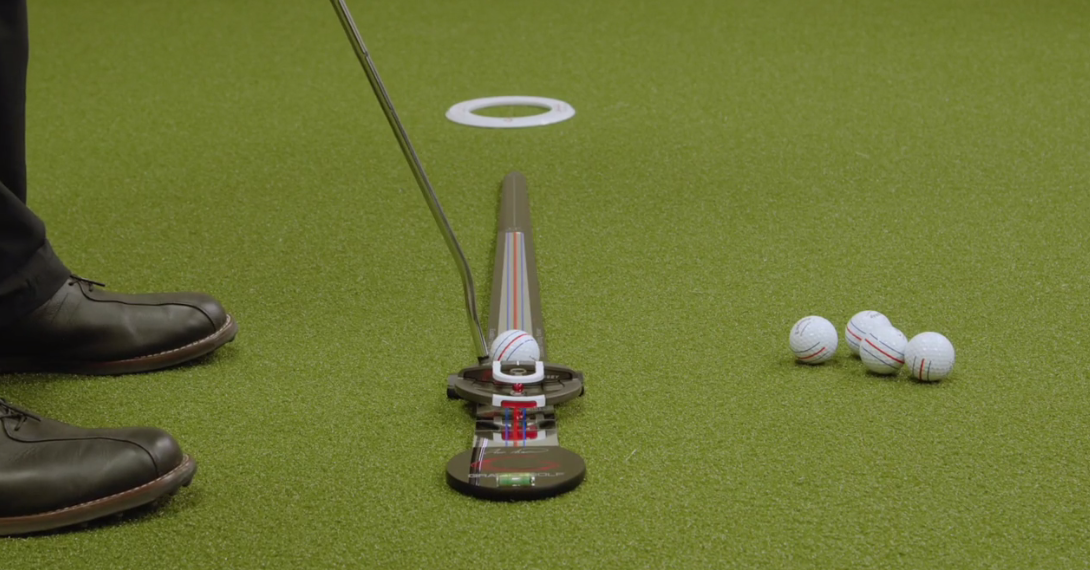
It is surprising how many golfers do not have a square face and compensate during the stroke.

The picture above shows using the Graves Golf Excalibur (Indoor / Outdoor Putter Training Aid) – checking the putter face angle.

And – can almost guarantee – problem squaring your putter face, same problem squaring any club face…

Fundamental # 3 – Hands Down the Line

How do you check to make sure your hands go “down the line” past impact?

Your hands should go down the line and toward the intended target through impact.

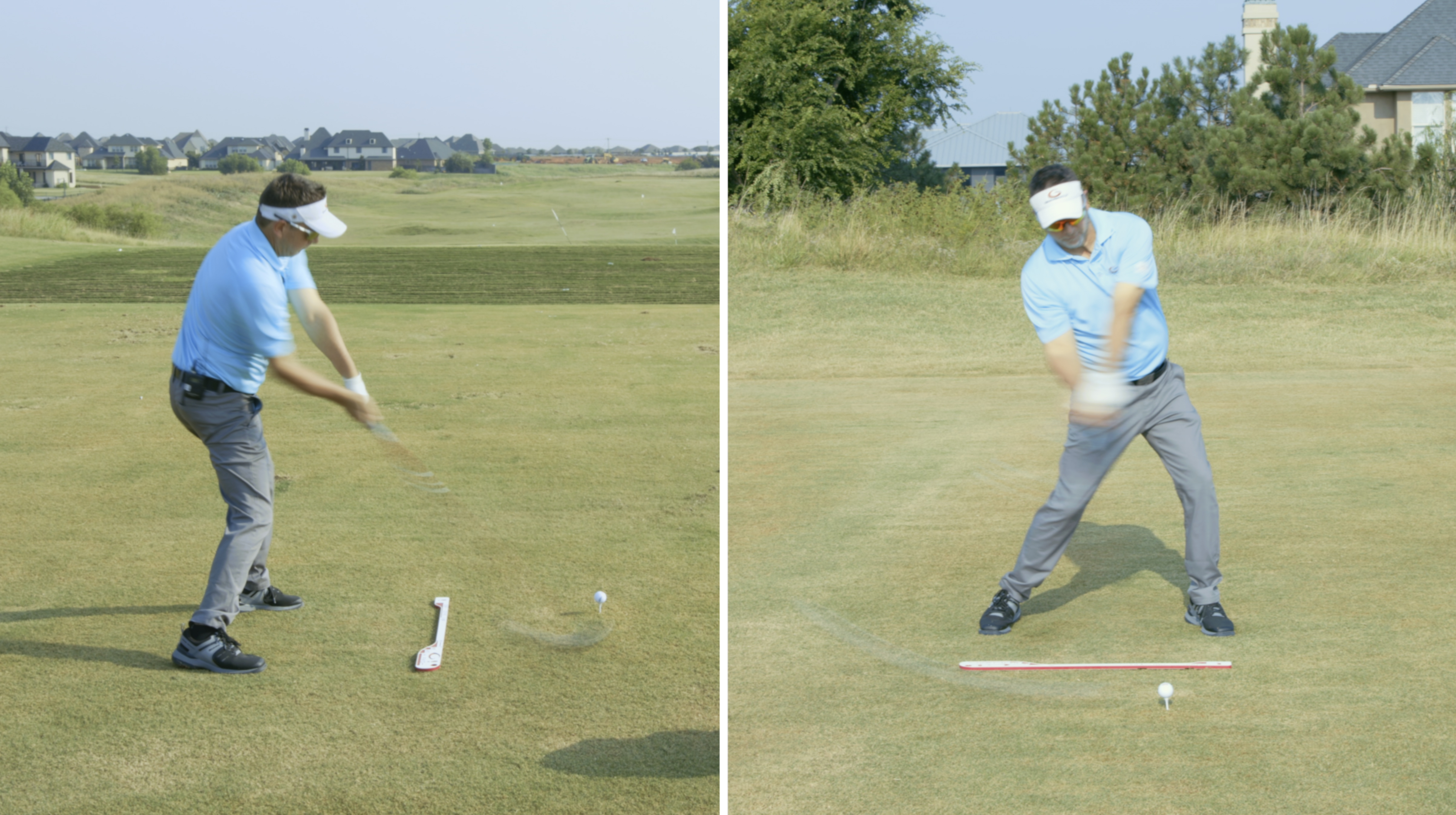
Most golfers struggle with this fundamental. Their hands go in and up through and past impact. Your hands should go down the line through impact. As you see in the picture below the putter face is still square past impact and down the line. This check will make sure your hands are going “down the line” toward your target.
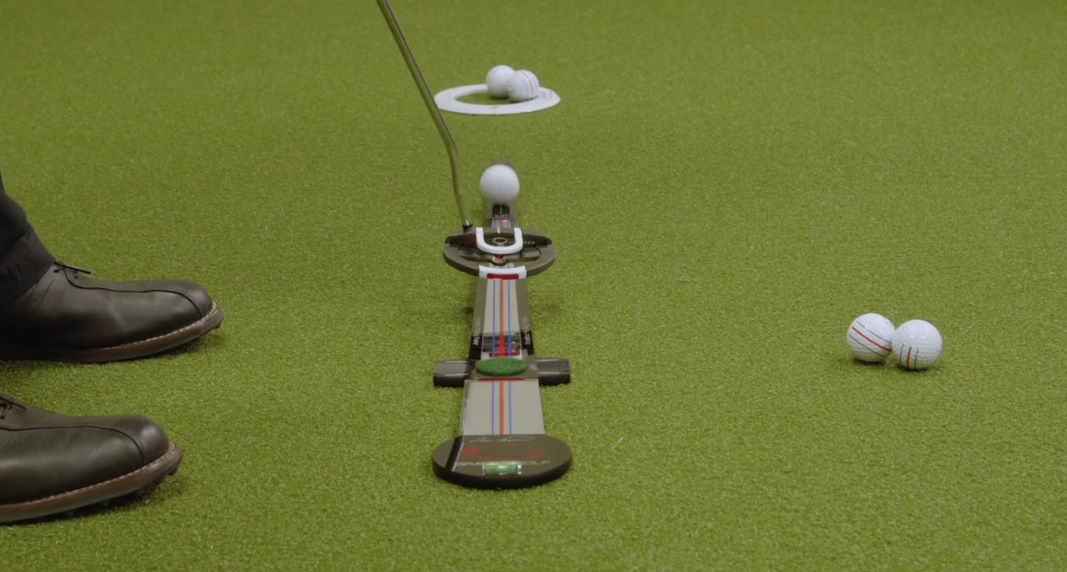
Here is another picture of the hands “down the target line”:
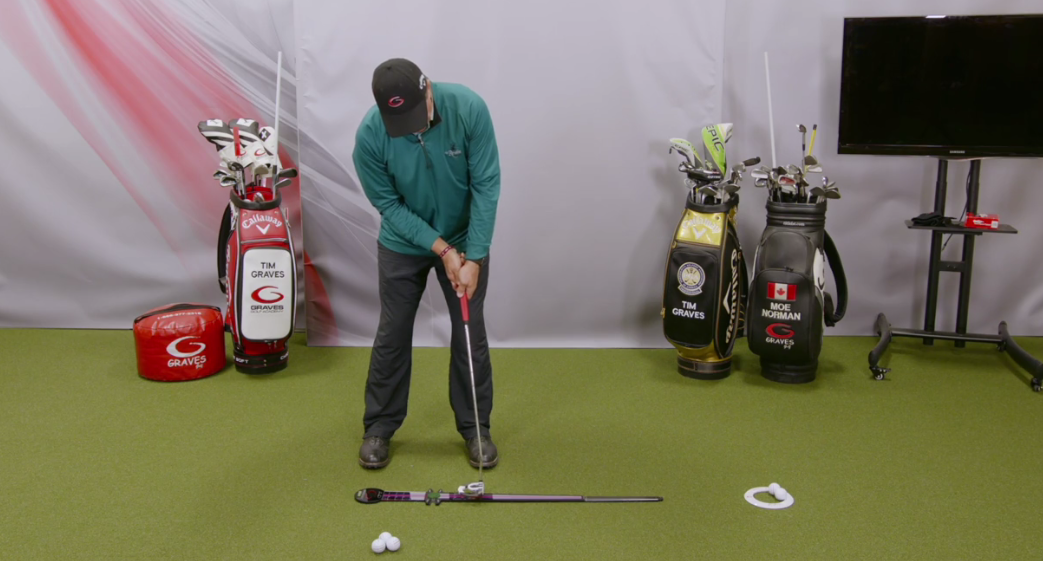
In the full swing, your hands must go down the line through impact. You can have an on plane golf swing – but if your hands do not go down the line, it will cause impact with a club face coming to impact at an angle (out to in, etc..). This is a start to working on getting your club face and hands down the line.

These are 3 putting fundamentals you can check that, if done correct, will not only greatly improve your putting, but will also help your full swing.

More information about our EXCALIBUR PUTTING TRAINER:  CLICK HERE

Hope you can join us this Wednesday, Oct 6th in our hour long instruction on indoor training.

If you would like more information on how to join us in this instructional webinar, please:  CLICK HERE
Save Your Body and Your Swing with Your Feet

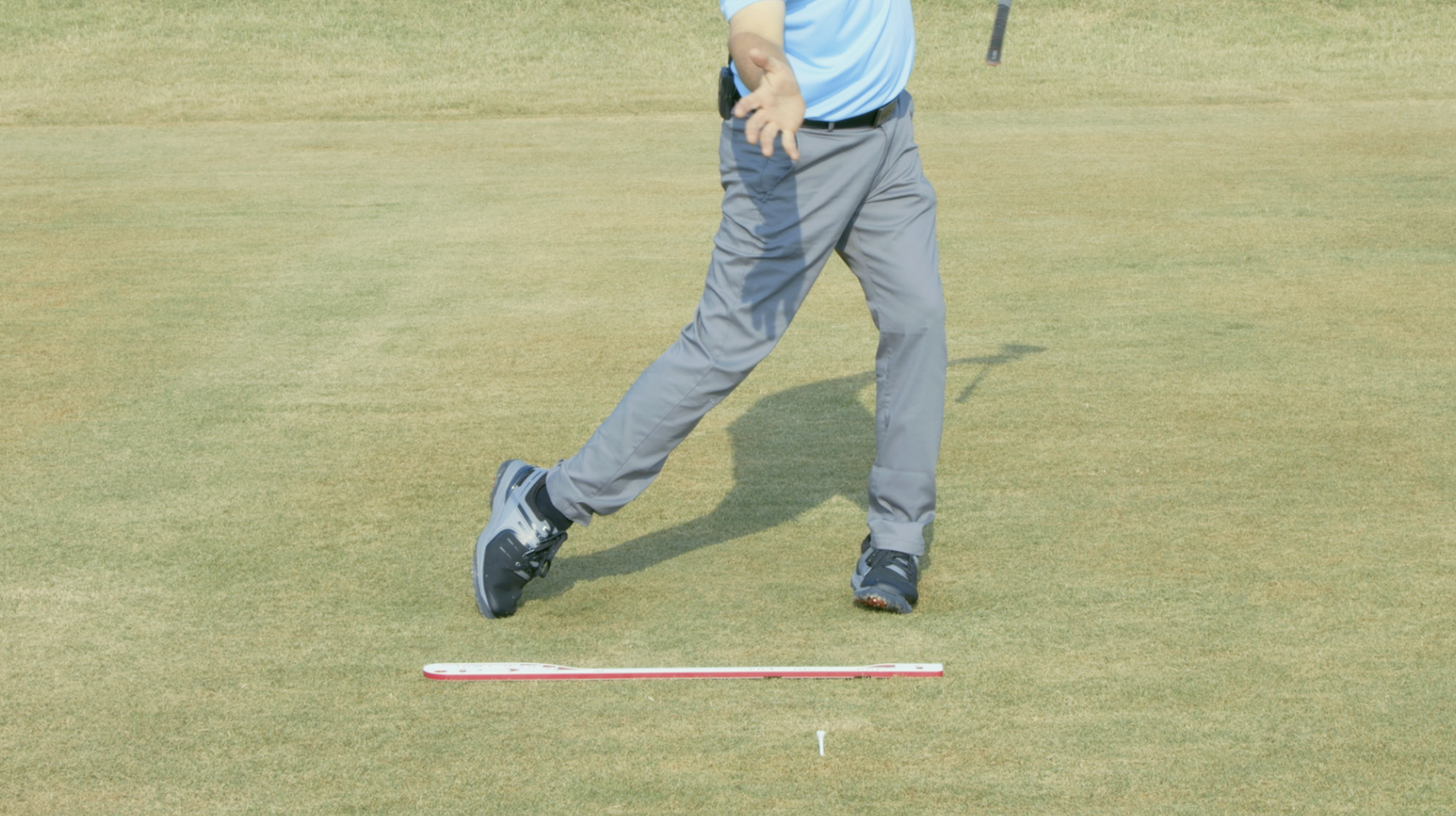
As an instructor, I don’t often debate other instructors but there is one thing that other instructors teach that I must correct and that is the position of the feet. In many instances it might simply be misunderstood or even ignored, nevertheless I do not like to see the feet in a straight-out position. When the feet are straight, this can cause rolling during the swing, instability and even stress on the back.

The feet are the stabilizers of the body during the swing. They support your connection to the ground. If your feet are out of position, you will lose stability and your golf swing consistency and power will suffer.

Bad Legs and feet

I recommend having the trail foot rotated slightly and the lead foot with twice as much rotation as the trail foot.

This allows you to stabilize your backswing against the trail leg for power and then, in the downswing, brace into a stable flexed lead knee through the ball.

Into Impact Single Plane

With the trail foot less rotated than the lead foot, you will be able to rotate the pelvis correctly throughout the swing and safely move through the ball which also saves your back.

If you are interested in lessons, you can contact Todd at toddg@gravesgolf.com or for more information about Todd Graves and Graves Golf, you can visit www.Gravesgolf.com or for more great tips.

Ryder Cup: Hope you Watched and Learned

It feels like it has been forever since the last Ryder Cup. As the teams readied themselves last week for the 2020 Ryder Cup at Whistling Straits, the familiar buildup and intensity had arrived.

For decades, this has been the most intense team event in all of golf. And no wonder: the pressure on the players is incredible as each of the players feel the weight of a nation on their shoulders.

I especially like how the Ryder Cup showcases the mental game of golf.  We rarely get to see the best golfers in the world crashing up against the outer limits of their mental game capabilities. The choking that we will see this week from fear, stress, overthinking, anxiety, and pressure…that’s the stuff that you and I see (and feel) every weekend!

So, last week we truly watched and learned so much about the mental game.

Some players handled the pressure very well – and others did not. The result? Those who played up to their potential. And those who do not.

In any competitive domain, one of the keys to performing up to your potential lies in your ability to manage your mental and emotional dynamics. In golf, this primarily shows up in how you respond to the variability inherent in the game, as well as things like fears and expectations unmet.

If I go out today and shoot my handicap or lower, it is likely that I have also been successful at managing my potential. If I shoot five or six over my handicap, then perhaps I was not. And after a round like that, I will be asking myself questions like:

  • What was bothering me?
  • What thinking may have gotten in the way of me playing my best golf?
  • How could my thinking on the course have produced better shot-making?

Three years ago, in September of 2018, I wrote some reflections on what we had all seen as Team Europe crushed Team USA by a very lopsided score of 17 ½ to 10 ½. Some players managed their potential well – and others did not.

(Check out my reflections here: http://moenormangolf.com/ryder-cup-thoughts/

Can you notice when the players on the course are impacted by things like the crowd, their competitor’s play, or even the outcomes of their own shots? What do they look like when they hit a poor shot, or when their opponent hits a great shot? What do they do next? Do they show resilience, or do they spiral downward in response to perceived setbacks?

Great players accept the variability in the game: the bad bounces, the missed shots, the opponents who are playing super-hot, the lipped-out putts. They also acknowledge and accept their own fears and anxiousness. And they STILL manage to play at a high level.

Hope you watched and learned last week. If you can begin to notice the mental game dynamics in your favorite players, you may be able to start exploring how some of the same dynamics are showing up in your own game.

Lob Wedge – Making it Your “Best Friend”

The Lob Wedge – Making Your “Worst Enemy” Your “Best Friend”

First, I want to say, I believe the lob wedge is one of the most important clubs in your bag.

In fact, I believe it is the 3rd most important club in your bag (refer to past e-tips for #1 (Putter) and # 2 (Driver).

Besides your putter and your driver, this is probably the club you will use the most in a given round… if you know how to use it and use it correctly…


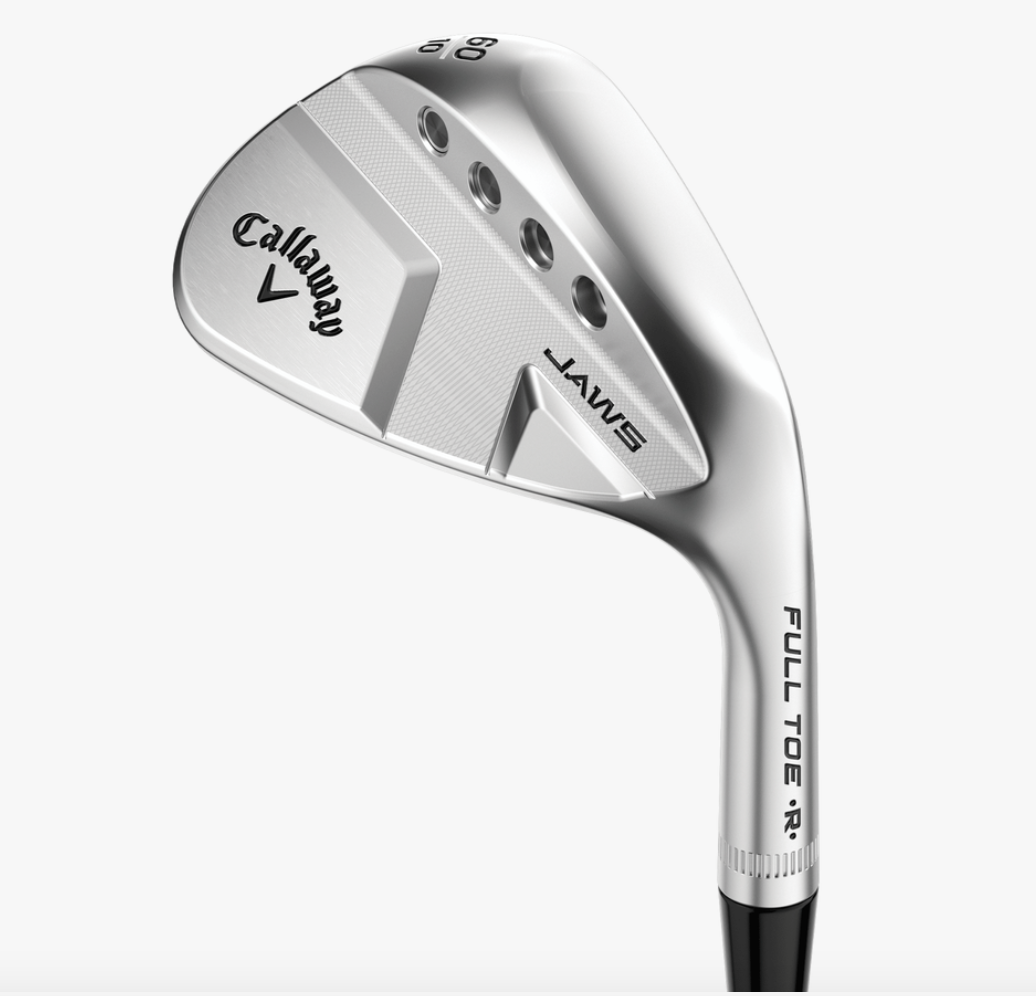
The perfect Lob Wedge: The perfect lob wedge (in my opinion) has the following characteristics:

  1. 58* of loft or more
  2. Forged type club (the softest material in a wedge that helps create spin and a very soft feel at impact – allows for the ball to land softly on the green).
  3. C – type grind on the sole of the club. This grind on the club allows to hit off of all different surfaces (soft, hard, etc..) and allows for different ball positions instance to hit low to high (lob) type shots. The C type grind on the sole keeps the leading edge of the club low to the ground when the ball position is “pushed forward” for higher / lob type shots.
  4. Medium to Wide sole on the club – the wider the sole – the easier it is to “slide” across tight lies.
  5. Needs to have swing weight heavier than most clubs in bag besides the sand wedge (swing weight typically between D-4 and D-6) – most lob wedges are built this way as the added weight helps cut through many surfaces (high grass, sand, etc..) and helps create better “feel” around the greens.
  6. Steel shafted. Again – the weight helps as described.
  7. Slightly rounded leading edge on the club – only slight, but this slight rounding also helps cut through different surfaces.

To see the video about us recommend wedges: CLICK HERE

Screen Shot 2015-10-17 at 8.53.57 PM

How to play the Lob Wedge:

For a full shot, (for many ranges from 30 to 60 yards, maybe slightly longer) – the ball is placed in the middle of the stance and swung with a good on the plane single plane swing. (Like any other club in the bag – ball position center of stance).

For a short pitch or high lofted shot (not lob or flop shot yet…):

  1. The ball is placed slightly forward in the stance (forward of center). As higher you want the ball – the more forward you put in the stance.
  2. The weight (body’s weight distribution) is 50/50. You do not put more weight on the lead foot.
  3. Stance is slightly open – about 10 to 20* at max.
  4. The hands are slightly ahead of the ball at set up.
  5. Choke down slightly for more control and better feel.
  6. You swing the club with VERY soft hands. This means light grip pressure on the club.
  7. You work on the fold/fold type swing. Meaning you fold your trail arm in the backswing and lead arm in the through the swing. Nice and easy….
  8. You accelerate through the shot – your hands should finish at shoulder level or above. If you think the swing is too long for the shot – shorten the backswing, but still keep a solid and extended through the swing.
  9. Swing toward the hole – as Moe said: “Try to pull the flag out with the head of the club”. This was his analogy of making sure the club is swung down the line toward the hole.
  10. Make sure the weight is evenly distributed throughout the shot and the feet stay down throughout the shot.

For a flop shot (high lofted short shot): Follow the points above except the following:

  1. Ball position – as forwarding instance as comfortable. Off lead heel or further forward is good.
  2. The weight distribution is still 50/50 or slightly toward the back foot. Keep weight balanced throughout the shot.
  3. The club slides under the ball… Think of sliding under the ball rather than hitting down on the shot.

To be honest, after teaching 1,000s of students in the past, this is always a difficult shot to master – it takes time, but once you get the “feeling” it actually becomes pretty easy and a great “shot saver” in the round. Here are a few faults many students have difficulty with while they are trying to learn the flop shot:

  1. Weight transfer – you need to keep your weight back to center during the shot – exaggerate this as much as possible. It is almost impossible to get the club to slide under the ball if you are transferring your weight too much forward.
  2. SOFT HANDS – if you think you have lightened the grip pressure enough – do it some more. The softer the grip pressure the easier it is to fold/fold in the shot which brings consistency and great feel with this shot.
  3. Acceleration – shorten the backswing enough that you feel you need to be pretty aggressive in the through the swing. A backswing that is too long creates deceleration in the through swing which leads to fat and/or thin shots.
  4. The swing toward the hole – great area to practice on swinging toward the target. Chances are if you are coming across your full shots (cut/slice) you are also doing the same in your pitching/flop shots.

In a good high pitch/flop shot the ball should land relatively soft on the green with minimal roll. In fact, if you listen to the shot, you will hear a “thud” when it hits the green. A good shot comes in soft, has minimal role… many pros call it landing like a “butterfly with sore feet”.

Hopefully, this helps those who are looking to help their short game – especially that all needed lob shot around the green.

Please feel free to contact me at timg@moenormangolf.com with any short game questions, questions about your wedges or any other club fitting questions.

Remember my saying: “I’ve never seen a good player with a bad short game and have never seen a bad player with a good short game.”

Coach – Tell Me It’s Not Mental…

My student TW (no, not that TW), has been coming to me for over a year on a regular basis. Over that time his ball striking has improved dramatically. He has been working consistently on his short game to get it in the single-digit parameters, owns great equipment which fits him perfectly – from the driver through the putter and, we’ve mapped out a course strategy to that maximize his potential for staying out of trouble, giving him the best chance of making some birdies. Outstanding!

However, Houston, we have a problem. TW has been shooting scores in the high eighties and he didn’t understand why and frankly, neither did I. Even after a stat analysis of his cards, while the problem was clear (too many penalty shots) the reason(s) were still elusive. TW is a middle-aged guy, quite calm in general demeanor and keeps himself in good physical condition. From a ball-striking and short-game perspective, there is no reason why he hasn’t been playing better. I began to suspect that this wasn’t a mechanical or swing-technique issue.

During a recent lesson, I watched TW hit flushed shots for forty-five minutes. I told him it was time for us to go on the course and see what was different when he took his game to the first tee. It didn’t make sense to me that his results weren’t better. He agreed, so we set up a playing lesson the following week.

Forward eight days. After a nice warm up in which we rehearsed the shots he would hit over the first three holes, I felt confident, in spite of what he had been doing in his recent outings, TW could produce a nice, solid front nine. My confidence was based on his warm up; he flushed every shot and kept them all on a rail. However, as we went to the first tee, I could hear Moe’s voice in the back of my head. “The longest walk in golf is from the practice tee to the first tee.” This was prescient!

At the first tee, a 500-yard Par 5, TW proceeded to hit a shot I had not seen him hit in at least six months. It was an ugly duck hook into the trees, followed by a poor recovery shot putting him only 30 yards ahead into a long bunker. Then, he chose the wrong club out of the bunker and chunked it. He was now laying 3 and still had 350 yards to go! TW went further downhill from there, as he eventually missed the green about 20 feet to the right from 100 yards with a wedge. Eventually, he chalked up a triple bogey eight.

The second hole was no better. A lost tee shot to the right set the pace for the hole. By the time he finished, TW carded an 8 with a nice three putt. My goodness what was happening? As I observed this usually calm, happy guy was now one tense dog with a clenched jaw, rapid breathing and jerky movements. His entire demeanor had gone from a usual peaceful demeanor to looking like he was plugged into a 220 outlet. He was wired and it was visibly showing in his energy and body tension!

After a dead pull into the trees on his third tee shot, I called a Time Out. If there was ever a time to talk about the mental-emotional state one brings to the game, this was it. He had literally hit a series of shots in the first three holes that I had not seen from him on the range in three months. I posed a single question to him. “What are you feeling right now?”

Without a moments delay, his response was totally revealing. “My heart is racing and I can feel it beating in my chest. I am feeling fearful about hitting the next shot and I feel anxious about not doing better. In fact, as I think about it, this is how I get in a lot of my rounds, so fearful of making a mistake.” Then, after a few seconds of reflection, he commented wryly. “Oh Doc, tell me it’s not mental.” Ok, now we had something to work on.

After some more chatting, we began to hone in on the fact that TW was experiencing classic performance anxiety as often experienced by athletes in all types of sports. I define this as the difficulties experienced when seeking to perform well under pressure. This is a common affliction – probably better known as stage fright. It has a wide variety of symptoms and levels of severity. But in the end, the result is similar – the normal level of performance suffers.

Stage fright is well known to those trying to perform a task when it matters to them, i.e.; giving a speech, singing in front of others, maybe taking a driving test or hitting a golf ball to a predetermined location within a certain number of attempts for an agreed upon prize – maybe a score. Any time the outcome matters to you, anxiety over your performance can raise its disagreeable head. A recent Gallup Poll reported that 40 percent of adults in the US experience some degree of stage fright. I personally suspect this number is way too low. I know very few people who don’t have a measurable degree of nerves when getting outside their comfort level.

Some will hold that the antidote to stage fright is the self-confidence that comes from preparation and training. If that was totally true, why do many professional athletes still get nauseated and highly nervous before a big event or even experience choking at critical moments during their performance? While having a significant amount of training and preparation is necessary to being ABLE to perform at a high level, it is absolutely not a guarantee one won’t experience anxiety. Watch the last nine holes of any PGA event and you will see the tourniquet tighten.

There Is a Simple Solution?

There is a surfeit of books written seeking to illumine the variety of strategies, tactics and techniques for staying calm when you get into your personal pressure cooker. Remember, pressure is any time the outcome matters to YOU. It doesn’t matter if it is for a .50 cent Nassau or a $10 million dollar FEDEX CUP closing nine. When it matters to you – your susceptibility to pressure is exponentially increased.

However, given that almost all pressure is self-imposed, I believe there is a simple solution to most mental and emotional pressure. It is basically to pay exquisite attention to what you are doing. 

Because it is simple, that doesn’t mean it is easy to do. Paying attention to what you are doing this precise moment requires great discipline and intention. If you will practice and develop a routine that facilitates you paying attention to your immediate and present actions, it is very difficult for the over-riding emotional concerns to take precedence.

This insight is grounded in the awareness that the majority of pressure felt is a result of your mind being oriented in the past or future, not in the present.  In TW’s case, he was thinking about how he would feel if he didn’t play well in front of his friends and how disappointing it was to put in all this time and energy practicing not to get the results. Recognize that these thought patterns are located in the future and the past, and have nothing to do with picking up a 3 iron and hitting a ball 210 yards in the middle of the fairway. NOTHING!

The objective here is to have you stay totally and completely focused on your routine or pattern and not the outcome or meaning of the result. An example of your internal dialogue shift could sound like this:

  • Current: “Darn, first tee shot. Hope I don’t embarrass myself by jerking one into the trees on the left. The last couple of times I blew this hole and it started the whole round off poorly.”
  • New: “OK, set up on the right side of the tee box and focus on hitting the ball straight at that tree behind the fairway bunker.”

Then, pay total attention to what you are doing. Focus on taking the proper grip, establishing the proper alignment and posture and then initiating the swing. Your entire attention is on the PROCESS of what you are doing, not on the potential outcome. You can evaluate the shot after you hit it, not before. Until the shot is completed, any anxiety over the result is self-defeating.

If you take a swing, you will get a result. That result will either be positive or negative based on your personal criteria. Stay focused on your present activity and you can minimize your anxiety. Give this a try and you will find your stage fright will begin to reduce and you will optimize your potential for a good result. What have you got to lose other than hindering anxiety? Go for it!

About the Author: Ron Cruickshank, Ph.D., is a GGA Instructor and he teaches the single plane golf swing for Graves Golf Academy.

Responsibility Mindset

By Paul Monahan –

Graves Golf Performance Mindset Coach.

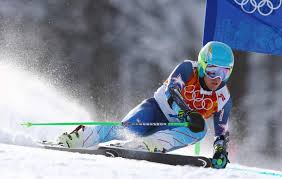
Ted Ligety was among the favorites to win gold in the Giant Slalom this year at the Olympics in Pyeongchang. Having won gold in 2006 in Turin, and again in 2014 at the Sochi Games in 2014, along with world championship titles in 2011, 2013, and 2015, Ligety is known as the King of the Giant Slalom.

But in 2018, there would be no gold medal in Pyeongchang. After a slow first run, Ligety finished the event tied for 15th…far out of the medal standings and a very long way from a gold medal. And he didn’t perform well enough in his second run to move up in the standings.

I don’t think anyone would begrudge Ligety if he were to look for something or someone to blame. “I didn’t have the right equipment.” “The conditions were poor.” “The food in Pyeongchang was terrible.” “My coach didn’t prepare me right.”

But Ted Ligety didn’t say any of those things. In fact, I doubt he even though those things. Ligety only stepped up and took ownership of his results, saying:

“That first run was purely me not having the right approach and going hard enough and going straight and clean enough. That’s all on me. Nothing to blame but myself for that first run.”

And then he said this:

“The second run was a mini-step in the right direction, but not anywhere close to the giant leap I needed to do anything. I tried to step it up a little bit more but didn’t have the speed in the legs today. So, that’s how it goes sometimes.”

I love that. And here’s why:

Ted Ligety knows who was responsible for his results on the hill. It was him. And he was not about to pretend that others (or other things) were to blame just so that he could save face or so that his pain of loss would hurt a little less.

So he stayed true to himself and was honest about his reality.

The highest achievers …athletes, leaders and performers don’t blame others when things go wrong. They seem just to know intuitively that their achievement depends first and foremost upon their actions.

How can this help your golf game?

I believe that any successful endeavor must include a responsibility mindset: a mindset that never blames others or on other things. It is a mindset that is rooted in the belief that we control our destiny and that our thought processes, decisions, and actions are what drive our success or achievements.

We all know someone who blames everyone else (or everything but themselves) for the things that happen to them.

They might even use language like: “He was talking about my backswing…that’s why I hit it in out of bounds.” “She didn’t pack my rain jacket, that’s why I lost the match.” “I missed the putt because these greens are terrible.”

Etc…etc…etc

While that person might believe that all these things are causational, the objective reality is much different.

If I were working with them as their coach, I would challenge their notion of cause and effect …and would help them to understand what was going on. I would point out to them:

You hit it out of bounds because you did not deliver the clubhead squarely to the ball.

You lost the match because your opponent scored more points than you.

You missed the putt because you misread the break.

Why is knowing this important?

Because the sooner you can see your reality more objectively, the sooner you can develop the skills that allow you to perform better. (Like, squaring the clubhead to the ball more regularly, scoring more points in your matches, and reading brakes more efficiently.)

I encourage my clients to learn how to tell the difference between what is TRUE for them versus what is THE TRUTH (objective reality.)

Once they get better at seeing the TRUTH, their mental and emotional dynamics change for the better, and they can work more productively toward their desired goals: more fairways hit, more greens run in regulation, fewer putts per round…etc.

Operating from blame is a trap it limits our potential at any moment.

Operating from objectivity…when we are not weighed down by judgment or our story is liberating.

Free yourself. Be responsible. Stop blaming. Period.

Paul Monahan, PCC , Graves Golf Mental Game Coach, s a Peak-Performance coach, member of the International Coach Federation and a certified COR.E Performance Dynamics Specialist. He resides in Cleveland, Ohio with his wife Paula and is the proud dad of three young men. He works with elite-level performers and leaders, helping them to expand their awareness so that they perform at their best more consistently.

LEARN

THE

SWING

Join 1M+ Subscribers to get your FREE Video Quick Start Guide that reveals how to hit the ball farther and straighter more consistently from now on…

START YOUR NEW GOLF SWING