Success Story From Fellow SP Golfer

Success Story From Fellow SP Golfer

I know you guy’s appreciate success stories, so here is another.

I’ve been a Gold Member for approximately 1.5 years and recently purchased the Excalibur/H3 mirror package.

A couple weeks after, I finally sprung for properly-fitted irons through Tim.

Today was my FIRST round with those irons and in 45° weather, I shot low round of the year of Even par(+2 on front/-2 on back).

Having practiced a couple hours each week on the Excalibur, I made every putt today that I was supposed to and a couple that I probably shouldn’t have.
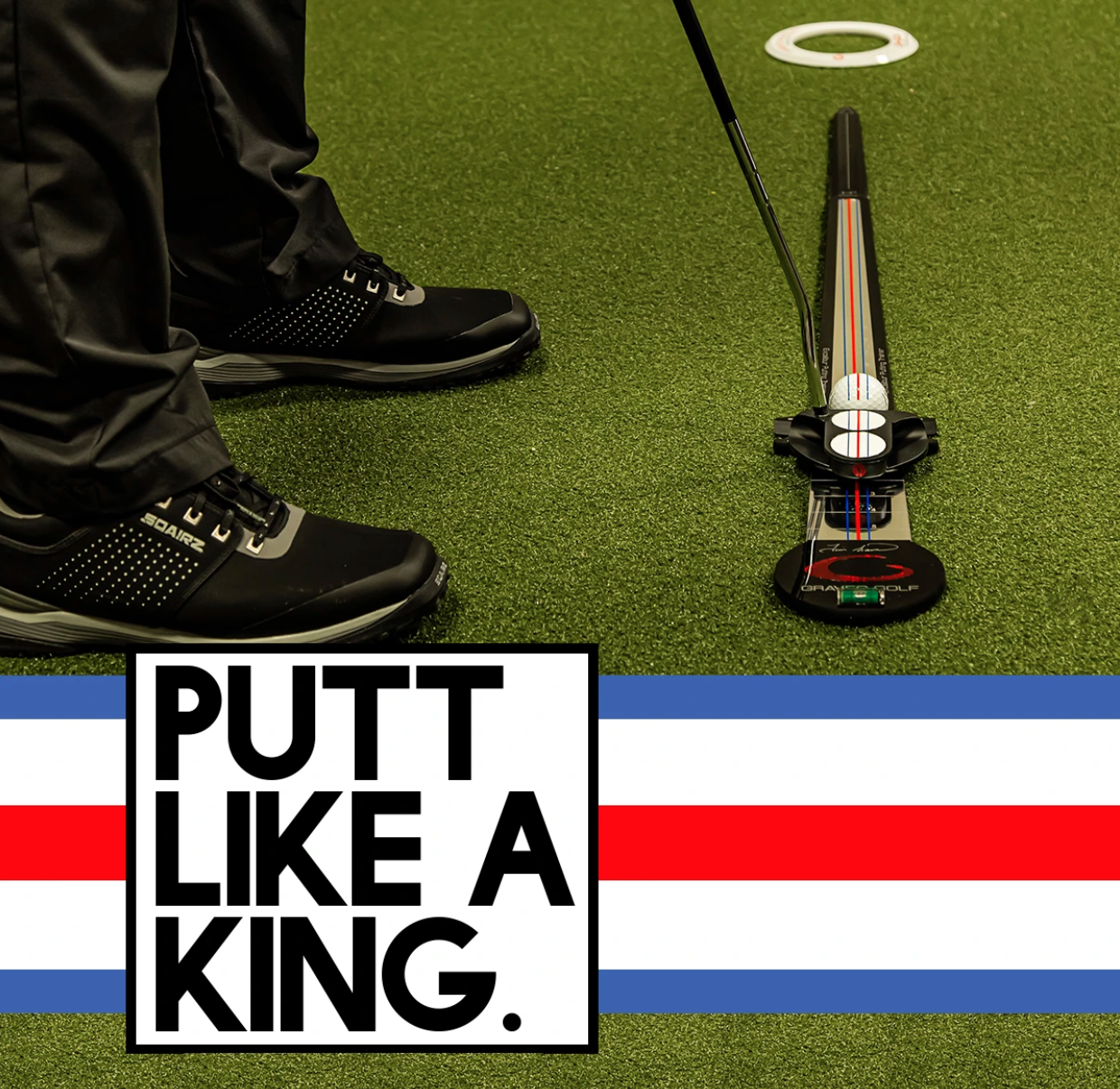
That, combined with having properly fitted clubs in hand were a deadly combination. Not a bad way to end the season. Onto the winter training.

Brenden G.
Niagara Falls, NY

****
EXCALIBUR TRAINING VIDEOS:  CLICK HERE
FREE CLUB FITTING:  CLICK HERE
The Perfect Grip

Graves Golf Academy Teaching

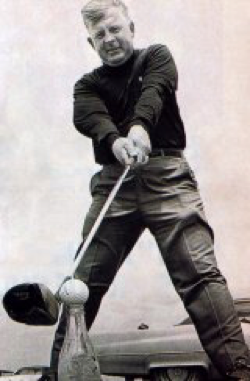
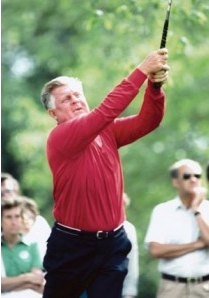
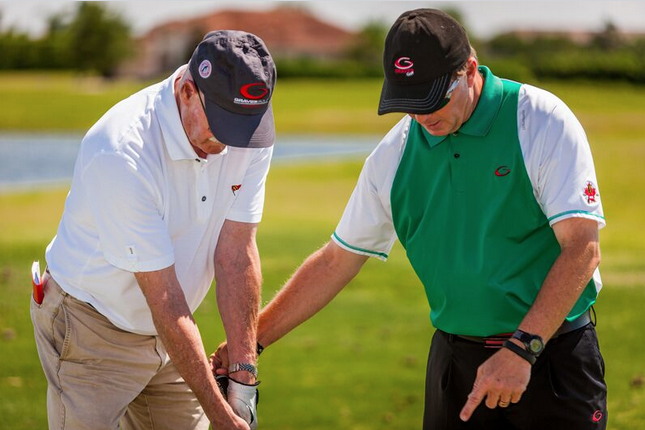
After watching and learning from Moe over years it is certain that Moe had the best hand action in golf because he had a perfect grip. We also learned that hand position or the grip is a vital part of the golf swing and we wouldn’t be exaggerating if we said that it could be the most important variable. Not because it is the only thing that is important but because the entire swing will often reflect and compensate for where your hands are placed on the club.

So why exactly is hand position so important?

Your hands hold the club so that you can move the club, produce speed and square the club face at impact. We call this hand action within the golf swing and your hand action is a direct reflection of the position of your hand placement on the grip. As a matter of fact, we often check a person’s grip at the top of the back swing because you simply cannot hit a golf ball correctly if the club face is not square during the swing movement. And the only way to have a square club face is by having a correct hold and hand action.

Upon discussing the importance of the hands position with Moe as well as how a correct hand position allows for a great address position which leads to a great hand action and swing action that Moe called – “The Feeling of Greatness”. This feeling that Moe described, started in his hands where the lead hand worked together with the trail hand to produce perfect club and club-face movement during the swing. Here are a few details to describe the Hand Position and Hand Action:

Hand Position Basics:

  1. The back of the lead hand faces the target / square with the club face
  2. The club is held in the fingers of the lead hand (pressure points) (The Lead hand is the left hand for a right handed player).
  3. The club is held so that it aligns with the lead arm (from face on view)
  4. The Trail Hand pinky overlaps the lead hand index finger to unify the hands. (The trail hand is the right hand for a right handed player)
  5. The Trail Hand is under or aligned with the club into a “non-rotational” position where it does not rotate during the back swing or downswing allowing for a direct, straight, non-rotational movement into impact.
  6. The club also aligns with the trail arm (down-the-line view)

Below you can see Moe’s hand position from another angle:


This angle shows Moe’s Lead hand and how it aligns with the club face. You can also see how the trail arm is below the lead arm showing that the club is placed through the lead hand under the heel pad. Notice the squareness of the club-face.

The Grip (Hands) position the wrists

With the hands placed on the club correctly, there is another key factor to the hand position – the wrists. If there were one concept that we would want you to fully understand about the grip is that when I talk about your grip, what we are really talking about is your wrists. What we mean by this statement is that your hands are like clamps and your wrists are like hinges. The clamps simply hold the club, the hinges are the things that actually move. To have a proper grip, you must hold the club so that the wrists can move together – hinging and unhinging to maximize both the range of motion and the direction of movement.

There has been much debate between a 10 finger, Overlapping and even Interlocking grip. And my position on all of these different hand positions is still the same, they all work. The problem is that none of them work if they do not place the wrists in the correct position. What needs to be discussed here is which grip promotes the ideal wrist movement – which we believe to be the Overlapping Grip.

Why do we believe the Overlapping Grip provides the best possible wrist movement – the answer is simple. Because it moves the wrists closer together unifying them. By bringing the lower hand up by overlapping the pinky over the index finger, the lower hand wrist is moved closer to the lead hand wrist. Think about breaking a stick between your hands, the more you separate your hands apart, the easier it is to break the stick in between. When you bring the hands closer together, it becomes more difficult to produce pressure between your hands.

This is an important part of understanding the pressure in the hands when you hold a golf club. You want pressure on the ends of the hands, not in between the hands. This allows for you to “use” the shaft to produce speed as opposed to placing stress on the hands.

With the proper pressure points and the hands unified, the hands work together, unified. With unified hands, you can freely move the wrists to their ideal range of motion as well as produce speed on the club shaft propelling the club head quickly to through the golf ball.

Improperly holding the club where the hands are not unified, is the main reason we see golfers lose speed. They simply don’t have the hands working. And since the hands are such one of the main speed producers in the golf swing, without proper hand movement, the club can’t move either. Here are a few samples of improper hand positions that completely inhibit hand unification and speed:

1)   Hands in opposite rotations

2)   Hands Split or 10 finger (not unified)

3)   Lead Thumb too Short

4)   Lead Thumb too Long

5)   Club in Palm of Lead hand

6)   Club in Lifeline of Trail Hand

These are just a few of the improper hand positions that we commonly see. The main issue of course is that these hand positions inhibit wrist movement thus the entire golf swing is negatively affected – mainly club speed and angles of club approach into the ball at impact.

If you want to understand club approach into the ball – ask yourself if you take a divot or not. If you don’t take a proper divot with your irons, most likely you have issues with your hand position causing you to improperly use your wrists. In other words, you do not have angle into the ball because your wrists aren’t working.

Here are the hand action basics:

The hands work together during the back swing where:

  1. The lead hand cocks
  2. The trail Hand Hinges  (non rotationally)
  3. The lead arm stays straight in the back swing
  4. The trail arm folds in the back swing
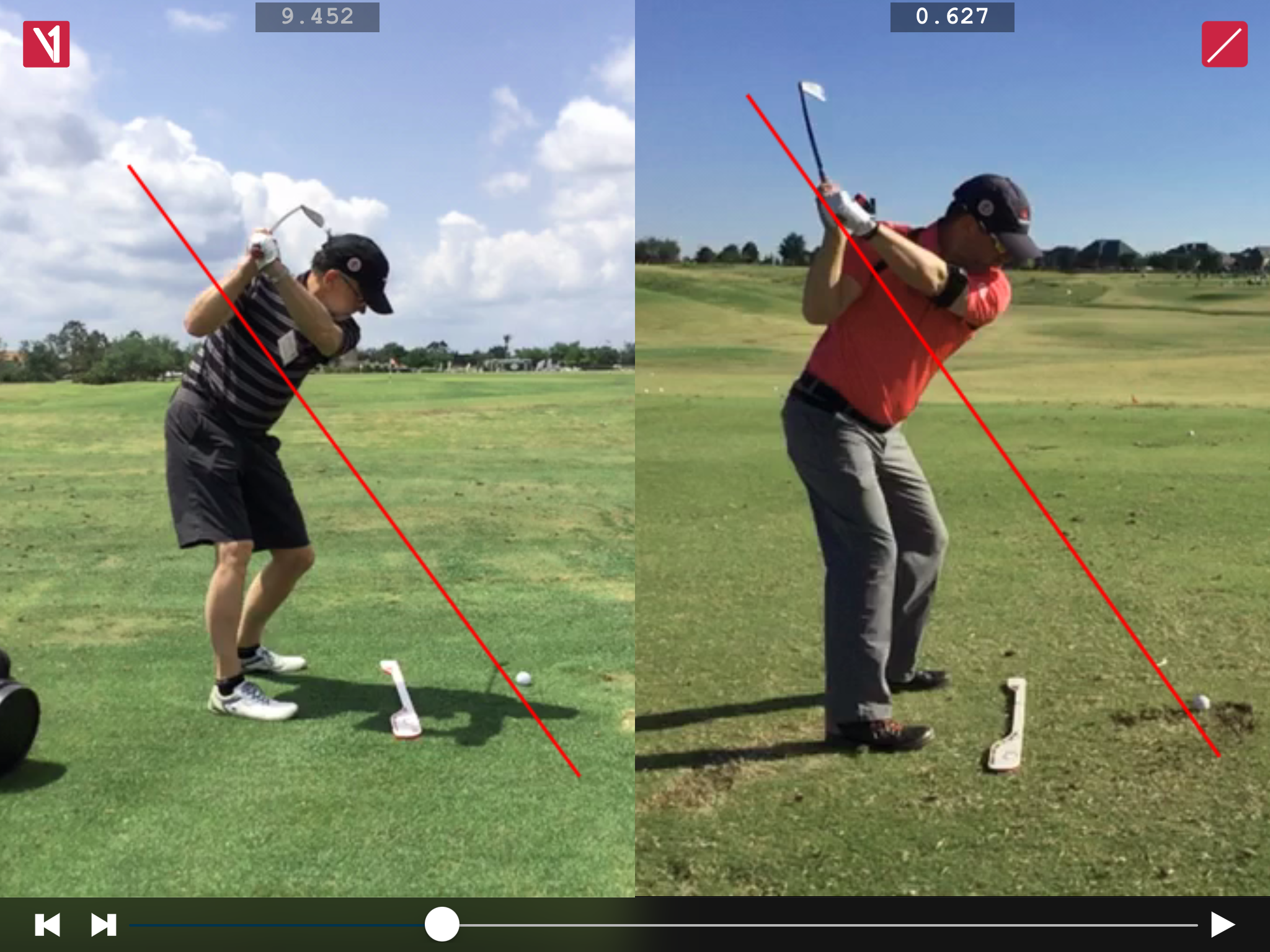
  5. The movement of the hands and arms (hand action) planes the club shaft
  6. The movement of the hands and arms also planes the club face
  7. The uncocking and unhinging of the hands produces speed into impact
  8. The uncocking and unhinging of the hands squares the clubface at impact

As you can see, the proper grip allows for the ideal hand action throughout the golf swing including the proper angles of club approach into the ball at impact.

The proper angles of approach result in the golf ball flying straight due to the ideal hand position as the unhinge into impact. And in my opinion playing golf with an improper grip is a waste of time because you are fighting poor fundamentals, improper face aims and angles.

Moe would call this “fighting yourself” because if your hands are on the club incorrectly, you simply cannot swing the club well. You’ve lost the battle before it has begun.

Spend some time perfecting your grip and train your hand action. You will be amazed at how much you can improve from this simple yet critically important fundamental.

To view the Training Grip Club Information / Videos:  CLICK HERE

Go All In – Advice from a Graves Golf Member

Hi Fellow GGA followers.

Months into this program.

Was thoroughly lost and overwhelmed at first.

I used to golf regularly once a week about ten years ago.

I was playing in the low to mid 80’s.

Then I got into something else that took a ton of my time and loved it.

I golfed maybe ten times the next ten years…

Just re energized my mind to really get after this great game.

I started playing and was shocked at how poorly I now play, rather embarrassing…

I began buying clubs, specialty drivers, and rail Hybrids etc.

Than this academy reared it’s lovely head!

I purchased a hitting mat and net and am now immersing myself into this.

Everything Tim and Todd and those at the academy speak and preach rings true!

But the only caveat is…

You GOTTA do the drills, send in the video’s, trust the recipe!

They give you the recipe. Are you doggedly not putting in a certain ingredient?

Are you adding other ingredients?

You will come away with a different product.

So, I nervously went out yesterday to play my first round with my new Callaway irons, hybrids and driver…

I only wanted to play with my best golf buddy cuz I didn’t want the added pressure of others watching me …Of course the course people added another twosome to our group…

I gotta say, when I got my mind off the ball, and actually swung the club properly with lead knee flex, proper tilt, and torso rotation around my trail leg… I launched some awesome drives.

I hit the hybrids totally awesome, putting one shot from about 180 to six feet from the pin with the 4 hybrid.

Guys, it really is ALL ABOUT THE SWING AND MOVEMENT OF THE BODY, AND NOT THE BALL!

What is helping the most as far as drills is the impact bag drill where it is placed inside my trail leg and I keep it gently against my trail leg as I bring the club back.

Upon the downswing, the trail leg and knee crush the bag as you move into (Transition) your lead leg flexed knee.

I realized immediately that I wasn’t getting to a flexed lead knee, even though I was trying very hard to do just that!

Old habits are hard to break….

Beginning is half done.

As the round progressed I began to let go of the fact that others were watching and get to a flexed lead knee.

What a difference.

I launched three drives about 260 up the gut, and the hybrids were mashed straight as arrows.

I think the lining up the club face at address with an intermediate target, then my feet was the key to that!

I only lost one ball and that was on the 18th hole, a par 5 with water down the right side.

I mashed the drive but took a dangerous angle and paid the price as the ball faded about 5-10 yards.

Because of a stellar hybrid shot, I still had a par putt of 35 feet on punched greens.

I made a bogey and shot 86.

Finally…. my recommendation for you – 

GO ALL IN!

Tim Flynn

The Short Cut….

Do you know the most common question golfers ask us?

“Is there a shortcut to making swing changes and improving my game?”

The simple answer to the question is “Yes!”

The short cut – are you ready for it?…..  is all about FEEDBACK.

Most think it is about practice….  but does practice actually help??

Should instructors encourage you to practice?

You might not believe it, but golf instructors debate about this all the time. Many golf instructors believe that you should avoid the idea of teaching the importance of practice – that it takes away from the enjoyment of the game.  They argue that the game is about teaching golfers how to play not about teaching them how to swing.

Our position is that you really can’t have fun and play well if you don’t have a good swing. Furthermore, building a great golf swing is part of the fun. We also believe that teaching the golf swing is about helping golfers “shortcut” the learning process (practice), not avoiding it. Let’s explain in two sentences.

Golfers struggle and get frustrated (and score badly) because they are unskilled.  

Skill is acquired through practice.

All skills require practice and we can’t think of a game that requires more practice than golf. This might explain so many are frustrated with the game and why in recent years, more have quit the game then started new.  It simply takes too long to get good.   The question we should be asking is not whether we should be teaching golfers to practice but rather how can we help them learn to practice correctly and effectively and get better faster…

Don’t take my word for it, listen to Dan Coyle, author of the book The Talent Code.  Dan, who researched talent hotbeds describes the acquisition of talent in three important processes:

• Deep Practice–Everyone knows that practice is a key to success. What everyone doesn’t know is that specific kinds of practice can increase skill up to ten times faster than conventional practice.

• Ignition–We all need a little motivation to get started. But what separates truly high achievers from the rest of the pack? A higher level of commitment—call it passion—born out of our deepest unconscious desires and triggered by certain primal cues. Understanding how these signals work can help you ignite passion and catalyze skill development.

• Master Coaching–What are the secrets of the world’s most effective teachers, trainers, and coaches? Discover the four virtues that enable these “talent whisperers” to fuel passion, inspire deep practice, and bring out the best in their students.

These three elements work together within your brain to form myelin, a microscopic neural substance that adds vast amounts of speed and accuracy to your movements and thoughts. Scientists have discovered that myelin might just be the holy grail: the foundation of all forms of greatness, from Michelangelo’s to Michael Jordan’s. The good news about myelin is that it isn’t fixed at birth; to the contrary, it grows, and like anything that grows, it can be cultivated and nourished.

The way we see it is that you don’t need to practice harder, you need to practice smarter get help along the way.  We can relate to these three factors in my experience as well.

In our experience the students who are the most willing to practice and enjoy the process have the most success. 

Deep practice is getting into the place where real learning occurs.  This is where feedback happens and feelings are well….felt.  Let me give you an example.

In a recent school, we had been sitting in the meeting room for about an hour.  One student asked “when are we going to hit some balls on the range?”  We responded with a question, “We will let you hit balls on the range when you can reassure me that you are measuring and getting feedback on every swing.  Are you able to do that?”

The reason we have a great golf swings is not because we are more talented than any of our students.  We have simply spent more quality time working on my golf swing.  It come down to the quality of your practice, now how much you practice.

We put in the quality then I made is stronger with repetition.  Most students put in the repetition but not the quality.

Our teaching habits have changed over the years. We find it almost impossible to watch people practice ineffectively.  We start to get nervous and we usually jump in and stop it.  We then ask “what are you working on” and “how do you know if you are getting it?”.

We are now heading into 2022.  You have a choice.  You can go another year wishing your golf game improved and guessing at the outcomes or you can make a transformation in your approach.  This is what we are suggesting is that you take a giant leap by making some major changes. You can do this by understanding Dan Coyle’s three principles of talent.  Learn how to Deep Practice, Get Passionate about it and Get Help from a Master Coach. 

Now take some action on these principles and get practicing – correctly.

To find out more about how to practice correctly, deep practice and your short cut to improvement – please see:  CLICK HERE

A Five Putt And The Win

This past week I (Tim) played in the South Central Section PGA Yamaha Stroke Play Arkansas Series Championship at Mystic Creek Golf Club in El Dorado, Arkansas.

The is one of our annual section events (we play two in Oklahoma, one in Kansas and one in Arkansas each year) in which we play for a purse and points for our yearly tour championship.

This was the first time we played this course (built in 2013) and was quite an “adventure” to say the least….

I ended up winning the tournament, but rather than talk about my win, I wanted to write a newsletter article to hopefully help you when you might encounter similar circumstances on the golf course.

First – Let’s start with the difficulty of the golf course.

According to the head professional, Mystic Creek is rated as the 37th most difficult course in the United States (just ahead of Augusta National).  And he believes, as more people play it and rate the golf course, it will be rated in the top 20 hardest golf courses in the US.

Two weeks prior to our event, the Symetra Tour (LPGA mini tour) played Mystic Creek and only 4 golfers out of 120 scored below par.

We had just under 50 professionals (PGA SCS Members) play in our event, the average score for 2 days was 20 over par with a few scoring 40 over par +.

The head professional and assistant from the course (who play the course regularly) shot 35 over par +.

It is / was a VERY difficult golf course.

The fairways were tight, heavily bunkered, rolling hills, VERY high pine trees, but the most difficult thing of all were the greens.  And incidentally, I was told by the head professional, the architect who designed the course, felt like the greens were too difficult, but the owner wanted to make them “as hard as possible” to have a course that was extremely challenging.

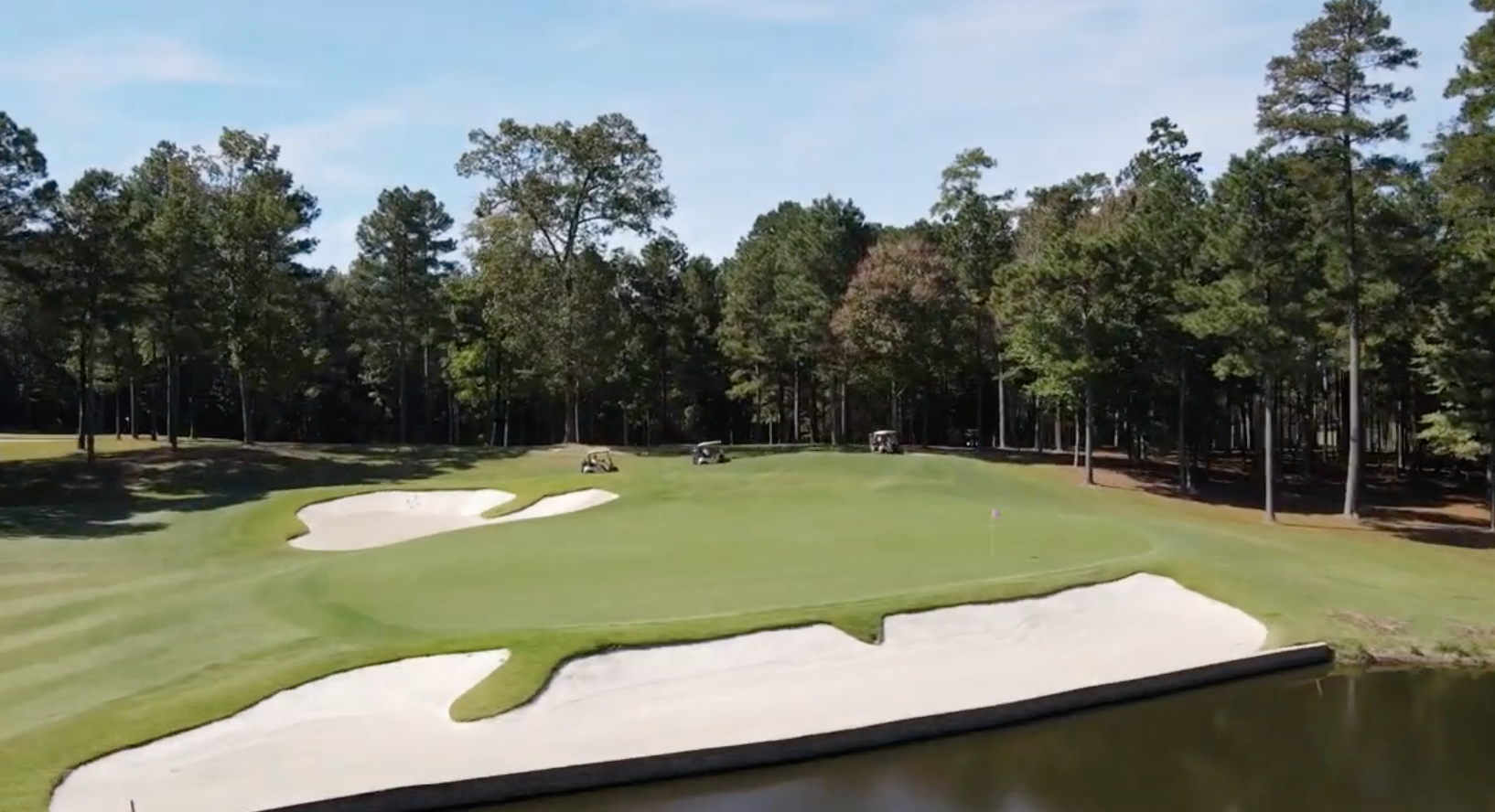
The greens were Champions Bermuda that ran between a 11 and 12 on stimpmeter (very fast) with SEVERE slopes and “buried elephants” in the very large greens.  Picture of # 10 green is below.

The course played extremely fast, hard and difficult.

In my over 40 years of tournament golf, I would say this is the most difficult course I have ever played (in a tournament) and the most mentally exhausted I have even been after a tournament.

So, let’s talk about some “on course” instruction that can help you (from what I “survived” earlier this week).

1. You must play every golf shot what I call “shot to shot”.

You must not get ahead of yourself or think about what just happened (in the previous shot).  You can only control what is happening right now.  You can not control what just happened or what is going to happen in the future.  This course was so hard, it was really easy to start worrying about upcoming shots or what just happened.  If you didn’t stay in the moment, you would very easily get overwhelmed with the upcoming or past difficulty.. (I saw a couple of my fellow playing partners loose more than a few shots because of being upset over what had just happened and what was upcoming..)

2.  Do not worry about “par” on a hole. 

To be honest, par is just a number that can be COMPLETELY irrelevant at times.  I’ll explain….    The first day we played #18 (slightly downhill 540 yard par 5).  I hit a good driver off the tee and had 185 yards remaining to the hole.  It hit a 6 iron to the middle of the green and two putted for a relatively easy birdie.  It was playing like a relatively easy par 4.

The 2nd day, on the same hole (#18) from the same tee box, I hit a drive into a dew covered fairway and had over 260 yards remaining to the green.  My second shot, I hit a 4 hybrid and laid up short of the fairway bunkers, short of the green, about 75 yards out.  I hit a Sand Wedge from 75 yards to the middle of the green (blind uphill shot) (pin was tucked just over the bunker in the front of the green).  One of my playing partners said “good shot”, and we got in the cart to drive up to the green.  As we approached the green, we saw my golf ball roll off the green, across the fringe, down the hill, around the bunker and was now 85 yards out.  I had hit the 3rd shot – negative 10 yards.  I was actually 10 yards further away on my fourth shot then where I was on my 3rd.

I went to the 4th shot, hit a sand wedge again, this time a little right of the 3rd shot (away from the pin), ran up to the green to see it roll to the front and stop on the fringe this time… I two putted for bogey… and did not miss a shot…

So, do not worry about what “par” is on hole… it really makes no difference.  What matters is hitting your best shots and scoring your “best” possible on the hole.

3.  Do not let how you “start” dictate your round (good or bad).  

There has been many times, I have started my rounds with a couple of birdies, and told myself “this is going to be a great day” only to get too nervous / anxious, etc.. to continue the good round.

But this round (the 2nd round at Mystic Creek) was MUCH different.

I started on #18 the 2nd day (shotgun start and we were in the leaders group).  You read above how I made bogey on #18 (without missing a shot) and then I stepped up on number 1 (my second hole of the day).  A double dogleg  par 5 that was playing 550 yards.

I hit a great drive that cut over the right corner of the fairway and ended up about 280 yards away.  I laid up in the middle of the fairway about 90 yards out (laid up short of bunkers again).

My third shot, I hit 5 feet right of the pin with too much spin on the ball.  The ball kicked to the left, spun back down the green and rolled into the lake short of the green.   It rolled about 50 feet down the green into the hazard.

I took a drop (red hazard), chipped up and one putted for a bogey 6.

So, I had played two holes in my final round, and had bogeyed both without missing a shot…  In fact, I had hit every shot basically “perfect” and was now standing on my 3rd tee two over par already.

Standing on my 3rd hole tee shot, I had an “internal” decision to make.  I could worry about what had just happened and allow that upset feeling dictate my round, or I could say to myself, “$#% happens sometimes”,  and there is nothing I can do about it now, except give the next shot my best shot and be as positive as possible the remainder of my round.  I choose the 2nd option as I hope you do when you are in a similar circumstance(s).

4.  Play to your strengths… take trouble “out of play”.

When you are playing a round of golf do NOT worry about what your playing partners are doing, or what you think others are doing, you MUST play to YOUR strengths.

# 14 at Mystic Creek is a 500 yard par 5 that is one of the tightest tee shots I have ever seen in my life…

In fact, while playing my practice round, I hit 5 shots off the tee down the middle of the fairway and none stayed in the fairway.

Three of the tee shots rolled into the left hazard and 2 rolled into the right bunkers under the lips of the bunkers… And all 5 tee shots I hit in practice, landed in the middle of the fairway and ended up in bad positions.  Here is a picture of this “crazy / beautiful” golf hole taken from the tee box we played…

So, needless to say, I put some “extra time and thought” into this hole.

This is how I played # 14 for 2 days…

Six iron off the tee.

Six iron lay up to 130 yards

9 iron from 130 yards to an uphill green (surrounded by bunkers).

I made a par (5) the first day and birdie (4) the 2nd.   I played the hole 1 under par, playing to my strengths on the hole and taking the “trouble” out of play.

You MUST play to your strengths and work on taking the trouble “out of play” to play your best golf.

5.  Sometimes golf is hard and there is NOTHING you can do about it.

I assume most of you are like myself, you play this game because it is a challenge, that challenge to make yourself better is the enjoyment and fun part of the game.  Many of you challenge yourself to shoot better scores, lower your handicap, beat your age, beat your buddies, par a hole you’ve never parred, or just play better today than you did yesterday….  again all GREAT motivation and why so many of us play and have fun at this game..

But, sometimes….. golf is just hard.  And no matter how good you are playing and / or hitting the ball and / or putting and chipping, etc.. the course is just gonna beat you that day…. and sometimes, beat you up pretty good…

Why, because you have no control over how difficult the course is playing that day… whether it is the speed of the greens, the conditions you are playing (wind, cold, etc..) or just the difficulty of the course in general – ALL these are out of your control.

You can only manage yourself and your game to the best of your ability on and in the conditions you are given that day.

The PERFECT point as example is as follows…..

The first day of my tournament at Mystic Creek, I stood on #4 tee box (a down hill par 3 playing 178 yards – slightly into the breeze).

I choose a 6 iron and hit a very good shot – 15 feet behind the hole (hole was left edge of green).

Both my playing partners hit their tees shots on the green, slightly further away from the hole than me.

I watched my playing partners putt before me (one was to the right of me, one was uphill).  Both hit putts that slid past the hole about 5 to 6 feet….

Thinking and reading my putt as down grain / downhill, pretty fast, I hit a lag putt toward the hole.  It stopped about 4 feet short…. It was NOT near as fast as I thought.

I marked the ball, lined up the next putt, went through my routine and putted the next putt.  It slid past the right side and went 4 feet past the hole.  That putt was VERY fast.  I went from being into the grain to down grain… (thank you bermuda green…)

I marked the putt that was now 4 feet below the hole.  Went through my routine and putted the next putt.  It “power lipped” completely around the cup and went behind where my putt had started…. I was now 5 feet away, same line, uphill, but 5 feet away now….  the greens were crazy fast and sloped.  I had just power lipped a putt from 4 feet to 5 feet away and I had hit that putt easy.

I marked the ball, stepped up over my next putt from 5 feet and left it one inch short…..

I tapped in my one inch putt.

The equals a 5 putt…. yes a 5 putt and I hit EVERY putt on line with decent speed and gave them all my best effort….

Guess what, sometimes golf is just hard and there is NOTHING you can do about it.

You just have to give the next shot your best effort and accept that if you are playing in a tournament or competition that it is equally hard for everyone (not just you..)

If you are playing for fun (not in a tournament) accept that for every “hard” day, there should be an “easy” day on the links….  a great way to help accept those hard days…

Needless to say, after 2 days of golf on one of the hardest courses I have ever played, I was exhausted.

(So were my playing partners.  One had 7 three putts and one 4 putt, the other had 6 three putts and one 4 putt).   (I was extremely excited to say I had zero 3 putts, 0 4 putts… okay… 1 five putt…)

After the round…. mentally, physically, and ego… shot.  But I was extremely proud of myself for staying “within” myself.  I didn’t let myself get down after bad shots, I did my best focusing on the now, I played each shot “shot to shot”, I played to my strengths to the best of my ability and lastly, I kept telling myself, this course is hard for everyone, not just me…

I ended up shooting 5 over par for the two rounds (77 / 72) and won by 4 shots.

One of my playing partners commented my 72 was like watching a 65….  (to be honest, if felt like a 62… but I didn’t tell him that…)

I have shot many 65s in my life, in fact, I have shot 62s in my life… this 72 was better than many of those…

Hopefully this helped you think a little different next time you are on the course, especially those times when the course has that extra “challenge”.

Good Luck with your golf game.

Remember – ALWAYS practice with a purpose.

Tim

Free Single Plane Fitting For You

Whether looking to fit/replace a single club to an entire set, from a putter to a driver to your irons, wedges, etc.. it is ABSOLUTELY CRITICAL that the club(s) is fit to YOUR individualized swing and single plane specifications.

An UNfit club will hinder your improvement process, an UNfit club will hinder your golf game, an UNfit club will not allow you to reach your potential, an UNfit club can and many times will actually physical hurt you (tendonitis in elbows and wrists are many times causes and exaggerated by club with improper lie angles), and UNfit club is basically worthless to you. I don’t care how much you spent for the golf club(s) – if they are not individually fit to you – they are worthless to your game – and worse than that, can and many times will actually “hurt” you.

The Graves Golf Academy has custom fitting programs established with most major manufacturers in the golf industry. And many of the manufacturers install our grips in their custom department (no other instruction group can say that….). We have worked VERY HARD to set this customizing system up for our customers, students, etc. anyone interested in the single plane golf swing.

Also, because of the amount of equipment we sell from each manufacturer, we are many times offered equipment at a reduced rate for our customers. We are always able to match industry pricing and many times able to beat the pricing. We are also many times able to offer clubs at a significantly reduced price (last year’s models, etc. as these manufactures know how many clubs we sell and “hold some back” for us). Please watch our newsletters (bimonthly) for these specials – as they typically don’t last long as many are interested in these special pricings.

Customization done at the manufacturer (Callaway, Taylormade, Titleist, etc..) is free through the Graves Golf, there is no added cost for the GGA grips installed and customized at the manufacturers. Plus, there is no shipping charge (within US) and no tax (outside of OK) through Graves Golf.

To get a FREE individualized custom fitting please go to:  http://moenormangolf.com/clubs/free-club-fittings/


To View Single Plane Fitting Informational / Instructional Webinar:

  CLICK HERE

LEARN

THE

SWING

Join 1M+ Subscribers to get your FREE Video Quick Start Guide that reveals how to hit the ball farther and straighter more consistently from now on…

START YOUR NEW GOLF SWING