By: Tim Graves, PGA


I wrote this practice tip a few years ago and thought it would be good to publish again.
This is one of those article this is good to republish at least once a year.
During the past couple of weeks, I have to admit I was putting in some “extra hours” to push my game to a level that hopefully could have competed with the big boys. One of my practice sessions was right after one of our school days. Typically, after a day of teaching I’m too tired to put in a good practice session, but due to the circumstances – possibly getting a call to get in the PGA Championship anytime – I put in the “after hours” practice.

During one of my post-school sessions, one of our students asked me if he could sit and watch my session. I never have a problem with anyone wanting to learn more, and gladly entertained the company.
During the middle of the practice session, it became very apparent I needed to write more about how I practice, as the student kept telling me, you need to teach this, show this. So guess what this e-tip is about? But I have put a little different take on it.
As I was talking to my student – I began to describe my “advantages” over the average golfer in my practice sessions. In other words, how I have set up my practice sessions to give me the “no excuse”, or “least amount of variables” type of practice. How do I set up my practice sessions with the least amount of doubt during the session?
So, as you haven’t seen me on my “soapbox” for a while; if you are new to our e-tips, you have never seen my “soapbox”, I thought it was about time, and I am writing this as an “advantage me” type situation. You’ll understand more as I get into detail, read on. This is my NO EXCUSE Attitude.

I have always made it a very specific point to give myself every advantage when I practice. I heard this for the first time in 1996 when I was playing in the U.S. Amateur against Tiger Woods. I remember an interview he was giving to ESPN on the range and he stated (paraphrasing) “When I (Tiger) practice, I set up a situation when no one has an advantage over me” – meaning, when Tiger practices he makes sure all the details are covered, there are a few variables as possible, etc… I’ll explain by describing my practice session I was holding with our student watching.
As I go through my practice session, think, and better yet write down how many of the points you do EVERY TIME, not some of the time, or most of the time, but EVERY TIME. Be honest with yourself – the more honest, the better.
First, before I start every practice session – I stretch. To be honest, probably not enough, but I put in at least 5 minutes of stretching. Making sure not to forget about my wrists and shoulder blades. I stretch with my training 6 iron in hand so when I hold the club to stretch I have the training grip in hand.
Note: If you begin your practice session tight – you will be hurting your swing – guaranteed – good luck getting into correct positions when you are tight.
I also “kill two birds with one stone” as stretching always involves a few “air swings” or golf swings without a golf ball. I want to make sure my grip is perfect, and with my training club, I don’t have to think about it – no brainer.
So – if you don’t stretch before your practice session – ADVANTAGE ME. (Double Advantage me as I use a training grip club to help me stretch…)
Second – How many golf balls do you hit during practice. In other words, do you have a “limited” number of golf balls? I am going to eventually write an article for the PGA titled how “Country Club members have an advantage over the typical golfer”, not because of the course, but because of the unlimited range balls.

I’ll explain. After I stretch, I begin to hit my wedges. In fact, I hit a lot of wedges. Lob, sand, pitching, etc… I start with very short shots, maybe 30 to 40 years, and then work up to a full pitching wedge – I typically hit at least 20 to 30 balls minimum with my wedges to warm up my swing, start getting the club on plane with short easy swings is much easier than getting to the mid to long clubs too fast.
Here is the issue – with a limited number of golf balls, like a small range bucket, I promise you, you will be hitting drivers in just a few golf balls. You will not spend enough time on the wedges – which is where the warm-up should and must begin. Hit a lot of wedges.
If it is a cost issue for you, figure out a way to hit balls and shag them, find a pitching green to begin your practice, figure out something, give your wedges more time.
So – if you aren’t spending a good amount of time warming up your practice session with your wedges – ADVANTAGE ME.

Third – My clubs – this is an easy one – but one missed by so many golfers.
When I practice I have NO DOUBT my clubs fit me PERFECT!
Why is this important – because it gives me a no excuse for the club’s attitude. In other words, if I hit a ball left, it wasn’t due to the club (improper fit), if I hit it right (not due to the club), too high (not the club), etc… etc. I think you get the point.
Too many golfers have club issues – clubs that don’t fit their swing. They may swing at it perfectly, but as the club doesn’t fit their swing, the lie angle pulls the ball left or pushes the ball right (vice versa for lefties) and their mind tells them there is a swing issue – when it is really a club issue. So many aren’t able to release the club because their grip size is too big and don’t know it.
This causes SO MANY problems having grips that are too big. Thirdly, I have NO DOUBT about my clubs – the fit me for a lie, length, grip size, shaft flex, and the most important playability (for my ability) and a good feel for my game. So – if you clubs might not fit you or you’re are uncertain about your club fit – ADVANTAGE ME.

Fourth – This may be the most important. I use an Alignment Aid EVERY TIME I practice – yes, even when I am warming up for a tournament, I put an alignment training aid on the ground. To be honest, this is probably the issue the disturbed me the most when I watch average golfers practice.
Why? Because it is so simple, and has such BIG effects – and so few use it. Too lazy? Don’t know the importance? Who knows? But a HUGE problem!
I lay the alignment aid pointed toward the target and put a yardstick under the training aid.
Now, every time I set up over a shot – the following are given:
So simple – look at all the variables I have solved using this SIMPLE tool EVERY TIME.
I promise you, I will never hit a practice ball without an alignment tool.
So – if you aren’t using an alignment aid every time you practice – ADVANTAGE ME.
In fact – let’s say HUGE ADVANTAGE ME. In fact, soapbox time, if you aren’t using an alignment aid every time you practice, don’t read further…. no need – you have so many variables right now without using one… no need to continue to read… you won’t get past fixing all those listed above… Alignment, ball position, stance, square club face, distance to the ball…. enough said.
You will go back and forth, back and forth, back and forth fighting these issues FOREVER – I will NEVER have these issues – why because I take the extra couple of seconds to lay an alignment tool down every time I practice.

Fifth – I never practice for more than 15 minutes at a time. In other words, I hit 15 minutes’ worth of golf balls and then take a break. Might sit down for a minute or two to drink some water, might make a phone call, might walk over to the putting green and hit a few putts… you get my point.
Why? Because I give my body and more importantly, my brain, a break. None of us can focus longer than 12-16 minutes, it’s a proven fact. And as you are working on your swing (hopefully specific issues in your swing), you need to focus.
What happens when you lose your focus – your bad habits come back – FAST. If I were to hit one hours’ worth of golf balls – I would take at least 4 breaks (many times going to hit a few putts, chips, water break, etc…)
So – if you are practicing for more than 15 minutes in a row (without taking a break) – ADVANTAGE ME.
Many of you might think I video and check my swing every day. Couldn’t be further from the truth. To be honest, at most, I video my swing maybe once a week – more often, once every two weeks… I get enough from a single video session to work on for at least a couple of weeks.
What can you do? Check out our GGA Internet Golf Academy – you can do EXACTLY what I do. Send in a video every couple of weeks – we’ll give you plenty to work on.
So – if you aren’t getting some type of “outside” feedback to work on during your practice sessions – ADVANTAGE ME
In summary – be honest with yourself.
How do you rate your practice sessions compared to what I wrote above?
How many advantages do I have over you?
Remember – there is a DIRECT correlation between the time it takes to get better to the number of “advantages” you have.
Don’t leave ANYTHING to chance…. every second I practice I am assured I am getting better – I eliminate as many variables as possible.
To end – Folks, it’s not hard… in fact, it is very very simple and easy. Go through the list above again and make sure I have NO Advantage over you when we practice.
Remember – Always Practice with a Purpose!
In air navigation there is a rule of thumb called “1 in 60”. The 1 in 60 rule states that for 60 miles a pilot has traveled, for every mile that he is off-course is equal to 1 degree. This means that the farther you travel, the more off-course you would be.
The 1 in 60 rule is analogous to the golf swing where, for every mistake you make at the beginning forces you to compensate and correct throughout the entire motion. The problem with corrections during the golf swing is compounded when the entire golf swing is happening in less than a second. When you make a mistake early in the swing motion it creates a domino effect throughout the golf swing.
Take the address position for example. If you mis-align your hips, it affects your lower back (spine) affecting your shoulder position. You shoulder position affects the way your arms extend and your arm extension affects how you hold the golf club. Everything works together and the little things can cause big problems. Moe would often refer getting the little mechanical elements correct as “the Purity of Technique” – something I always personally strive for. Many of the problems in the golf swing are caused at the very beginning – the address – the first domino.
Let’s take a look at the Purity of Technique at address.
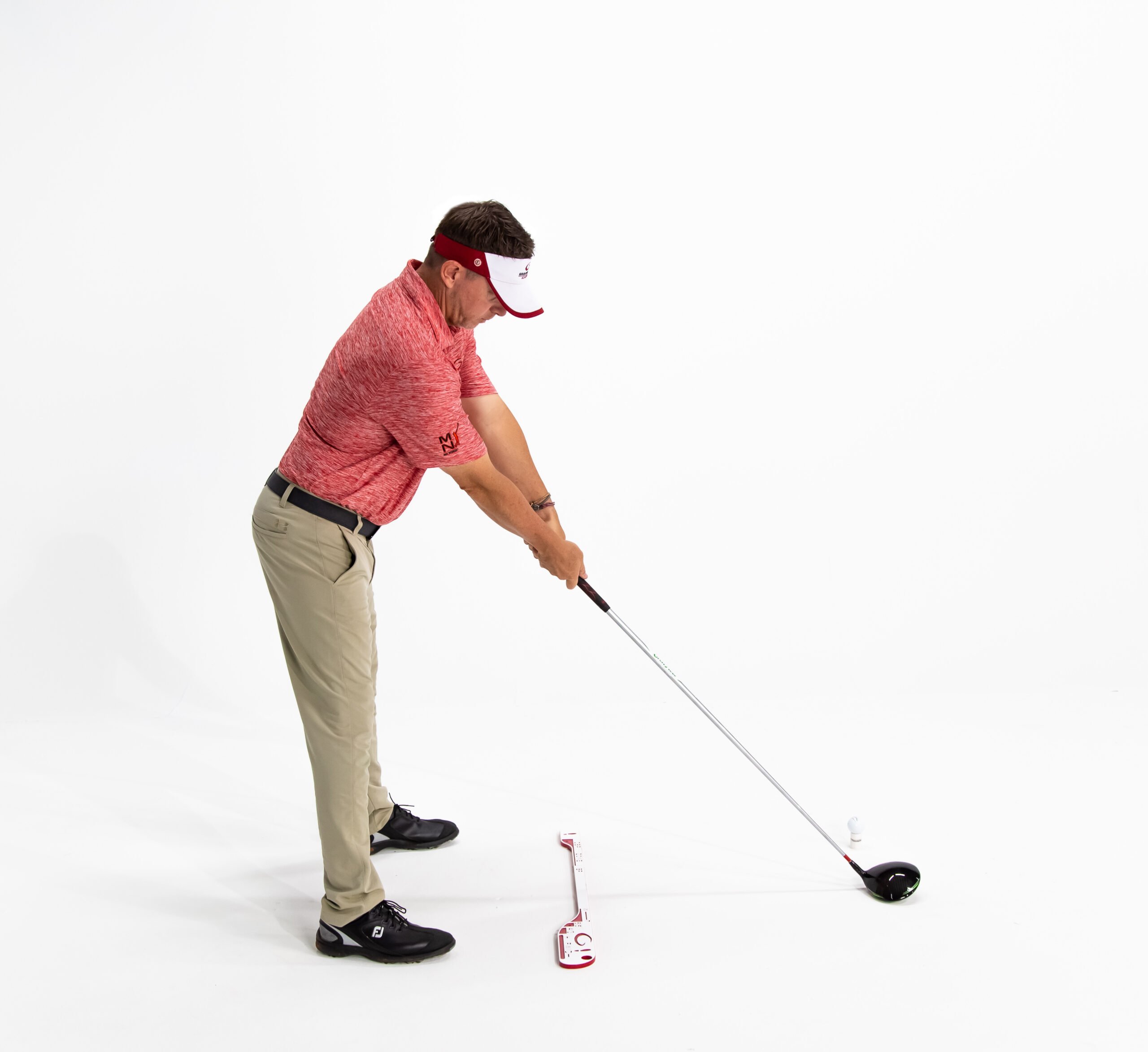
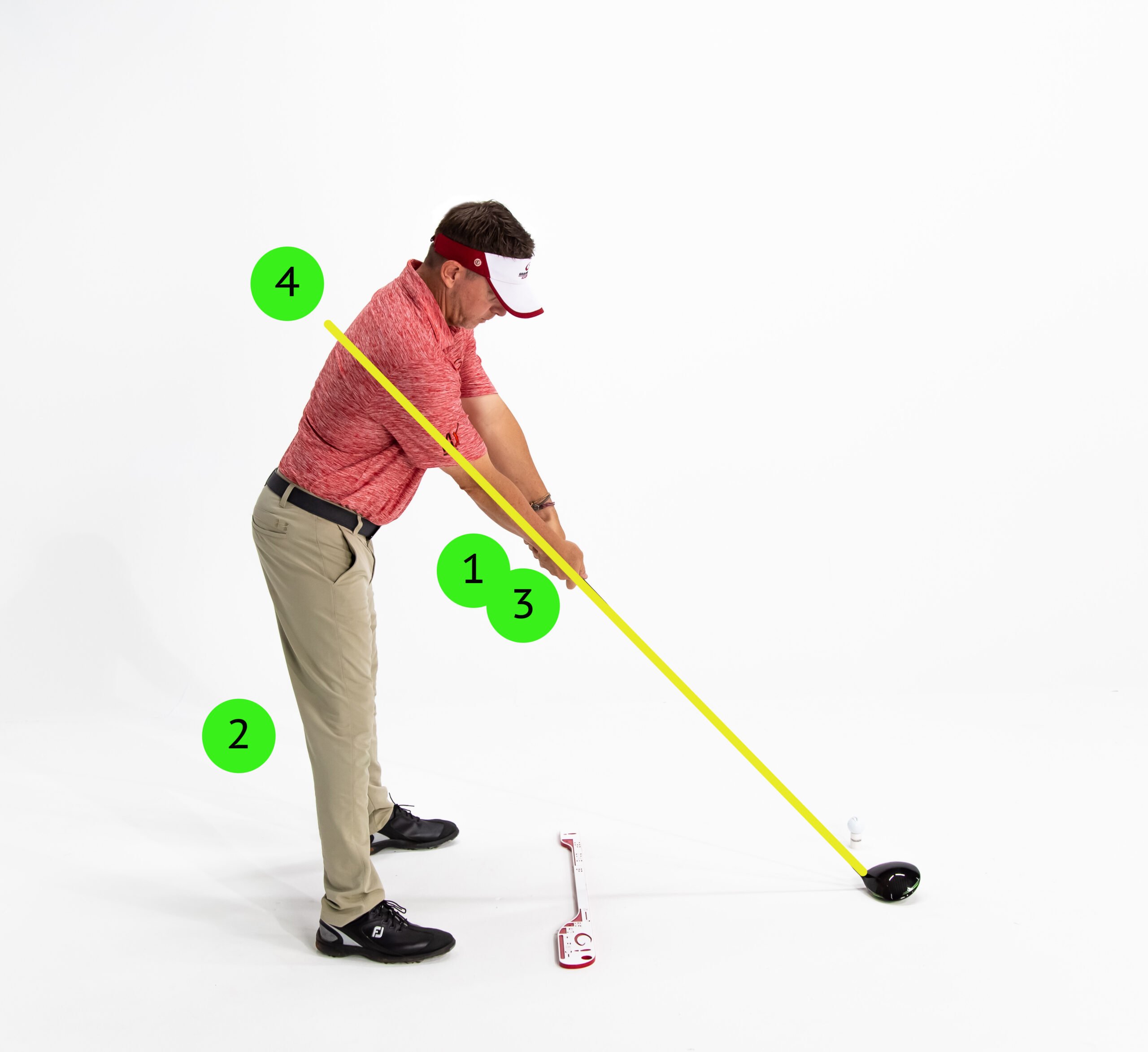
From the Down-the-Line Perspective, the clubshaft aligns with the trail arm and the lead arm is visible (1). There is no gap between the arms and the legs are relatively straight (but not locked)(2). The handle of the club (butt-end) is not visible under the trial arm (3). The plane of the club-shaft runs to the middle of the back (4).
Gripping the club correctly isn’t enough to ensure the proper address position. As a matter of fact, you can’t have a correct grip if the body position isn’t arranged properly – what Moe called Orientation.
Orientation relates to how the body is oriented that allows you to grip and stand correctly to the ball at the start. The way to achieve the perfect grip is by positioning the body correctly as well.
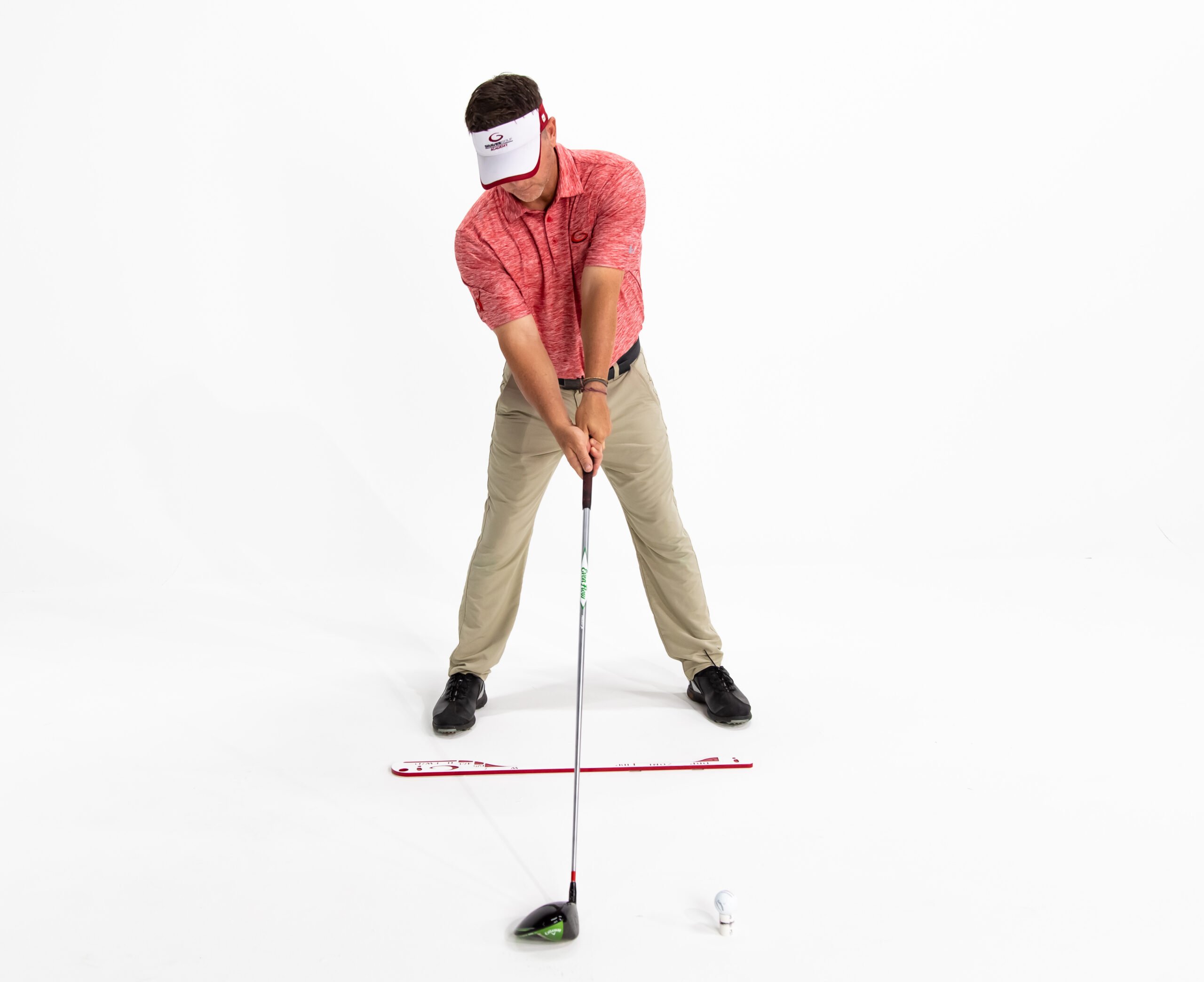
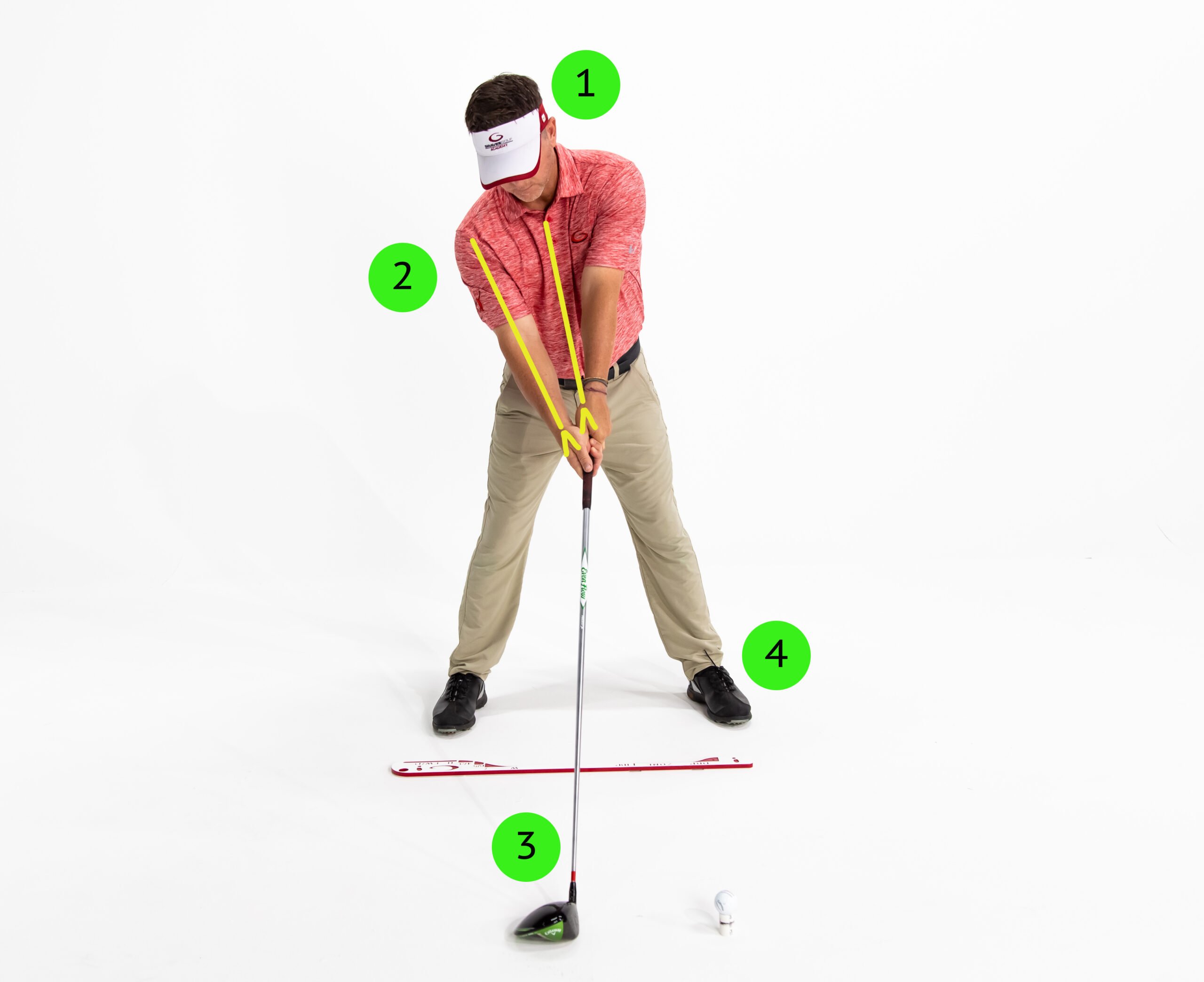
The tilt of the upper body orients the lead shoulder higher and extends the arms (1). This lowers the trail shoulder and places the trial hand into an “underneath” rotation (2). The club (head) is placed below the nose to allow the club to fully align with the lead shoulder (3). The lead foot is turned out slightly (4). With these details in place, the V of the trial hand points to the trail shoulder and the V of the lead hand points near the middle of the chest. Notice how I positioned the body before I discussed where the V’s were pointing. The V’s point correctly because of ideal body orientation.
Like dominos where the first domino sets off a chain reaction. When it comes to the purity of technique, your address position is your first domino. and every detail matters. This is the Domino Effect.
You can find out more about in my latest video Series “The Domino Effect” back to basics by going here:
In the 1968 Olympics Richard Douglas Fosbury would win the gold medal in the high jump and became one of the most influential athletes in the history of track and field. Besides winning a gold medal, Dick Fosbury revolutionized the high jump event with a “back-first” technique, now known as the Fosbury Flop. “The Flop” is adopted by almost all high jumpers today. As a matter of fact, of the 36 Olympic medalists in the event from 1972 through 2000, 34 used “the Flop”
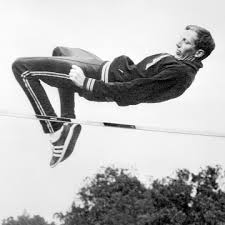
Dick Fosbury’s “Flop” challenged conventional thinking.
In later interviews, Fosbury provided a more candid and accurate account of the Flop’s development, revealing that it actually unfolded over many years and involved countless trials and errors.
“It was not based on science or analysis or thought or design. None of those things. Just intuition. It was simply a natural technique that evolved. The interesting thing was that the technique developed in competition and was a reaction to my trying to get over the bar. I never thought about how to change it, and I’m sure my coach was going crazy because it kept evolving. I adapted an antiquated style and modernized it to something that was efficient. I didn’t know anyone else in the world would be able to use it and I never imagined it would revolutionize the event. I wasn’t trying to create anything, but it evolved that way.”
What did Fosbury think of the seeming awkwardness of his Flop?
After all, when he first competed with the Flop, competitors and spectators alike teased and derided him. “I believe that the flop was a natural style and I was just the first to find it. I can say that because the Canadian jumper, Debbie Brill was a few years younger than I was and also developed the same technique, only a few years after me and without ever having seen me.”
Through trial and error and a bit of intuitive engineering, Dick Fosbury found a Natural way to move his body more efficiently. His intuitive “easier way” can now be validated with physics.
Would it be surprising if the same exact thing, a discovery of a more natural and easier way, has already happened with Golf? I believe it already has.
Meet Moe Norman an obscure and possibly autistic genius golfer from Canada. Like Dick Fosbury’s unconventional style, his golf swing techniques were considered idiosyncratic and often ridiculed – yet his record tells Fosbury-like story, winning 55 tournaments in Canada and at one time holding 41 course records in the 50’s, 60’s and 70’s.
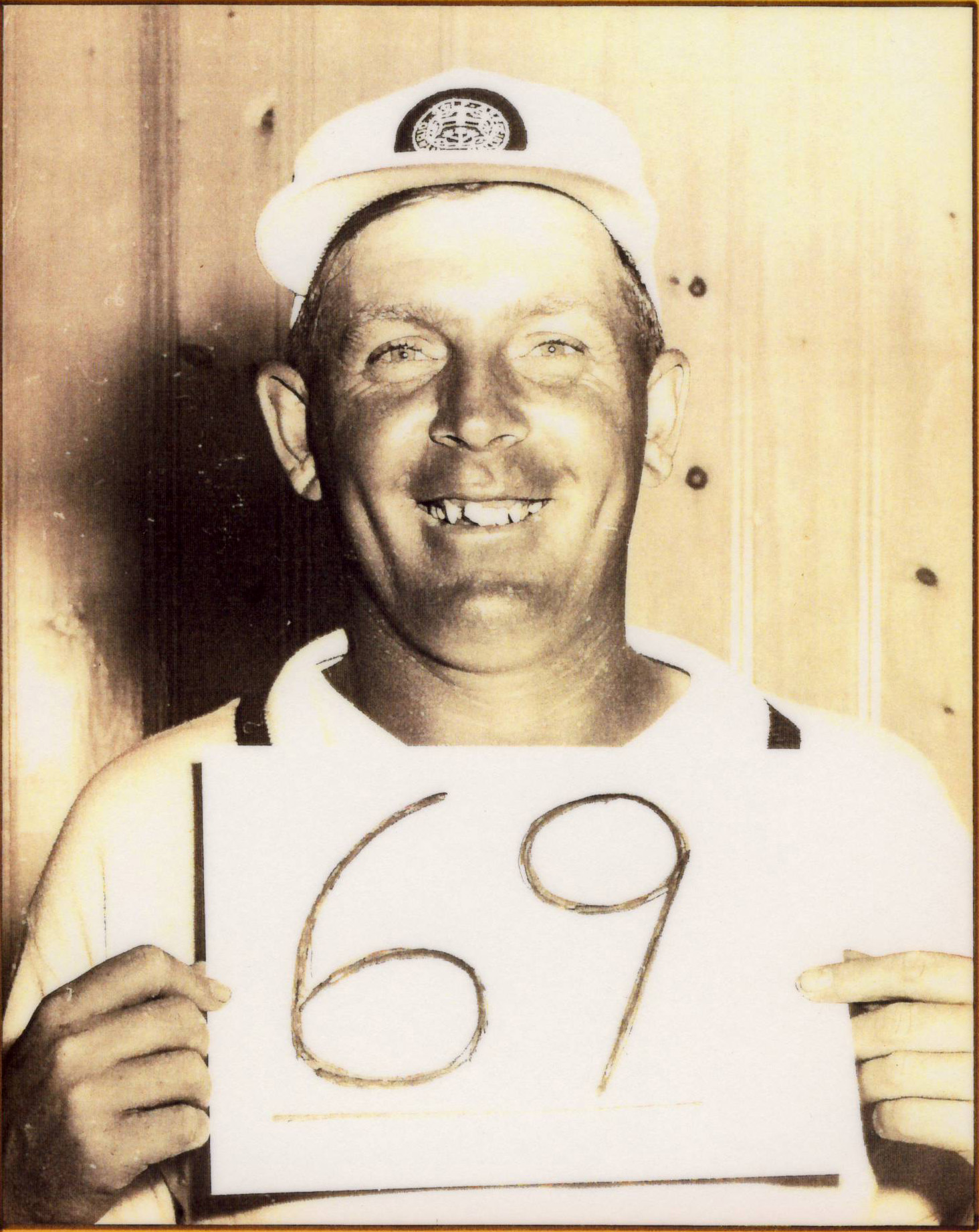
Reclusive and shy, Moe Norman avoided the spotlight never becoming a house-hold name but the professionals who played with Moe regarded him as one of the greatest ball-strikers to ever play the game. Even Ben Hogan, one of golf’s greatest ball-strikers, who rarely would watch other players, was known to watch Moe hit balls.
like Dick Fosbury, is it a coincidence that, Moe’s idiosyncratic swing just happened to be one of the most consistent and accurate golf swings of all time? David Owen (Golf Digest, 1995) puts it, “Whatever form of autism he had allowed him to do what others don’t have the courage to do is defy conventional wisdom and pursue something on your own. Whether he just invented something and just worked hard enough and make it work or he discovered something that maybe everybody should do.”
I had heard of Moe in my younger days – a fictional character of unbelievable stories and exploits. A year earlier a College Teammate, Matthew Lane, showed me to a video of Moe taken in Canada during a Canadian Tour event.
Seeing Moe for the first time on Matthew’s video I was immediately astounded at the idiosyncratic way Moe stood at address and the subsequent simplicity of his golf swing. My friend Matthew put it best when he said “You should see how great Moe hits a golf ball, he’s a freak.”
I met Moe in 1994 at a Clinic in Chicago Illinois. What I would soon learn is that Moe’s freakish and idiosyncratic golf swing was actually a more natural and scientific way to pay golf.
To understand Moe’s swing and how it simplifies the striking of a golf ball you must understand the basic principles of the conventional and traditional golf swing methods and the most important objectives of the golf swing – to produce speed and consistently achieve the moment of the strike – impact.
Consistent Impact
Like Dick Fosbury intuitively discovering the ability to get his body higher by rotating his body as he jumped, Moe was able to reach the moment of impact more consistently than other players because of his unique address position.
Where conventional golfers bent their knees and hung their arms below their shoulders, Moe straightened his legs and stretched his arms into a straight line with the club. Moe also tilted his body further to the side dropping his right shoulder substantially placing the club almost a foot behind the ball at the start.
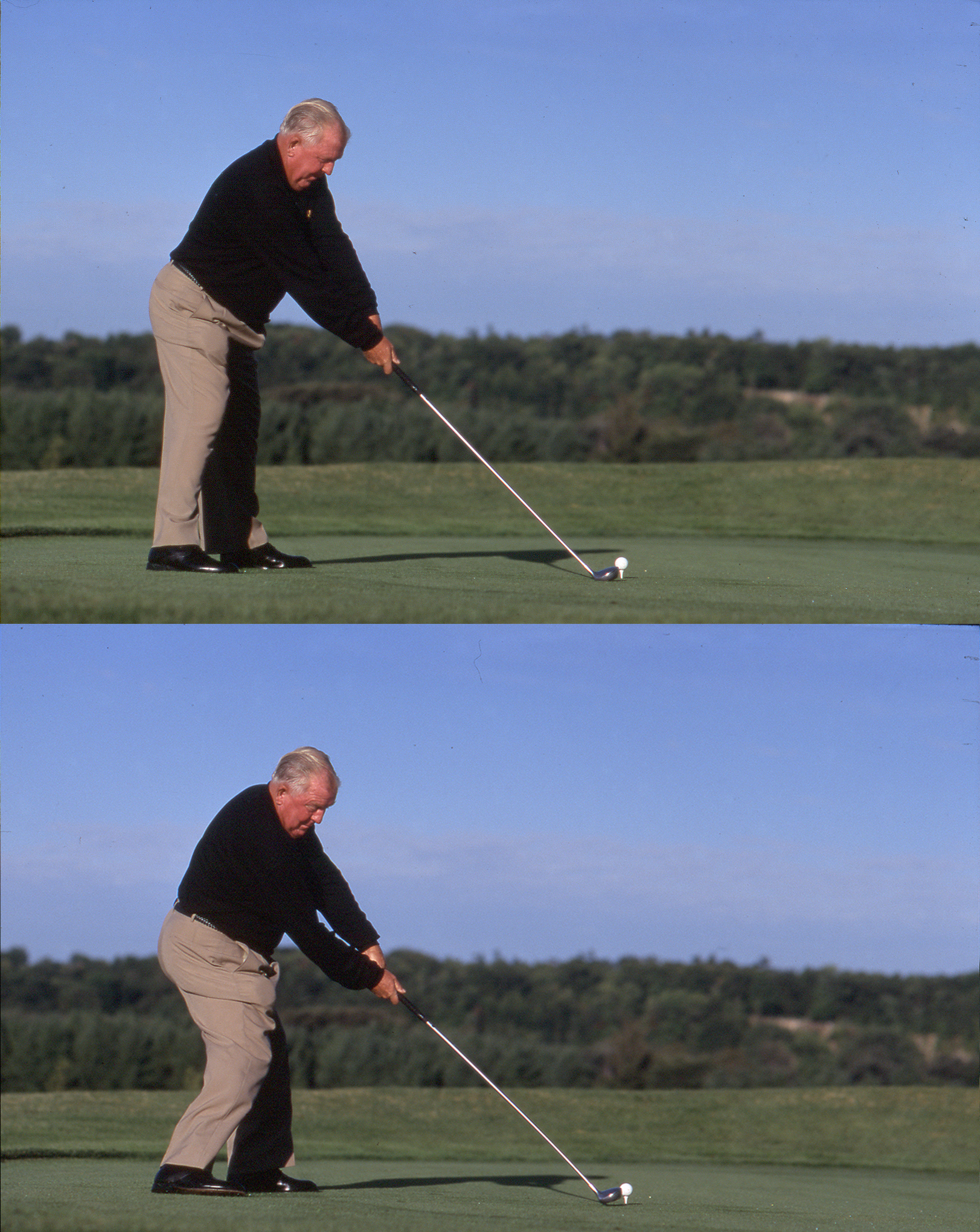
Moe didn’t know it but his intuitive starting position simplified the movement of the body into impact. Like Fosbury’s roll over the bar lowered the body’s center of gravity, Moe’s address position simplified the ability of the body to achieve impact by eliminating many of the problems with the traditional method.
It is interesting that both Moe and Dick Fosbury when asked would say “I did it my way”. I also find it interesting that they related their discoveries and talents to intuition.
I wrote this practice tip a few years ago and thought it would be good to publish again.
This is one of those article this is good to republish at least once a year.
During the past couple of weeks, I have to admit I was putting in some “extra hours” to push my game to a level that hopefully could have competed with the big boys. One of my practice sessions was right after one of our school days. Typically, after a day of teaching I’m too tired to put in a good practice session, but due to the circumstances – possibly getting a call to get in the PGA Championship anytime – I put in the “after hours” practice.
During one of my post-school sessions, one of our students asked me if he could sit and watch my session. I never have a problem with anyone wanting to learn more, and gladly entertained the company.
During the middle of the practice session, it became very apparent I needed to write more about how I practice, as the student kept telling me, you need to teach this, show this. So guess what this e-tip is about? But I have put a little different take on it.
As I was talking to my student – I began to describe my “advantages” over the average golfer in my practice sessions. In other words, how I have set up my practice sessions to give me the “no excuse”, or “least amount of variables” type of practice. How do I set up my practice sessions with the least amount of doubt during the session?
So, as you haven’t seen me on my “soapbox” for a while; if you are new to our e-tips, you have never seen my “soapbox”, I thought it was about time, and I am writing this as an “advantage me” type situation. You’ll understand more as I get into detail, read on. This is my NO EXCUSE Attitude.
I have always made it a very specific point to give myself every advantage when I practice. I heard this for the first time in 1996 when I was playing in the U.S. Amateur against Tiger Woods. I remember an interview he was giving to ESPN on the range and he stated (paraphrasing) “When I (Tiger) practice, I set up a situation when no one has an advantage over me” – meaning, when Tiger practices he makes sure all the details are covered, there are a few variables as possible, etc… I’ll explain by describing my practice session I was holding with our student watching.
As I go through my practice session, think, and better yet write down how many of the points you do EVERY TIME, not some of the time, or most of the time, but EVERY TIME. Be honest with yourself – the more honest, the better.
First, before I start every practice session – I stretch. To be honest, probably not enough, but I put in at least 5 minutes of stretching. Making sure not to forget about my wrists and shoulder blades. I stretch with my training 6 iron in hand so when I hold the club to stretch I have the training grip in hand.
Note: If you begin your practice session tight – you will be hurting your swing – guaranteed – good luck getting into correct positions when you are tight.
I also “kill two birds with one stone” as stretching always involves a few “air swings” or golf swings without a golf ball. I want to make sure my grip is perfect, and with my training club, I don’t have to think about it – no brainer.
So – if you don’t stretch before your practice session – ADVANTAGE ME. (Double Advantage me as I use a training grip club to help me stretch…)
Second – How many golf balls do you hit during practice. In other words, do you have a “limited” number of golf balls? I am going to eventually write an article for the PGA titled how “Country Club members have an advantage over the typical golfer”, not because of the course, but because of the unlimited range balls.
I’ll explain. After I stretch, I begin to hit my wedges. In fact, I hit a lot of wedges. Lob, sand, pitching, etc… I start with very short shots, maybe 30 to 40 years, and then work up to a full pitching wedge – I typically hit at least 20 to 30 balls minimum with my wedges to warm up my swing, start getting the club on plane with short easy swings is much easier than getting to the mid to long clubs too fast.
Here is the issue – with a limited number of golf balls, like a small range bucket, I promise you, you will be hitting drivers in just a few golf balls. You will not spend enough time on the wedges – which is where the warm-up should and must begin. Hit a lot of wedges.
If it is a cost issue for you, figure out a way to hit balls and shag them, find a pitching green to begin your practice, figure out something, give your wedges more time.
So – if you aren’t spending a good amount of time warming up your practice session with your wedges – ADVANTAGE ME.
Third – My clubs – this is an easy one – but one missed by so many golfers.
When I practice I have NO DOUBT my clubs fit me PERFECT!
Why is this important – because it gives me a no excuse for the club’s attitude. In other words, if I hit a ball left, it wasn’t due to the club (improper fit), if I hit it right (not due to the club), too high (not the club), etc… etc. I think you get the point.
Too many golfers have club issues – clubs that don’t fit their swing. They may swing at it perfectly, but as the club doesn’t fit their swing, the lie angle pulls the ball left or pushes the ball right (vice versa for lefties) and their mind tells them there is a swing issue – when it is really a club issue. So many aren’t able to release the club because their grip size is too big and don’t know it.
This causes SO MANY problems having grips that are too big. Thirdly, I have NO DOUBT about my clubs – the fit me for a lie, length, grip size, shaft flex, and the most important playability (for my ability) and a good feel for my game. So – if you clubs might not fit you or you’re are uncertain about your club fit – ADVANTAGE ME.
Fourth – This may be the most important. I use an Alignment Aid EVERY TIME I practice – yes, even when I am warming up for a tournament, I put an alignment training aid on the ground. To be honest, this is probably the issue the disturbed me the most when I watch average golfers practice.
Why? Because it is so simple, and has such BIG effects – and so few use it. Too lazy? Don’t know the importance? Who knows? But a HUGE problem!
I lay the alignment aid pointed toward the target and put a yardstick under the training aid.
Now, every time I set up over a shot – the following are given:
So simple – look at all the variables I have solved using this SIMPLE tool EVERY TIME.
I promise you, I will never hit a practice ball without an alignment tool.
So – if you aren’t using an alignment aid every time you practice – ADVANTAGE ME.
In fact – let’s say HUGE ADVANTAGE ME. In fact, soapbox time, if you aren’t using an alignment aid every time you practice, don’t read further…. no need – you have so many variables right now without using one… no need to continue to read… you won’t get past fixing all those listed above… Alignment, ball position, stance, square club face, distance to the ball…. enough said.
You will go back and forth, back and forth, back and forth fighting these issues FOREVER – I will NEVER have these issues – why because I take the extra couple of seconds to lay an alignment tool down every time I practice.
Fifth – I never practice for more than 15 minutes at a time. In other words, I hit 15 minutes’ worth of golf balls and then take a break. Might sit down for a minute or two to drink some water, might make a phone call, might walk over to the putting green and hit a few putts… you get my point.
Why? Because I give my body and more importantly, my brain, a break. None of us can focus longer than 12-16 minutes, it’s a proven fact. And as you are working on your swing (hopefully specific issues in your swing), you need to focus.
What happens when you lose your focus – your bad habits come back – FAST. If I were to hit one hours’ worth of golf balls – I would take at least 4 breaks (many times going to hit a few putts, chips, water break, etc…)
So – if you are practicing for more than 15 minutes in a row (without taking a break) – ADVANTAGE ME.
Many of you might think I video and check my swing every day. Couldn’t be further from the truth. To be honest, at most, I video my swing maybe once a week – more often, once every two weeks… I get enough from a single video session to work on for at least a couple of weeks.
What can you do? Check out our GGA Internet Golf Academy – you can do EXACTLY what I do. Send in a video every couple of weeks – we’ll give you plenty to work on.
So – if you aren’t getting some type of “outside” feedback to work on during your practice sessions – ADVANTAGE ME
In summary – be honest with yourself.
How do you rate your practice sessions compared to what I wrote above?
How many advantages do I have over you?
Remember – there is a DIRECT correlation between the time it takes to get better to the number of “advantages” you have.
Don’t leave ANYTHING to chance…. every second I practice I am assured I am getting better – I eliminate as many variables as possible.
To end – Folks, it’s not hard… in fact, it is very very simple and easy. Go through the list above again and make sure I have NO Advantage over you when we practice.
Remember – Always Practice with a Purpose!
“How do you prepare for a triathlon?”
I asked this question of my new friend Alyssa who was sitting next to me on a Southwest Airlines flight to Baltimore recently.
Alyssa had opened her reading material for the flight… a large paperback book called The Triathlete’s Training bible. It piqued my interest because I am currently working with a client who is preparing for triathlons himself. I was curious to hear what the magic formula was for creating success in this arena.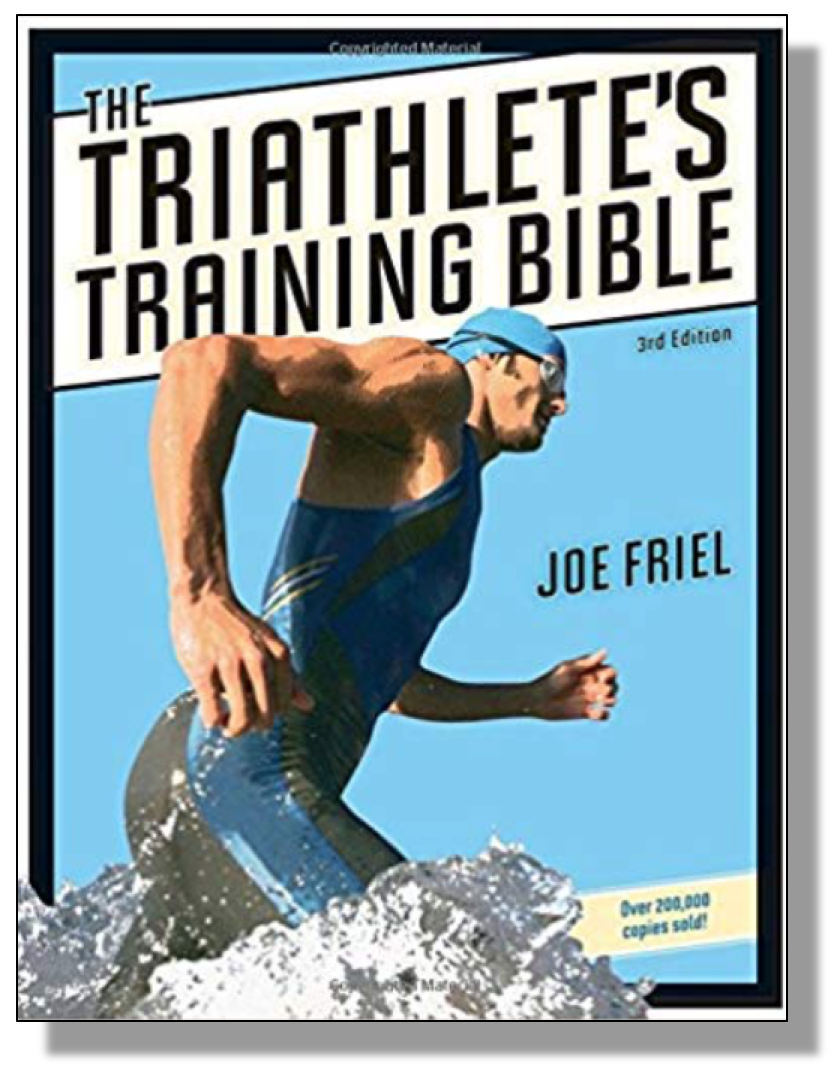
So I asked my question, then waited for the big reveal.
Her answer was both simple and brilliant…and a reminder about how we can accomplish anything, really. She said: “Basically, I set a goal, then I break that goal down into manageable action items. Then I commit to executing those action items.”
So, for Alyssa it meant establishing goals in running, biking and swimming…then taking small steps toward those goals every day, every week and every month. It meant planning her work and working her plan.
That was the big reveal?
I found myself smiling. This was a very young person who clearly understood the template for accomplishment. And she knew it.
Brilliant. This is the template for how to accomplish anything important….for how to create anything you want in your life.
It works for triathlons, building a business and even learning to play the game of golf at a higher level.
What a great reminder. And what an important Mental Game lesson for those of you on the Single Plane Swing journey.
Set a goal. Break that goal down into manageable action plans. Execute to those plans.
How are you approaching your own SPS journey? Are you expecting to reach your goal of shooting sub-80 rounds on a regular basis by next week? Or are you taking a more measured approach?
And think of the productive mindset you can create for yourself if you just break down your goal into manageable action plans…then simply work those plans.
What would it look like?
More important, what would it FEEL like when you knew you were ON THE PATH…and you KNEW that you would eventually get where you wanted to go?…and imagine if it didn’t matter WHEN you achieved your goal…
Part of creating a healthy and productive mindset on the golf course is to take away the anxiousness and pressure associated with outcome. When you break down your goal of breaking 80 into smaller chunks, the work within each of those chunks is easier. It is less “weighty”…doesn’t feel as heavy.
This makes it MORE LIKELY that you will arrive at your goal. Not less likely.
So, you don’t have to achieve your goal today or this week. Just be on the path, chipping away at your larger goal by accomplishing the smaller goals along the way.
If it is good enough for a triathlete, it’s good enough for us!
Have a great week!
-Paul
