Bacon Strips not Pork Chops

Bacon Strips not Pork Chops

I recently posted a video on youtube discussing Moe’s address position and the importance of Shaft lean into impact. I mentioned the importance of taking a divot and one of the comments on the post mentioned the following:

“But MOE never took a divot, or very rarely did he. He even said it himself”.

I replied: “Moe took divots albeit shallow. As Moe said “Bacon strips, not pork chops”.

Then he replied:

“Todd Graves – maybe sometimes but I can show you a video where he said he doesn’t take divots and that he could , “ put your Casio watch on the ground and I could hit off of it and not break the grass.” Also, I have seen many of his hitting clinics on video and he rarely ever takes a divot. He said he would sweep the grass.”

Let’s set the record straight.

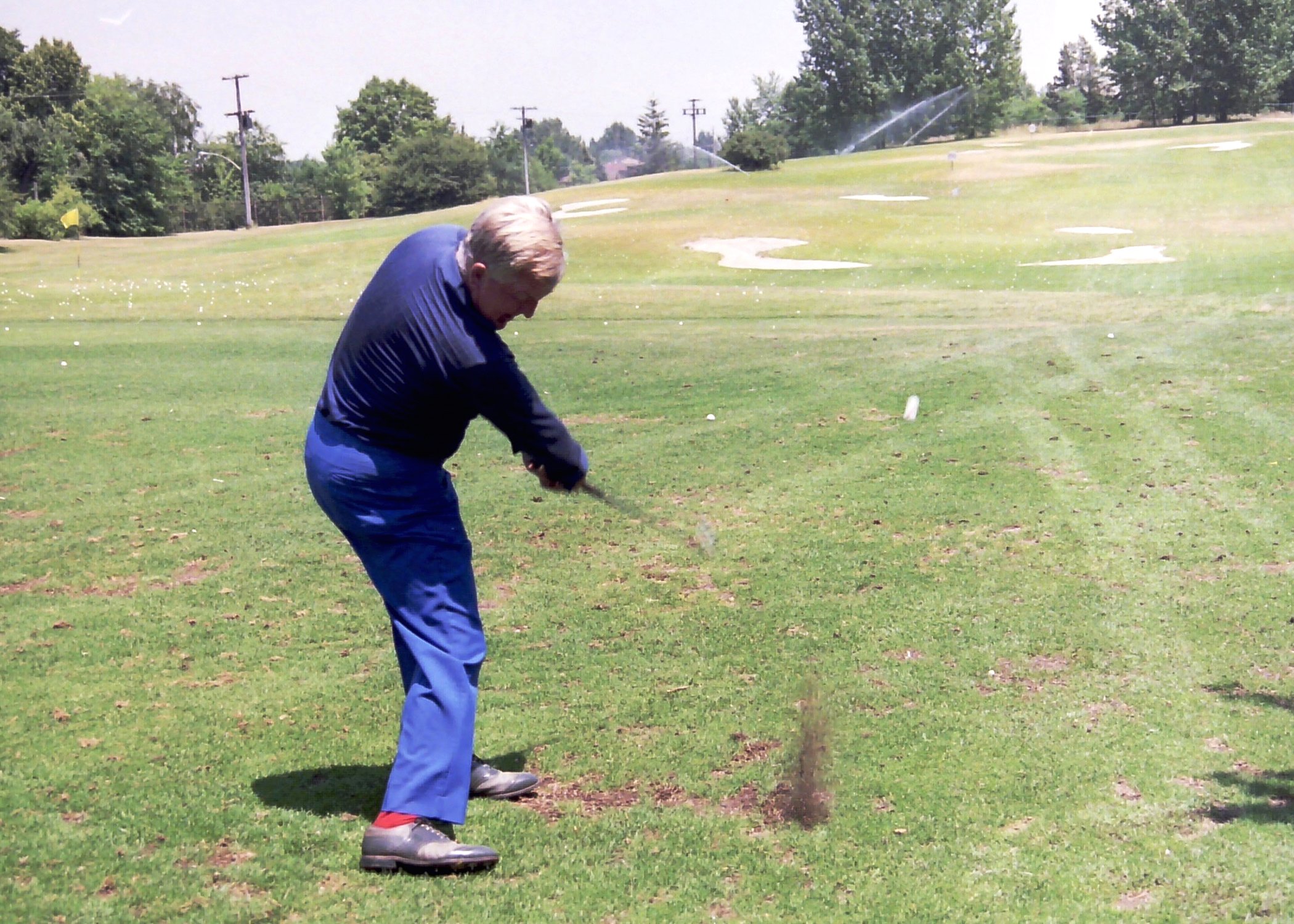
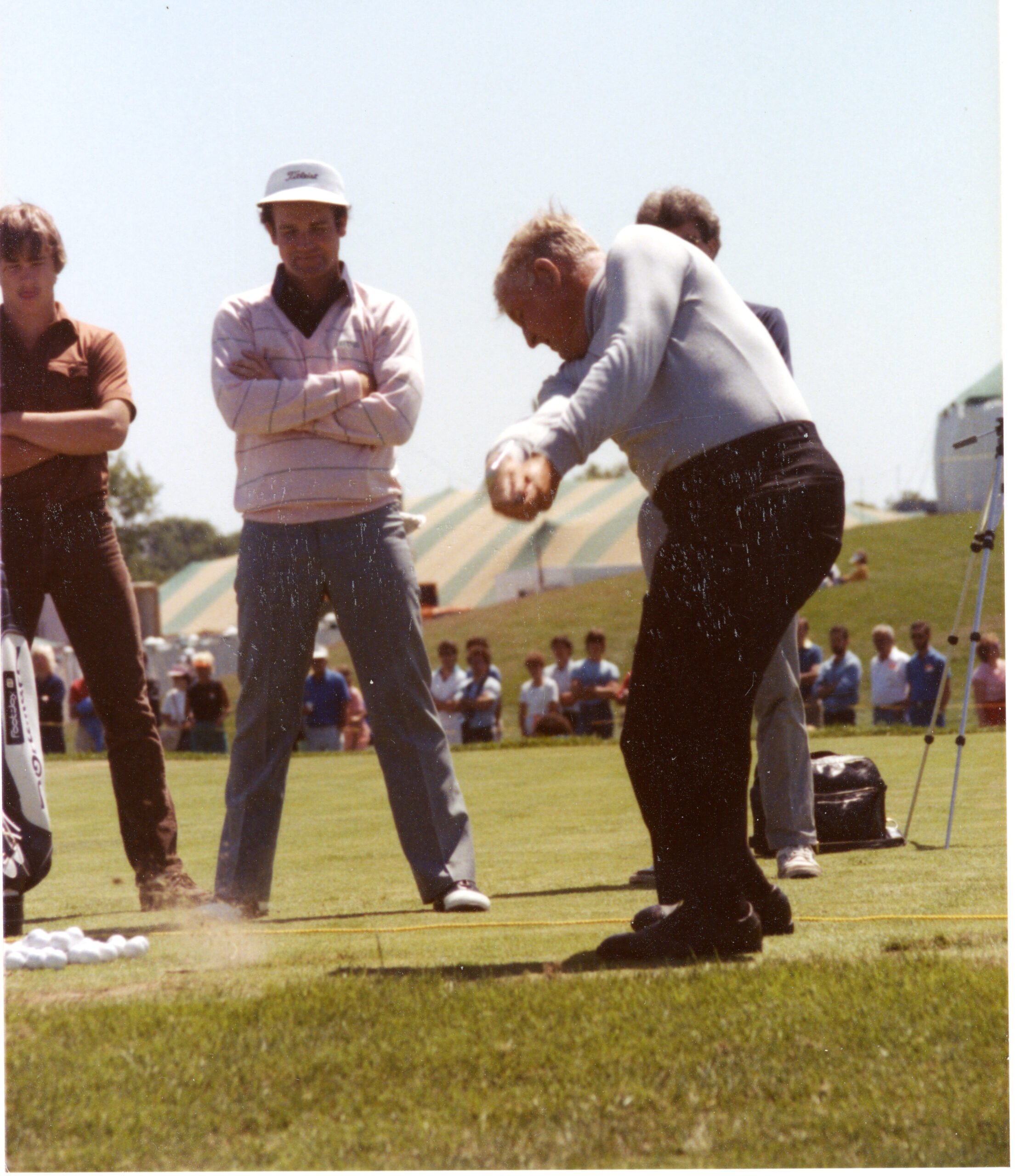
While Moe might have said he didn’t take a divot, what he felt he did and what he actually did were quite different.  I have not doubt that Moe could have hit a golf ball off of a Casio watch face.  This doesn’t mean that you shouldn’t take a divot.  Moe’s swing was perfectly shallow into impact.  He compressed the ball perfectly.  Yet, when the ball was on tight turf, he took a shallow divot.  Here are some pics that tell the story.
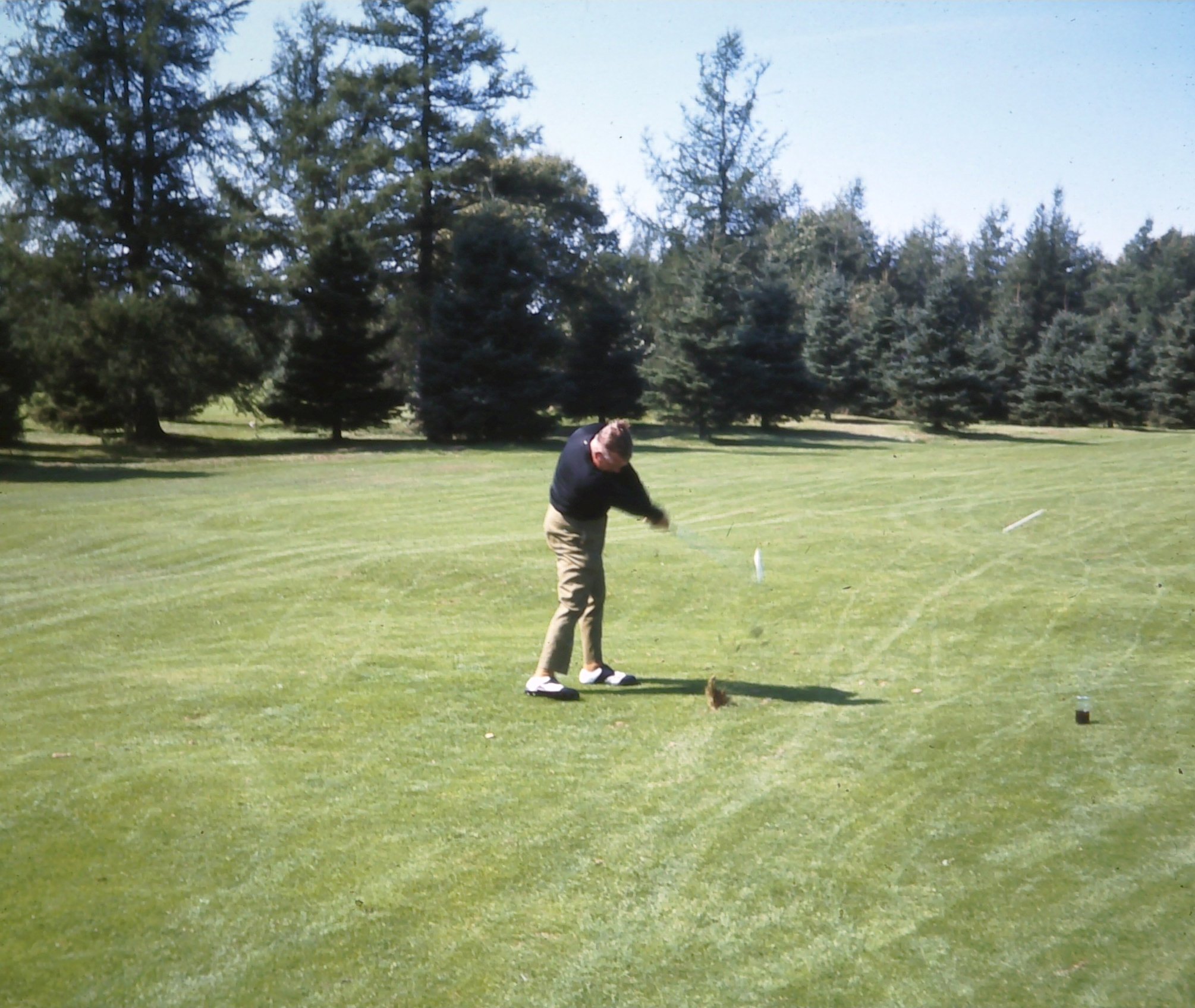
Moe NormanMoe Norman Front ViewOnce again, there is a difference between feel and real and you must be cautious between what you hear Moe say and what is actually happening. 
 

Emotional Awareness and Success

By Paul Monahan, GGA Performance Mindset Coach

If you want to lead better, parent better, or play golf better, you must develop your skills. But you also must get better at “tuning in” to the mental and emotional dynamics that either support or limit your ability to perform at your best.

Expanding emotional awareness is the primary work I do with my clients. I help them develop their knowledge of how the events happening all around them impact their thought patterns – and ultimately, their actions or performance. When they get better at seeing how games outside of the impact their “internal mechanics,” they can make progress toward building the emotional resilience necessary to perform well no matter the situation.

So, how do you develop higher awareness? I believe that it can happen for you by focusing on a couple of simple concepts.

First, you must learn to notice the thoughts that come up for you during challenging situations, as well as the feelings and emotions those ideas produce.

In essence, this means merely learning to pay attention to the ways your brain interprets each moment. For example, can you notice the thoughts you have about the driver who just cut you off in traffic? And what feelings and emotions do those ideas produce?

If you are like most people, your initial thought may be: “What’s the matter with that jerk!!??” And the emotion you feel is anger or frustration.

Simple right?

Next, you must get better at noticing how your thought patterns impact your behavior. This is key because the quality of your interactions and your performance depends upon WHAT you do.

To do this well, you must be able to “see” how your thoughts influence what you do. What do you DO when the guy cuts you off in traffic? Do you step on the gas and ride his bumper for the next mile? (That will show him!) Do you raise what my wife calls “the swears finger?” (Hey… your number one!!) Or do you ease up on the gas and make a little room for him?

Your behavior is a function of your emotions and the thoughts that proceeded them. You can get LOTS of clues about how productive your thinking is by getting better at analyzing your behavior.

One of my clients recently told me about how he was able to tune in quickly to his thoughts and emotions.

He was traveling through a busy airport and experienced a very long TSA line. When he finally arrived at the x-ray belt, a TSA agent instructed him to go a different route. My client reported that he pretty much wanted to strangle the guy. But that once he became aware of how his thought pattern might not serve him, (maybe stifling a TSA agent is not a good idea after all!) he began to reframe the situation.

Because of this awareness, he was able to anchor to a more rich story. One that was focused on how the TSA agent was just doing his job – and that there was nothing personal about the agent’s directive to him… even though he may not have liked it at first. He quickly became aware that it was much more productive toward achieving his objective of getting home if he engaged more politely with the agent.

So he successfully did two things:

He paid attention to his thought patterns…and NOTICED when a very unproductive thought pattern was dominating the moment and he also noticed that his thought pattern – and the emotion it yielded – had the potential to produce VERY unproductive behavior

Life is an inside game. All of it. All of the time. Relationships, work, leadership, parenting, traveling and the Single Plane Swing journey as well. Learn the physical skills for sure. but if you want to improve your golf or your life in 2018, never forget that the work you do on your “inside game” can make a big difference in your experiences…on the course and off.

Have a fantastic holiday season.

I look forward to continuing the conversation in 2018 and hope to see you at a GGA school soon!

PS…I’d love to hear how your awareness of your mental and emotional dynamics impacts your game. Drop me a note and let me know how it’s going: paul@paulmonahancoaching.com

Paul Monahan, PCC is a Peak-Performance coach, member of the International Coach Federation and a certified COR.E Performance Dynamics Specialist. He resides in Cleveland, Ohio with his wife Paula and is the proud dad to three young men. He works with elite-level performers and leaders, helping them to expand their awareness so that they perform at their best more consistently. You can find out more information about Paul’s work here. here.

Hybrids vs. Irons – When to Hit

One “common” question we receive (multiple times a week) is when to hit hybrids vs. when to hit irons.

When do you hit hybrids, when do you hit irons?

Here are a few scenarios of when it is recommended to hit a hybrid and when it is recommended to run an iron.

First – A Hybrid is best thought of as a long/mid iron replacement. It is a club with a more full sole and typically more weight on the bottom/ sole of the club which makes it much easier to hit the longer shots (with the hybrid vs. the mid to long iron). And it is much easier to hit the longer shots with height (due to lower center of gravity in the club) which typically allows the golf ball to “hold” on the green easier.


Scenario #1: Ball in Rough

Depends how the ball is sitting in the rough. If the ball is sitting on the top or middle of the rough, can use a hybrid.

If the ball is sitting at the bottom of the rough (or in deep rough) – use an iron. Might need a metal with a lot of lofts (wedge, etc.) if rough is thick enough need to get the ball up quickly to get out of rough and back in the fairway.

General Recommendation from the rough (when not buried in deep rough):

When the distance is more critical – hybrid.

When accuracy is more critical – iron.

Always remember – if there is a question if the hybrid will get the ball out of rough or not, use iron and get back into the fairway. Combinations are great clubs from “mild” rough but can get you in trouble if rough is too broad.


Scenario #2: Ball in Fairway Bunker

A hybrid is a great club to hit out of fairway bunkers. If you are beating out of a container and there is a minimal lip on bunker (don’t have to hit up fast) use the hybrid.

If the ball is sitting down in the sand (buried type lie) or you have to get up quick (high lip on the bunker) – use an iron.


Scenario #3: Hitting into the Wind

If it is minimal wind and you can account for the wind vs. added height of the hybrid – hit the combination.

If very windy and must keep shot down/low – use an iron. It is relatively difficult to keep hybrids low and not very good clubs into a lot of wind.

Many good players will put irons in their bags instead of hybrids when playing in excessively windy days. For example, wind blowing 30 mph to 40 mph or higher, might consider putting a four iron and five iron in the bag instead of 4 and five hybrid. If you carry three combinations, might find a three iron (if you have one) those days. Most good players will have both metals and hybrids (at least a few) – for example, a four combination and four iron (carrying only one, depending on conditions).


Scenario #4: Hitting below a Tree / Punch Type Shot

If you are hitting a low shot (punch type shot) below a tree, etc. it is recommended to run an iron. Hybrids are built to get height fast, and they are not good clubs to punch shots out below trees. Would recommend hitting your longest (least lofted) iron vs. hitting a hybrid in these situations. In other words, strongly suggest punching a six metal vs. a five combination under the tree. Or a five iron vs. a four hybrid, etc..


Scenario #5: Chipping when a ball is sitting into the Grain


Many times when a shot comes up short of a green and is on an uphill slope to the green, it is sitting “into the grain.” Grain of the grass typically goes the way the water would roll off the hill. In other words, if your ball is sitting on a spot the water would move away from the hole, your shot is probably sitting into the grain.

To test this, take a couple of practice strokes with iron and “feel” the grass/grain. If it feels “sticky” – like the club will not cut through the grass clean and with ease, your ball is sitting into the grain. This type of shot, many times will be hit fat or “chunky” because the club will not get through the grass clean. Use your hybrid for chipping in these situations. The wider sole of the club will glide across the grass and will not get “stuck” into the grain.

Like any “specialty” shot – they require some practice. Using the proper “tool” (hybrid vs. iron) is the first key to hitting the specialty shot. The more you practice with the proper club in each scenario, the easier it will become.

If you can think of other scenarios of a hybrid vs. iron, let me know – happy to give recommendations in upcoming practice tips.

To see a recent webinar on hybrids / how to hit hybrids, etc..:  CLICK HERE

Critical Moments

“What you do NEXT” has a profound impact on how you perform on the golf course and off.

I was playing last week with Single Plane Academy student Chris Anderson at his course in Detroit. Chris is a very good player and has worked a lot on his swing mechanics over the years. For the past year, Chris has also been focused on his mental game skills …and I’m proud of what he has accomplished in that arena!

What he did after a mid-round disappointment was a great lesson for me on how to handle the critical moments we face when we play.

The fifth hole is a 355 yard, significant dogleg right par four. It’s a bit of a placement hole off the tee. Chris hit a perfect drive (4-wood I think) to put himself into position to shoot at the green. (If you want to see what a very strong tee-ball game looks like, go play with Chris!)

On his second shot, Chris slightly-missed a 5-hybrid and left his ball in the deep rough, short and right of the green. With the pin back and left, Chris had a good angle to the hole and could still get up and down for par.

He stepped up and hit a chip a bit firm, running it through the green and coming to rest on the back fringe (but against the rough…about 25 feet from the hole.) Ouch. Now it was another difficult chip for par.

His next shot made it’s way down towards the hole to about ten feet and he missed the bogey putt. Double bogey. Four shots to get down from the greenside rough. That one stung!

But it’s what Chris did next that really impressed me: It was clearly frustrating for him to shoot 6 on that hole. But he did not dwell on the score. Instead, he went right to… “What can I learn from this?” Chris clearly understands that there is opportunity in our mistakes. He knows that scoring a 6 on a 350 yard par four does not make him less of a person.

After we finished the hole, I heard him express out loud how he could have approached that differently. He said “Well, I guess the lesson here is to first be on the green…and not to get too cute with these kinds of shots when the pin is there.”

Then he dropped a ball in the rough from where he hit his third shot, popped a little chip to the center of the green, and watched as it collected to about 8 feet from the hole. I could see that Chris had made an important, yet calm and measured mental note about that experience.

The way I interpret what I saw on that hole for Chris is this: There are what I call Critical Moments that we all face when we play. I call them that because what happens next (what you think, say and do) is CRITICAL to staying in a productive energetic presence – or performance mindset.

For Chris, he had a CHOICE about how to THINK about what he just experienced on hole #5, and WHAT HE WOULD THINK, SAY and DO about it. In that Critical Moment, Chris chose to tap into that part of him that sought out a LESSON, rather than devolving into struggle or frustration because he had played that hole so badly.

And the result was that Chris was able to:

  • Become more aware of his mental and emotional dynamics (Moe called that Alertness)
  • Loosen his grip on his story about what SHOULD be happening (Moe called that Indifference)
  • Capture the true lesson of the moment that would help him on his path to mastery

You can do the same thing when you play. It just takes awareness that a Critical Moment has just occurred. And it takes intentionality to anchor to productive thinking when critical moments do show up on the course.

What will you do next when faced with a Critical Moment on the course?

-Paul


paul@paulmonahancoaching.com

TLC Approach & Hopefully My “Heart Ache” Can Help You…

Hope everyone got a chance to see the PGA Championship this weekend.  Brooks played great.. was a lot of fun to watch his dominance.

During the event – many times the commentators referred to the last time Tiger was beat in the final round of a PGA Championship (’09 PGA at Hazeltine Golf Club) in Minnesota.  Brought back a lot of memories as I was the first alternate for that event…  Thought I’d reprint an article I wrote about the tournament I played to qualify for that PGA Championship.

(Reprint from July ’09):

Many of you may have seen me this past week (on the golf channel) – or may have heard about my “exploits” at the PGA National Club Professional Championship. I first want to thank all those who sent emails, phone calls and/or text messages to me during and after the event (when I walked off the course on Wednesday I had over 50 text messages and when I turned on my computer that night – over 200 emails about the tournament) – you will never know how much the support is appreciated – thank you very much!!

For those that didn’t see my tournament or didn’t hear about my experience, though I’d share some details and hopefully going through my story will help your golf and game.

First, the Tournament was the PGA National Club Professional Championship.

Held annually at different locations across the U.S. – it starts with sectional qualifiers for the 35,000 PGA Class A professionals.

There are 41 sections and the 35,000 professionals qualify for 300 spots (typically each section has 5 to 7 places). I trained last September for this year’s tournament.

The 300+ finalists tee it up at two different courses (at one location). This year it was at Twin Warriors Golf Course in Albuquerque, NM (Twin Warriors Golf Course and Santa Anna Golf Course).

Before I get to details – want to add one more… I had an INCREDIBLE caddie. I was assigned to a young man, Tim Madigan from Albuquerque, NM. Plays golf for New Mexico State and it a great golfer himself.  He has won numerous events in NM and on Twin Warriors and was my “guide” for the week. (Tim was assigned to me because of my connections to Twin Warriors – knowing one of our alumni Court Koontz helped. He is a long time player at Twin Warriors and good friend of the tournament’s caddie master. Nice to have connections!!)

Now on to details….

I teed off Sunday morning at 7 am on Santa Anna Golf Course. I was the first player to tee off in the tournament. The only issue was it was blowing 40+ mph. It was one of the windiest days I have ever teed it up – and that is saying something when you grew up playing in Oklahoma. The greens were so fast, and it was so windy, I literally couldn’t keep a ball on the chipping green during practice. I would chip to the hole, would roll back toward me off the green… I kept thinking to myself – it’s going to be a long/tough day….

As I approached the first tee (coming off the range) I told my caddie, my primary goal today was to keep the ball down and not get into too much trouble…. I knew there would be a few if not a lot of errant shots that day, I just wanted to limit the “high numbers.” I knew parts would be great and bogies wouldn’t hurt too much bigger numbers would… so I wanted to .just keep the ball “down” and in play.

I went through the day keeping the ball low and playing “relatively conservative” for the wind/weather. I finished the day with a 74.

The problem was, as I walked off the course (literally as I was walking down # 18), it started to rain for about a 1/2 hour, and then the wind completely stopped. Went from blowing 40+ to rain to no wind at all. One half the field was able to play in good to excellent conditions. I knew I’d be behind the “8 balls” after the first day… but there is NOTHING you can do about mother nature…. sometimes you get the breaks sometimes you don’t….

After day #1, I was in the middle of the pack (around the 130th place I believe…)

(One of my golf buddies, a great golfer also qualified and played the first day. The problem is he is pretty tall and has a decidedly upward swing meaning he hits the ball very high, he shot an 84 the first day and shot himself out of the tournament due to his ball flight.

Lesson #1 – Not only do you need to know where the ball is going, but you also need to know how to control your trajectory. “Towards is not everything, Towards and controlling height/flight is….”

Day #2 – I teed off at Noon on Twin Warriors Golf Course. Was a perfect golf day the entire day. (To be honest, I was hoping it would be windy again the ENTIRE day so that I could make up a few strokes… much easier to make up strokes in adverse conditions, but you get what you get.

I knew the 2nd day I would have to shoot a few under (at least) to cut. The cut in the tournament after the 2nd day is the top 70 players and ties.

I told my caddie (Tim) we were going to take the TLC approach that day (in fact, I assume that approach any time the “nerves” start to take over… I try to simplify it as much as possible.)

My caddie looked at me like I was crazy – not sure what he thought I meant by TLC, so I explained.

My TLC approach stands for the following:

T – Target off the tee – Hit at a target off the tee (could be a tree, rock, spot in fairway… something particular)

L – Line – Hit your approach shot on the best line possible. Do the work – figuring yardage, wind, etc.… but ultimately my responsibility was to hit the ball on the best LINE possible.

C – Chance – Give every putt a chance… a good opportunity. Don’t take any for granted and don’t ever give up on any putt, give them all a chance.

I told my caddie if I could stick to this game plan no matter what the shot – I would simplify my game – allow me to play one shot at a time and not get ahead of myself… would help me stay within the moment and shot.

Day 2 started pretty well – I birdied the first three holes… I was told they took some highlights of my round after the early three birdies on the Golf Channel… I ended up shooting four under on the front nine.

My 10th hole (a 560-yard par 5) – was the “make it or break it” point in the round….

I teed off and pulled a driver a little left. It ended up on the lip of a bunker – in which I had to stand about 3 feet below the ball (in the bin with the ball out) – had to swing at the ball like a baseball bat…. The problem was I had to advance the ball 120+ yards to carry over the desert and to the fairway. I chose a seven iron, swung at the ball and proceeded to shank the ball sideways about 150 yards into the desert. The ball went over the forecaddies head, and she never saw it. She just warned me of all the rattlesnakes I was about to encounter looking for the golf ball…. I found the ball WAY in the desert, a place where very few have been… ever Not good.

I asked my caddie for yardage – he response was “You’re kidding me right” – that’s how offline I was…. finally, he came back to me with a 230-yard guess…. but I had no idea where the green was… couldn’t see it. So, I asked my caddie for a line. He told me where to hit it, I ran a four iron over the target and hoped for the best….

As I approached the green, one of the gentlemen in the gallery had to tell us where the ball went – it had buried in 6 inches sharp left of the green. I “crawled” into the rough, hit a great flop shot which proceeded to hit the edge of the fringe and roll 30 feet past the pin… I looked at my caddie and said “This is never going to end” – he laughed. I got over my 30-foot putt, thought to myself “give it a chance” – hit the putt and guess what – it went dead center – for a par 5. Probably the most dramatic and most “sideways” par I have ever made….

I have to say, I made five birdies on the front 9, but that par meant more to me about the round…. NEVER say done… NEVER!!

As I approached my 17th hole, I was six under. The 17th hole is a 490-yard par 4 – by far the hardest driving hole on the course. I hit a good drive but didn’t carry it far enough. I buried in waist-high grass on the top lip of a fairway bunker.

As I approached the shot, I told my caddie I was going to take an “unplayable” lie and give myself the best chance at a five on the hole…. he disagreed. He thought I should try and hit the ball and see if I could advance a little… I weighed the risks and thought to myself – would instead take a shot penalty and guarantee a decent 2nd shot vs. take the gamble….

I dropped and was 250 yards (uphill) from the green. I hit a good fairway wood but went left of the green – again in 6 inches rough. Crawled into the rough again – hit a flop shot to about 3 feet and made the putt for a 5. As I told my caddie – bogies NEVER kill, others DO!!

I ended up parring the final hole for a 66 (was told competitive course record at the time). I moved up over 120 spots to a tie for 8th after the 2nd day. (BTW – I was told I had 23 putts on day #2…)

Lesson # 2 – Most of the time it isn’t the birdies that make around, it is limiting the bad holes to bogies (or pars) rather than others. It is effortless to make up for a bogey but not so easy to make up for others.

The third day was on Twin Warriors again. The third day was why we use the single axis swing…. I didn’t putt well (one of those days.) but it all but two fairways and 16 greens. I shot 72. I played with two other very good players who swings didn’t hold up and shot themselves out of the tournament…. I kept using the TLC approach and kept myself in the game even though the putts didn’t’ seem to fall…. After the 3rd day, I was in a tie for 18th place.

Lesson # 3 – Develop a swing that will “keep you in the game” … even if you’re not putting well, you will still be in the game.

Finally, it was the 4th (and final) day, also at Twin Warriors. I told my caddie we were going to use the same TLC philosophy we had used all week and tried and keep as “calm” and “slow” as possible… not get ahead of ourselves, not think about the future, etc.… (you’ll know why in a second)

What I haven’t mentioned yet and you might not know it is the top 20 in the field qualify for the PGA Championship. Yes, if you finish in the top 20, you will be teeing it up in August with Tiger (this year at Hazeltine GC in Chaska, MN).

It would be straightforward to think ahead and start choking. I wanted to avoid that at all costs… I’ll give you a “little secret I use” to help myself… when I start to think ahead, I was once told by a sports psychologist to imagine a stop sign in my head – and say to myself – STOP…. nothing you can do about future shots… Stop getting ahead of yourself.

I teed up in front of a pretty good crowd. Many alumni and others supporting me one traveled over 1,000 miles to see my last round (thanks Tom..).

I played okay for the first 14 holes, was one under. Played pretty well when thinking about pin positions, conditions, pressure, etc. played solid.

I then 3 putt 15 (missed a shot putt) – but came back with a great birdie on 16.

On number 17, my drive rolled about a foot into the thick rough, and I could only advance to the front of the green. I bogeyed the hole – probably more of pressure issue vs. hard shot…

Then it was Number 18. By far the hardest finishing hole I have played in a long time. 500-yard par 4 with bunkers on both sides of the fairway – and very high rough on either side. I watched many double bogies++ on the hole the previous two days…. My two playing partners hit fairway woods off the tee to about 210 to the gap…. we figured I needed a birdie to “guarantee” spot, par maybe…. I was going to hit a fairway wood. My caddie looked at me and asked me this question “Do you trust yourself… I do…. hit the driver.” So I did… hit is 320 down the middle of the fairway – perfect shot!

My second shot was 174 yards to the pin – pin tucked top right of green behind the bunker. I got over the chance, my heart was coming out of my chest, and I told my caddie – “you give me the club, I’ll give you the line.” I hit an eight iron to 20 feet above the hole – was one of the best shots I have hit (ever) under the circumstances…. couldn’t have pictured it better!

We got to the putt 18 feet above the hole – 6 inch right to left break. (Was told I was live on Golf Channel now…) We lined up the putt, and my caddie told me. “Give it a chance… like we have all week. Confident stroke, make sure when you leave the green you can say to yourself you gave it a chance”. I hit the putt – many of you probably saw it on TV – 2 feet from the hole it was a dead center – my hand went up – thought I made it…. it lipped out to the right – in fact, from my view it went into the hole and out….

I finished two under for the tournament – and in a tie for 16th place. If the putt would have gone in, would have finished 10th.

Come to find out, there were eight that tied for 16th place, so after 2 1/2 hours of waiting, there was an 8 man playoff for five spots to go to the PGA Championship.

Was live on the Golf Channel (8 man playoff for five spots), felt like the Big Break.

I hit a high drive off the first tee, hit my target, but bounced right into the rough… not much of a shot into the green from the rough hacked a seven iron into the front bunker. Had a tough 25-yard bunker shot and hit it about 35 feet past the hole. There were going to be at least five pars on the shaft – so I knew if I made bogey I was out… I got over the putt and made it… was told it was very dramatic…. Gallery yelled, and I have a lot watching the Golf Channel a “heart attack” ….. All I know is I took the ball out of the hole, was walking to the next tee and Donna Capone (Golf Channel Announcer) grabbed me a hugged me… she was pretty excited.

I hit a good iron off the next tee (short lay-up par 4) and had 122 yards into the hole. The pin was center of green with ridge left and behind the hole. The problem was I had mud on the right side of my golf ball… thought would come off when hit…. I hit a gap wedge (easy) and pulled the shot… the ball went left, and I ran too far left over the ridge in the green. I proceeded to 3 putts the green (hit first putt a little hard – nerves I guess) and made bogey… there were five pars or birdies on the hole. I was out… First alternate in the PGA.

So, very long story make short….35,000 PGA professionals to the first alternate in the PGA…. if one of the top 20 can’t make it, I’ll be there with Todd (he’ll be loopin’ for me) – trust me we’ll have a blast….

The last Lesson you never know, especially in this game. Always give yourself a chance. Even when you think you are entirely out of a hole or round, you never know. This is a FUNNY game – you NEVER know….

Hope my story didn’t bore too many and hopefully, it can teach or help you with your golf games. Again – to all those who called, emailed, sent texts – I thank you VERY much – they were greatly appreciated and even after a couple of nights of reliving that pulled wedge over and over again in my head – made this golfer feel A LOT better!!!

LEARN

THE

SWING

Join 1M+ Subscribers to get your FREE Video Quick Start Guide that reveals how to hit the ball farther and straighter more consistently from now on…

START YOUR NEW GOLF SWING