Needy is Creepy

Needy is Creepy

A few weeks ago I went to the local retail store of my mobile phone service provider (No names…but it might rhyme with Hey Bee & Bee) to provision my new iPhone which I had bought to replace my broken iPhone 8.

When I arrived, a young man eagerly greeted me – I will call him Bob. Bob asked how he could help – and I told him I would like to set up my new phone. He agreed to help – but I noticed that he wasn’t too enthusiastic about it. In fact, he didn’t seem too excited about working with me until he realized he might be able to sell me something.

In fact, his first comment to me was to tell me that I could set the phone up myself. (Wut? You’re not willing to help me?) I saw that little push-back trick – so I pressed him to see if he would do it for me.

Reluctantly, Bob went to work on switching out sim cards and setting up the phone. The whole time he was doing that, though he very distracted – he was quizzing me about my current phone plan, did I need more than one phone for my business?, and – here’s the big one: what internet was I using at home?

When I told him I used a competing home internet provider he perked right up. And then came the big pitch. You’ve heard it before…Question after question. “What if…” after “what if…” This was his entire operating plan from that point on.

My frustration and dissatisfaction grew. But he never saw it. He was never aware of it. He was so stuck in his needs – his neediness to make the sale – that he missed the signals that he was losing a customer.

Moments after I politely suggested that I was not interested in his offers– and how about we stay on the task at hand to get my new phone up and running, he decided he had “helped” me enough and walked over to a new customer who had walked into the store. (Hmmm…ok)

(I had to enlist the help of the store manager who discovered that Bob had initiated my phone setup incorrectly by putting the wrong sim card in my new device.)

I don’t know what Bob’s incentives are to land an internet customer, but I surmise it must be very significant. I have seen this kind of behavior at this store in the past. On multiple occasions. And what I have noticed is that this dynamic (the incentive, I mean) seems to take the associates on the floor out of their game.

They might focus on the “small-ball” game of making a sale, but they lose perspective on the bigger game they could be playing   – to serve customers in important ways, build relationships, create customers for life – and instead they focus on the short term win for them.

Too bad really. But the lesson I think for all of us can be found in what a mentor and coach of mine  (Steve Chandler…author of a great little book called Fearless) likes to say: Needy is creepy.
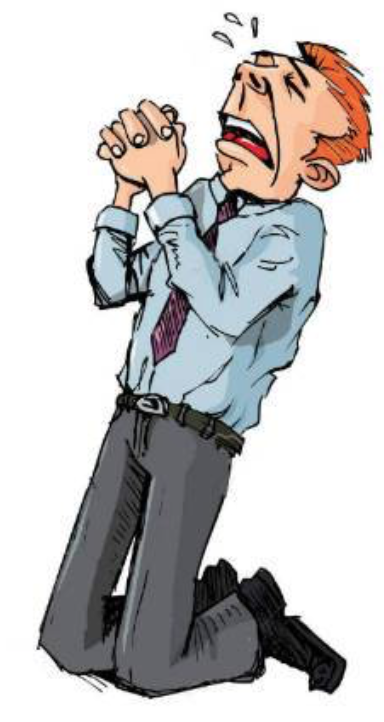
By this, he means that when we operate from our neediness – our need to “win” the sale, or to win on the course, this neediness can get in the way of us being at our best – and in fact, can come off as a little weird. A little creepy even.

Bob was getting creepy on me, man! It was clear that the only thing he wanted was to put some cash in his pockets at my expense. It was clear he didn’t care about me. He only cared about what was in my wallet.

(BTW…I’m not anti-salesperson. I have been in sales my entire career. But the evidence I have seen  – and experienced – informs me that the most successful selling interactions occur when both parties feel the value inherent in the transaction. That was lost on Bob.)

It may seem like a stretch – but I believe that the same performance issues are at play when we get needy on the golf course. The reason is that when we play the game of golf from a neediness orientation, our brain’s primitive threat response can more likely be triggered when things don’t go our way – or are even when things just MIGHT not go our way.

When we golf from a sense of neediness it is as if we are maintaining a tight grip on our story about what SHOULD happen This creates worry and anxiety…and ultimately pressure and tension – and finally, an inability to perform at our best.  (Check out Sian Beilock’s book: Choke)

Operating from neediness also prevents us from being present and in the moment. It prevents us from being able to be alert and indifferent on the course– two amazingly powerful operating stances which allow us to stay connected to our full potential in any moment.

Let’s face it…a grown adult smashing his club on the ground and swearing out loud after a less-than-perfect shot is a little weird. It’s a little creepy.

So, don’t be like Bob at the phone store. Don’t be so needy on the course.

Stop and smell the roses a bit. Drop your attachment to your outcomes. Engage in meaningful ways with your playing partners. Build a relationship or two. You will have a more enriching experience. And your scores may even go down!

Have a great week!


-Paul
Social Connection and Golf

Social Connection is an incredibly important influencer for all of us. But you may not have thought much about it in a golf context. A recent experience made me think of Social Connection as a great topic for the GGA community.

Human beings are wired to connect with each other in important ways. (Dr. Matt Lieberman’s TED Talk on the neuroscience of human connection is pretty interesting.) For example, when you feel like your need to connect with others (to be liked, to be loved, to be appreciated…etc.) is in jeopardy, your energetic presence can shift in important ways – and your play can be impacted.

It boils down to this: your ability to stay present in the game you are playing – and to play and perform at your best  – sometimes depends upon whether you feel like you are being supported (or not) by the people around you.

In August, I spent an amazing week in the Wind River Mountains in Central Wyoming with an incredible group of leaders and coaches. We were part of a National Outdoor Leadership School (NOLS) -led leadership expedition designed to explore team and leadership dynamics, overcome physical challenges, and reconnect with nature.

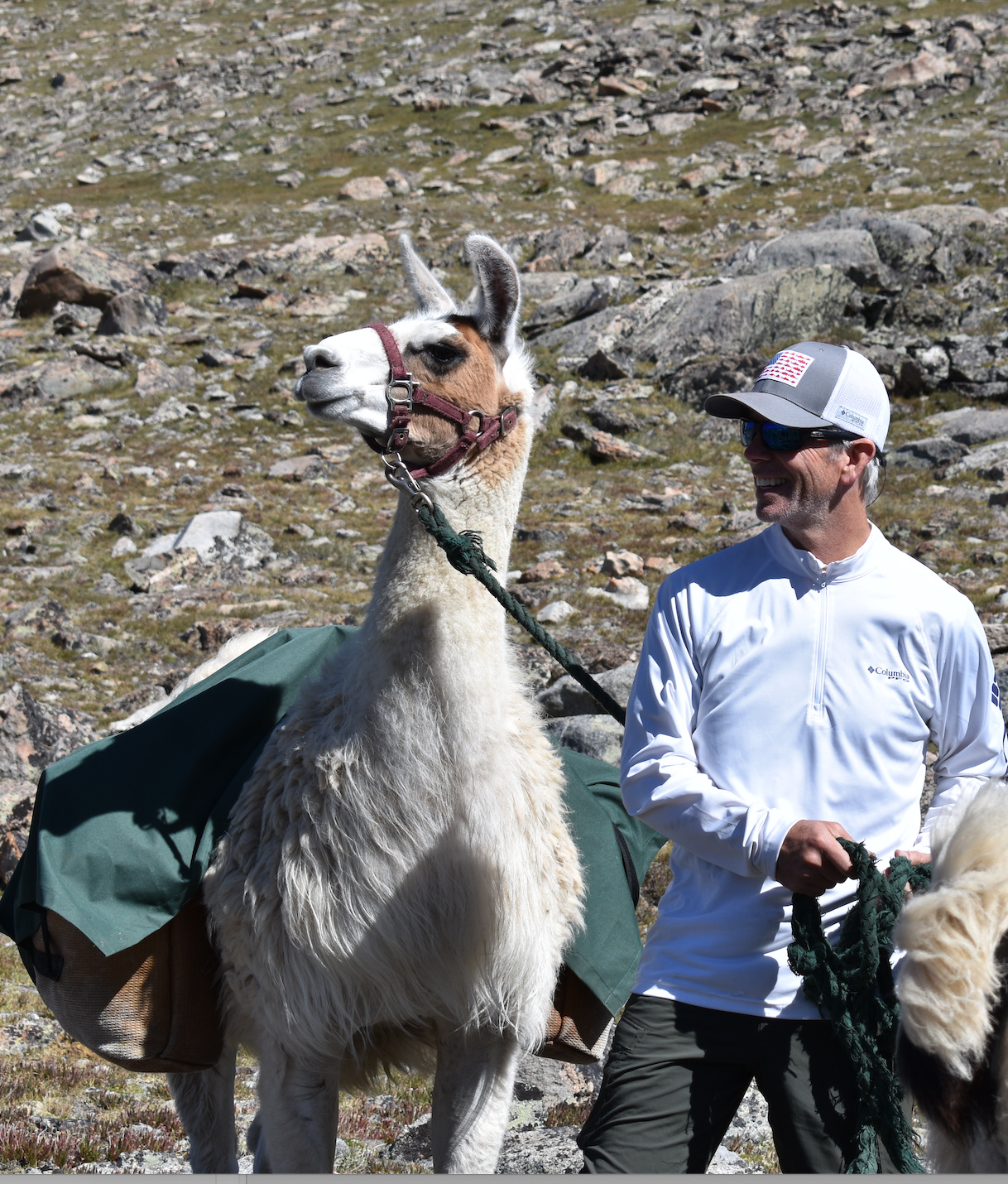
One of the elements of the trip that was pretty fascinating was the team of pack llamas that accompanied us, carrying our food and some of our gear. It turns out that llamas are highly-social pack animals…and significantly influenced by their social nature.

My new buddy “Oregon” and me in the Wind River Mountains.

There were 14 of us on the trip along with 7 llamas. At night we were all in the same camp together…but during the days when we hiked 5-6 miles , we would break up into smaller groups of 4 or 5 people  – and so the llamas would be split up as well.  No big deal right? Well, not if you are a llama!

Each of the llamas had distinct personalities. “Coyote” was young and rambunctious. “Oregon” was mature and calm. “Roper” wanted to lead …and so on. One of the things we noticed was that their performance on the trail depended on the social dynamics they found themselves in.

So, if Roper wasn’t leading, he would pout. If Coyote wasn’t with his buddies, he got tough to handle. (That’s right…some of them seemed to get along with some of the other llamas, but not others!) And if one of them felt challenged, they would spit or kick.

All of this made me think of the ways we (human beings) handle our interactions with others when playing golf.

Let’s face it. Not everyone approaches the game the same way you do. Some talk more than you. Some drink more, use language you don’t, or make noises while you are hitting the ball.

Additionally, others may not approach the kind of fun competition you enjoy in the same way that you do. They may bang their club on the ground after an errant shot. They may get super-intense with themselves or others.

If you are not careful, you can let other’s behaviors impact your own thought patterns –how you experience the game, and ultimately how you perform on the course

When I work with golf clients, I always talk about the importance of their Energetic Presence on the course…and we often discuss Social Connection influencers. My goal is to help them to become aware of what they “need” from others on the course – so that they can tune in to potential detractors when they are occurring -and REFRAME their thinking so that they can maintain a more neutral and objective stance.

This way, no matter how the other person is behaving, they can still have an enjoyable experience. They can still stay connected their true potential and play the game at or even above their skill level ( and not below it).

How does this work?

Imagine the playing partner who get super-angry with every shot. You know this guy. Every shot has to be perfect or they tell themselves (out loud) what a complete idiot they are. They get intense and angry with themselves, and maybe even with others around them.

How do you react to that guy today? Do you get a little caught up in their drama? Do you get annoyed by their behavior…because, after all. “I would never do that.”

If you do, then you are at risk of being taken out of your game. You are at risk of lowering your performance capacity. And why? Simply because of a thought you have about how the other person was behaving.

So, how do you turn that around? How do you prevent being taken out of your game by that guy?

First, tune into your own mental and emotional state. Notice what you are feeling about the situation – (“His behavior is frustrating me.”) Next, notice how those feelings are causing you to behave. (“I’m getting tense and it’s causing me to miss easy shots.”)

Then, see if you can isolate the original THOUGHT driving your feelings:  (“This guy is a total jerk.”)

This is SUPER-important, as your feelings area a product of your THINKING. Isololate your thinking and you can make important shifts in your mental state!

Finally, REFRAME that thought. (“This guy is acting like a jerk. But he is doing the best he can right now. Maybe I can be a good friend and be supportive toward him right now while he is struggling. “)

If you can do this, you might be surprised at what happens next. Your emotional intensity will diminish. Your feelings will shift from frustration to care and concern. And you will be able to stay connected to your full potential on the course.

All because you shifted your thinking.

Too bad my llama friends will never quite get this!

Have a great week!

-Paul

The Two Lines and Tension Points of the Single Plane Swing

I spend much of my time stressing the importance of the Single Plane starting position.  It has been my experience that when I am unstable or uncomfortable at address, my ability to strike the ball solid and consistently decreases dramatically.  When I feel perfect at address, I am a great ballstriker.

I believe that many golfers take the address position for granted and focus more attention on the motion of their body during the swing.

The address position is more than just standing beside the golf ball holding the club.  There are important elements that must be present to engage the body ensuring that the first motion into the backswing, what I call the first move, sets the entire golf swing into the proper sequence.

Club to Body Spatial Relationsihip

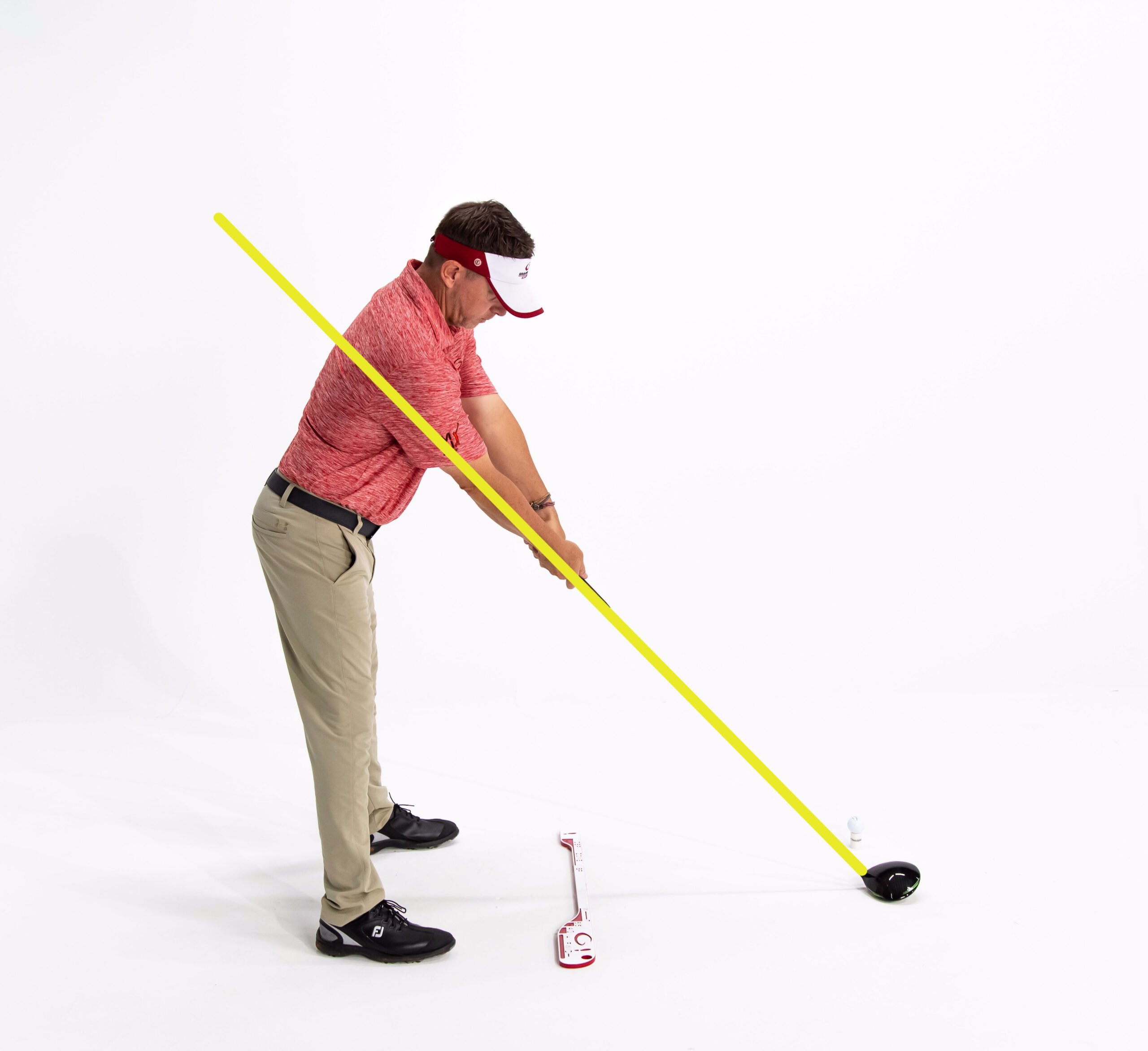
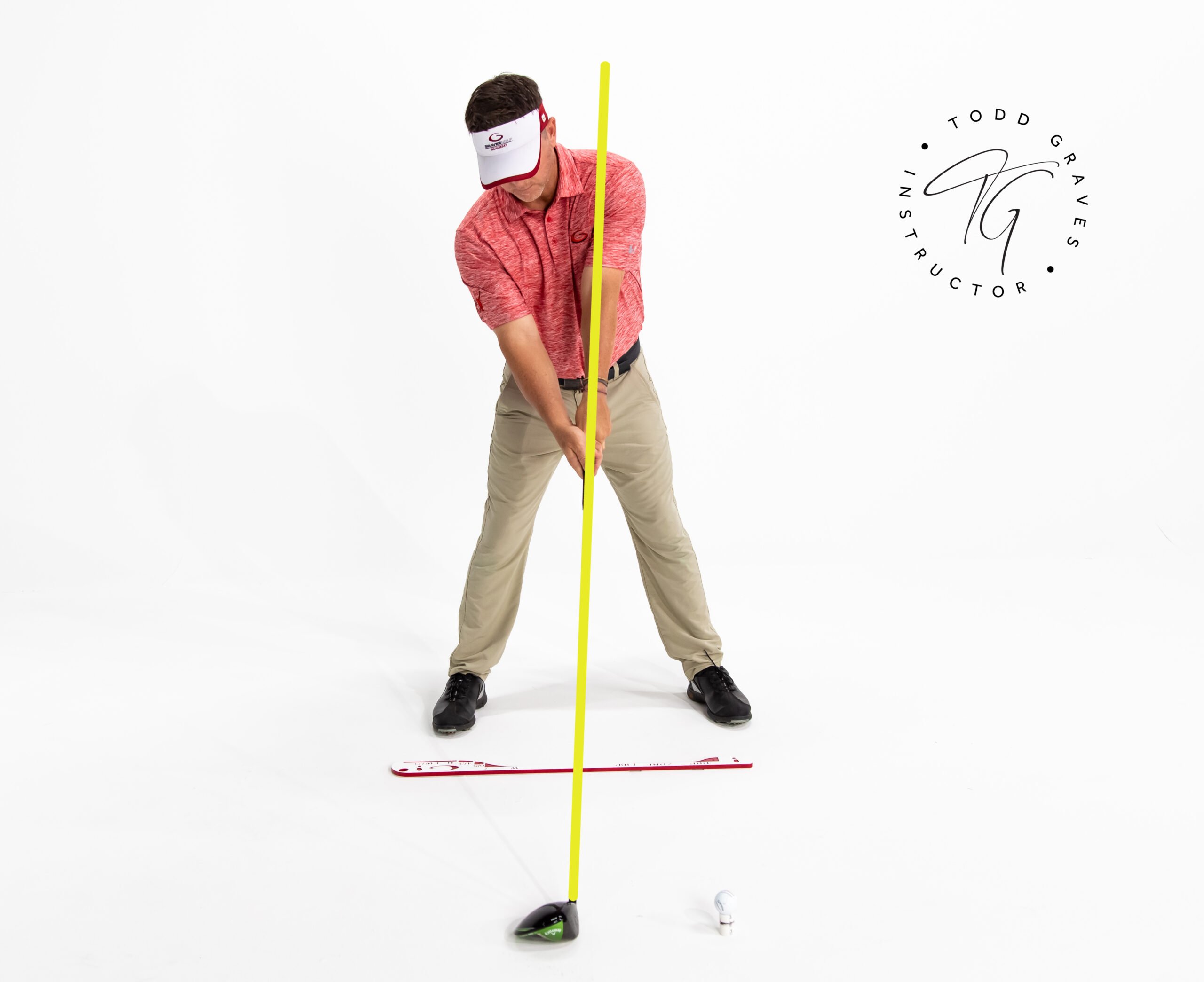
At address, there are two straight lines formed between the arms and the club.  These two lines form a “club to body” relationship.  The relationship is spatial allowing the arms to easily return the club to impact.  Let’s take a close look at these two lines and the relationship that is formed.

Down-the-Line (Single Plane) – the First Line

Single Plane Address Line from Down the Line

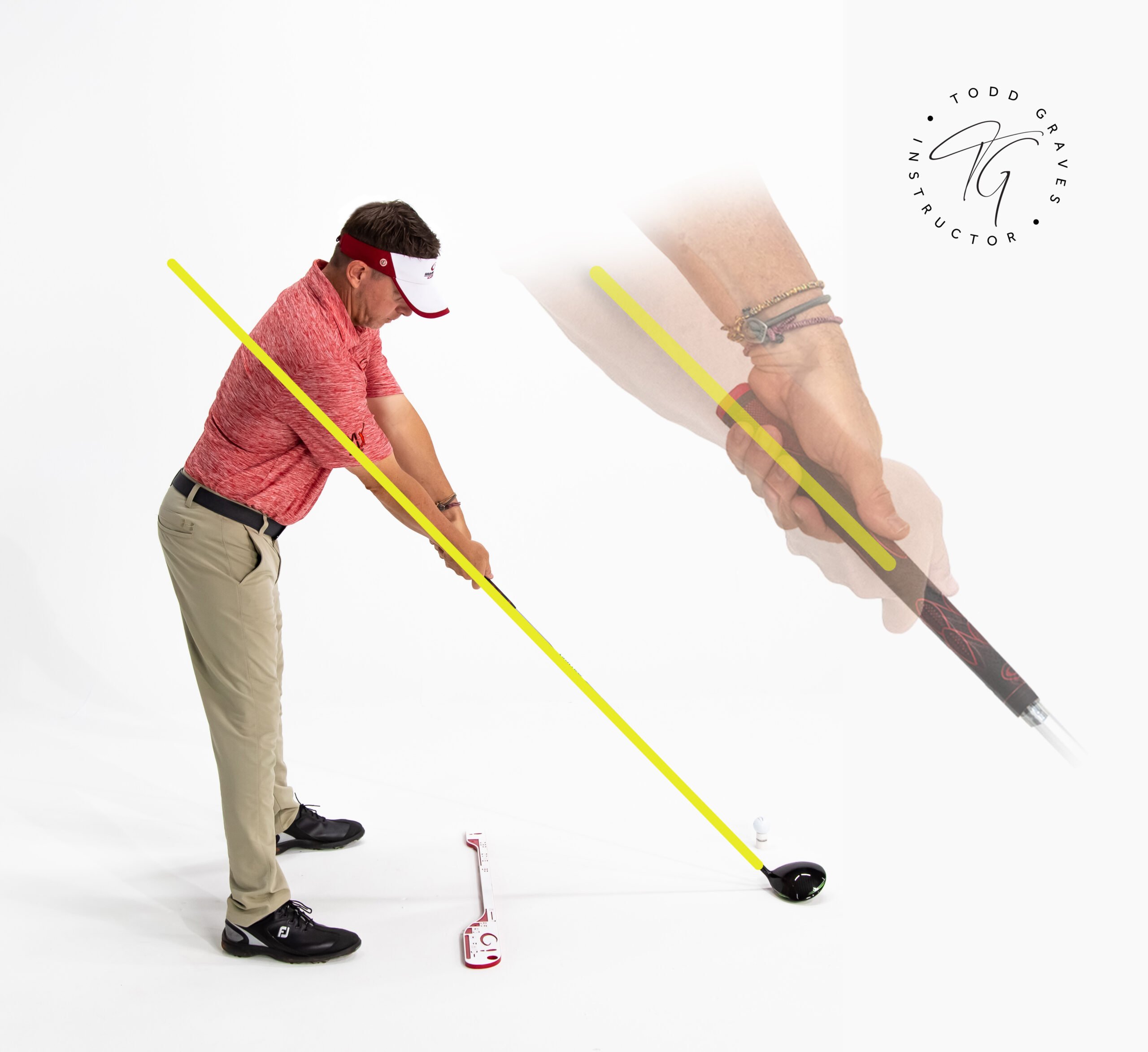
This angle shows the alignment of the club with the trail arm into a straight line.  The club is NOT aligned with the lead arm from this angle.  If I removed the trail arm from the club, the club would align below the lead arm.

Single Plane showing Trail Arm and Lead Arm

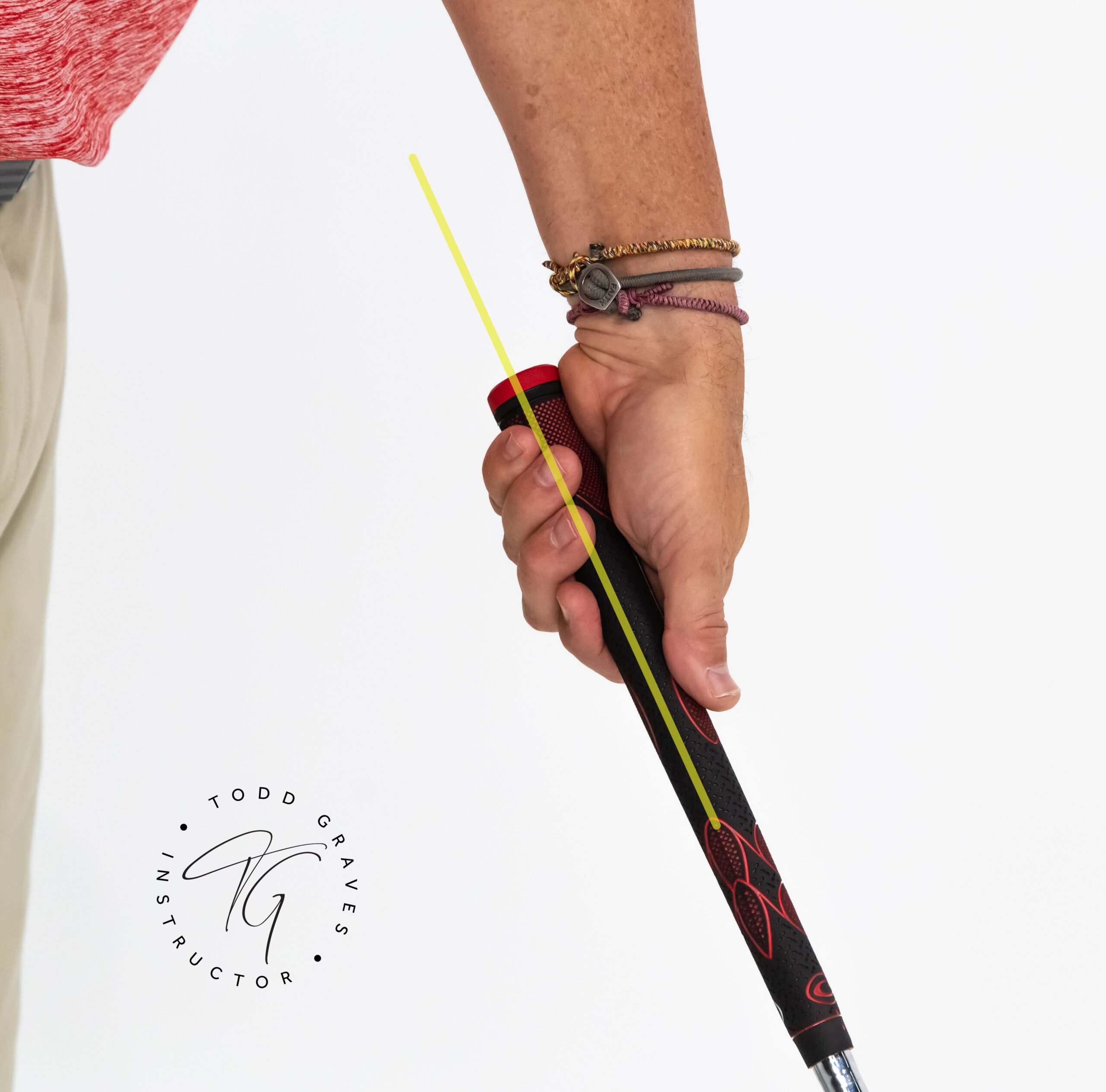
This is due to the club being held in the fingers of the lead hand into the heel pad.

Single Plane Lead Hand Fingers
The Single Plane Swing and Lead hand position

Face-on-View – The Second Line

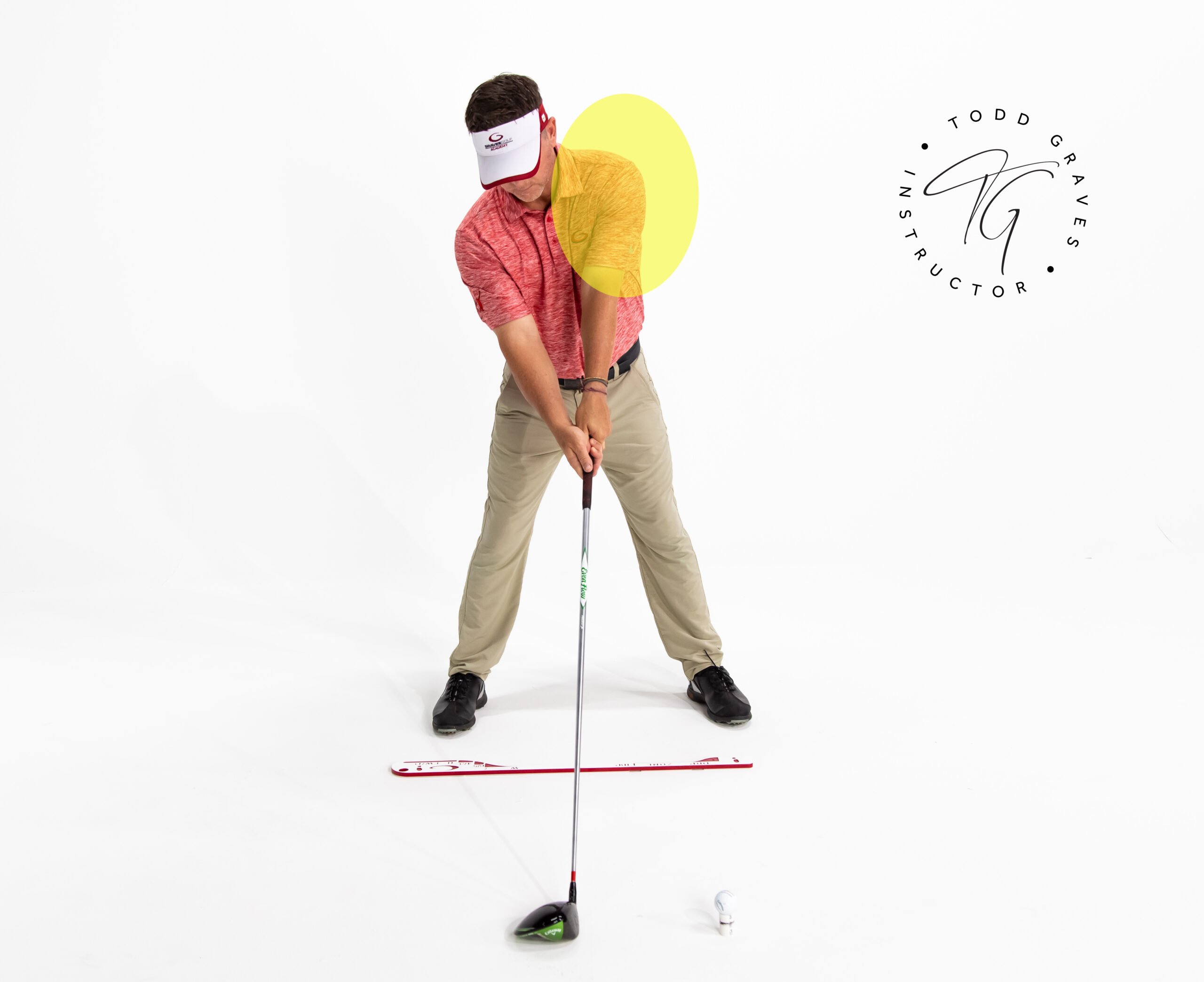
The second line can be seen from the face-on perspective where the club shaft aligns with the lead arm to the lead shoulder.

Single Plane Face on View

This alignment is a function and created by the tilt of the body.  The tilt of the body lifts the shoulder where you can see the extension which is where tension is felt. This is the area where the body feels engaged and ready to move.  The motion of the swing starts at the lead shoulder area because of this tension.

Single Plane Lead Shoulder Position

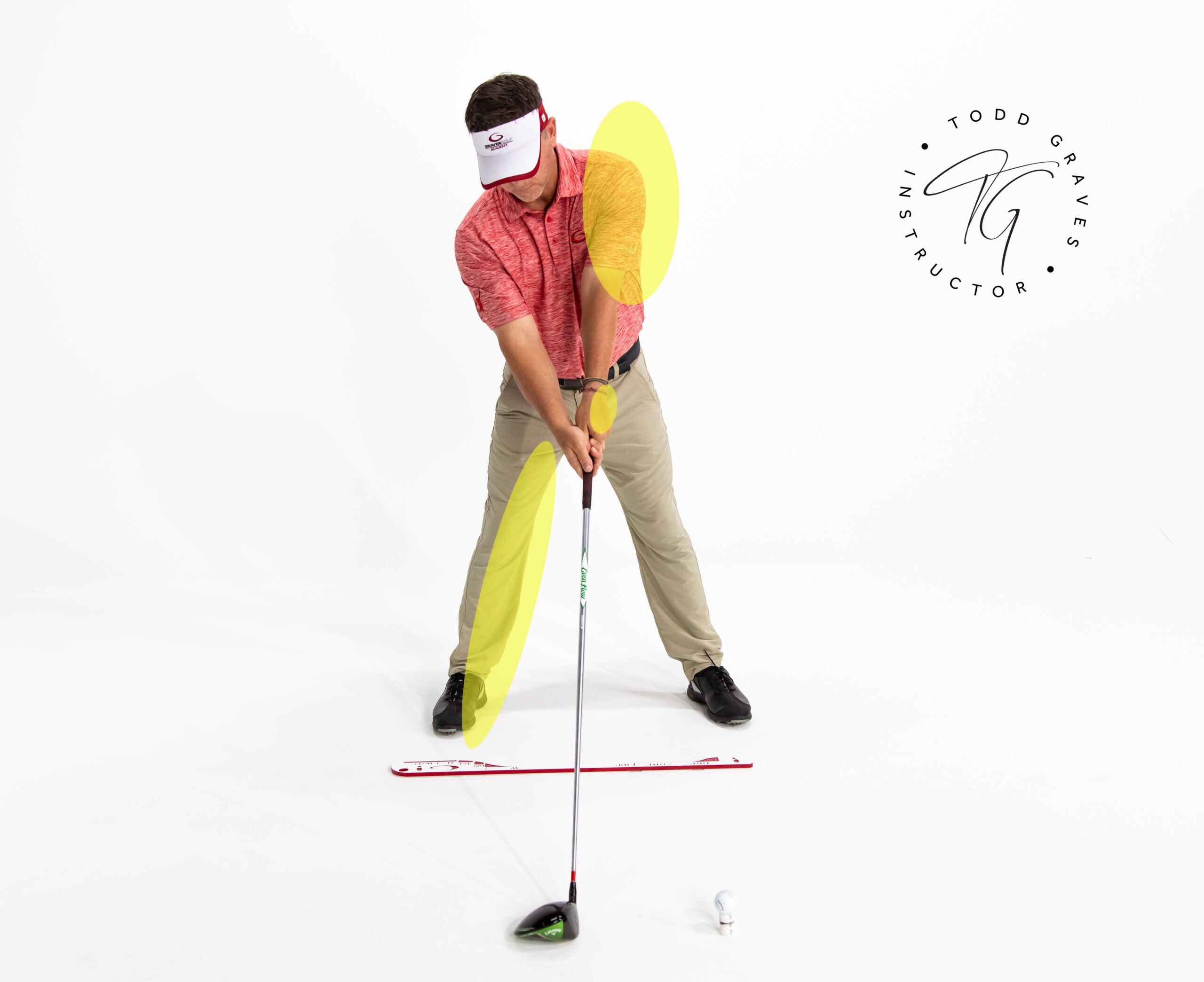
When the body is engaged, there is tension as various points feeling as though at these places you are in a “ready” state.  As the body prepares to make the first move into the backswing, with the proper tension at these places, the body is stable.  Stability at the correct places allows for the proper movement sequence.

Single Plane Swing Places of Tension

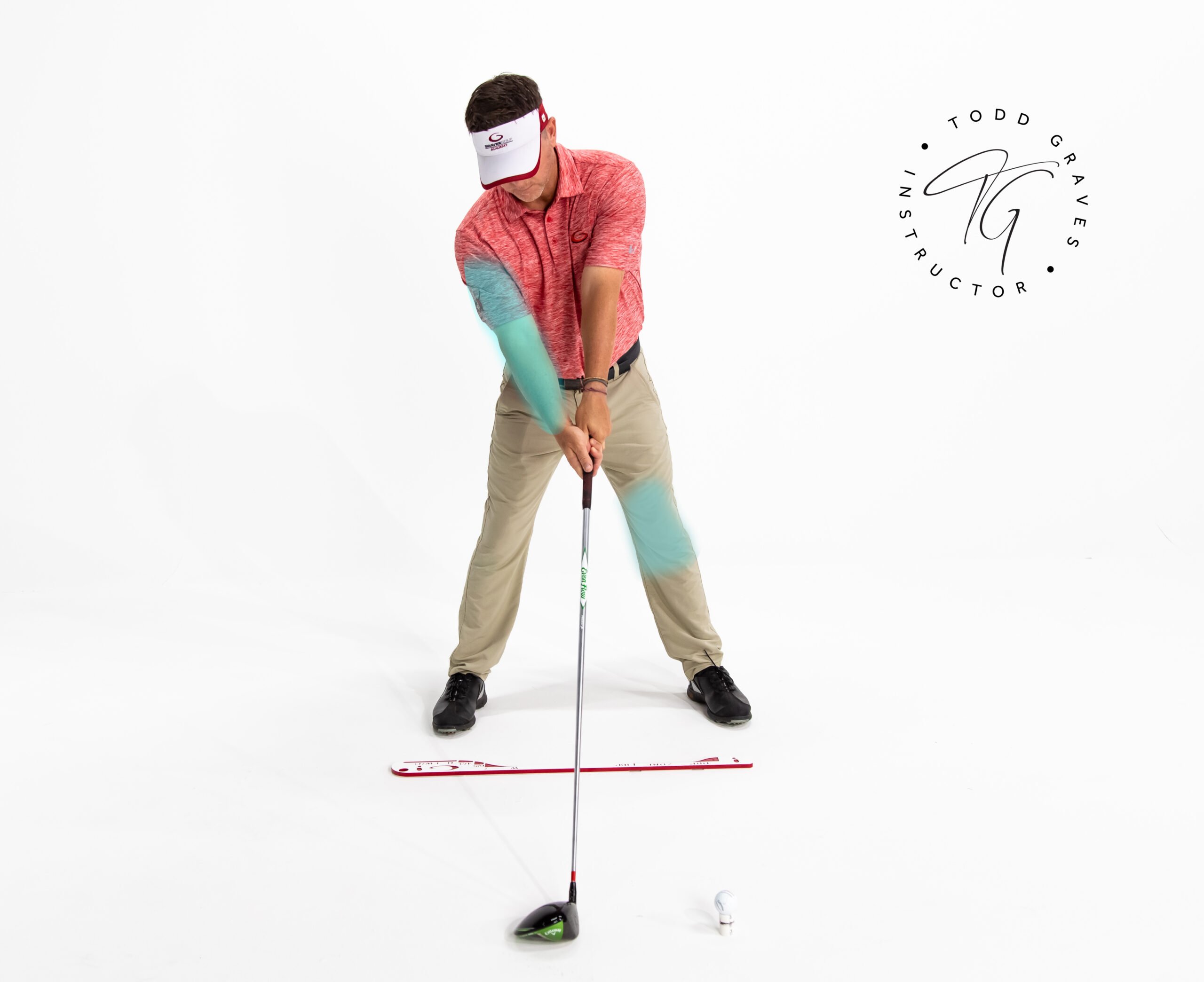
With the tension and stability in the correct areas of the body, there are also places that are relaxed, mostly in the trail side.  Instead of tension, these areas are “soft” and relaxed. See the diagram where the blue shaded areas mark the places in the body were there is very little tension. Single Plane Relaxed areas

With the body engaged and relaxed in the correct places, you are ready to initiate the correct movement into the backswing.  Each aspect of the body’s position promotes proper movement.  The details of these aspects are an important part of biomechanics and swing sequence.  You can find out more about how each detail of the swing affects the swing in its entirety in my latest DVD product, the Domino Effect, Back to Basics where I discuss, in detail, each aspect of the Single Plane Golf Swing.

The Domino Effect – Back to Basics

Graves Golf Domino Effect


LEARN

THE

SWING

Join 1M+ Subscribers to get your FREE Video Quick Start Guide that reveals how to hit the ball farther and straighter more consistently from now on…

START YOUR NEW GOLF SWING