GET YOUR SINGLE PLANE CLUB FITTING HERE

GET YOUR SINGLE PLANE CLUB FITTING HERE

Whether looking to fit/replace a single club to an entire set, from a putter to a driver to your irons, wedges, etc.. it is ABSOLUTELY CRITICAL that the club(s) is fit to YOUR individualized swing and single plane specifications.

An UNfit club will hinder your improvement process, an UNfit club will hinder your golf game, an UNfit club will not allow you to reach your potential, an UNfit club can and many times will actually physical hurt you (tendonitis in elbows and wrists are many times causes and exaggerated by club with improper lie angles), and UNfit club is basically worthless to you. I don’t care how much you spent for the golf club(s) – if they are not individually fit to you – they are worthless to your game – and worse than that, can and many times will actually “hurt” you.

The Graves Golf Academy has custom fitting programs established with most major manufacturers in the golf industry. And many of the manufacturers install our grips in their custom department (no other instruction group can say that….). We have worked VERY HARD to set this customizing system up for our customers, students, etc. anyone interested in the single plane golf swing.

Also, because of the amount of equipment we sell from each manufacturer, we are many times offered equipment at a reduced rate for our customers. We are always able to match industry pricing and many times able to beat the pricing. We are also many times able to offer clubs at a significantly reduced price (last year’s models, etc. as these manufactures know how many clubs we sell and “hold some back” for us). Please watch our newsletters (bimonthly) for these specials – as they typically don’t last long as many are interested in these special pricings.

Customization done at the manufacturer (Callaway, Taylormade, Titleist, etc..) is free through the Graves Golf, there is no added cost for the GGA grips installed and customized at the manufacturers. Plus, there is no shipping charge (within US) and no tax (outside of OK) through Graves Golf.

To get a FREE individualized custom fitting please go to:  http://moenormangolf.com/clubs/free-club-fittings/


To View Single Plane Fitting Informational / Instructional Webinar:   CLICK HERE

Successful and Satisfied Students – Graves Golf’s only Mission

If I had to summarize the success of Graves Golf this recent testimonial says it better than I ever could – and makes every bit of our efforts worthwhile.

Hi Tim,

I am going to send you two emails. The second has to do with my swing trainer. But before I forget to do this, I want to say a couple of things. I attended the one day single plane training in Anaheim with Pat on September 27th. And I just followed up with another one on one session with Pat on Tuesday, Christmas eve. I was the only student at the all day session. At first I was concerned about being the only student, but I just wanted to tell you what a fantastic time I had. This experience was supplemented by my 2nd session just a couple of days ago. I wanted you to know, which I am sure you do, that I think Pat is tremendous. He is smart, patient, funny and absolutely a tremendous representative of your golf philosophy and your company. Time literally flies by when I am with him. He constantly refers to you and to Todd regarding the positions, the process, how to practice, how to score better, etc. You have a great person in Pat working for you. And of course, he has no idea I am writing this to you. On a 2nd note regarding using your system. I picked up golf again exactly 20 months ago when my then 19 year old son stared working at a local golf course. I had played in my early 20s, but stopped for over 30 years when I started my company. I am now 65 and am an absolute fanatic of the game. I tried multiple different web training sites and took lessons from a pro on how to increase my swing speed. All of these were not only not helpful, the swing speed coaching just about ruined my low back. I stumbled across one of Todd’s YouTube videos regarding how a shorter backswing will produce better results. From there, I have completely adopted the system. I now regularly hit the ball further than I have ever done in the past. I make much better contact and much more consistent contact that I have ever been. I see improvement in my swing almost weekly. My scoring still sucks, but I am beginning to focus much more time on my short game, so I know the results will come. I know everyone says to concentrate on your short game, but when you are hitting every drive less than 200 yards, as I perviously was, you have to improve that part of the game as well. I truly love hitting golf balls now. I have so much more confidence that I will make solid contact and the ball will go (for the most part) where I am aiming, that the overall confidence in my game just keeps rising. Thank you and Todd for this. It is a great system, your videos and all of the content on the web site and YouTube are great as well. If you ever need a reference, I’m your man. Cheers,Nelson Greenwood

I am proud of the Graves Golf team is always working to help our students find their fastest path to great golf.  As the earth makes a final rotation for 2019, it makes for a great time for reflection. Speaking of rotation, let’s go full circle to the beginning of the year and review five great moments.

7. The Feeling of Greatness – 28 (more) Interviews 

Moe FOG

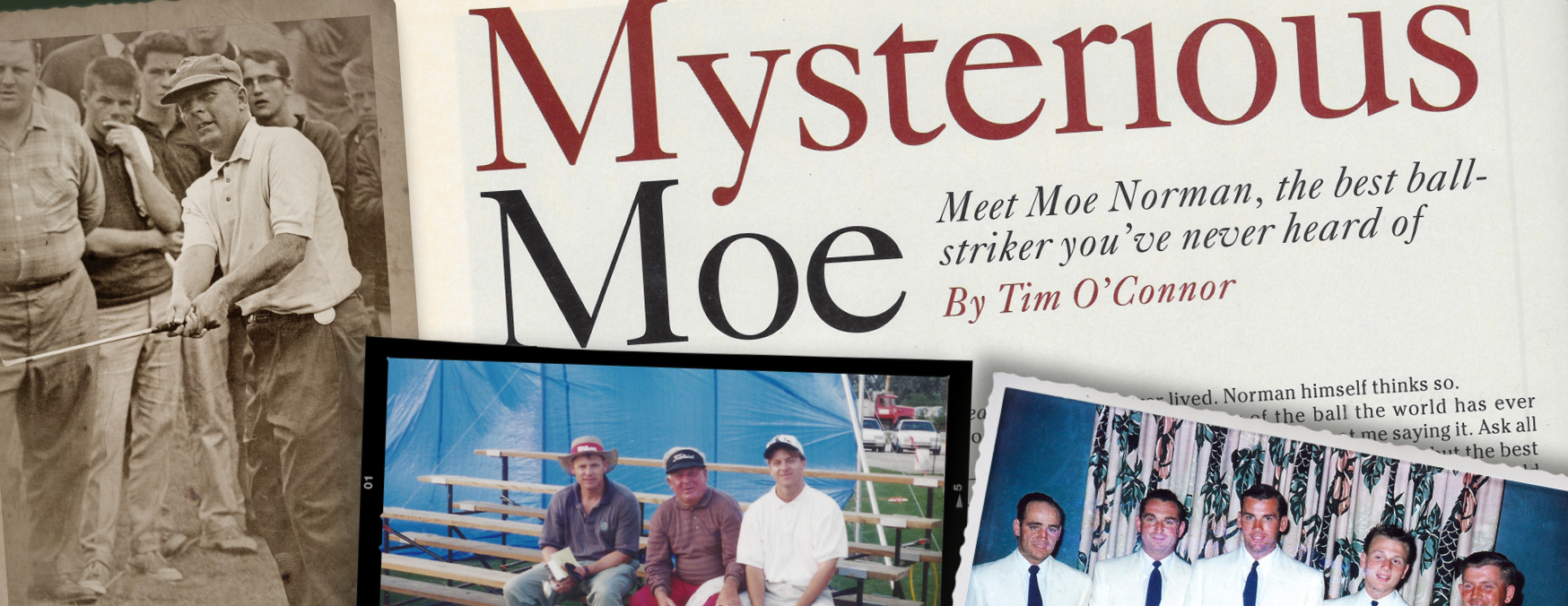
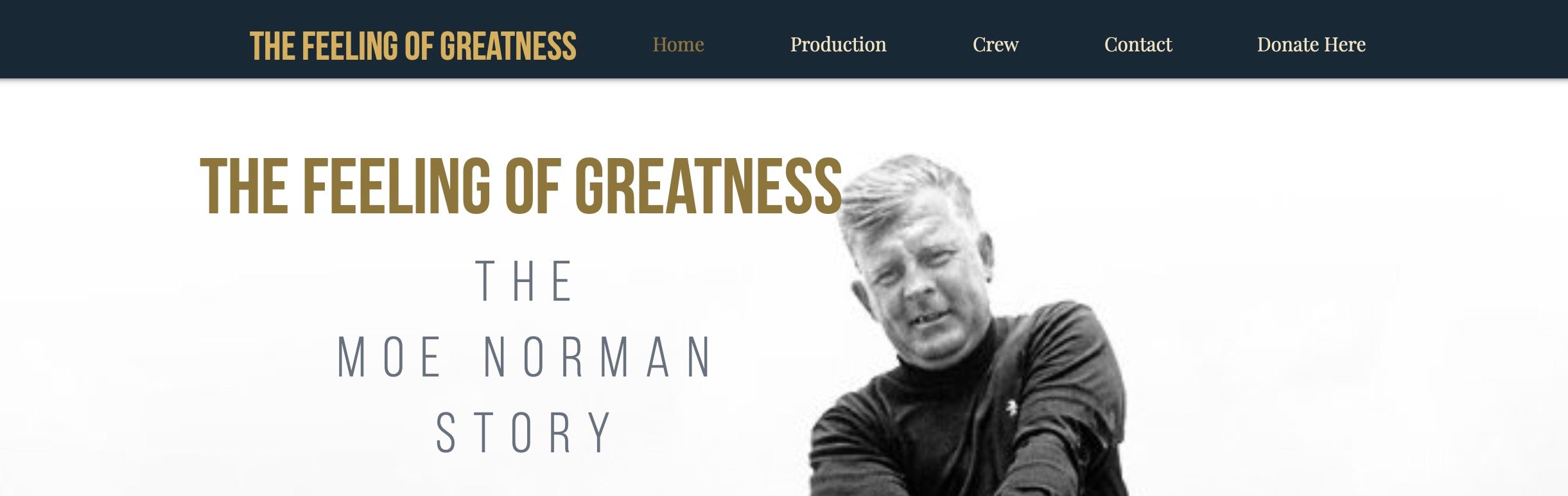
Heading into our second year of production, the Feeling of Greatness Documentary is entering into Post-production after the team, lead by Barry Morrow – Academy Award writer for Rain Man and Producer Nathan Edwards, acquired twenty-eight additional interviews of Moe’s family and friends.  You can find out more about the Moe Norman Documentary at www.thefeelingofgreatness.com.

Website: http://www.thefeelingofgreatness.com

6.  The AAI Golf School

With the help of Paul Monahan, Graves Golf’s Performance expert, the Alert Attitude of Indifference School (AAI) has become one of our most popular offerings.  Here is what students are saying about the GGAAI school:

Student: Rich R.

Just a short note of appreciation to Paul, Chandler, and yourself for a wonderful experience at the recent Alert Attitude of Indifference school in Phoenix.

You recall that I questioned the value of the school and was not certain that it was worth the time or money.
The exercises, drills, and practical applications were extremely valuable to apply immediately and build on in the future.

If anyone is doubtful about the value of the training – I suggest they visit with some of the folks who have attended the school.

A former doubting Thomas

Again thanks for a wonderful experience 

Rich R

Student: Jack G.

I am a 69 year old low teen handicap golfer who is “stuck” to get the next 5-6 shots off my handicap. If frustration and confusion are part of your game, the tools acquired at the AAI School instructed by Paul Monahan with assistance and coaching from Tim Graves and Chandler Rusk – May be for you………I now have a toolbox that will provide me the skills to get out of my own way (Stop Overthinking), replace frustration with gratitude and get back to the basic concept of why I took up the game 40 years ago – To Have Fun!!!  Isn’t that why Moe was so successful? Because he “played the game” and had fun!!

You will leave this school with a new appreciation of yourself, your life and your golf game. 

Jack G

To find out more about the next GG AAI School – you can visit the school pages here: http://moenormangolf.com/schools/2-day-alert-attitude-of-indifference-school/

5. Todd Graves YouTube Channel

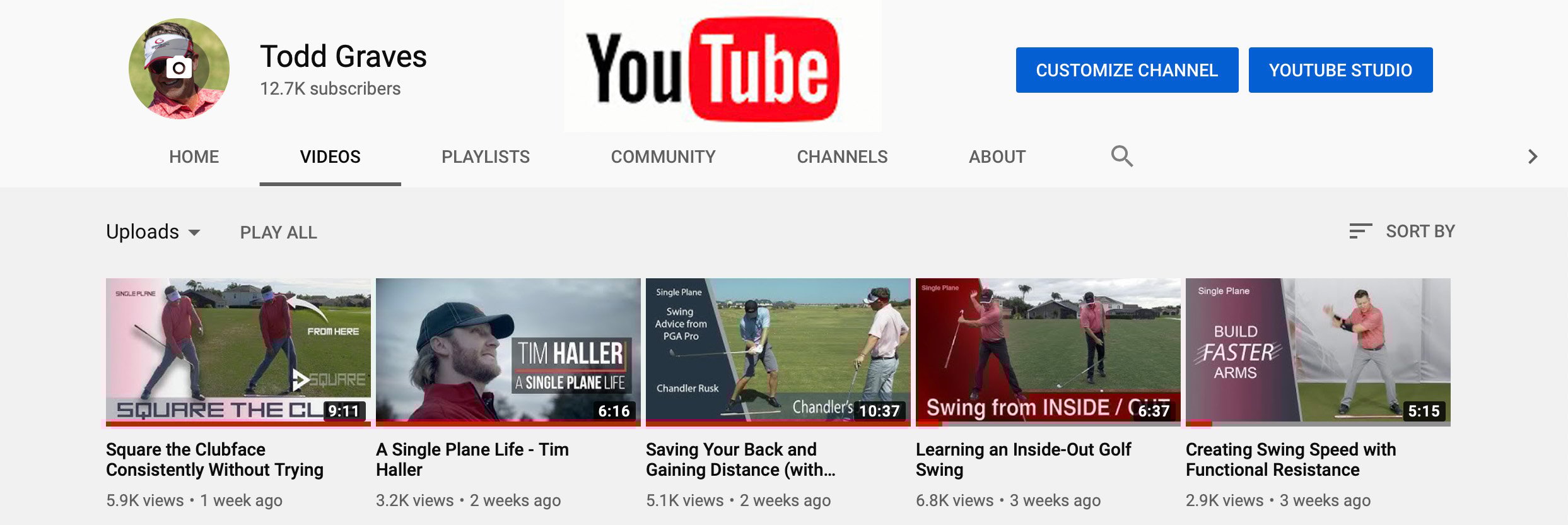
Moe Norman and the Single Plane swing expand to YouTube this year with the Todd Graves Channel.  The channel gained over 10,000 subscribers in just four months.  The channel is a great creative outlet for teaching people about the uniqueness of the Single Plane instruction.

http://www.youtube.com/c/ToddGravesGolf

4. Excalibur and H3

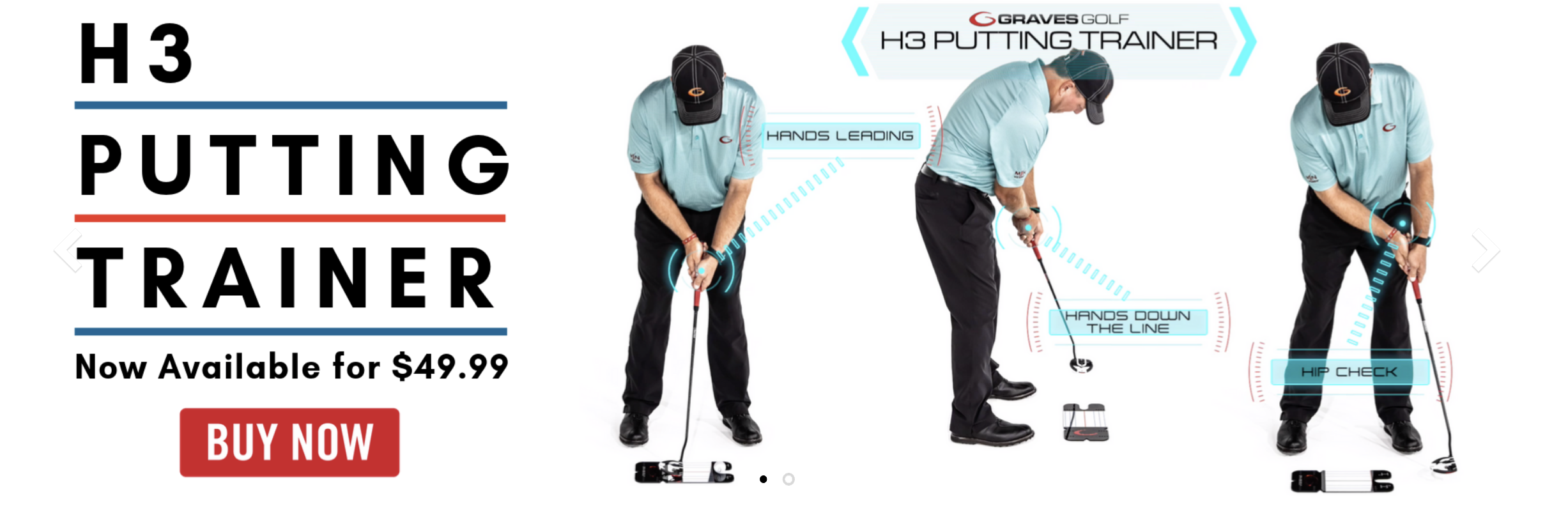
On a mission to help golfers lower their scores by improving the most important scoring part of the game, Tim Graves developed the Excalibur and H3 putting trainers designed help you implement the Graves Golf fundamentals.

Purchase it here: http://bit.ly/2MxCBVV

3. The Swing Thing

This year Graves Golf Introduced the Swing Thing – a product designed to teach the proper sequence of the golf swing and one of the most difficult parts of swing motion – the release.  It is impossible to swing the “Thing” incorrectly.  The design helps you feel swing plane when you Plane the Chain.

Purchase it here: Right Handed: http://bit.ly/39mfMOO Left Handed http://bit.ly/39kVa9i

2. The Single Plane Life

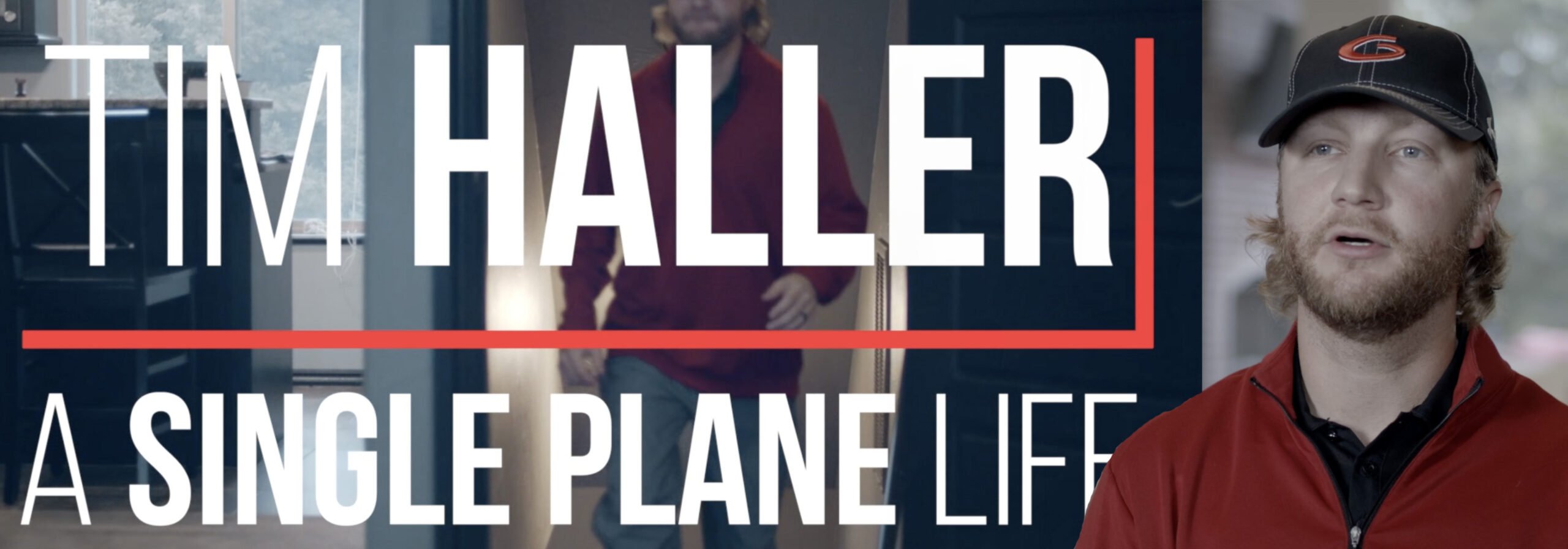
Why do you play? Is golf important to you? This year we introduced the Single Plane Life. The Single Plane Life is a life where you have fun playing golf again which makes you enjoy your time playing golf.  Great golf, fun on the course and with friends, this is the Single Plane Life.

See Tim’s video here: https://www.youtube.com/watch?v=g0qCxxD2xJg

1.The Acquisition of Moe Norman

This has been an exciting year for Moe Norman as well.  For the past twelve years, the Moe Norman brand has been in great hands thanks to Graves Golf.  After a brand purchase arrangement with the Moe Norman Estate, Graves Golf has acquired all of the intellectual property rights to Moe Norman. Now the future is in our hands as well.

Build Soft Skills, Play Like a Skateboarder – Tips for Improving (Part 3)

Hopefully, you were able to read the last 2 practice tips (November 2019 Update and December Newsletters) – Tips for Improving (Part 1 and 2).

In those practice tips we discussed how we work with our students to create new habits rather than breaking old habits. It is essentially impossible to break bad habits (our mind/body is not set up that way) … but we are set up to be able to create new habits and ultimately make changes/create new movements, etc.  we want.

We talked about a book we strongly recommend – The Little Book of Talent/52 Tips for Improving Your Skills by Daniel Coyle

It is described as a manual for building a faster brain and a better you. It is an easy-to-use hand book of scientifically proven, field tested methods to improve your skills – your skills, your kids’ skills, your organization’s skills – in sports, music, art, math and business. The product of five years of reporting from the world’s greatest talent hotbeds and interviews with successful master coaches, it distills the daunting complexity of skill development into 52 clear, concise directives. Whether you are 10 or 100, this is an essential guide for anyone who ever asked, “How do I get better?”

9780345530257

This book is available at Amazon.com

The last instructional newsletters (Tips for Improvement Part 1 & 2) we talked about the following tips:

  1. Staring at who you want to become.
  2. Spending 15 minutes a day engraving the skills on your brain.
  3. Stealing without apology.
  4. Buying (and keeping) a notebook.
  5. Be willing to be stupid
  6. Choose spartan over luxurious
  7. Before you start, figure out if it’s a hard skill or a soft skill
  8. To build hard skills, work like a careful carpenter

This instructional newsletter (Part 3) we cover the next 3 tips for improving your skills and relate them to you learning/working on your single plane swing and golf game.

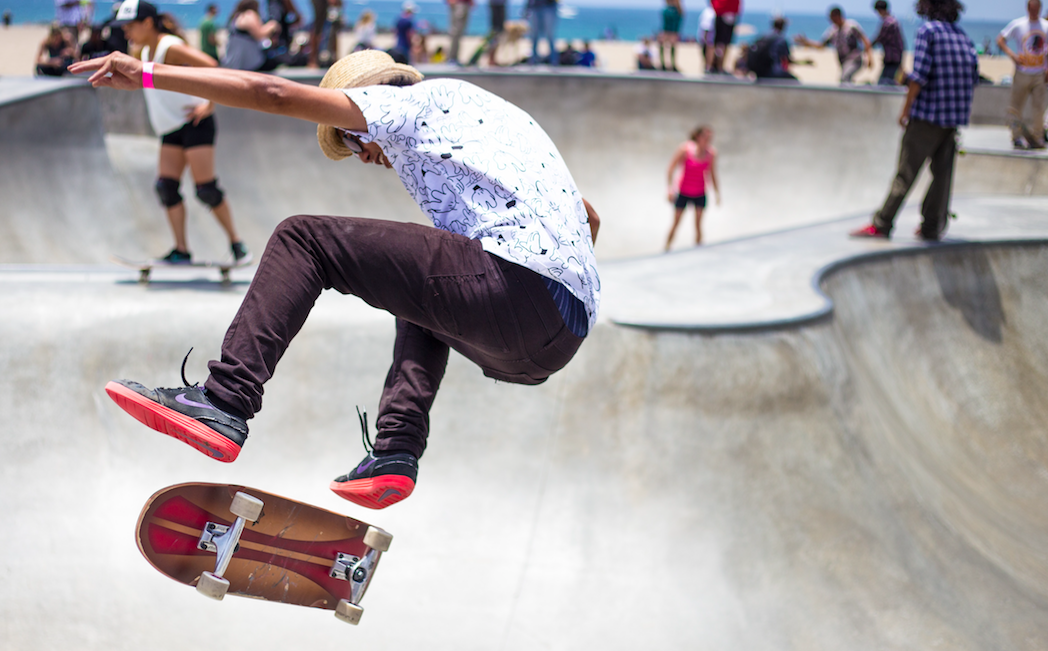
9. To Build Soft Skills, Play Like a Skateboarder

While hard skills are put together with measured precision (Tip # 8), soft skills are built by playing and exploring inside the challenging, ever-changing environments. These are places where you encounter different obstacles and respond to them over and over, building the network of sensitive wiring you need to read, recognize and react. In other words, to build soft skills you should behave less like a careful carpenter and more like a skateboarder in a skateboard park: aggressive, curious and experimental, always seeking new ways to challenge yourself.

It may seem a far distance between a skateboarder and golfer, but it really isn’t. A soft skill in golf is primarily built on the course or practicing for “on course” situations. It is much more about feel than technique.

Some examples: Hitting shots into different winds (down wind, cross wind, etc..), hitting different trajectories (high, low, etc..), working on different shots into the green, ones that roll (like a long chip), ones that stop fast (like a pitch or lob shot), hitting off of side hill lies (up hill, down hill, etc..), and obviously many more.

Suggestions to help you practice/work on these soft skills:

– Try to get on the golf course early or late… at a time when you are alone or with someone who doesn’t care if you hit more than one shot. And at a time when you aren’t holding anyone up behind you. My favorite times are to start on back nine early in morning (not getting in way of grounds crew) or teeing off early evening when the front nine is open.

– Hit more than one shot (hit many if possible) in the situation you are working on.  Especially if the first was not performed correctly. (I like to hit 6 to 10 balls from the “situation”)

– Hit YOUR golf balls – the one’s you typically play with. NOT range balls…. You are learning feel, etc.. You need to learn feel with YOUR golf balls. They react different than range balls.

– Doesn’t hurt to make a plan before you start on what you want to work on. For example, let’s say you want to work on side hill lies and some flop shots around the greens.  You play the first hole and hit the ball down the middle… on a flat lie. Pick up the ball and find the nearest side hill lie.  Drop the ball on the lie and hit it. Hit a few more. work on that shot.  Let’s say you hit the shots on the green. Pick them up and throw them into a position that you will have to hit a flop/lob shot from… hit a few from there……  Have a plan before you start on shots you want to work on.

– Remember – learning/working on feel is just as important, even more important, than technique in building soft skills. Think about the feel….  take your time to learn the feel, even take notes on what you feel… it will help you a lot in recall when you have the same shot during a round of golf.

When you practice a soft skill, focus on making a high number of varied reps, and on getting clear feedback. Don’t worry too much about making errors – the important thing is to explore. After each session, ask yourself, what worked? What didn’t? And why?

10. Honor The Hard Skills

As you probably recognize, most talents are not exclusively hard skills or soft skills, but rather a combination of the two. Prioritize the hard skills because in the long run they’re more important to your talent. Most top performers (top athletes) place great importance on practicing the same skills they practice as beginners.

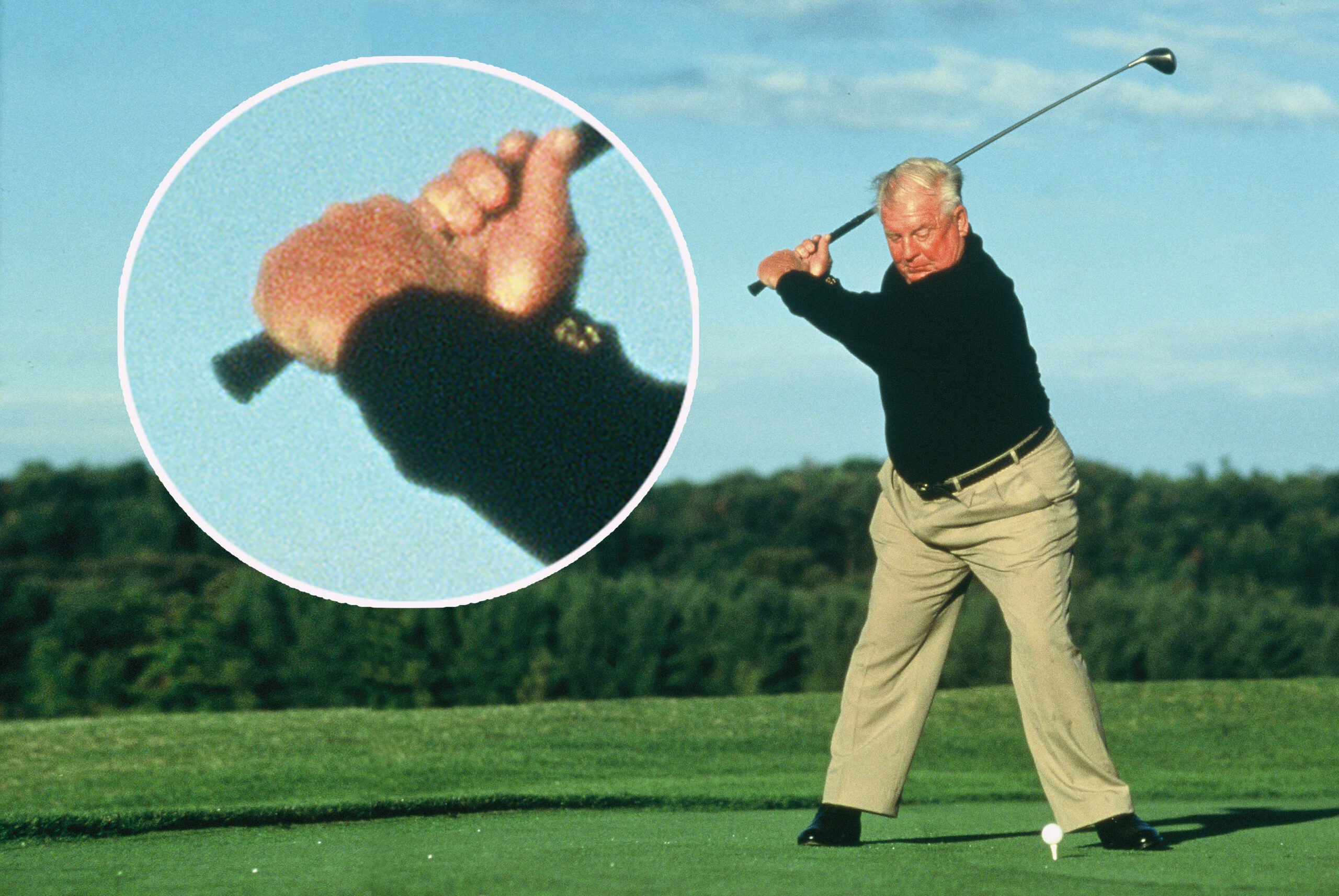
As we always say, over and over and over (I am sure many of our students get tired of us telling them this) – you must first build/work on your grip, then set up, then take away, then down swing, impact and release… in that order. And you will NEVER stop working on these fundamentals.

In fact, even myself (Tim) and my brother (Todd) continually work/tweak, check, etc.. these fundamentals. I ALWAYS use an alignment trainer when I practice, I quite often use a grip training club when I practice, Todd videos his swing almost every session he hits balls (to check) … You will and should NEVER stop working on your fundamentals.

One way to keep this idea in mind is to picture your talent as a big oak tree – a massive, thick trunk of hard skills (fundamentals) with the towering canopy of flexible soft skills up above.  First build the trunk.  Then work on the branches.

11. Don’t Fall For The Prodigy Myth

Most of us grow up being taught that talent is an inheritance, like brown hair or blue eyes. Therefore, we presume that the surest sign of talent is early, instant, effortless success, i.e. being a prodigy. In fact, a well-established body of research shows that that assumption is false.  Early success turns out to be a weak predictor of long-term success.

We believe and prove it every day, regardless of athleticism, age, “current talent”, etc.. you can, should and will improve if you practice correctly. In other words, as we always say, if you practice with a purpose and focus on getting a little better every time you practice, you will improve. The rate of improvement is up to you. How much you practice, your focus during practice, your focus on fundamentals, your “patience” to allow time for changes to occur and become a new habit, and in general your belief in the methodology are all factors to your improvement. We see too many fall into “the trap” that they can’t learn new habits because they are “too old” or aren’t “athletic” enough..  Both have very little to do with learning new habits… the issues typically come down to forgetting how to learn something new and flexibility issues. Both areas that can be worked on.

Talent Code comment: If you don’t have early success, don’t quit. Instead, treat your early efforts as experiments, not as verdicts. Remember, this is a marathon, not a sprint.

Watch our next Practice Tip(s) for continuation of this topic – Tips for Improving including picking a coach, finding the sweet spot, breaking down moves into chunks, and many others.

Expectations Revisited

Question: “What’s the most important shot in golf? Answer: “The NEXT one”

I know that you know that.

So, what can you name that will interfere with your ability to pull off THE NEXT SHOT?

Among many things, I can think of two that have to do with expectations:

  1. Expectations about what we think SHOULD happen next.
  2. Expectations unmet from the previous shot.

A couple weeks ago at the Alert Attitude of Indifference 2-Day playing school in Phoenix, we had a great discussion around ten mental game strategies you can build to improve your play and your overall golf experience

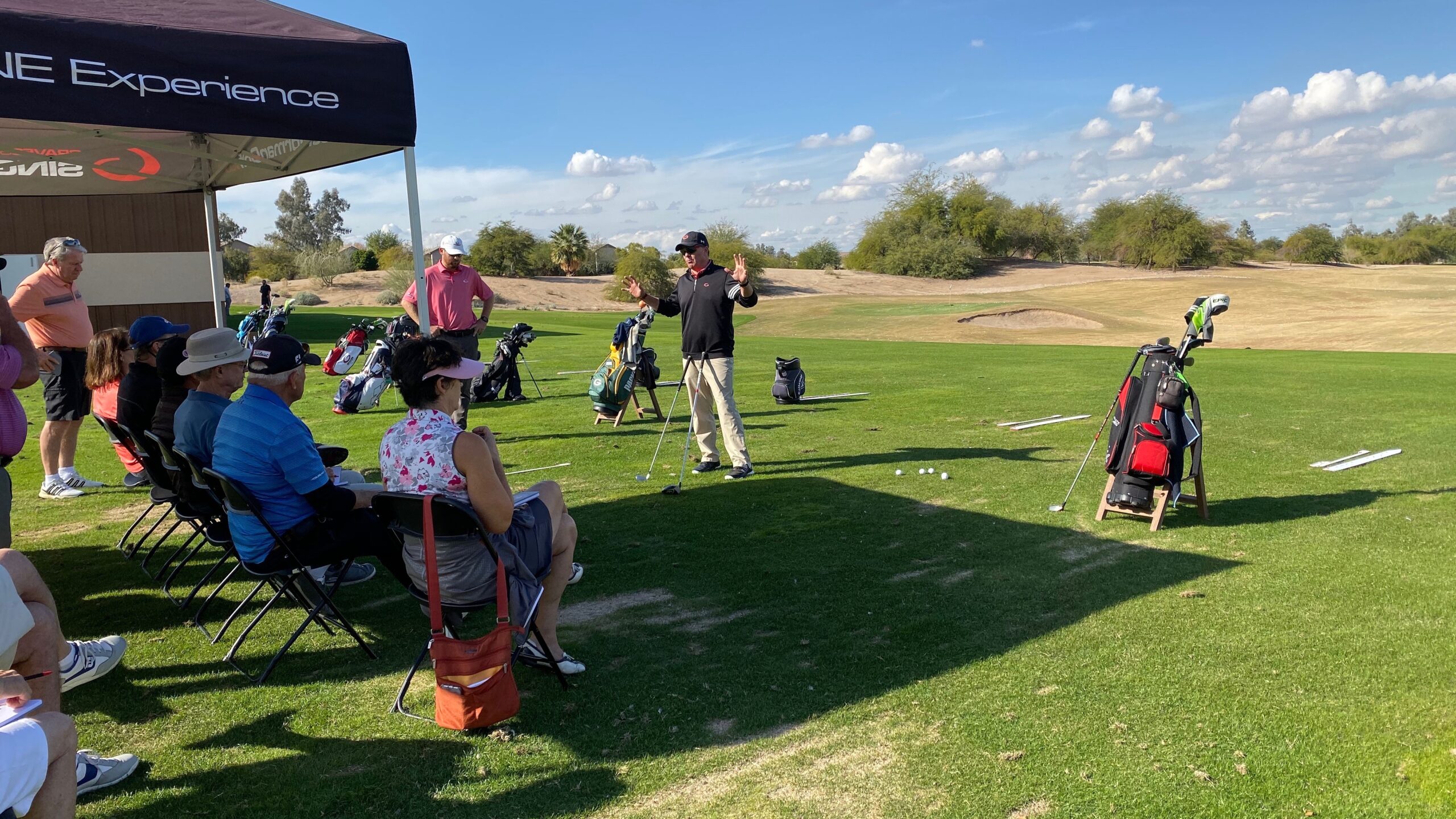
Tim Graves and Chandler Rusk lead a mental game discussion at the Alert Attitude of Indifference School in Phoenix, AZ.

One of those strategies is this: Leave Hope and Expectation in the Car

One of the students – a very talented and successful Single Plane Swing golfer – commented that he understood about not playing with Hope ( Moe used to tell people “…you don’t need hope.”) But he was having trouble getting his head around dropping all expectation.

I appreciated the candor. The concept is a little unconventional. After all, aren’t we supposed to EXPECT to do well? Aren’t we supposed to EXPECT to make that important putt? (He certainly does!)

Well, maybe. And you can take expectations out onto the course if you want to. But I believe that there is a more powerful mindset from which to play the game. And it involves dropping expectation altogether.

It involves staying present and in the moment so that the shot you just flubbed doesn’t impact the most important shot in golf – the NEXT ONE!

Check out this article I wrote a couple years ago that addresses expectation in our game…and how it showed up for one golfer on the PGA Tour.

http://moenormangolf.com/expectations/

Have a wonderful holiday season. I look forward to a great year of Single Plane Golf in 2020!

All the best.

-Paul

Be Willing to Be Stupid – Tips for Improving (Part 2)

Hopefully, you were able to read last month’s practice tip (November Update) – Tips for Improving (Part 1).

In this practice tip we discussed how we work with our students to create new habits rather than breaking old habits. It is essentially impossible to break bad habits (our mind/body is not set up that way) … but we are set up to be able to create new habits and ultimately make changes/create new movements, etc. we want.

We talked about a book we strongly recommend – The Little Book of Talent / 52 Tips for Improving Your Skills by Daniel Coyle

It is described as a manual for building a faster brain and a better you. It is an easy-to-use hand book of scientifically proven, field tested methods to improve your skills – your skills, your kids’ skills, your organization’s skills – in sports, music, art, math and business. The product of five years of reporting from the world’s greatest talent hotbeds and interviews with successful master coaches, it distills the daunting complexity of skill development into 52 clear, concise directives. Whether you are 10 or 100, this is an essential guide for anyone who ever asked, “How do I get better?”


9780345530257

This book is available at Amazon.com

The last instructional newsletter (Tips for Improvement Part 1) we talked about the following tips:

1.  Staring at who you want to become.

2.  Spending 15 minutes a day engraving the skills on your brain.

3.  Stealing without apology.

4.   Buying (and keeping) a notebook.

This instructional newsletter (Part 2) we cover the next 4 tips for improving your skills and relate them to you learning/working on your single plane swing.

5. Be Willing To Be Stupid

Feeling stupid is no fun.  But being willing to be stupid – in other words, being willing to risk the emotional pain of making mistakes – is absolutely essential, because reaching, failing, and reaching again is the way your brain grows and forms new connections.

When it comes to developing talent, remember, mistakes are not really mistakes, but rather they are guideposts you use to get better.

This is a topic we discuss often at our schools and clinics. When you are making changes in your golf swing, it should be uncomfortable at first and you will not hit it well at first. You shouldn’t – many feel they are making “mistakes” and feel “stupid” when they do this. But this shows you are making changes and something EVERYONE will go through when they are making changes and creating new habits. If you are willing to make “mistakes” – miss hit shots when you first start to make changes, “willing to be stupid” as Mr. Coyle calls it…. you will create new habits. If not, the process will take MUCH longer, if not hindered all together.

6. Choose Spartan Over Luxurious

We love comfort. We love state-of-the-are practice facilities, oak-paneled corner offices, spotless locker rooms, and fluffy towels. Which is a shame, because luxury is a motivational narcotic: It signals our unconscious minds to give less effort. It whisper’s, Relax, you’ve made it…

The point of this tip is not moral; it’s neural. Simple, humble spaces help focus attention on the deep-practice task at hand; reaching and repeating and struggling. When given the choice between luxurious and spartan, choose spartan….  Your unconscious mind will thank you.

This is actually one of my favorite tips in the Little Book of Talent. Do I like fancy country clubs, fancy ranges, fancy practice areas – ABSOLUTELY! But, there is no question, my focus suffers big time when I’m in that environment. In fact, when I grew up hitting golf balls, and practicing in high school, in college and when I was starting on the mini – tours, 90% of the time I hit balls (practiced) in a field hitting my own golf balls out of my shag bag. And I guarantee my improvement was increased dramatically as my focus had to stay alert as when you are hitting your own balls, you must shag your own golf balls. If you loose focus, it is absolutely no fun shagging those balls….

I always recommend to my students (especially younger high school and college students) if you want to dramatically improve your quality of practice – hit your own golf balls – whether you are chipping, pitching, or working on your full swing, if you have the opportunity to hit your own balls – I strongly recommend it

7. Before You Start, Figure Out If It’s a Hard Skill or a Soft Skill

The first step toward building a skill (creating a new habit) is to figure out exactly what type of skill you’re building. Every skill (habit) falls into one of two catagories: hard skills or soft skills.

Hard, High-Precision Skills are actions that are performed as correctly and consistently as possible, every time. Hard Skills are about repeatable precision.

An example of a hard skill is creating new moves/working on new positions in your golf swing. Golf swing fundamentals are hard skills.

Soft, High-Flexibility Skills are those that have many paths to a good result, not just one. These skills aren’t about doing the same thing perfectly very time, but rather about being agile and interactive, reactive and making timely choices.

An example of soft skills is working on things that will help you on the course/on course type situations. Hitting shots into the wind, moving the ball right to left, or left to right, hitting different trajectories on golf shots, working on your short game (creating different shots around the green), etc. Soft skills tend to be more “feel” related and something that is reactive to the situation

8. To Build Hard Skills, Work Like a Careful Carpenter

To develop reliable hard skills, you need to connect the right wires in your brain. In this, it helps to be careful, SLOW, and keenly attuned to errors. To work like a careful carpenter. Precision especially matters early on, because the first reps/swings establish a pathway for the future. Neurologists call this the “sled on the snowy hill” phenomenon. The first repetitions are like the first sled tracks on fresh snow. On subsequent tries, your sled will tend to follow those grooves.

When you are working on hard skills (working on your golf swing), be precise and measured. Go SLOWLY. Make one simple move (change) at a time, repeating and perfecting it before you move on. Learning fundamentals only seems boring – in fact, it’s the key movement of investment. If you build the right pathway now, you’ll save yourself a lot of time and trouble down the line.

This is EXACTLY why Todd and myself have worked so hard on creating and implementing our training aids and instructional videos.

These training aids and instructional videos are set up to help you act like a careful carpenter. They help you take the guess work out of practicing. Even if your focus starts to “lax” – they will help you keep on path.

Do not guess, do not question if you are doing it right or not.

As we say at all our schools and to all our students – a majority of typical golfers have no idea if they are on the path to improvement or not. Our students do not and will not have this problem. By following a model, studying and learning proper movement and using training aids to check and check often, you can guarantee you are building those hard skills (fundamentals) perfect – like a VERY careful carpenter.

Watch our next Newsletter (December Update) released in 2 weeks for continuation of this topic – Tips for Improving.

CLUB FITTING INFORMATION / FREE CLUB FITTING

Whether looking to fit/replace a single club to an entire set, from a putter to a driver to your irons, wedges, etc.. it is ABSOLUTELY CRITICAL that the club(s) is fit to YOUR individualized swing and single plane specifications.

An UNfit club will hinder your improvement process, an UNfit club will hinder your golf game, an UNfit club will not allow you to reach your potential, an UNfit club can and many times will actually physical hurt you (tendonitis in elbows and wrists are many times causes and exaggerated by club with improper lie angles), and UNfit club is basically worthless to you. I don’t care how much you spent for the golf club(s) – if they are not individually fit to you – they are worthless to your game – and worse than that, can and many times will actually “hurt” you.

The Graves Golf Academy has custom fitting programs established with most major manufacturers in the golf industry. And many of the manufacturers install our grips in their custom department (no other instruction group can say that….). We have worked VERY HARD to set this customizing system up for our customers, students, etc. anyone interested in the single plane golf swing.

Also, because of the amount of equipment we sell from each manufacturer, we are many times offered equipment at a reduced rate for our customers. We are always able to match industry pricing and many times able to beat the pricing. We are also many times able to offer clubs at a significantly reduced price (last year’s models, etc. as these manufactures know how many clubs we sell and “hold some back” for us). Please watch our newsletters (bimonthly) for these specials – as they typically don’t last long as many are interested in these special pricings.

Customization done at the manufacturer (Callaway, Taylormade, Titleist, etc..) is free through the Graves Golf, there is no added cost for the GGA grips installed and customized at the manufacturers. Plus, there is no shipping charge (within US) and no tax (outside of OK) through Graves Golf.

To get a FREE individualized custom fitting please go to:  http://moenormangolf.com/clubs/free-club-fittings/
 

To View Single Plane Fitting Informational / Instructional Webinar:   CLICK HERE

LEARN

THE

SWING

Join 1M+ Subscribers to get your FREE Video Quick Start Guide that reveals how to hit the ball farther and straighter more consistently from now on…

START YOUR NEW GOLF SWING