Putt Your Way to a Great Swing

Putt Your Way to a Great Swing

During a recent webinar I discussed how working on your short game (putting, chipping and pitching), if done properly, can and will dramatically improve your long game.

Had GREAT response during and after the webinar. To be honest, didn’t surprise me as it is the same response I get when I present this same topic during our schools and camps.

What does surprise me is how many don’t understand this concept – working on proper short game fundamentals will improve your long game.

Click HERE for your FREE PUTTER FITTING

So – thought would talk about the first (putting) and how working on putting can help your long game.

Fundamental #1 – Hands Leading

In every shot in golf – your hands should lead at impact. In other words, your hands will be ahead of the golf ball at impact including putting. Then why do most average golfers set up with their hands behind the ball when putting?

When you set up over a putt, your hands must be ahead of the golf ball. The butt end of your putter grip should be forward of your belly button – in fact, for most, half way (or more) between your belly button and your lead hip.
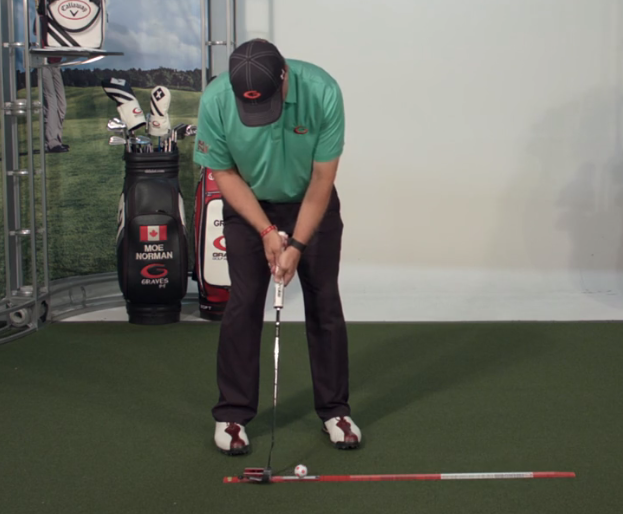
If your hands do not lead when you putt, it is guaranteed your hands will not be leading in your full swings. If your hands are not leading, you are training your body to make impact with the golf ball with the hands behind the ball. (Aka casting in the full swing).

Fundamental #2 – Face Square at set up and Impact

How are you checking to make sure your club face (putter face) is square at set up and impact?

It is strongly recommended you use a check system to make sure your putter is square at set up and impact (square to where you are trying to hit the ball).
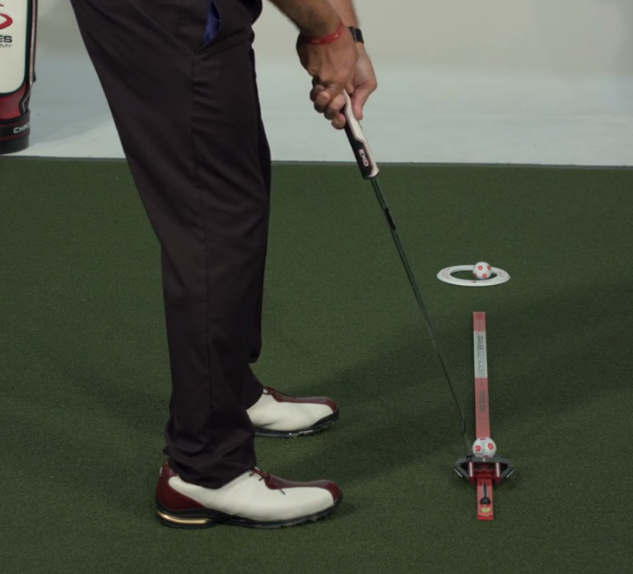
It is surprising how many golfers do not have a square face and compensate during the stroke.

The picture above shows using the GGA putting stick – checking the putter face angle.

And – can almost guarantee – problem squaring your putter face, same problem squaring any club face…

Fundamental # 3 – Hands Down the Line

How do you check to make sure your hands go “down the line” past impact?

Your hands should go down the line and toward the intended target through impact.

Most golfers struggle with this fundamental. Their hands go in and up through and past impact. Your hands should go down the line through impact. As you see in the picture below the putter face is still square past impact and down the line. This check will make sure your hands are going “down the line” toward your target.
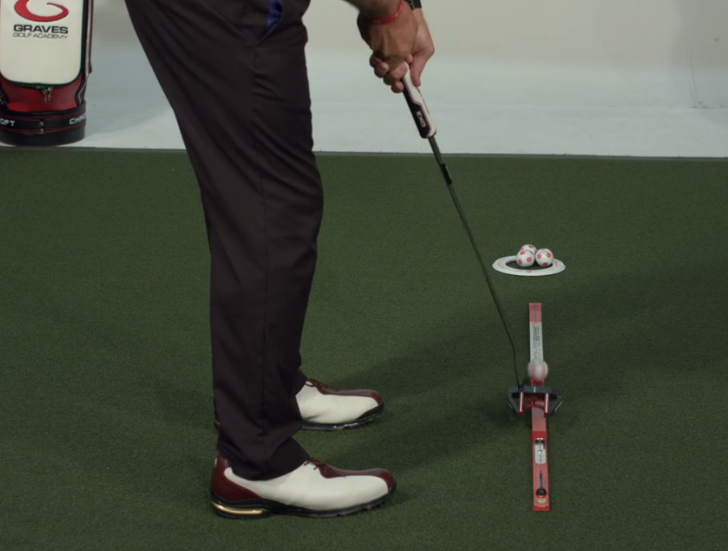
Here is another picture of the putter face down the line:
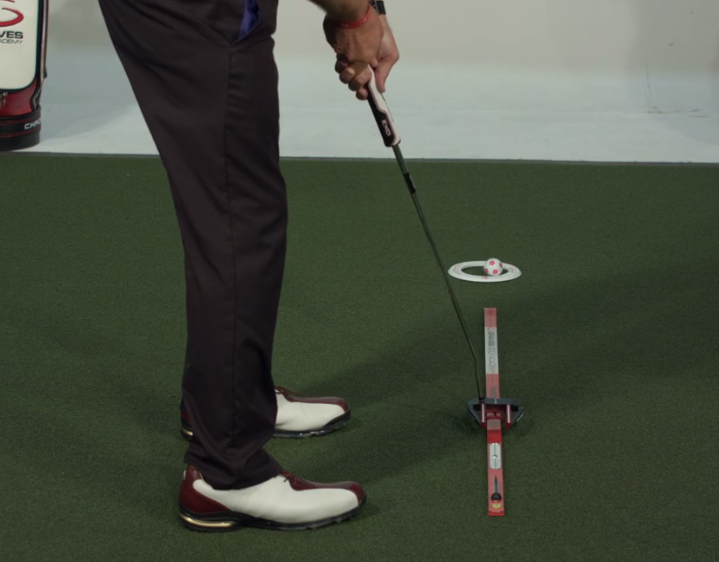
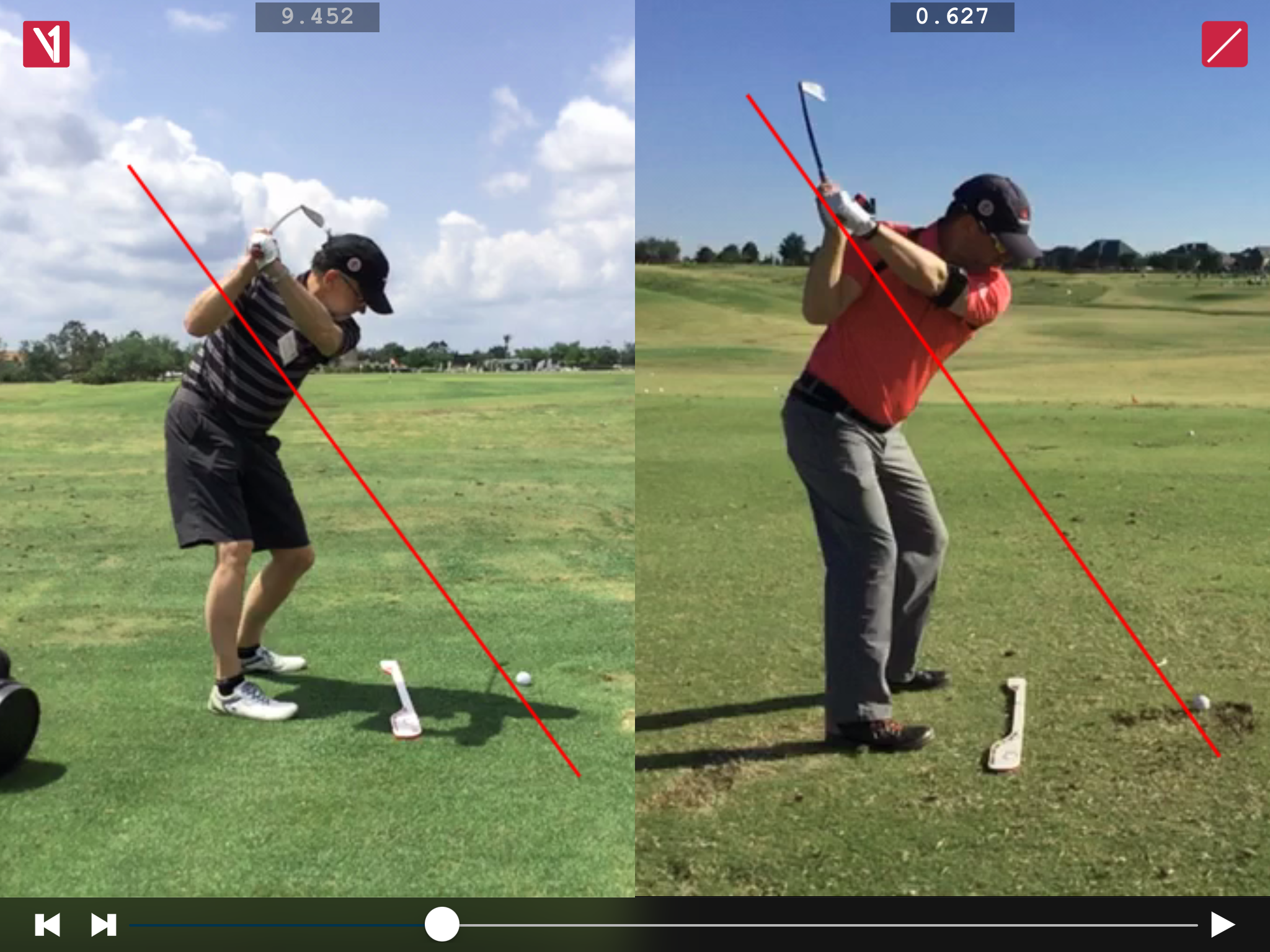
In the full swing, your hands must go down the line through impact. You can have an on plane golf swing – but if your hands do not go down the line, it will cause impact with a club face coming to impact at an angle (out to in, etc..). This is a start to working on getting your club face and hands down the line.

These are 3 putting fundamentals you can check that, if done correct, will not only greatly improve your putting, but will also help your full swing.

More information about our PUTTING STICK:  CLICK HERE
New Year, New You

Hello Single Plane Golfers. 

Welcome to 2019.  We are readying our company for a fantastic year.  I wanted to share with you some ideas about your training that you start making some plans to play your best golf this year. 

Single Plane Training at a GGA School

Practice is only as good as the quality of it.  Therefore, I wanted to introduce you to my training levels where the highest levels reflect the most productive and effective use of tools, time, energy and effort. 

The Levels of Swing Training & Practice

Level 1: Unproductive Practice

  • On the Range
  • Hitting balls Using ball-results as measurement
  • Estimating and making Assumptions
  • Reliance on Feelings
  • Troubleshooting: Guessing

Level 2: Training Aids and Tools

  •  Using Ball-flight results as measurement
  •  Use of Training Aids
  •  Reliance of Feelings
  • Troubleshooting: Guessing

Higher Levels of Training / Speed up the process of habit building  (Developing Training Routines – all high performers do this)

Level 3: Video Feedback 

  • Using Model as measurement / Comparing on Video
  • Perceptions and Adjustments
  • Must have understanding of Model
  • Must have way to compare directly to model (video)
  • Focus on Model not Ball-flight Results           
  • Troubleshooting: Matching the Model / Adjust

Level 4: Video Feedback and Use Training Aids (Combine Level 2 and Level 3)

  • Using Model as Measurement
  •  Perception and Adjustment
  • Training Aids Allow for Focus on Motion / Ensure correct positions
  • Focus on Model not Ball-flight Results
  • Troubleshooting: Using Aids / Video to Measure and Match the Model

Level 5: Ideal Training – Biofeedback with Training Aids with Video

  • Using Body Motion is the Measurement
  • Instant Motion Feedback
  • You instantly Feel as You Practice
  • Perfectly Match the Model
  • Focus: Process and Motion not Results
  • Use Video Feedback Tools
  • Troubleshooting: Adjust Body Position / Develop Motion, Strength and Flexibility

For more information about Biofeedback training visit : www.singleplane3d.com

Level 6: Direct from Coach: Lessons, GGA Schools, Online Coaching

  • Match the Model
  • Combine Body Motion and Ball-Flight Results
  • Use Training / Video and Bio-feedback Tools
  • Match the Model
  • Troubleshooting: Refer to Coach for Guidance

Highest Level Training / Maintain / Improve – Make it Stronger

Level 7:  Ball Flight Result Practice

  • Model is mastered – Video is Proof
  • Repetition is the Goal
  • Make is Stronger
  • Troubleshooting: Refer to Fundamentals / Minor adjustments

Level 8: Maintenance and Improvement

  • Off the Course Routine to Stay Fit and Flexible
  • Easily Identify if Something is Not Correct
  • Easily Fix Something That is Incorrect
  • Ideal Training Regimen for Off-season and On-Season
  • Occasional Visit / Feedback from Coach to “Check-in”

Obviously the goal is to attain the highest level of practice as much as possible.  When I asked Moe why he kept practicing he would confirm his reason, “To make it stronger”.  Moe was at level 7 and 8.  Interestingly, even though Moe was the best, he kept practicing and knew the importance of repetition.  

The Perfect Grip

Graves Golf Academy Teaching

After watching and learning from Moe over years it is certain that Moe had the best hand action in golf because he had a perfect grip. We also learned that hand position or the grip is a vital part of the golf swing and we wouldn’t be exaggerating if we said that it could be the most important variable. Not because it is the only thing that is important but because the entire swing will often reflect and compensate for where your hands are placed on the club.

So why exactly is hand position so important?

Your hands hold the club so that you can move the club, produce speed and square the club face at impact. We call this hand action within the golf swing and your hand action is a direct reflection of the position of your hand placement on the grip. As a matter of fact, we often check a person’s grip at the top of the back swing because you simply cannot hit a golf ball correctly if the club face is not square during the swing movement. And the only way to have a square club face is by having a correct hold and hand action.

Upon discussing the importance of the hands position with Moe as well as how a correct hand position allows for a great address position which leads to a great hand action and swing action that Moe called – “The Feeling of Greatness”. This feeling that Moe described, started in his hands where the lead hand worked together with the trail hand to produce perfect club and club-face movement during the swing. Here are a few details to describe the Hand Position and Hand Action:

Hand Position Basics:

  1. The back of the lead hand faces the target / square with the club face
  2. The club is held in the fingers of the lead hand (pressure points) (The Lead hand is the left hand for a right handed player).
  3. The club is held so that it aligns with the lead arm (from face on view)
  4. The Trail Hand pinky overlaps the lead hand index finger to unify the hands. (The trail hand is the right hand for a right handed player)
  5. The Trail Hand is under or aligned with the club into a “non-rotational” position where it does not rotate during the back swing or downswing allowing for a direct, straight, non-rotational movement into impact.
  6. The club also aligns with the trail arm (down-the-line view)

Below you can see Moe’s hand position from another angle:


This angle shows Moe’s Lead hand and how it aligns with the club face. You can also see how the trail arm is below the lead arm showing that the club is placed through the lead hand under the heel pad. Notice the squareness of the club-face.

The Grip (Hands) position the wrists

With the hands placed on the club correctly, there is another key factor to the hand position – the wrists. If there were one concept that we would want you to fully understand about the grip is that when I talk about your grip, what we are really talking about is your wrists. What we mean by this statement is that your hands are like clamps and your wrists are like hinges. The clamps simply hold the club, the hinges are the things that actually move. To have a proper grip, you must hold the club so that the wrists can move together – hinging and unhinging to maximize both the range of motion and the direction of movement.

There has been much debate between a 10 finger, Overlapping and even Interlocking grip. And my position on all of these different hand positions is still the same, they all work. The problem is that none of them work if they do not place the wrists in the correct position. What needs to be discussed here is which grip promotes the ideal wrist movement – which we believe to be the Overlapping Grip.

Why do we believe the Overlapping Grip provides the best possible wrist movement – the answer is simple. Because it moves the wrists closer together unifying them. By bringing the lower hand up by overlapping the pinky over the index finger, the lower hand wrist is moved closer to the lead hand wrist. Think about breaking a stick between your hands, the more you separate your hands apart, the easier it is to break the stick in between. When you bring the hands closer together, it becomes more difficult to produce pressure between your hands.

This is an important part of understanding the pressure in the hands when you hold a golf club. You want pressure on the ends of the hands, not in between the hands. This allows for you to “use” the shaft to produce speed as opposed to placing stress on the hands.

With the proper pressure points and the hands unified, the hands work together, unified. With unified hands, you can freely move the wrists to their ideal range of motion as well as produce speed on the club shaft propelling the club head quickly to through the golf ball.

Improperly holding the club where the hands are not unified, is the main reason we see golfers lose speed. They simply don’t have the hands working. And since the hands are such one of the main speed producers in the golf swing, without proper hand movement, the club can’t move either. Here are a few samples of improper hand positions that completely inhibit hand unification and speed:

1)   Hands in opposite rotations

2)   Hands Split or 10 finger (not unified)

3)   Lead Thumb too Short

4)   Lead Thumb too Long

5)   Club in Palm of Lead hand

6)   Club in Lifeline of Trail Hand

These are just a few of the improper hand positions that we commonly see. The main issue of course is that these hand positions inhibit wrist movement thus the entire golf swing is negatively affected – mainly club speed and angles of club approach into the ball at impact.

If you want to understand club approach into the ball – ask yourself if you take a divot or not. If you don’t take a proper divot with your irons, most likely you have issues with your hand position causing you to improperly use your wrists. In other words, you do not have angle into the ball because your wrists aren’t working.

Here are the hand action basics:

The hands work together during the back swing where:

  1. The lead hand cocks
  2. The trail Hand Hinges  (non rotationally)
  3. The lead arm stays straight in the back swing
  4. The trail arm folds in the back swing
  5. The movement of the hands and arms (hand action) planes the club shaft
  6. The movement of the hands and arms also planes the club face
  7. The uncocking and unhinging of the hands produces speed into impact
  8. The uncocking and unhinging of the hands squares the clubface at impact

As you can see, the proper grip allows for the ideal hand action throughout the golf swing including the proper angles of club approach into the ball at impact.

The proper angles of approach result in the golf ball flying straight due to the ideal hand position as the unhinge into impact. And in my opinion playing golf with an improper grip is a waste of time because you are fighting poor fundamentals, improper face aims and angles.

Moe would call this “fighting yourself” because if your hands are on the club incorrectly, you simply cannot swing the club well. You’ve lost the battle before it has begun.

Spend some time perfecting your grip and train your hand action. You will be amazed at how much you can improve from this simple yet critically important fundamental.

By Todd Graves


Fear and Starbucks

My wife Paula and I took in a comedy show a couple weeks ago in Cleveland with our sons Joe and Kevin. We saw Nate Bargatze – a brilliant comic from Nashville, TN.

One of the things that successful comics do really well is they learn to tune into their fears. They do this because they understand that fears are essentially universal…and they also know that these fears can be the basis for great comedy.

Toward the end of Bargatze’s set he told a great story about a recent experience he had at his local Starbucks. The story was about a funny communication mix-up…but it was ultimately rooted in his own fear. A fear that the customers and employees of Starbucks would judge him as not worthy of being a Starbucks customer.

You see, Bartgatze  – a self-proclaimed introvert and quiet guy – confessed that he was always intimidated by Starbucks. And that’s what made his bit so funny. I remember being intimidated by Starbucks as well.

I thought about the first time years ago that I entered a Starbucks. I just wanted coffee…but It WAS so intimidating! All these smart customers and baristas speaking a language I had never heard! Would they look down on at me? Would they judge me if I ordered a “small” coffee instead of a “tall?” And what the heck is a venti anyway?

And there were so many options! What is a caramel macchiato? And dare I ask? (Heck no…just order something simple and get out of there before they find out how little I actually know!!)

Over time I gained the courage to figure out the Starbucks lingo. I developed the courage to actually ASK what the difference was between a latte and a cappuccino! And I overcame my FEARS of the Starbucks experience.

What made Bartgatze’s comedy so good was that it hit home for so many people in the audience. I laughed so hard because he tapped into my own experience of having to overcome an irrational fear.

Fear comes in many forms. And when we are learning something new, it often shows itself in terms of our Need for Credibility.

The Need for Credibility is a primary need we all have. It’s about our hope that the people around us will:

  • Value our contribution
  • Appreciate our skills and intellect
  • Not judge us harshly

The fear that was driving Nate Bargatze’s experience at Starbucks can easily come up for anyone trying to learn a new skill – especially one like the Single Plane Swing.

You show up to the range and are working through the positions – but once it is time to actually hit the ball, you refer back to old habits because you know that at least then you can hit the ball and not look like a complete idiot!

At that point, your FEARS and your NEED for CREDIBILTY are driving your behavior. In that moment it is literally more important to swing the club incorrectly  – so long as the ball flies in the air in a way that others won’t judge you to be an idiot golfer.

But holding on to that thought process will NEVER allow you to progress. (Or it will at least significantly slow your progress)

As you work on the mastery you want to create in your single plane swing this year, the most important resolution you can make is to tune into your fears and eliminate them.

Become aware of your fear and challenge yourself about its truth. Ask yourself:

  • How true is it that others will think less of me if I miss-hit a few shots on the range?
  • How true is it that others even CARE about how well I hit the ball?
  • What is the REAL reason for spending time at the driving range?

Stop caring so much about what others may think about you. Instead, learn to enlist others to help you see what you cannot. The fearless Single Plane Swing golfer seeks out the GGA instructor and says: “How did that look?” or “Did that swing match the model?”

And when you visit us at a GGA instruction school this year, forget about trying to impress…and focus instead on LEARNING. Ask: “What did you see?” And then LISTEN to and ACCEPT their answer.

Living a life of ease and freedom– on the golf course or in your everyday experiences – is a goal worth striving for. It starts with being able to identify your true fears and then working to move past them!

-Paul

paul@paulmonahancoaching.com

Paul Monahan, PCC is a Peak-Performance coach, member of the International Coach Federation and a certified COR.E Performance Dynamicsä  Specialist. He resides in Cleveland, Ohio with his wife Paula and is the proud dad to three young men.

Fundamental, Why, Practice and Check Points

The first morning of our schools and camps I (Tim) talk to the students about what they are about to go through. One of the topics is the process of learning and how to get the most out of the school. This process is the same we all need to go through to create new habits – I wanted to discuss a little in this e-tip. Here is what all need to do to create new habits:

1.  Learn the Fundamental

You must first learn the fundamental(s) that you need to work on. Whether a long game, short game, mid game, etc… fundamental such as the grip, set up, etc…  you need to study the fundamental you want to work on. Learning doesn’t mean doing at first, it means understanding what is correct and what is not.

2.  Learn the Why

As you are working on creating a new habit, you need to know the why of the fundamental. More than, because we said so, but rather, why the fundamental is important. As you are making the change(s), you will feel uncomfortable at first. If you don’t know the specifics of why you need to make the change, your brain will “give up” when it becomes uncomfortable. (Very common). If you know why – you will be more likely to get through the uncomfortable stage. This is the conscious thought eventually transforming to the unconscious thought. It takes time, but your conscious thought must know the “whys” at first to continue with the change.

3.  Learn How to Practice to Create the New Habit

You can know what fundamental you need to work on, you can know the whys… but if you don’t know how to practice toward creating the new habit, your improvement will be limited, or at least slowed considerably. Whether performing drills, using training aids, or both, it is absolutely critical you learn how to practice toward creating the new habit.

4.  Check Points

During your practice, you must have check points. The check points are set up so you can make sure you are creating the fundamentals correct. The more check points you have, the better. Check many, check often, don’t forget to check. As many already realize, it is much easier to make yourself worse than better – you can prevent this by having check points and checking often while practicing and working toward the new habits.

Some of us can self-teach, some of us have a hard time with this…. it is really and individual thing.

Most of you know we have many instructional DVDs you can review on fundamentals, drills, etc… If you have not seen them, you can review them at moenormangolf.com

We also have a coaching / gold program you might not know about. It is a great way to get individualized work with a GGA Master Instructor – we will let you know exactly what you need to work on. Give you the whys, drills and check points to guarantee improvement.

The Short Cut….

Do you know the most common question golfers ask us?

“Is there a shortcut to making swing changes and improving my game?”

The simple answer to the question is “Yes!”

The short cut – are you ready for it?…..  is all about FEEDBACK.

Most think it is about practice….  but does practice actually help??

Should instructors encourage you to practice?

You might not believe it, but golf instructors debate about this al the time. Many golf instructors believe that you should avoid the idea of teaching the importance of practice – that it takes away from the enjoyment of the game.  They argue that the game is about teaching golfers how to play not about teaching them how to swing.

Our position is that you really can’t have fun and play well if you don’t have a good swing. Furthermore, building a great golf swing is part of the fun. We also believe that teaching the golf swing is about helping golfers “shortcut” the learning process (practice), not avoiding it. Let’s explain in two sentences.

Golfers struggle and get frustrated (and score badly) because they are unskilled.  

Skill is acquired through practice.

All skills require practice and we can’t think of a game that requires more practice than golf. This might explain so many are frustrated with the game and why in recent years, more have quit the game then started new.  It simply takes too long to get good.   The question we should be asking is not whether we should be teaching golfers to practice but rather how can we help them learn to practice correctly and effectively and get better faster…

Don’t take my word for it, listen to Dan Coyle, author of the book The Talent Code.  Dan, who researched talent hotbeds describes the acquisition of talent in three important processes:

• Deep Practice–Everyone knows that practice is a key to success. What everyone doesn’t know is that specific kinds of practice can increase skill up to ten times faster than conventional practice.

• Ignition–We all need a little motivation to get started. But what separates truly high achievers from the rest of the pack? A higher level of commitment—call it passion—born out of our deepest unconscious desires and triggered by certain primal cues. Understanding how these signals work can help you ignite passion and catalyze skill development.

• Master Coaching–What are the secrets of the world’s most effective teachers, trainers, and coaches? Discover the four virtues that enable these “talent whisperers” to fuel passion, inspire deep practice, and bring out the best in their students.

These three elements work together within your brain to form myelin, a microscopic neural substance that adds vast amounts of speed and accuracy to your movements and thoughts. Scientists have discovered that myelin might just be the holy grail: the foundation of all forms of greatness, from Michelangelo’s to Michael Jordan’s. The good news about myelin is that it isn’t fixed at birth; to the contrary, it grows, and like anything that grows, it can be cultivated and nourished.

The way we see it is that you don’t need to practice harder, you need to practice smarter get help along the way.  We can relate to these three factors in my experience as well.

In our experience the students who are the most willing to practice and enjoy the process have the most success. 

Deep practice is getting into the place where real learning occurs.  This is where feedback happens and feelings are well….felt.  Let me give you an example.

In a recent school, we had been sitting in the meeting room for about an hour.  One student asked “when are we going to hit some balls on the range?”  We responded with a question, “We will let you hit balls on the range when you can reassure me that you are measuring and getting feedback on every swing.  Are you able to do that?”

The reason we have a great golf swings is not because we are more talented than any of our students.  We have simply spent more quality time working on my golf swing.  It come down to the quality of your practice, now how much you practice.

We put in the quality then I made is stronger with repetition.  Most students put in the repetition but not the quality.

Our teaching habits have changed over the years. We find it almost impossible to watch people practice ineffectively.  We start to get nervous and we usually jump in and stop it.  We then ask “what are you working on” and “how do you know if you are getting it?”.

We are now heading into 2022.  You have a choice.  You can go another year wishing your golf game improved and guessing at the outcomes or you can make a transformation in your approach.  This is what we are suggesting is that you take a giant leap by making some major changes. You can do this by understanding Dan Coyle’s three principles of talent.  Learn how to Deep Practice, Get Passionate about it and Get Help from a Master Coach. 

Now take some action on these principles and get practicing – correctly.

To find out more about how to practice correctly, deep practice and your short cut to improvement – please see:  CLICK HERE

LEARN

THE

SWING

Join 1M+ Subscribers to get your FREE Video Quick Start Guide that reveals how to hit the ball farther and straighter more consistently from now on…

START YOUR NEW GOLF SWING