Think: GIVE…not GET

Think: GIVE…not GET

I had lunch a couple days ago with an old friend of mine  – my high-school buddy Jon. We live about an hour away from each other – and subsequently don’t see each other enough. You know how that goes.

One thing that I have noticed is that the older we get, the more our conversations seem to be about the really important aspects of lives. Our kids, our clients, our experiences. I remember years ago – maybe earlier in our careers – we were focused on acquiring: things, customers, new homes, new cars, new and better jobs, the right schools for our kids…etc.

Acquiring takes a TON of mental and emotional energy. Which is probably why I remember often feeling exhausted from “the chase.” But GIVING is much different.

Jon was reflecting that the more he has focused on giving, the richer his life has become. The more he spends time giving of himself to others, the more he gets back. The more he lets go of the idea of “getting” things from an interaction or a relationship the easier, more fulfilling and more abundant his life becomes.

You may have experienced this as well. I know I have. In multiple aspects of my life.

We know that we are at our best when we stop trying to GET and instead make GIVING our primary mission. And our religious and spiritual traditions have been cultivating a similar idea for thousands of years.

If you are struggling with the game of golf, consider that you may be trying to GET something from the game. Consider for a moment that the same paradigms of giving and getting apply to the game of golf…and that you may be overly focused on YOU – and your Ego is trying to fulfill a need that it thinks is unmet. Consider also that you may be holding too tightly onto a story about what you need in that round, on that course, in that tournament…etc.

Also, consider that if you can learn to operate instead from a level of thought that is firmly rooted in the concept of GIVING, your golf experience could change significantly (and for the better). You would no longer feel the pull of the ego. You would no longer feel the duality of winning and losing – and you would come to see the game with a completely new perspective.

So  – in this, the season of giving, stop trying to GET something from the game of golf. Start thinking about what you can GIVE to the game, to your playing partners, to your competition. When you can get off of yourself and focus on contributing, making a difference and serving others, THEN you can set yourself up to play your best golf.

Merry Christmas and Happy New Year to you and yours.

-Paul

paul@paulmonahancoaching.com

Paul Monahan, PCC is a Peak-Performance coach, member of the International Coach Federation and a certified COR.E Performance Dynamics Specialist. He resides in Cleveland, Ohio with his wife Paula and is the proud dad to three young men.

Single Length Clubs / Irons

Single Length Clubs

We have begun to receive many calls and emails in the past couple of months about single length clubs. Whether the increase in curiosity is from Bryson DeChambeau, Cobra Golf’s single length irons, Edel Golf’s new single length irons, or a combination, many people tend to associate the single plane golf swing with single length clubs.

Thought I’d write an article about single length clubs, where we “stand” and maybe debunk some misinformation and some misunderstandings about the clubs.

Some general facts about distance related to clubs. The distance you hit a golf ball is due to many factors. The biggest factors are club head speed at impact (the longer the club, in general the faster you will swing the club) and launch of the golf ball (primarily due to loft of the club). Yes, there are many other factors such as spin of the golf ball, type of club you are hitting, launch angle, etc. etc. But the primary factors are how fast the ball is hit and the club loft that is hitting the ball. So, the golf industry for 100s of years, has set distance between clubs by either decreasing or increasing loft in combination with adding or subtracting length of the shaft. If you compare the two, it has been shown, the loft of the club has a 3x + greater influence on distance then the length of the shaft.

So, with that background, let’s talk about Single Length Clubs.

First – Single Length Clubs – At this time I do not recommend any single length clubs.  As I believe there is some validity to the concept, at this time there is not a set on the market that works as claimed.  We have tried many single length club sets (from new one’s just released, to one’s that have been out for years, to one’s that were produced 30+ years ago) and nothing really works as claimed. There is not the distance difference between the irons as claimed (in combination with the needed height / ball flight) and those that get the clubs are typically disappointed. Typically, most can hit all the irons in the set, but as the iron has less loft (higher irons) – the needed height for proper ball flight is not there.

Second – A point of issue everyone considering single length clubs should understand – those that play / played single length clubs (i.e. Bryson DeChambeau) have numerous lengths of clubs in the bag. There is NOT one length for all clubs. In a “single length club set” there is typically a driver length, fairway wood length, hybrid length, iron length, wedge length and putter length… Meaning, do not confuse single length with all clubs in bag being one length.

Third – Many have claimed, and even stated, they played with Moe and he was using single length irons.

All the years Todd and myself spent with Moe, watching Moe preform demonstrations and play golf, and all the video and pictures of Moe participating in tournaments, we cannot find any evidence he ever played single length irons.

But, even if he did, Moe was known to choke down on his clubs to the suitable length, etc. that then fit him and his shot. So in other words, if Moe ever played single length irons, it can be almost guaranteed they were all long and he choked down on the different clubs in different spots to in essence create the proper length of each club.

Fourth – There is a company working on making a single length iron (with graphite shafting) that has the proper distance difference between the irons. They are working on a system in which you are fit for every iron individually (club head weight, head size, shaft weight, shaft flex, shaft kick, etc…). I believe this will be the only way to truly have an iron system of single length that works. From preliminary information – these clubs (when available) will be very expensive (as each iron is fit individually) and only available in graphite. When looking at the fit system for this company, there are 90 shafts to choose from, 4 different club heads comprising of 8 different weighting in each head…. In other words, every iron will be fit individually with a different shaft (flex, kick point, weight, etc…), different weighted head, etc… So that it is set to go a particular distance and height.

(FYI – this is EXACTLY how Bryson created his irons to work for him. In fact, he stated each iron took him between 30 and 40 hours to build to the specifications he needed. Ten irons in his bag – that’s 300 to 400 hours of work getting the clubs to fit….)

Finally – With that being said, I would strongly recommend getting a set of clubs (multiple lengths) that are fit to you perfect for length, lie angle, shaft flex, grip size, set make up, etc. A perfect fit set of clubs allows you to work on your swing without having to worry about what is in your bag.  You will only get to a point with improperly fit clubs – it is impossible to reach ideal (or close to ideal) impact with an improperly fit club.

We are happy to help you get a perfect fitted set of clubs for your single plane swing.

We offer a free single plane individualized club fitting and assessment at:  CLICK HERE

http://moenormangolf.com/clubs/free-club-fittings/

An informational club fitting webinar was produced about the importance of a proper fit:  CLICK HERE

I would also suggest reading the single plane swing article on proper club fitting:  CLICK HERE

Please feel free to contact me at timg@moenormangolf.com with additional questions, comments, etc…

Improve Your Golf Game Over the Winter (4th Session)

What are you doing to improve your golf game in the winter months?

Whether you are watching football games, just watching TV, sitting in front of your computer, sitting at your desk or just sitting on your couch…. how many of you know you can dramatically improve your golf game over the winter months?? 

Good players know this…

GGA alumnus know this….

Professionals know this…

Starting the 3rd week of October – our instructional webinars have been focusing on helping you improve your golf game this winter (indoor winter golf instruction / training).

Winter Indoor Training Series

Each webinar focuses on the following 3 points:

  1.  Techniques (drills) that can be done indoor to improve your fundamentals (both short and long game)
  2.  Exercises that can be done indoor to help you improve your fundamentals and technique.
  3.  Equipment discussion of things you can do with your equipment over the winter to optimize your game in the spring.

This week’s webinar covers the following:

  1.  Technique – Hands down the line in chipping and at impact in full swing in conjunction with separation (hips and shoulders)
  2.  Exercise – Strengthen / stretch hips / shoulders / separation continued.
  3.  Equipment – Discussion of grips, Rogue Driver characteristics.

Webinars will run every other week starting this week and continuing until the end of March.

Here are some facts that we know about winter golf.

  1. Very few practice much (especially over the fall and winter).
  2. Everyone wants to be better / improve.
  3. Very few know how to improve over the winter.
  4. The best time to improve your game is over the winter as most play less this time of year.
  5. Very few understand that improvement exponentially increases when you are NOT hitting golf balls.
  6. Practice must involve the long game, short game and flexibility (especially for our typical age group).
  7. Very few know how to practice properly.

So – Strongly Recommend to join us this Wednesday, December 12th at 7pm (CST) / 8pm (EST) for our 4th in our Winter Training Series – PLUS to kick of the Winter Training Series – we are having NUMEROUS Give Aways.

To Register (Free Registration) for the Webinar / Winter Training Series: 

CLICK HERE


Managing My Potential

By Paul Monahan

Mental Game Coach, Graves Golf Academy

I believe that staying connected to one’s true potential in any moment comes in part from high consciousness. And high consciousness occurs when you have:

  1. An awareness of who you are.
  2. A good sense of what your life is all about.

Primarily, I think of high consciousness as the mental state who’s hallmark is the ability to contextualize or put things into proper perspective easily and quickly.

Don Byers understands what it is like to stay connected to his potential in any moment. In April 2018 Byers made history as the oldest person ever to play a college sport when he teed up his golf ball as a member of the Bellevue University Men’s Golf Team.

61 year-old Don Byers as profiled on the Golf Channel

As the story goes, Byers –  a 61 year-old father and grandfather  – happened to play a round of golf in August of 2017 at his home course (Champions Run) with Bellevue’s head golf coach Ron Brown. He (Byers) had been working on his game the previous few years and had worked his handicap down to scratch. He played very well the day he golfed with Brown.

Brown was impressed and joked to Byers about whether he had any eligibility left. And it turns out that the former baseball player DID in-fact have four years of eligibility left due to an injury he sustained prior to his freshman season at University of Nebraska, Omaha.

So Beyers – who owns his own insurance agency – was recruited by Brown and later joined the Bellevue Bruins golf team.

But it wasn’t easy. And as he tells the story in a Golf Channel feature story, Byers was very nervous about making the team – and wanted desperately to earn a spot in the top five on the team so that he would qualify to tee it up in tournament play.

Byers reported that: “I didn’t want to fail. I wanted to play well right out of the chute and impress everybody. When it didn’t happen that way, you start pressing and it slowly falls apart on you.”

But to combat those nerves, he said: “I found myself having that care-free attitude again. Just go out there and have fun.” And eventually, he earned an opportunity to play in the Bruins’ last tournament of the season as a 61-year old freshman. (And he made history as the oldest collegiate athlete ever!)

How did he earn that spot? In part, I believe because he was able to quickly put his experiences into proper context, and to anchor to the thought patterns that he knew could produce a better experience for him. Ultimately, I think he was able to tap into the playful and joyful feelings that are so much a part of his golfing.

Don has grown the skill of managing his current potential

What does that mean? It means that he has learned how to stay in productive thought patterns while playing golf…so that he can play his best golf – not matter the stakes or the situation.

In my work as a leadership and performance coach, I often help my clients to cultivate an idea called Managing My Potential.

I encourage them to look inward and tune-in to their own thought patterns. The ones that keep them connected to their potential in the present moment… as well as the ones that block their access to that potential.

Managing My Potential happens for me when I am AWARE of the mental and emotional dynamics that keep me connected to my true potential in any given moment.

Managing My Potential is about expanding awareness of self. And it’s about creating a sense of HIGH CONSCIOUSNESS  (awareness) about the present moment as it unfolds for me…so that I can cultivate proper context and perspective. It is what allows me to see things objectively and without a lot of judgment.

As the snow begins to fall more regularly, and the cold begins to set in a little deeper in many places, the opportunities to play are less and less for a little while. But you can ALWAYS work on your mental game skills…just by TUNING-IN to your own mental and emotional dynamics – that is to say:  by expanding your own awareness.

When that happens, you will make the most of every round. You will tap into joy and passion and play with ease. You will access the very best that is within you that day. And you will play better golf!

Cheers!

-Paul

Paul Monahan, PCC is a Peak-Performance coach, member of the International Coach Federation and a certified COR.E Performance Dynamics (TM) Specialist. He resides in Cleveland, Ohio with his wife Paula and is the proud dad to three amazing young men.(…you guessed it: they take after their mom!) 

Odyssey New Red Ball Putter

ODYSSEY RED BALL PUTTER

Odyssey Red Ball is a face-balanced mallet putter with a Red Ball scope, Versa high contrast alignment, and a White Hot RX insert.

Odyssey built the Red Ball Putters specifically to address and improve on two things: proper set up and proper alignment. Having the right set up and alignment is crucial for any player, and this innovative new design is all about getting you properly positioned over the ball.

The distinct Red Ball inside the scope of the putter so that it’s incredibly easy to align the face to the intended start line on every putt. Combined with the black and white framing from our proven Versa high contrast alignment, this forgiving mallet removes the variables in your set up.

And that’s how you’re able to get the right set up and the proper line every time you’re over the ball. With all of this technology, and the legendary sound, feel and roll from our White Hot RX insert, you have everything you need to become a more consistent putter.

Red Ball For Easy and Consistent Setup

The innovative Red Ball in the scope of the putter allows you to consistently get into the proper setup over the ball.

Improved Alignment From Versa

The proven Versa high contrast technology also helps you align the putter so you get set up on your intended line.

White Hot Sound and Feel

The White Hot RX insert provides legendary sound, feel, and great roll. To make more putts you have to get the line AND the speed right, and combining Red Ball and Versa with White Hot will help you with that.

More Forgiveness From A Mallet Shape and Face Balanced

The mallet design and face balance in the Red Ball takes the weight out of the center of the head and redistribute it into the perimeter of the head.  Meaning the putter has more forgiveness and is easier to keep the putter head on line and square through the stroke and impact.

If interested in the Red Ball Putter (currently have

special offer) – please feel free to contact me

at timg@moenormangolf.com or timkgraves@aol.com

(I can not advertise special publicly – but happy to discuss

through email).


Contact:  TGraves@moenormangolf.com

866-377-2316

The Shortcut to a Great Golf Swing – Single Plane 3D

Stand up and let me ask you three questions.  

Can you rotate your body?  

Can you bend forward?

 Can you bend sideways?

If you answered yes to these questions then you have a great golf swing inside of you right now.  You simply have to get it out.  This is why I developed Single Plane 3D. To get it out faster.

What is Single Plane 3D?  To put it plainly, the Single Plane 3D system is like having a coach with you every time you move your body. When you move incorrectly, the Single Plane 3D system notifies you producing visual and audio signal – in realtime.  Realtime biofeedback when you practice is revolutionary and unlike any practice you have ever experienced because unless a coach has moved your body for you – you have never really experienced biofeedback.  

Single Plane 3D
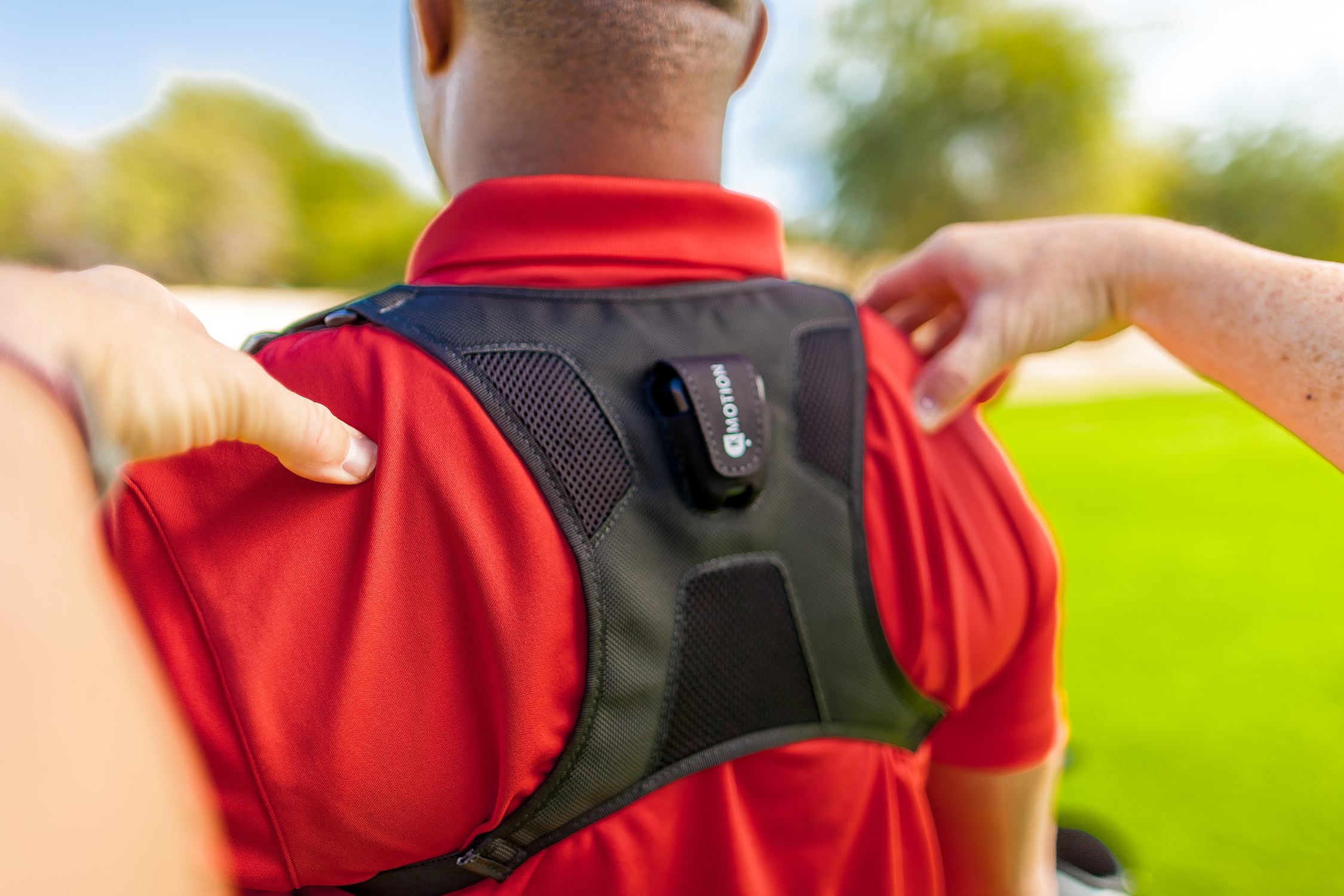
Single Plane 3D Torso Sensor

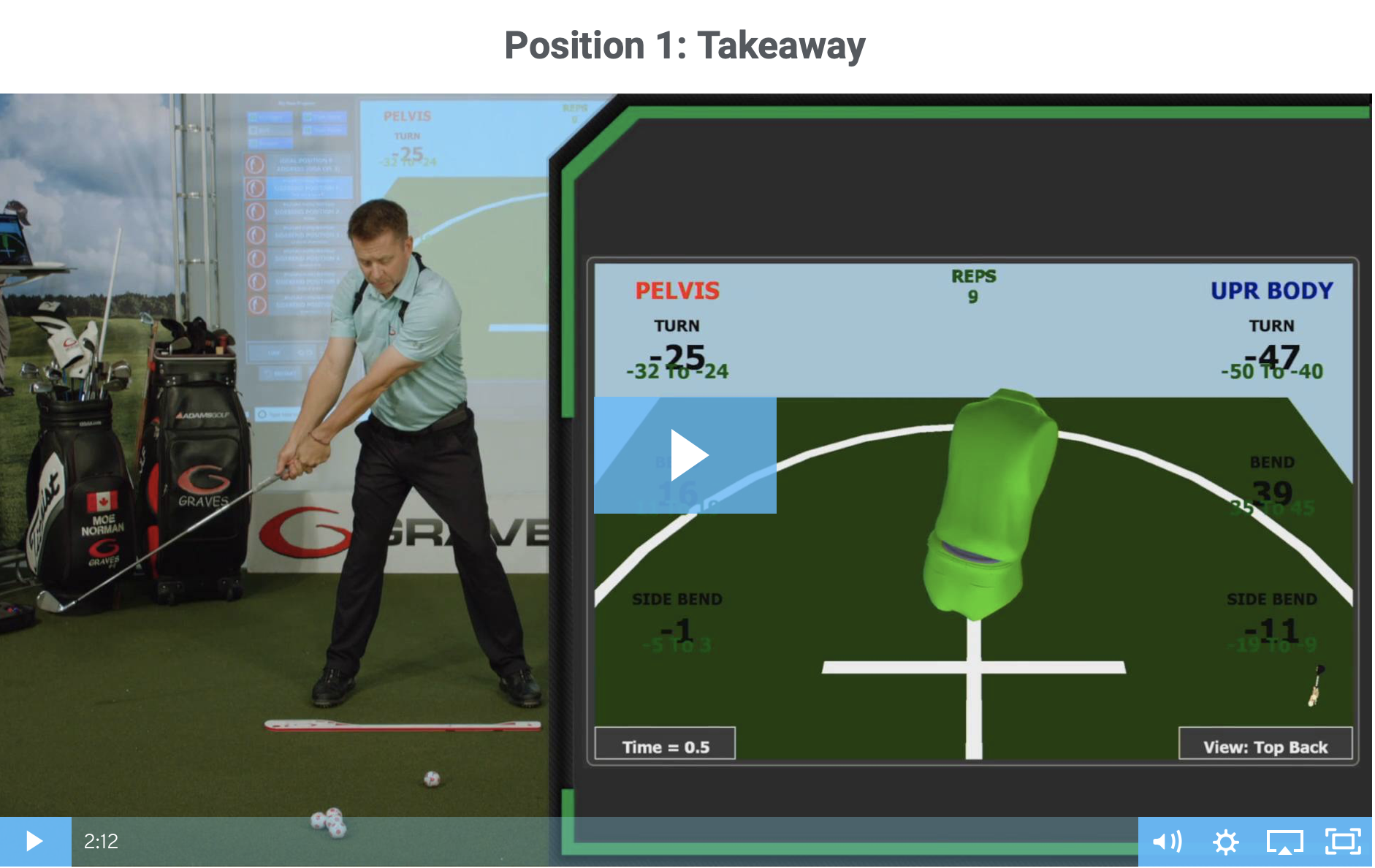
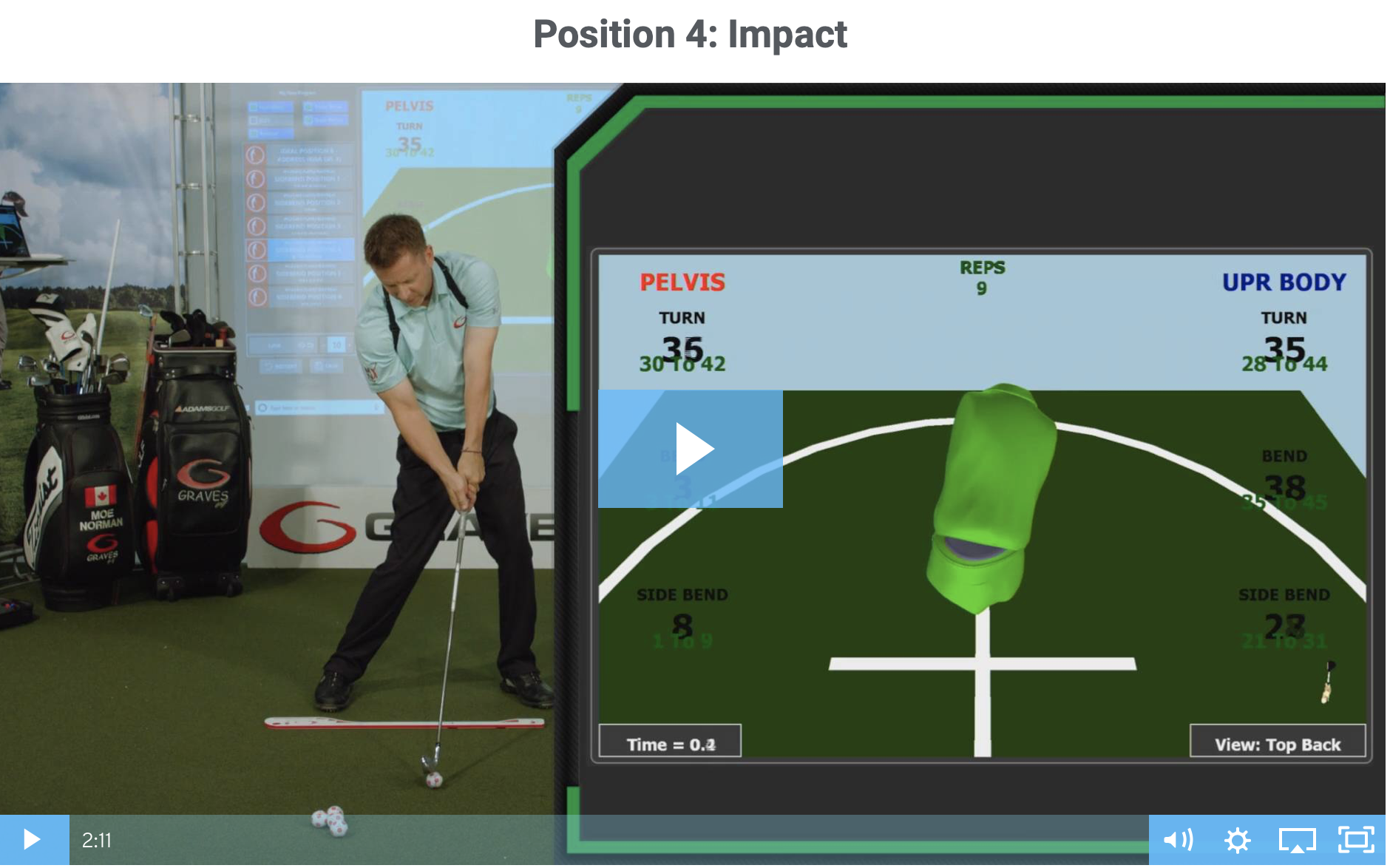
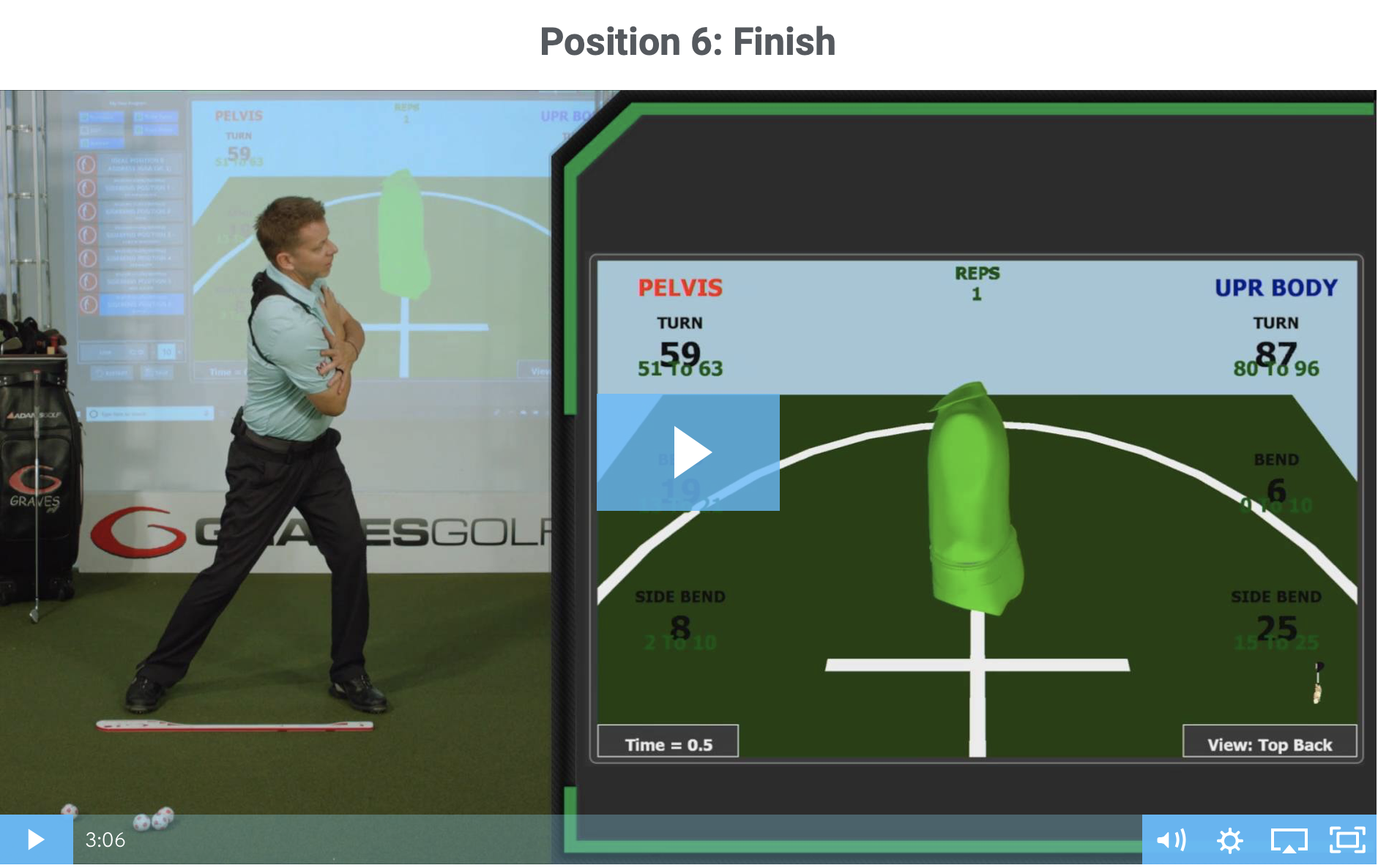
The 3D system places a sensor on your torso and your pelvis to measure the position of the body relative to Turn, Bend (forward) and sideband (sideways).  When you wear the sensors, the sensors indicate whether you are in the correct position.  If not, arrows will indicate whether you are incorrectly positioned.  When you match the model of the Single Plane Swing, you will hear a TONE that indicates perfect positioning.  This is all happening while you move in realtime. 

I developed the 3D system to solve the problem of practicing incorrectly.  It dramatically improved the quality of my practice which, in turn, sped up the process and became part of my practice regimen.  

This is the regimen and checks that I use to improve and stay on track.  

Movement Practice

You simply can’t move correctly enough.  Moe would often say “Hit your positions, hit your positions”.  You must practice moving into your Single Plane swing positions. To practice my movement I am always moving into my swing positions starting at address.  You can do this with or without a golf club or with a Single Plane Trainer.  I make sure that even if I am not hitting golf balls on the range, I get a few reps of movement practice in each day.  The Single Plane 3D system works you through each position of the golf swing and gives you biofeedback on whether you are hitting your positions.  

Heavily Focus on Address

Single Plane Address
Measuring the Single Plane Address in #D

Moe would often say “If you haven’t got a good address, you haven’t got anything”.  The address position determines how you initiate your movement.  It also determines the initial path of the golf club.  If you make a mistake at address, you must compensate for it somewhere in the golf swing.  The golf swing is moving too fast to make adjustments and without a great address, you can never be a good golfer.  I make sure I practice my address position every day by doing what I call walk-ins.  Walk-ins are when I step into my address position before I hit a shot.  No only am I developing my address position, but I am also getting a feel for when to pull the trigger before I hit the shot.  This is one of my favorite exercises with the Single Plane 3D system.  

Position 1 is key

Over two thirds of the body’s backswing movement occurs from Address to position 1.  I call it “The First Move”.   The first move looks simple and most people take it for granted and get it wrong.  I know personally that if I don’t execute the first move correctly, it throws off the timing of my entire swing.

Rehearse Impact (Position 4)

You must have a way to feel can rehearse the perfect impact position.  I’m not talking about hitting balls but rather making sure you can put your body into the positional moment of impact where you trail foot is down, the lead knee is flexed and your body is tilted and rotated correctly with your trial arm bent.  You should be able to put yourself into this position and hold it for a few seconds.  If your body hasn’t learned the impact position, it will be unlikely that you will hit this position when you swing in full speed.  You can also practice impact with a leverage bag and club.  Impact is the one of the first metrics I measure with the Single Plane 3D system.

The Finish Position (Position 6) is a Bellweather 

If you can’t reach the finish position, you will most likely miss impact.  This is something I learned from developing the Single Plane 3D system.  I found that people had the most trouble with the finish position because this position requires the most amount of differential between the upper and lower body.  This differential is called separation where the upper body rotation separates from the lower body rotation.  I continually practice this position without a golf club to develop my rotational ability and “free up” my body.  When my body is free to finish the swing, I can maximize my speed.

While the Single Plane Golf swing is an easier way to “get it”, it still takes practice and to most people, practice is monotonous and difficult. Now I have a way you can double-down on your practice, save enormous amounts of time and dramatically speed up your learning.  

“How long is this going to take? is the most common question I get asked.  You have probably asked that question as well.  That’s because when it comes to playing golf, all of us want to hit great shots as soon as possible. I am the same way, I get it.  

The problem is not that it takes much time to learn the Single Plane Swing but mainly golfers practice incorrectly.  I guarantee that at least half of your practice time or more is simply – wrong.  Just think how many hours you are wasting by practicing incorrectly. What if you used that time effectively? Practicing the wrong way is vicious circle The more you incorrectly train, the worse you become.  This is why most golfers dread going to the range – because it’s not fun and most of the time, they don’t get better.

The answer to this dilemma is exactly why I developed Single Plane 3D – the only way to get biofeedback while practicing – and know that you are practicing perfectly.   I dedicated a website to 3D training. You can even see the quantification of the exact rotations, bends and sidebands of the model here:

https://singleplane3d.com/sp-swing-model/

The shortcut to a great golf swing is practice the correct swing perfectly. So do yourself a favor and take a look at www.singleplane3d.com.   On the website you will find everything you need to know about taking your game to new levels and learning how to practice perfectly. 

LEARN

THE

SWING

Join 1M+ Subscribers to get your FREE Video Quick Start Guide that reveals how to hit the ball farther and straighter more consistently from now on…

START YOUR NEW GOLF SWING