Managing My Potential

Managing My Potential

I believe that staying connected to one’s true potential in any moment comes in part from high consciousness. And high consciousness occurs when you have:

  1. An awareness of who you are.
  2. A good sense of what your life is all about.

Primarily, I think of high consciousness as the mental state who’s hallmark is the ability to contextualize or put things into proper perspective easily and quickly.

Don Byers understands what it is like to stay connected to his potential in any moment. In April 2018 Byers made history as the oldest person ever to play a college sport when he teed up his golf ball as a member of the Bellevue University Men’s Golf Team.
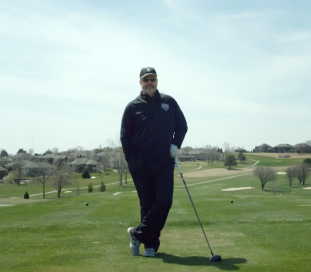
61 year-old Don Byers as profiled on the Golf Channel

As the story goes, Byers –  a 61 year-old father and grandfather  – happened to play a round of golf in August of 2017 at his home course (Champions Run) with Bellevue’s head golf coach Ron Brown. He (Byers) had been working on his game the previous few years and had worked his handicap down to scratch. He played very well the day he golfed with Brown.

Brown was impressed and joked to Byers about whether he had any eligibility left. And it turns out that the former baseball player DID in-fact have four years of eligibility left due to an injury he sustained prior to his freshman season at University of Nebraska, Omaha.

So Beyers – who owns his own insurance agency – was recruited by Brown and later joined the Bellevue Bruins golf team.

But it wasn’t easy. And as he tells the story in a Golf Channel feature story, Byers was very nervous about making the team – and wanted desperately to earn a spot in the top five on the team so that he would qualify to tee it up in tournament play.

Byers reported that: “I didn’t want to fail. I wanted to play well right out of the chute and impress everybody. When it didn’t happen that way, you start pressing and it slowly falls apart on you.”

But to combat those nerves, he said: “I found myself having that care-free attitude again. Just go out there and have fun.” And eventually, he earned an opportunity to play in the Bruins’ last tournament of the season as a 61-year old freshman. (And he made history as the oldest collegiate athlete ever!)

How did he earn that spot? In part, I believe because he was able to quickly put his experiences into proper context, and to anchor to the thought patterns that he knew could produce a better experience for him. Ultimately, I think he was able to tap into the playful and joyful feelings that are so much a part of his golfing.

Don has grown the skill of managing his current potential

What does that mean? It means that he has learned how to stay in productive thought patterns while playing golf…so that he can play his best golf – not matter the stakes or the situation.

In my work as a leadership and performance coach, I often help my clients to cultivate an idea called Managing My Potential.

I encourage them to look inward and tune-in to their own thought patterns. The ones that keep them connected to their potential in the present moment… as well as the ones that block their access to that potential.

Managing My Potential happens for me when I am AWARE of the mental and emotional dynamics that keep me connected to my true potential in any given moment.

Managing My Potential is about expanding awareness of self. And it’s about creating a sense of HIGH CONSCIOUSNESS  (awareness) about the present moment as it unfolds for me…so that I can cultivate proper context and perspective. It is what allows me to see things objectively and without a lot of judgment.

As the snow begins to fall more regularly, and the cold begins to set in a little deeper in many places, the opportunities to play are less and less for a little while. But you can ALWAYS work on your mental game skills…just by TUNING-IN to your own mental and emotional dynamics – that is to say:  by expanding your own awareness.

When that happens, you will make the most of every round. You will tap into joy and passion and play with ease. You will access the very best that is within you that day. And you will play better golf!

Cheers!

-Paul

Paul Monahan, PCC is a Peak-Performance coach, member of the International Coach Federation and a certified COR.E Performance Dynamics (TM) Specialist. He resides in Cleveland, Ohio with his wife Paula and is the proud dad to three amazing young men.(…you guessed it: they take after their mom!) 
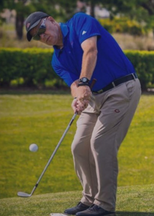
Playing Winter Lies

It’s getting that time of year again (or at least close to that time of year again for most…)

As always with this time of year, it is a much different game than that in the summer or even spring. The main difference is the lies you get. Yes, some of you might play winter lies (moving the ball to a “favorable” lie when the grass is dormant) – and to be honest, I am not totally opposed to that…. I would rather you enjoy the game in the winter, than struggle with lies that you would never see professionals play or even big “amateur” events being played on.

But… there are times you will need to know how to hit shots off these “tight” lies. Whether you are playing the ball down on the dormant grass that is “beat down” or as at a lot of Florida courses in the winter, the fairways are green (over seeded) – but mowed extremely tight. The fairways, the first cut around the greens, etc. can have extremely short grass this time of year. If you don’t understand how to play shots off these type of lies, it can become very frustrating.

A golfer who finds his ball on such a lie can be helped by knowing some of the “tricks” in playing these shots.

First: If the distance to the green is within chipping or pitching range, it is wise to take a less-lofted club than normal and play a chip-and-run type shot. This is the safest choice for two reasons:

  1. The flange on the club will be narrower and tend not to “bounce” into the ball.
  2. More importantly, the club head speed for the less lofted iron will be slower than for the deep-faced, wider-flanged pitching club, so that if the ball is miss hit the error will be less severe.

Chipping, or even putting, from areas with “tight grass” from off the green is generally good advice.

If the ground is “rock hard”, and the player must use a sand  or lob wedge, be sure the minimum bounce from the sole is presented. This is accomplished by squaring the face up at address. Play the ball back in the stance so the contact point for the clubface will be at the very base of the ball where it meets the ground.

Make no attempt to lift the ball. Instead, maintain the shaft angle that was established at address. It takes considerable trust to execute this shot because the margin for error is close to zero.

For full shots off of hard ground or ground with very little grass or even fairways with very “tight” lies, follow these tips:Play the ball back a little further in the stance than normal. Maybe a ball or two (length) further back.

  1. Playing the ball back a little bit will take a little of the “effective” bounce off the club and will help you hit the ball on a slightly more descending blow. You will need the “increased descending” angle to catch the ball clean as it is very easy to “bounce” the club off the ground and into the ball off the tight lie. Adding a little more “downward angle” on the shot will help.
  2. Take a club or two more than you need and choke down slightly. Swing “smooth” rather than “hard” at the shot. Swinging hard will cause excess movement in the body and with minimal room for error – it is much more important to swing “smooth” and steady rather than “hard”.
  3. Many times on very tight fairways, or “hard pan” type shots, it is easier and more “reliable” to hit a “punch” type shot or even a hard “chip” type shot. The reason is you are more likely to keep your lead wrist firm through the shot in a punch or hard chip type shot – which will make is easier to hit through the shot. If you are swinging a full swing type shot off of a “tight” lie and cup the wrist (or breakdown) prior to impact, you are very likely to either miss the ground all together or hit behind the ball and the club will bounce off the ground into the ball. Either one of these misses will lead to a “bladed” or “thin” type shot
  4. A good drill to work on hitting through the shot:

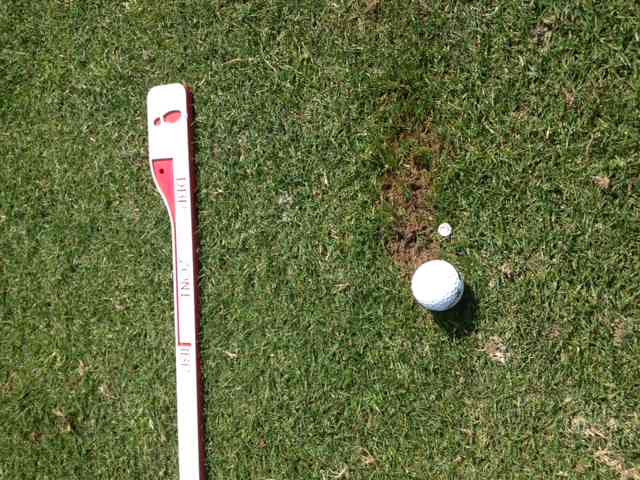
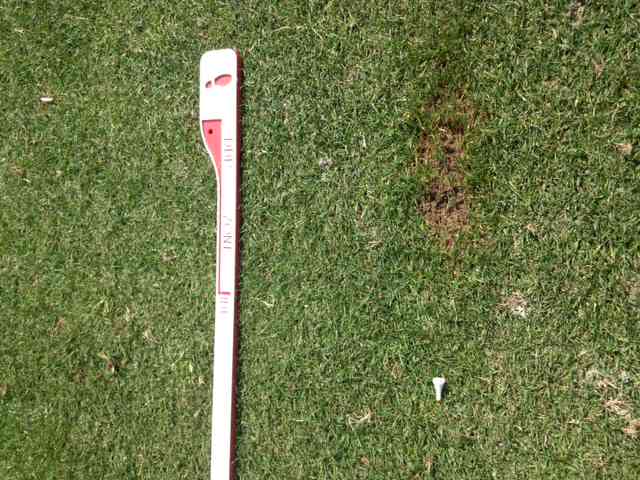
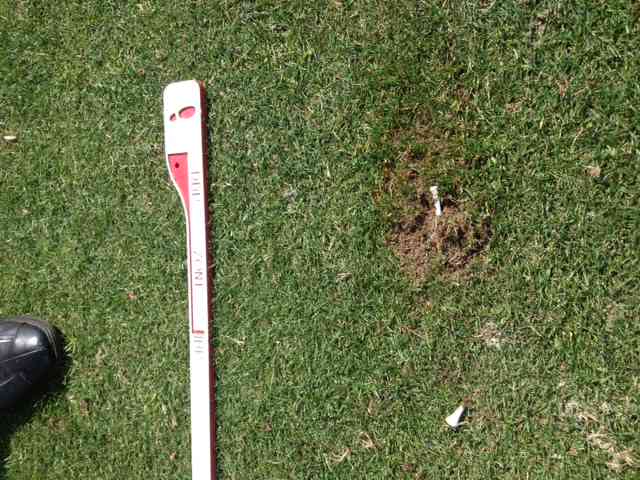
Place a tee in the ground just ahead of the ball (like the golf ball feel backward off the tee). You should hit the ball and the divot should take the tee out of the ground.  The divot should start where the tee is in the ground. The divot (at worst) should start at the lead side of the golf ball – the back end of the divot should be ahead of the golf ball. 

2 Tee Drill with Golf Ball

The divot should start where the tee is in the ground. The divot (at worst) should start at the lead side of the golf ball – the back end of the divot should be ahead of the golf ball. 

Tee Broken and Divot After Hybrid Swing
2 Tee Drill Finish – 1st tee out of ground, 2nd broken / bent over

Or paint a line on the ground perpendicular to your target. Place golf balls on the line. Hit the golf balls.  The club should enter the ground on the leading edge of the line or ahead of the line and the divot will be in front of the line.  At worse, the back end of the divot will be on the front edge of the line painted on the ground.

Ultimately, being able to hit shots off of “tight” lies comes down to how well you can hold your proper angles through impact. In other words, those that keep a “firm lead wrist” through impact will have a much easier time than those that cup or break down their lead wrist prior to impact. Working on leverage angles, leverage bag, etc. will help master the correct positions and angles at impact.

Good Luck!!

You are what you repeat.

Practice makes Permanent

As a coach, I am consumed, and concerned, by the way golfers practice.  Let’s be honest, just as the quality of food you eat practice determines the health of your body, the way you practice affects the health of your golf swing.  

I have outlined what I believe are “Levels” of Swing training and practice.  The levels detailed below are my observations of the different types and methods of practice and the quality of feedback students are willing to apply to their practice. 

As with all learning, you are what you repeat.  If you repeat correct practice habits, your outcomes improve. 

The Levels of Swing Training / Practice

Level 1: Range Practice (90% of all golfers)

  • Hitting balls Using ball-results as measurement
  • Estimating and making Assumptions
  • Reliance on Feelings
  • Troubleshooting: Guessing

Level 2: Training Aids and Tools (10% of golfers)

  • Using Ball-results as measurement 
  • Use of Training Aids 
  • Reliance of Feelings 
  • Troubleshooting: Guessing

Higher Levels of Training / Speed up the process of habit building 

Level 3: Video Feedback (1% of all Golfers)

  • Using Model as measurement 
  • Perceptions and adjustments 
  • Must have understanding of Model 
  • Must have way to compare directly to model 
  • Focus on Model not ball-flight results           
  • Troubleshooting: Matching the Model / Adjust

Level 4:  Combine Level 2 and Level 3 (1% of Golfers)

  • Using Body-motion as a measurement 
  • Perception and adjustment 
  • Training Aids allow for focus on motion 
  • Focus on model not ball-flight results 
  • Troubleshooting: Using Training aids to measure and match the model

Level 5: Ideal Training – Biofeedback (Less than 1% )

  • Using Body-motion as the measurement 
  • Instant motion feedback / indicating correct or incorrect movement in real time
  • Feel as you move 
  • Focus on matching model movements (not ball-flight)
  • Identify body weaknesses and flexibility issues
  • Focus on process and motion before ball-flight 
  • Troubleshooting: Adjust body position / develop motion, strength and flexibility

Level 6: Direct from Coach (1% of Golfers)

  • Combine Body Motion / Video Feedback and Ball-Flight Results to enhance modeling.
  • Use Training and Bio-feedback tools
  • Match the Model with Coaches Expertise.
  • Troubleshooting: Refer to Coach for guidance
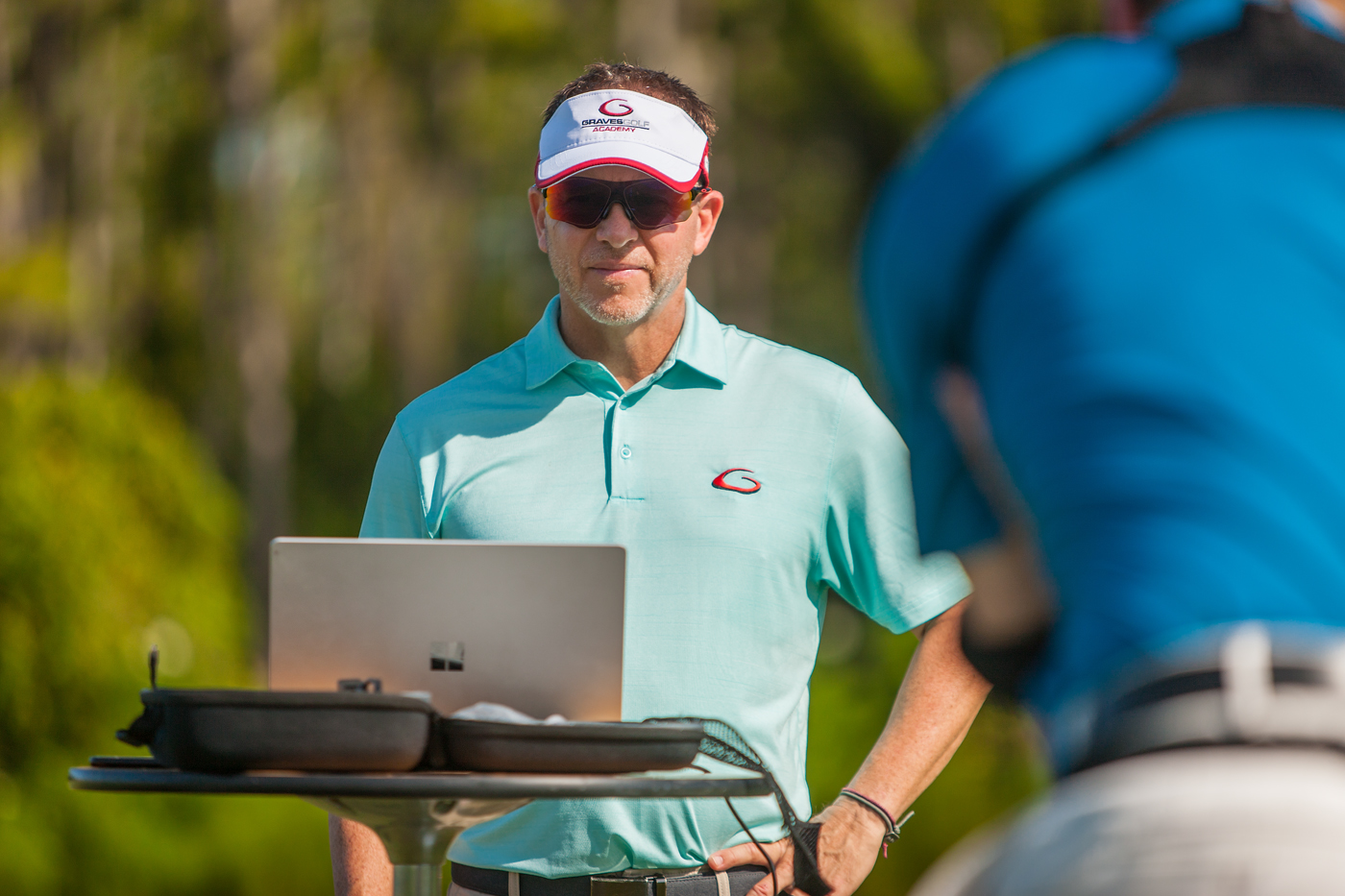
Observing a student and measuring

Keep in mind that Level 6, while the highest level of training and possibly the most effective,  might not be the best for long-term learning.  It lacks one very important quality that I find extremely important in making changes – personal responsibility of the process.  It relies on the coach to solve the students problems.  Take away the coach’s input in Level 6, and you revert to Level 1 where the training becomes almost useless.  

Also, if you look back at all the levels, other than level 1, they all require a swing model.  This allows us to have something to measure against whether in comparison on video or through data and metrics (biofeedback).  

This is what makes Level 1 so unproductive.  

The takeaways from this article.  First, remember that practice makes permanent (not perfect).  You must practice correctly to get the ideal results.  Secondly, always remember that when you practice you are creating.  This means that you are becoming what you repeatedly think and do.

Small Adjustments

Sometimes inspiration comes when you least expect it.

I had a chance to spend a couple great days at the Graves Golf Academy HQ in in Edmond, OK recently. It was a great visit…full of great interactions, creative ideas, stepping outside of my comfort zone, learning from the great team at GGA, and there was even time for a little golf with Tim.

Based on feedback and interest from the GGA community, we are planning some very exciting playing schools next year focused on helping our students to tune-up their on-course mental game.  ( I am looking forward to sharing the dates for those very special schools with you in the coming weeks.)

And yes, my visit with the Graves Team was inspirational. But something happened at the very end of my trip that made my trip even more so…and I just had to share it:

I ended my second day with Tim, Todd, Chandler, Shannon, Blade…et al, and headed to the airport late in the afternoon. Because I had stayed as long as I possibly could at Rose Creek Golf Club, I had barely enough time to make my flight.

The first order of business was to drop my rental car off at the Will Rogers World Airport and hop onto the shuttle that would deliver me to the main terminal.

As I approached the shuttle bus a guy greeted me cheerfully and offered to put my golf clubs onto the bus. I noticed his name tag…so I said: “Thanks Marty.” And he said…with a big smile and lots of great energy:  “Thanks for calling me Marty.”

Marty was the shuttle bus driver. When all the passengers had boarded the bus, Marty took his seat behind the wheel and we headed to the airport. Then he picked up the microphone and began making what sounded like a pretty-routine courtesy announcement.

“Good afternoon, ladies and gentlemen. My name is Marty and I will be taking you on the four-minute ride over to the main terminal here at Will Rogers World Airport. I hope that you enjoyed your stay in the Oklahoma City area.”

I was only sort-of listening. But, then it got interesting…

“And if I may, I would like you to consider this…”

Uh-oh, I thought. Where is this guy going with this…?

“In a few minutes, you will be on an airplane headed to your destination. As the pilot points the plane down the runway and throttles-up the engines, he will make lots of very small adjustments to the engine, wings and other control surfaces so that you will soon be soaring high in the sky.”

Small adjustments in your game can make you soar.

And then he went on…

“I invite you to consider that life is like that as well. If you commit to making small adjustments every day in your own life, you too can set yourself up to soar. To achieve all you want to. To be who you want to be. And to create the life you want.”

Woah.  I thought to myself: who is this guy!!??

He was articulate, polite, happy, and positive. His message was simple, thoughtful, and expertly-delivered. And he inspired me to pause and think. (Not who I expected to be driving that shuttle bus!)

It struck me that much of what I talk about with my performance clients can be thought of in exactly the same way he had described.

Small adjustments made often over time leads to profound changes. (Or as Marty would say…allows you to SOAR)

It’s the same message you have heard from Todd, Tim and others when it comes to skill development in the Single Plane Swing arena: Start slow. Feel position one. Then Feel position two. Learn what proper rotation onto your trail leg feels like. Ask for feedback on ONE thing. Then another. …etc.

Small adjustments made often over time leads to profound changes.

And it’s the same message that I offer with respect to building a more productive mental game. Learn to be a little more aware of your thoughts today. Then a little more aware tomorrow. Learn the language of Performance Energy. Then learn how to see how Performance Energy shows up for you on the course. Notice how it impacts your ability to hit the shots you desire…or how it prevents you from playing your best.  …etc.

Small adjustments made often over time lead to profound changes.

We all get impatient sometimes…and it’s easy to fall into the trap of needing BIG change NOW.

But that’s not always possible. (Or advisable)

Part of Marty’s message is to say this: take the pressure off of yourself to FIX this week what you want to  – in your swing mechanics OR your mental game skills – and just get on a path to mastery.

Commit to making small changes over a long period of time. And TRUST that you will create the change you are interested in. That’s how you improve your swing mechanics. And that’s how you raise your consciousness and performance energy (read mental game!) on the course.

So the next time you happen to be at the Oklahoma City Airport rental car facility, be sure to look for Marty driving your shuttle bus…and LISTEN carefully to his advice!

Have a great week!

-Paul

PS…What do you want to create in your life and your golf game? And what small adjustments are you willing to commit to making today, this week, this month? Drop me a note and let me know!!

paul@paulmonahancoaching.com

Paul Monahan, PCC is a Peak-Performance coach, member of the International Coach Federation and a certified COR.E Performance Dynamics (TM)  Specialist, and a member of the Graves Golf Academy staff, specializing in the mental game. He resides in Cleveland, Ohio with his wife Paula and is the proud dad to three young men.

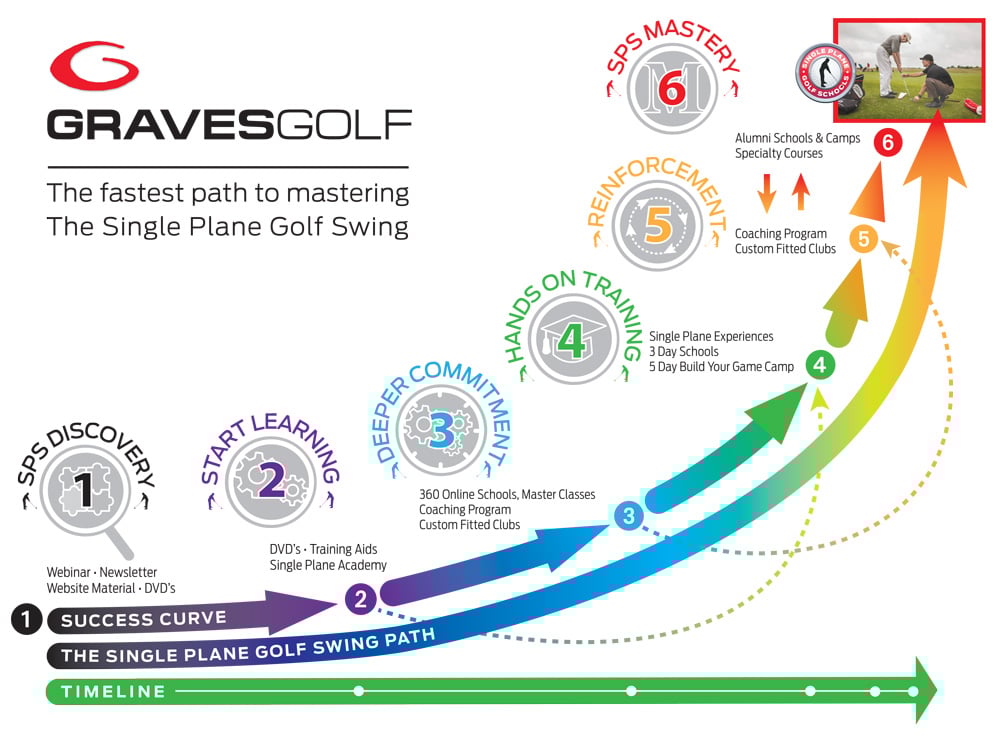
Your Path to Single Plane Success

A few years ago we introduced the Graves Golf Academy (GGA) “Path to Single Plane Success.” We call this simply the “Path.”

Over the years we have helped thousands of golfers improve their games. The GGA “Path” is the GGA formula for success– the most effective way that we can help you become a better golfer.

By identifying where you are on the path, we can help you improve more rapidly and have more fun. The Path is the greatest experience GGA can provide for you – the aspiring Single Plane Golfer.

Why Does The Path Offer the Greatest Chance of Success?

GGA’s mission is to simplify the complexity of golf. We do this in the following ways:

  • An easier way to swing – The Single Plane Swing
  • A short game methodology that relates to the golf swing
  • Providing DVDs and training tools to help the student’s self-progress
  • Online schools and coaching for faster improvement
  • Golf schools and hands-on Instruction helping match “feel and real”
  • A system to take learning to the course – for lower scores

The GGA Path is an all-inclusive “System” to improvement

How Long Does It Take?

No matter where you are with your golf game, the “Path” IS the shortcut to your improvement. Based on years and years of experience studying tens of thousands of students, we have identified exactly how students improve. All of them have followed the GGA Path. Think of the Path as though you were building a house. What would you do first? Most people say, “Build the foundation.” But the most important thing is the “Plan,” the “Design,” the “Blueprint.” The GGA Path is the Plan. Once you have the plan in place you can take the next steps – build the foundation and move yourself along your personal Path.

Why Does The Path Matter?

The Path comprises the exact steps you need to follow to build a fundamentally solid Single Plane golf game. The Path matters because we know what it takes to have success. We have built the plan. All you have to do is follow the GGA Plan – stay on The Path.

What Is The Best Way To Start?

Contact a GGA Coach. The best way to start is to determine exactly where you are and where you need to be on the path. The GGA Coaches can help you assess where you are now and help you get to the next level.

What is the most important part of the path? 

Each part of the path is a unique building block of understanding, training and coaching. The most important part of the path is knowing where you are and how to move to the next level.

Where Am I On The Path?

The GGA coaches will help you determine where you are. For example, are you fully familiar with the Single Plane Swing, and the Moe Norman Model? This would place you at step 1.

Are you practicing correctly with feedback tools? Are you using the material provided in the DVD Training when you practice and have you identified your weaknesses? This would place you at step 2.

Have you worked through a 360 Home Study / Online School? Do you understand the TOTAL GGA System of how the long game relates to the short game? This would put you at step 3.

The GGA Path is like building a house, starting with the Planning and Understanding Stage – the building of a foundation of understanding. Constructing the foundation is next. Then, as you progress, you begin to construct framing and walls, add wiring for electricity, plumbing for sanitation and water supply, and other required systems. As you add exterior details, your house takes shape. Along the way, you have your work inspected (inspectors / “coaches”) to make sure you are building everything correctly according to code. Then once everything is built, you fine-tune the details of the paint and trim with the feedback of proper coaching.

Lets look at each step to help you identify where you are in building your Single Plane Golf Swing.


Step 1: Discovery / Single Plane Swing Introduction

At this step, your curiosity, frustration (and maybe pain) has led you to look at the Single Plane Swing as an answer to your problem. You haven’t fully committed at this stage, but you wonder if the Single Plane Swing might be the answer to your golf game’s health.

Step 2: Begin Learning the Fundamentals

At Step 2, you have purchased and studied the Single Plane Solution (SPS) video. You have an understanding of the basics for the Single Plane Swing and the short game. You might not be able to swing like Moe yet, but you understand the basics of the Moe Norman model. At this stage you start to teach yourself the Moe Norman swing by watching the videos.

As you attempt to learn the swing, we suggest that you dive deep into the training with the proper drills and practice techniques. The Graves Golf Academy has specific training DVDs and training products that help you understand the model and practice the ideal way. The GGA training aids help you ensure that you are practicing correctly by giving you feedback in every practice session. Step 2 is all about self-practice and making sure you are practicing correctly. This is where you start building the foundation of the house.

Step 3: Deeper Commitment

Step 3 takes in what we call the “breakthrough” zone. This is where students apply the fundamentals they have learned and their practice starts to pay off. This deeper commitment means a deeper understanding as you move into the next stage of building your game. The GGA online school programs include the 360 Home Study School and the Master Class. This even includes working with a Coach in the Video Coaching program. At this stage you are building the walls and putting on the roof and the structure is taking shape.

Step 4: Hands-on Training – (Progress accelerates)

Step 4 is all about attending a GGA School and working with the Coaches. At this stage GGA Coaches can show you “in person” the exact things that you need to do improve. This is where what you have been feeling as you practice on your own meets reality. This is where we can personally customize and tailor the program for your improvement. Progress accelerates in at this stage. This is where you install the wiring and plumbing and drains and put up the exterior walls of the house. Everything starts to come together.

Step 5: Reinforcement

At stage 5 you have everything you need to know to build a great golf game. Now you need coaching and custom-fitted clubs to practice correctly and put in the dedicated time to improve. This is where the GGA Coaches can help you stay on track and stay accountable. GGA also recommends that at Step 5, if you haven’t done so already, that you take a serious look at your golf equipment to ensure that you are getting the most out of your game. At this stage you are painting your house, getting it inspected and making sure all of the plumbing, electrical and fixtures are up to code.

Step 6: SPS Mastery

At stage 6, you are on your way to SPS mastery by attending Alumni Schools, Camps and Specialty Courses. Your house is built. Now you need to furnish and decorate. But this doesn’t mean the work is done. Anyone who owns a house knows that you can always adjust and improve and make sure that everything is working correctly. This is where the GGA alumni and coaching programs can keep you comfortable with your new game (in your new home).

How do I measure my progress on the path?

Once again, think of your golf game as you would if you were building a house. Do you have a plan? How is your foundation, including your grip and setup? How are your short-game fundamentals? Do you know how to practice or have the tools needed to make progress? If the fundamentals are in place, do you KNOW that you are correct? Do you need help from a coach?

The GGA Coaches can help you determine where you are on the Path and help you Build a Success Plan for 2019.

To set up a time with a GGA coach:  CLICK HERE


Increasing Speed and Distance (Over Winter)

The upcoming webinar (November 14th, 2018) will be our Winter Indoor Training (Session #2).

This session will cover increasing speed (increasing hand speed leading to increasing club head speed leading to increased in ball speed leading to longer golf shots).

Topics will include:

  1.  Exercises to help you increase speed (this webinar covering shoulder (rotator cuff), wrists and forearm).   
  2.  Equipment – importance of a properly fit grip and a grip that is in good condition.
  3.  Training Aid(s) and Drills – using the Hand Speed Trainers to increase club head speed (guaranteed).

To register for the upcoming webinar (Nov. 14th):  CLICK HERE

As many of you know, we very seldom recommend training aids unless they are directly related to practicing Moe’s single plane swing and to be honest, most of those have been designed and produced by us. From the alignment and ball position trainer to the training grip club to the short game trainer to the perfect impact club, all our training aids have been designed to help you achieve your goals FASTER and MORE EFFICIENTLY. We have always designed our training aids to help all you improve more efficiently and keeping in mind, what will keep all our students on the “right path” during their practice.

One issue, we have dealt with since the start is how to create more distance. The answer has always been (and still is) – become more flexible, or at the least, maintain your flexibility and work on your fundamentals to hit the sweet spot on the club on the perfect plane more often. Ideal mechanics with good flexibility will get you maximum distance for your swing.

But, what can you do to increase distance?  To be honest, we have never had a “great” answer…. until now.

Long story made short…. I have a son who plays baseball and works with his traveling team everyday on fielding, pitching and hitting. A couple of practices ago, one of the dads showed me a new training device that his son was wearing to create bat speed. He told me this device was used by many professional athletes and Olympic athletes to create speed.

The Hand Speed Trainer™ was developed by US Bobsled Team Member and sports enthusiast Dave Owens.

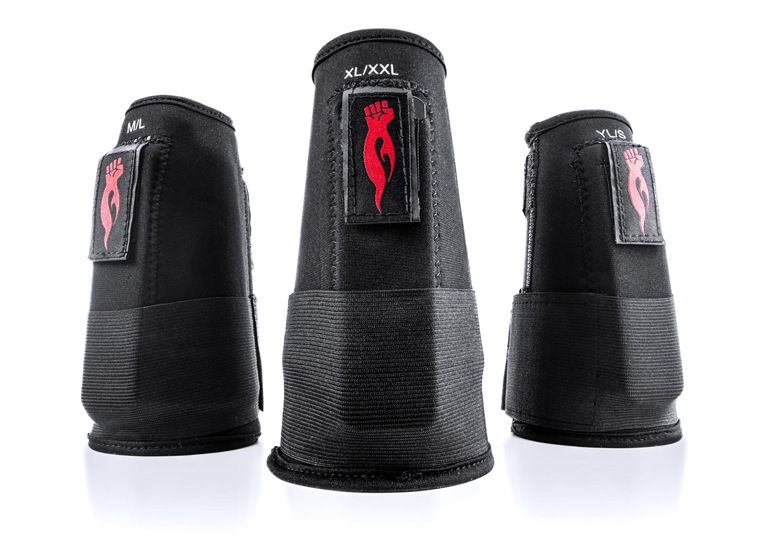
While Dave was traveling, training and competing at sports venues all around the world, he had a vision, a foresight of a training device that was needed but not yet developed to aide in quickness, speed and strength…three key elements that enhance athletic performance. He designed this training device, created it and has now patented the “Hand Speed Trainer™.” The Hand Speed Trainer™, HST™, is like no other. It is a training device that fits securely on your forearm that allows you to accomplish resistance-type training with weights while not restricting any other movement to achieve top athletic performance. It can actually train your body to operate and accept a new level of performance. By keeping the weight closer to the center line of the body an athlete is able to maintain correct body mechanics without altering them. The HST™ allows you to train smarter and maximize your efforts.

The Hand Speed Trainer™, now will allow you to functionally strength train by performing work against resistance the right way. It is as critical to train the specific movement as it is to train the muscles involved in that movement. Your brain simply thinks in terms of whole movements not in terms of individual muscles. The exercises with the highest transfer effect are those that are essentially similar to the actual movement or activity of the skill that you want to perform in your sport.

For you to get optimal results in your sport repeated practice of the precise movement or skill is absolutely essential. It’s a must. It’s required. Because of the unique Hand Speed Trainer™ weighted system, you as an athlete are able to increase resistance in minimal increments in as little as 4 ounces. This prevents the bio-mechanics of the movements that you are focusing on from being compromised.

This allows complete focus for your neuromuscular system to specifically and functionally adapt the memorization of the specific movement needed for you to improve your overall athletic skills. Your body will adapt to the demands that are placed upon it. By wearing the Hand Speed Trainers™ as you repeat sport specific movements such as hitting a golf ball or performing drills you will see incremental improvements quickly.


Hand Speed Trainer

Hand Speed Trainer

In the past few weeks, Todd and I have used the hand speed trainer and it has shown positive results in increasing hand speed and distance. In fact, results faster than we thought would happen.

A golf study was performed and the following results were found:

Golf Study

Hand Speed Trainer Effects on Club Head Speed, Ball Speed, Total Distance and Swing Mechanics: Weighted Progression; 25 swings, 3x/Week for 4 weeks (Week 1 – 4oz, Week 2 – 8oz, Week 3 – 12oz, Week 4 – 16oz).

PURPOSE: To examine the effects of 4 weeks of weighted resistance training using the Hand Speed Trainer on club head velocity, ball speed and total distance as well as swing mechanics.

METHODS: Golfers of varying ages and handicaps wore Hand Speed Trainers for additional resistance while taking twenty-five swings, three times per week. Resistance began at 113.4 g (4 oz.) and increased by 113.4 g (4 oz.) every week for 4 weeks. By week 4 the resistance was 453.6 g (16 oz.).

Each golfer (ranging in age from 13 to 61) recorded 5 swings measuring club head velocity, ball speed and total distance before and after the four week testing.

RESULTS: Data from 50 swings were collected measuring club head velocity, ball speed and total distance pre and post 4 week Hand Speed Trainer testing. Participants used 6 and 7 irons during data collection.

Screen Shot 2016-11-07 at 7.57.02 PM

CONCLUSIONS: The data indicates that golfers using the Hand Speed Trainers 3x/week (75 swings) for 4 weeks (300 total swings) achieved an average increase in Club Head Speed (+3.50 MPH)Ball Speed (4.55 MPH) and Total Distance (+7.1 YDS) with their 6 or 7 irons. This correlates to 20 to 25 yards with their drivers.

To see more about Hand Speed Trainers:  CLICK HERE

Again – To Register for upcoming webinar on how you can increase speed and distance over the winter:  CLICK HERE


LEARN

THE

SWING

Join 1M+ Subscribers to get your FREE Video Quick Start Guide that reveals how to hit the ball farther and straighter more consistently from now on…

START YOUR NEW GOLF SWING