|
|

|
|

What are you doing to improve your golf game in the winter months?
Whether you are watching football games, just watching TV, sitting in front of your computer, sitting at your desk or just sitting on your couch…. how many of you know you can dramatically improve your golf game over the winter months??
Good players know this…
GGA alumnus know this….
Professionals know this…
Starting the 3rd week of October – our instructional webinars have been focusing on helping you improve your golf game this winter (indoor winter golf instruction / training).
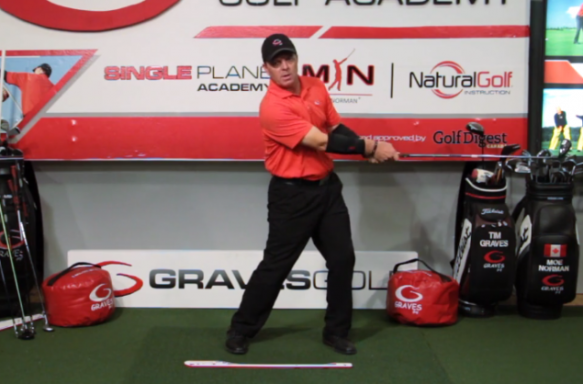
Winter Indoor Training Series
Each webinar focuses on the following 3 points:
This week’s webinar covers the following:
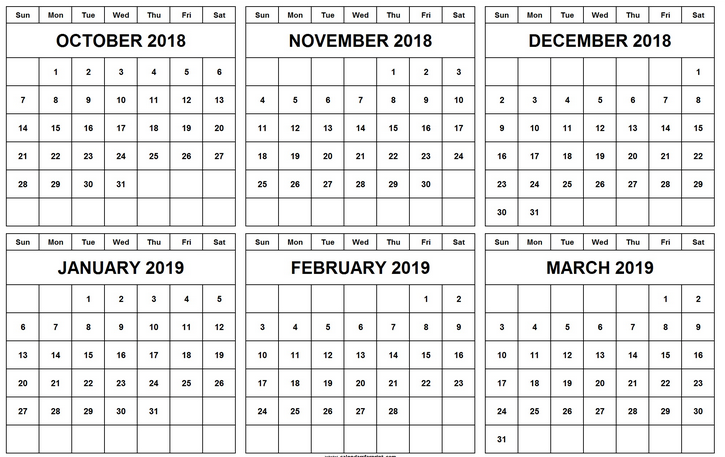
Webinars will run every other week starting this week and continuing until the end of March.
Here are some facts that we know about winter golf.
So – Strongly Recommend to join us this Wednesday, December 12th at 7pm (CST) / 8pm (EST) for our 4th in our Winter Training Series – PLUS to kick of the Winter Training Series – we are having NUMEROUS Give Aways.

Odyssey Red Ball is a face-balanced mallet putter with a Red Ball scope, Versa high contrast alignment, and a White Hot RX insert.
Odyssey built the Red Ball Putters specifically to address and improve on two things: proper set up and proper alignment. Having the right set up and alignment is crucial for any player, and this innovative new design is all about getting you properly positioned over the ball.
The distinct Red Ball inside the scope of the putter so that it’s incredibly easy to align the face to the intended start line on every putt. Combined with the black and white framing from our proven Versa high contrast alignment, this forgiving mallet removes the variables in your set up.
And that’s how you’re able to get the right set up and the proper line every time you’re over the ball. With all of this technology, and the legendary sound, feel and roll from our White Hot RX insert, you have everything you need to become a more consistent putter.
The innovative Red Ball in the scope of the putter allows you to consistently get into the proper setup over the ball.
The proven Versa high contrast technology also helps you align the putter so you get set up on your intended line.
The White Hot RX insert provides legendary sound, feel, and great roll. To make more putts you have to get the line AND the speed right, and combining Red Ball and Versa with White Hot will help you with that.
The mallet design and face balance in the Red Ball takes the weight out of the center of the head and redistribute it into the perimeter of the head. Meaning the putter has more forgiveness and is easier to keep the putter head on line and square through the stroke and impact.
Last March, I wrote about the value of cultivating proper perspective. How – on the course and in life – the perspective that comes from awareness and high consciousness leads to great performances.
I returned home to Cleveland today after spending the past three days with my family, celebrating and remembering the life of a very special lady: my mom. She was one person who knew what was really important.
And I’m feeling like the events of the past week were the kind that help to put lots of things in my life into perspective.
I thought you might enjoy revisiting this post from March in which I relate a special experience that reminded me about the value of perspective.
http://moenormangolf.com/perspective/
Paul Monahan, PCC is a Mental Game coach, member of the International Coach Federation and a certified COR.E Performance Dynamics Specialist. He resides in Cleveland, Ohio with his wife Paula and is the proud dad to three young men.
One of the most common questions we receive (seems every day) is “How can I get more distance?”
There are three areas you can work on/improve to help you get more distance on all your golf shots, in particular, your driver.
And, all of these, you can and SHOULD work on over the fall / winter (training sessions).
Those three areas are:
Let’s break down each area a little.

1. Driver Technology:
A few years ago, the USGA put together a set of rules limiting how much a golf ball can “rebound” off the face of a driver (a vague description) – thus putting a limit on the distance of the drivers. Since then, the golf industry realizing they can no longer make drivers that can hit it further off the face, have been working on technology that has made the “big” headed drivers more aerodynamic (thus less air resistance in the golf swing) and more prominent sweet spots on the face.
Older technology drivers had sweet spots the size of a dime (some smaller), newer technology drivers have sweet spots the size of half dollars (some even bigger). What that means is balls hit slightly off the middle of the club face will travel much further now.
And the key is the “average driving distance” you have, not the “one” you catch that happens to fly a long way. Meaning, if your sweet spot on the driver is large and you miss hit a few shots (or more) around off the middle of the club face, you will still get good/more “average” driving distance. Meaning, overall you will have less club into the greens, etc. etc.
So, if you are looking to maximize or increase distance – you need to have a driver that is “modern” or at least less than 2 or 3 years old. These newer drivers have large sweet spots and have the highest technology for the least amount of wind/club head resistance in the golf swing.
2. Flexibility and Strength
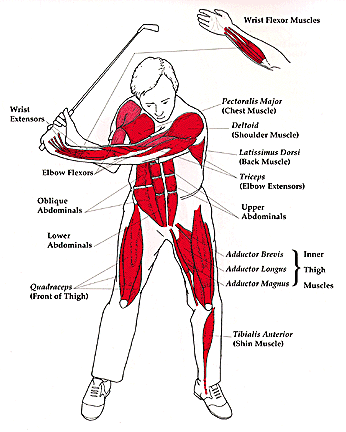
The 2nd area to focus on with distance is flexibility and strength. And in that order. Too many worries about strength and not flexibility. Being strong with good, or great, flexibility “allows” you to get in positions in your golf swing to hit the ball with reasonable distance.
As we get older, we lose our strength and more importantly our flexibility, when we start to lose our elasticity, we can no longer create certain angles in the golf swing that will allow us to create “leverage” in the golf swing which in turn produces speed and distance.
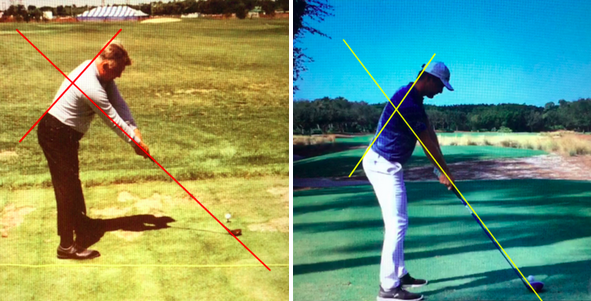
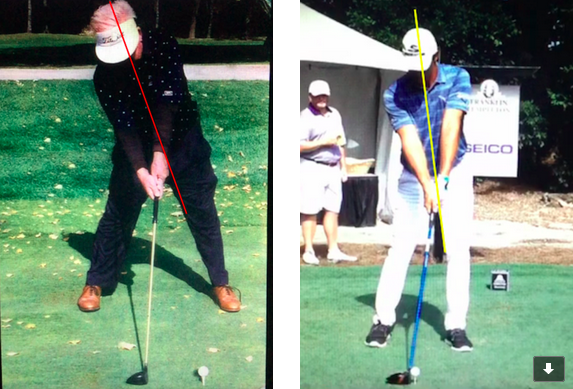
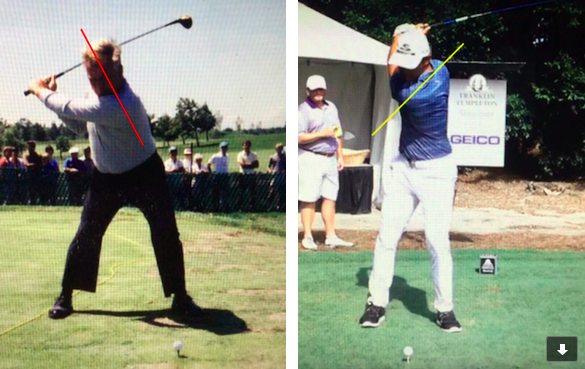
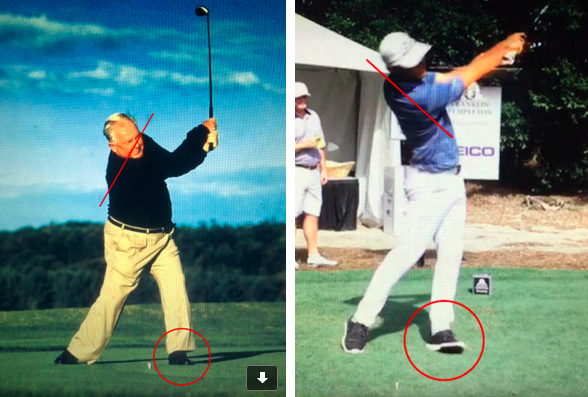
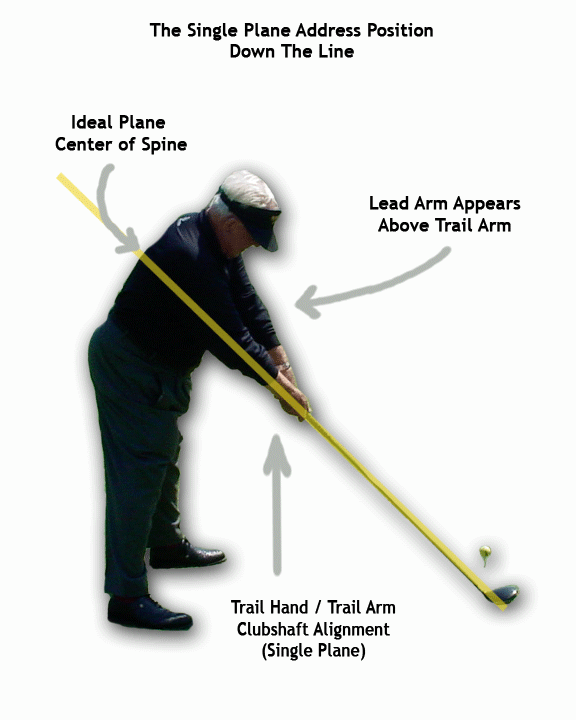
We have produced an extensive DVD on this topic. This DVD is set up to test the areas of your body and its flexibility in these areas. It then gives you 3 or 4 exercises you can perform to regain or create increased flexibility (and strength) in those areas. This DVD designed around the single plane swing of Moe Norman – in other words, it takes the eight most significant positions of Moe’s swing and determines if you are flexible enough to “reach” those positions. If not, it gives you “easy” exercises to perform over time that in turn will help you gain those positions and eventually “allow” you to swing the club on plane.
You can see a lot more detail about the Flexibility and Exercise information at: Flexibility and Exercise information at: Flexibility and Exercise Video
3. Swing Technique
Ultimately, the most crucial factor to get more distance is to improve your technique. It is always interesting, one of the things we do at all our schools and camps is to measure our students swing speed. We then correlate it to their driver swing speed and the average distance they should be hitting their driver. For most (those that swing 85 to 90 mph), they should be hitting their driver 230 to 240 yards (with a little roll).
For most, when they find out how far they should be hitting their driver with the speed they currently have, they are shocked. Why are they hitting it so short compared to where “their potential” says they should be hitting it? Because of technique. They are not hitting the golf ball off the “sweet spot” of the club with a “direct hit” from the club that is on the path.
In other words, they are hitting “glancing blows” that is creating side spin which is limiting or reducing the distance they should be hitting their driver.
Working on swing technique – working on getting the club on the proper single plane/path, with a square club face through impact and ultimately, limited to no side spin, will give you the maximum distance.
In conclusion, to answer the all too common question, we get from so many of our students/customers
How can I get more distance?
Answer:
P.S – Here is the P.S. to this article as EVERYONE will ask this question to us (in person, at schools, during webinars, across emails, etc….).
What is the fastest way to improve technique?
Answer – BECOME INVOLVED IN OUR COACHING PROGRAM
These are our premier instructional program set up for personalized instruction from a distance (from your home).
In fact, this is the program we GIVE to everyone who attends our Build Your Game Camps – this is how we follow up with all our camp students to guarantee continued success and improvement in a much shorter period.
To see more about our coaching program: CLICK HERE
(We are currently running (as of today) a VERY limited coaching program special)
For more information, please click link above or you can email Trent White, PGA – Coaching Program Manager at trentw@moenormangolf.com
Another Ryder Cup played in Europe and another win for Team Europe. Ouch (if you were rooting for Team USA!)
When you root for your favorite team, it’s tough to see them lose on the big stage. Isn’t it?

I feel the same way. But I also know that my disappointment is merely a function of my thinking. It happens when I THINK that I NEED my team to win…and when they don’t, there is a misalignment between my reality and what I think my existence SHOULD be.
It’s this misalignment that creates a “down” mood…sadness, loss, frustration…etc.
I could have just as quickly thought about the joy and delight that the Team Europe guys were experiencing…and cultivated much more productive feelings and mood.
So, keep in mind that your mood today is a function of your thinking. And you can change your thinking if you want to.
The same is true for competitors who have entered the competitive arena. (And sometimes that you…right?)
While watching the Ryder Cup this weekend, I was looking for signs of nervousness and anxiety. Signs that the pressure was having an impact on a player.
It’s not always easy to see, but sometimes it shows up as stiffness that creates clunky or “steered” shots…and in putts that look rigid, tentative, or that miss their mark by a lot. It can even show up as poor decision-making.
For those who watched a lot of the coverage, I’m sure that this was easy to see. One example that comes to mind for me is the Saturday afternoon match between Woods/DeChambeau and Molinari/Fleetwood.
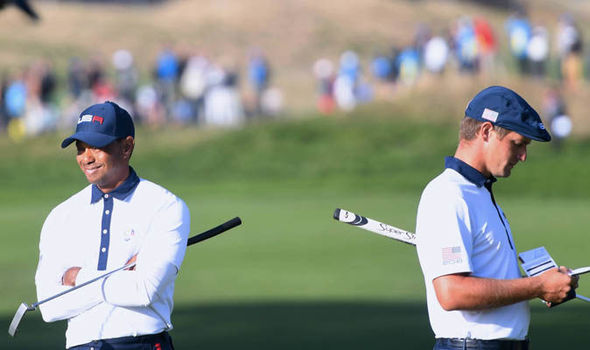
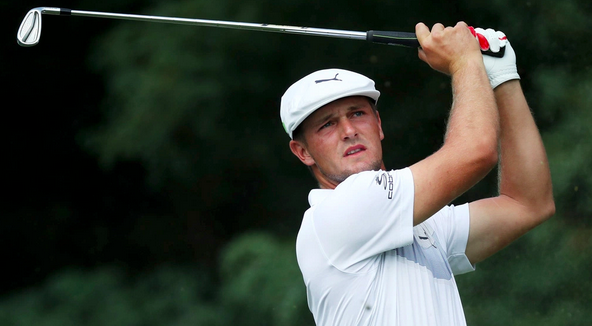
Molinari/Fleetwood won the match 5&4. And what I noticed a lot of with Tiger and Bryson was that neither of them hit very many shots that they are capable of. Said a little differently: they missed a lot of shots and putts that we might all agree are within their wheelhouse of capability.
On the contrary, Molinari and Fleetwood seemed to be hitting great shots, again and again. Swinging and playing with a lot of freedom.
It’s hard to know for sure, but it looked like both Tiger and Bryson were indeed feeling the pressure of the moment. And this feeling created more stiffness in their swings and putts – or LESS freedom and suppleness. It became tougher for them to hit fairways, hit greens in the correct spot ( or hit them at all) and even make the six-footers that they could usually make in their sleep.
Now, their lots of variables, so it’s hard to make a blanket statement like I just did and guaranteed it’s accuracy. The course was relatively new to them, the team format may not have suited certain parts of their game, and their competitors (Molinari and Fleetwood) may have just had one of those rounds where they couldn’t miss.
But it did seem to me that the pressure of the moment may have impacted them.
So what to do when you are feeling pressure on the course?
More than anything, find ways to prevent the distractions that create poor swing mechanics.
For example, just stepping into a shot without THINKING A LOT about the ball is a proven way to keep distraction at bay. Pull the trigger (on your full shots and putts) as soon as you are ready. No lingering. No hovering. Step up and pull the trigger.
It keeps your “procedural memory” …which is associated with muscle memory… in charge of your swing rather than turning it over to what is called “working memory”…and which is related to analysis and thinking.
Another way to prevent from being impacted by pressure on the course is to focus positive intentions toward others. Focus positive thoughts on the people around you…your playing partner, your competitors…etc. Research has shown that it is impossible to be engaged in positive feelings about others AND be anxious or worried at the same time.
It’s why I often talk about LOVING your competitor. It keeps you in a productive place and allows you to tap into your real potential in each moment. No matter the situation. No matter the stakes.
Give these methods a try, and I think you will like how they work for you!
Paul Monahan, PCC is a Peak-Performance coach, member of the International Coach Federation and a certified COR.E Performance Dynamics Specialist. He resides in Cleveland, Ohio with his wife Paula and is the proud dad to three young men.
He can be reached here.