The One Thing Standing in Your Way

The One Thing Standing in Your Way

GGA Mental Game Coach

Back in February of this year, I wrote about an essential mental game dynamic: expectation. You can check it out that blog post here.

Over the years, I have come to realize that in the human performance space, the one thing standing in your way most often is the expectation.

(I’m super-excited about our 2-Day Mental Game School coming up in Chicago in a few weeks – only a couple spots left – because we are going to transform golf games through a new understanding of expectation!)

The reason it is so important to understand is that playing great golf requires that you can execute shots as you plan them, (the physical part of the game) and that you stay connected to your potential in any moment (the mental game).

What does that mean? It means that you must be able to hit the shots you want to AND maintain productive performance energy (mental mindset) when things don’t go as planned.

On the golf course, we often expect to be able to hit shots like we’ve beaten them previously – or that we imagine them; flush, high, long, straight, etc. But there is a problem with holding tightly to expectations:

From the February 2018 article.

We get stuck in our expectations when we carry our expectations into our experiences, the only way we can be satisfied is if those expectations were met. (Makes sense…right? )

But if our expectations are not met then what happens? You guessed it: disappointment, anger, – or even worse: obvious frustration.

In many ways, expectations are the ONE THING standing in your idea of high performance on the course.

What to do? Learn to leave your expectations in the car. You don’t need them on the course. Believe me.

Learn to understand what it feels like to have goals and objectives, and yet at the same time have ZERO expectations about what will happen. (This is what Moe often referred to as an Alert Attitude of Indifference.)

The result: a sense of freedom, passion, joy, and enjoyment that allows you to stay connected to your capacity to perform at your BEST.

Paul Monahan, PCC is a Peak-Performance coach, member of the International Coach Federation and a certified COR.E Performance Dynamicsä  Specialist. He resides in Cleveland, Ohio with his wife Paula and is the proud dad to three young men. He works with elite-level performers and leaders, helping them to expand their awareness so that they perform at their best more consistently.


He can be reached at paul@paulmonahancoaching.com
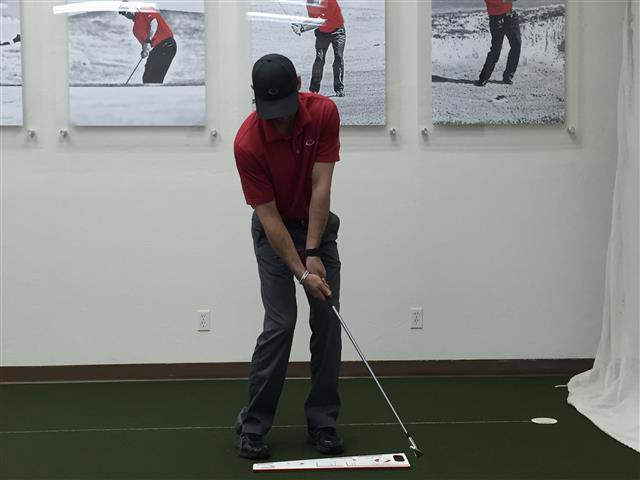
Fault / Fix – “Flipping” the Release in the Chipping Stroke

After this past week’s 3-day school at our Phoenix base – thought it would be a good idea to review a common fault and its fix – Flipping in the Chipping Stroke. The proper chipping stroke/movement is CRITICAL for adequate impact in full swing.

SEE BELOW:
 

If there is one area where golfers build poor technique into their full swing, it is in their chipping stroke. In reality, the chipping stroke for the short shots around the green directly relates and builds habits into the way a golfer attacks a golf ball. When teaching chipping to our students, one of the most significant issues we see is the “Flip” the release through the ball. As seen in the picture above, the “Flip” is when the club head gets in front of the hands just past the impact zone. In the “flip,” note how the lead wrist is bent, the trail wrist has released, and the clubhead is ahead of the hands. Also, you see the butt end of the club pointing behind the golfers lead hip. The “flip” in the chip shot leads to many, many bigger problems, including:

  1.    Chip shots hit fat or thin. No distance control.
  2.    “Skulled” chip shots
  3.    Every golf shot becomes a “flipped” release, from putts to the driver
  4.    Significant loss of distance in full shots
  5.    Topping or fatting of iron/hybrid shots
  6.    Inability to compress the golf ball at impact / “weak” shots and more.

Simply put, the “flipped” chip shot is not only an issue when chipping, but creates a myriad of problems throughout your game. If you have lost distance, are having a hard time hitting the ball solid, or get the chipping “yips,” then see the video below on how to fix this pervasive, very damaging issue.

FIX – Firm Lead Wrist Through Impact

Screen Shot 2016-03-21 at 1.29.16 PM


Click on Above Play “Arrow” to See Video of Fix

TLC Approach & Hopefully My “Heart Ache” Can Help You…

Hope everyone got a chance to see the PGA Championship this weekend.  Brooks played great.. was a lot of fun to watch is dominance.

During the event – many times the commentators referred to the last time Tiger was beat in the final round of a PGA Championship (’09 PGA at Hazeltine Golf Club) in Minnesota.  Brought back a lot of memories as I was the first alternate for that event…  Thought I’d reprint an article I wrote about the tournament I played to qualify for that PGA Championship.

(Reprint from July ’09):

Many of you may have seen me this past week (on the golf channel) – or may have heard about my “exploits” at the PGA National Club Professional Championship. I first want to thank all those who sent emails, phone calls and/or text messages to me during and after the event (when I walked off the course on Wednesday I had over 50 text messages and when I turned on my computer that night – over 200 emails about the tournament) – you will never know how much the support is appreciated – thank you very much!!

For those that didn’t see my tournament or didn’t hear about my experience, though I’d share some details and hopefully going through my story will help your golf and game.

First, the Tournament was the PGA National Club Professional Championship.

Held annually at different locations across the U.S. – it starts with sectional qualifiers for the 35,000 PGA Class A professionals.

There are 41 sections and the 35,000 professionals qualify for 300 spots (typically each section has 5 to 7 places). I trained last September for this year’s tournament.

The 300+ finalists tee it up at two different courses (at one location). This year it was at Twin Warriors Golf Course in Albuquerque, NM (Twin Warriors Golf Course and Santa Anna Golf Course).

Before I get to details – want to add one more… I had an INCREDIBLE caddie. I was assigned to a young man, Tim Madigan from Albuquerque, NM. Plays golf for New Mexico State and it a great golfer himself.  He has won numerous events in NM and on Twin Warriors and was my “guide” for the week. (Tim was assigned to me because of my connections to Twin Warriors – knowing one of our alumni Court Koontz helped. He is a long time player at Twin Warriors and good friend of the tournament’s caddie master. Nice to have connections!!)

Now on to details….

I teed off Sunday morning at 7 am on Santa Anna Golf Course. I was the first player to tee off in the tournament. The only issue was it was blowing 40+ mph. It was one of the windiest days I have ever teed it up – and that is saying something when you grew up playing in Oklahoma. The greens were so fast, and it was so windy, I literally couldn’t keep a ball on the chipping green during practice. I would chip to the hole, would roll back toward me off the green… I kept thinking to myself – it’s going to be a long/tough day….

As I approached the first tee (coming off the range) I told my caddie, my primary goal today was to keep the ball down and not get into too much trouble…. I knew there would be a few if not a lot of errant shots that day, I just wanted to limit the “high numbers.” I knew parts would be great and bogies wouldn’t hurt too much bigger numbers would… so I wanted to .just keep the ball “down” and in play.

I went through the day keeping the ball low and playing “relatively conservative” for the wind/weather. I finished the day with a 74.

The problem was, as I walked off the course (literally as I was walking down # 18), it started to rain for about a 1/2 hour, and then the wind completely stopped. Went from blowing 40+ to rain to no wind at all. One half the field was able to play in good to excellent conditions. I knew I’d be behind the “8 balls” after the first day… but there is NOTHING you can do about mother nature…. sometimes you get the breaks sometimes you don’t….

After day #1, I was in the middle of the pack (around the 130th place I believe…)

(One of my golf buddies, a great golfer also qualified and played the first day. The problem is he is pretty tall and has a decidedly upward swing meaning he hits the ball very high, he shot an 84 the first day and shot himself out of the tournament due to his ball flight.

Lesson #1 – Not only do you need to know where the ball is going, but you also need to know how to control your trajectory. “Towards is not everything, Towards and controlling height/flight is….”

Day #2 – I teed off at Noon on Twin Warriors Golf Course. Was a perfect golf day the entire day. (To be honest, I was hoping it would be windy again the ENTIRE day so that I could make up a few strokes… much easier to make up strokes in adverse conditions, but you get what you get.

I knew the 2nd day I would have to shoot a few under (at least) to cut. The cut in the tournament after the 2nd day is the top 70 players and ties.

I told my caddie (Tim) we were going to take the TLC approach that day (in fact, I assume that approach any time the “nerves” start to take over… I try to simplify it as much as possible.)

My caddie looked at me like I was crazy – not sure what he thought I meant by TLC, so I explained.

My TLC approach stands for the following:

T – Target off the tee – Hit at a target off the tee (could be a tree, rock, spot in fairway… something particular)

L – Line – Hit your approach shot on the best line possible. Do the work – figuring yardage, wind, etc.… but ultimately my responsibility was to hit the ball on the best LINE possible.

C – Chance – Give every putt a chance… a good opportunity. Don’t take any for granted and don’t ever give up on any putt, give them all a chance.

I told my caddie if I could stick to this game plan no matter what the shot – I would simplify my game – allow me to play one shot at a time and not get ahead of myself… would help me stay within the moment and shot.

Day 2 started pretty well – I birdied the first three holes… I was told they took some highlights of my round after the early three birdies on the Golf Channel… I ended up shooting four under on the front nine.

My 10th hole (a 560-yard par 5) – was the “make it or break it” point in the round….

I teed off and pulled a driver a little left. It ended up on the lip of a bunker – in which I had to stand about 3 feet below the ball (in the bin with the ball out) – had to swing at the ball like a baseball bat…. The problem was I had to advance the ball 120+ yards to carry over the desert and to the fairway. I chose a seven iron, swung at the ball and proceeded to shank the ball sideways about 150 yards into the desert. The ball went over the forecaddies head, and she never saw it. She just warned me of all the rattlesnakes I was about to encounter looking for the golf ball…. I found the ball WAY in the desert, a place where very few have been… ever Not good.

I asked my caddie for yardage – he response was “You’re kidding me right” – that’s how offline I was…. finally, he came back to me with a 230-yard guess…. but I had no idea where the green was… couldn’t see it. So, I asked my caddie for a line. He told me where to hit it, I ran a four iron over the target and hoped for the best….

As I approached the green, one of the gentlemen in the gallery had to tell us where the ball went – it had buried in 6 inches sharp left of the green. I “crawled” into the rough, hit a great flop shot which proceeded to hit the edge of the fringe and roll 30 feet past the pin… I looked at my caddie and said “This is never going to end” – he laughed. I got over my 30-foot putt, thought to myself “give it a chance” – hit the putt and guess what – it went dead center – for a par 5. Probably the most dramatic and most “sideways” par I have ever made….

I have to say, I made five birdies on the front 9, but that par meant more to me about the round…. NEVER say done… NEVER!!

As I approached my 17th hole, I was six under. The 17th hole is a 490-yard par 4 – by far the hardest driving hole on the course. I hit a good drive but didn’t carry it far enough. I buried in waist-high grass on the top lip of a fairway bunker.

As I approached the shot, I told my caddie I was going to take an “unplayable” lie and give myself the best chance at a five on the hole…. he disagreed. He thought I should try and hit the ball and see if I could advance a little… I weighed the risks and thought to myself – would instead take a shot penalty and guarantee a decent 2nd shot vs. take the gamble….

I dropped and was 250 yards (uphill) from the green. I hit a good fairway wood but went left of the green – again in 6 inches rough. Crawled into the rough again – hit a flop shot to about 3 feet and made the putt for a 5. As I told my caddie – bogies NEVER kill, others DO!!

I ended up parring the final hole for a 66 (was told competitive course record at the time). I moved up over 120 spots to a tie for 8th after the 2nd day. (BTW – I was told I had 23 putts on day #2…)

Lesson # 2 – Most of the time it isn’t the birdies that make around, it is limiting the bad holes to bogies (or pars) rather than others. It is effortless to make up for a bogey but not so easy to make up for others.

The third day was on Twin Warriors again. The third day was why we use the single axis swing…. I didn’t putt well (one of those days.) but it all but two fairways and 16 greens. I shot 72. I played with two other very good players who swings didn’t hold up and shot themselves out of the tournament…. I kept using the TLC approach and kept myself in the game even though the putts didn’t’ seem to fall…. After the 3rd day, I was in a tie for 18th place.

Lesson # 3 – Develop a swing that will “keep you in the game” … even if you’re not putting well, you will still be in the game.

Finally, it was the 4th (and final) day, also at Twin Warriors. I told my caddie we were going to use the same TLC philosophy we had used all week and tried and keep as “calm” and “slow” as possible… not get ahead of ourselves, not think about the future, etc.… (you’ll know why in a second)

What I haven’t mentioned yet and you might not know it is the top 20 in the field qualify for the PGA Championship. Yes, if you finish in the top 20, you will be teeing it up in August with Tiger (this year at Hazeltine GC in Chaska, MN).

It would be straightforward to think ahead and start choking. I wanted to avoid that at all costs… I’ll give you a “little secret I use” to help myself… when I start to think ahead, I was once told by a sports psychologist to imagine a stop sign in my head – and say to myself – STOP…. nothing you can do about future shots… Stop getting ahead of yourself.

I teed up in front of a pretty good crowd. Many alumni and others supporting me one traveled over 1,000 miles to see my last round (thanks Tom..).

I played okay for the first 14 holes, was one under. Played pretty well when thinking about pin positions, conditions, pressure, etc. played solid.

I then 3 putt 15 (missed a shot putt) – but came back with a great birdie on 16.

On number 17, my drive rolled about a foot into the thick rough, and I could only advance to the front of the green. I bogeyed the hole – probably more of pressure issue vs. hard shot…

Then it was Number 18. By far the hardest finishing hole I have played in a long time. 500-yard par 4 with bunkers on both sides of the fairway – and very high rough on either side. I watched many double bogies++ on the hole the previous two days…. My two playing partners hit fairway woods off the tee to about 210 to the gap…. we figured I needed a birdie to “guarantee” spot, par maybe…. I was going to hit a fairway wood. My caddie looked at me and asked me this question “Do you trust yourself… I do…. hit the driver.” So I did… hit is 320 down the middle of the fairway – perfect shot!

My second shot was 174 yards to the pin – pin tucked top right of green behind the bunker. I got over the chance, my heart was coming out of my chest, and I told my caddie – “you give me the club, I’ll give you the line.” I hit an eight iron to 20 feet above the hole – was one of the best shots I have hit (ever) under the circumstances…. couldn’t have pictured it better!

We got to the putt 18 feet above the hole – 6 inch right to left break. (Was told I was live on Golf Channel now…) We lined up the putt, and my caddie told me. “Give it a chance… like we have all week. Confident stroke, make sure when you leave the green you can say to yourself you gave it a chance”. I hit the putt – many of you probably saw it on TV – 2 feet from the hole it was a dead center – my hand went up – thought I made it…. it lipped out to the right – in fact, from my view it went into the hole and out….

I finished two under for the tournament – and in a tie for 16th place. If the putt would have gone in, would have finished 10th.

Come to find out, there were eight that tied for 16th place, so after 2 1/2 hours of waiting, there was an 8 man playoff for five spots to go to the PGA Championship.

Was live on the Golf Channel (8 man playoff for five spots), felt like the Big Break.

I hit a high drive off the first tee, hit my target, but bounced right into the rough… not much of a shot into the green from the rough hacked a seven iron into the front bunker. Had a tough 25-yard bunker shot and hit it about 35 feet past the hole. There were going to be at least five pars on the shaft – so I knew if I made bogey I was out… I got over the putt and made it… was told it was very dramatic…. Gallery yelled, and I have a lot watching the Golf Channel a “heart attack” ….. All I know is I took the ball out of the hole, was walking to the next tee and Donna Capone (Golf Channel Announcer) grabbed me a hugged me… she was pretty excited.

I hit a good iron off the next tee (short lay-up par 4) and had 122 yards into the hole. The pin was center of green with ridge left and behind the hole. The problem was I had mud on the right side of my golf ball… thought would come off when hit…. I hit a gap wedge (easy) and pulled the shot… the ball went left, and I ran too far left over the ridge in the green. I proceeded to 3 putts the green (hit first putt a little hard – nerves I guess) and made bogey… there were five pars or birdies on the hole. I was out… First alternate in the PGA.

So, very long story make short….35,000 PGA professionals to the first alternate in the PGA…. if one of the top 20 can’t make it, I’ll be there with Todd (he’ll be loopin’ for me) – trust me we’ll have a blast….

The last Lesson you never know, especially in this game. Always give yourself a chance. Even when you think you are entirely out of a hole or round, you never know. This is a FUNNY game – you NEVER know….

Hope my story didn’t bore too many and hopefully, it can teach or help you with your golf games. Again – to all those who called, emailed, sent texts – I thank you VERY much – they were greatly appreciated and even after a couple of nights of reliving that pulled wedge over and over again in my head – made this golfer feel A LOT better!!!

Recharging the Batteries

GGA Mental Game Coach

A few weeks ago I was speaking with my wife, Paula about the importance of recharging the batteries. We were talking about how important it is sometimes to step back from the physical and mental demands of the things we face to gain a fresh perspective on the endeavors most essential to us.

Last week LPGA star Lexi Thompson withdrew from the women’s British Open which will be played this week at the venerable Royal Lytham & St. Anne’s Golf Club. Citing the events of the past 18 months on and off the course ( including a crushing loss at the ANA Inspiration in 2017, the passing of her grandmother and the cancer diagnosis of her mom), Thompson expressed her desire to step away to “recharge my mental batteries” for a couple of weeks.

And a couple of days ago, a very talented client of mine – an accomplished single-plane-swing golfer – decided to put his clubs down for the weekend…and to focus on ANYTHING BUT the golf which had been the source of frustration for him over the past couple weeks. He too needed a mental break.

We all need this from time to time. The question is, do you take that break when you need it?

Bruce Lietzke, who passed away this week was famous for his ability to take the all-important mental break and step away from the game to get another perspective. (I guarantee you that his immersion in collecting and re-building cars served him on the golf course in ways that would surprise you.)

One story about Bruce is that he (Bruce) told his caddie Al Hansen that he wasn’t going to touch his clubs from the end of the 1984 tournament season to the beginning of the 1985 season. Hansen, who was dubious about Bruce’s claim stuffed a banana under his driver head-cover, believing that Bruce would soon discover it. To his amazement, many months later, he and Bruce found the rotting banana right where his caddie had put it.

Sometimes the mental break comes from a shift in focus.

This is one of the things we are trying to create in the Mental Game School in Chicago on August 31st.

So, instead of struggling with hitting a position or trying to match a swing model, we are going to help you shift focus by creating insightful learning experiences around how to thrive mentally on the golf course.

No worries or concerns about the swing model. Just a new focus on PLAYING.

I hope you consider how important this kind of break could be for you.

Regardless if you can attend the school or not, consider how beneficial it can be for you sometimes to create shifts in focus so that your perspective remains fresh and productive.

Take a break. Read a book. Go for a walk. Get away. Do it differently.

This is how the most successful at their craft approach high mental function and the achievement that comes from it.

(What do you do for a mental break? I’d love to hear from you…click on my email address link below and shoot me a note!!)

Paul Monahan, PCC is a Peak-Performance coach, member of the International Coach Federation and a certified COR.E Performance Dynamics Specialist. He resides in Cleveland, Ohio with his wife Paula and is the proud dad to three young men. He works with elite-level performers and leaders, helping them to expand their awareness so that they perform at their best more consistently.


He can be reached at paul@paulmonahancoaching.com
It’s The Mental Game…

GGA Mental Game Coach

In 1992 a relatively obscure Governor from Arkansas was elected president of the United States, in part because of a laser-like strategy to focus on the one thing: the economy. Bill Clinton’s campaign director James Carville believed that there was ONE factor more than any other that would make the most significant difference in the race if adequately focused on. So he created this phrase to focus his campaign staff on what he thought was a winning issue:

It’s The Economy Stupid.

And the rest was history.

The game we play and love called golf has many elements to it. And while it’s super-fun to focus on developing the skills to hit the ball better – to drive, hit irons, chip, and putt better, there is one thing I notice that – all things being equal – can make a HUGE difference in your game today if you knew how to focus on it.

So, as I co-opt a famous phrase from history, I want you to consider this:

It’s the Mental Game, Stupid.

(Full disclosure: my wife Paula warned me that I risked insulting my readers if I used this phrase. I told her that I thought every Single Plane Swing golfer I know, would understand exactly how true this statement is!)

Developing a productive mindset for playing and experiencing all that your golf round throws at you can make a significant difference in:

  • Your ability to stay resilient in the face of challenge.
  • Your capacity to tap into your playful best – no matter the stakes
  • How you experience and enjoy the game you spend so much time on.
  • The very scores you post.
  • …and so much more.

The problem is that it’s hard to learn these skills. For the most part, we are left to figure out the mental game on our own through trial and error. ( And for some, mostly fault!)

Until now.

I am super-excited to invite you to attend a unique two-day playing school we just announced to address how you can cultivate a stronger mental game on the course. (Check out the details here:)

During the two-day Mental Game School at Prairie Landing Golf Club in West, Chicago, IL on August 31st we will focus on the mental game through live competitive game situations and discussions. You will experience a new awareness of the shifts that happen to you when playing golf. And you will develop new strategies that help you stay in your most productive mindset.

You will also learn critical leading-edge concepts from the athletic performance arena like:

  •    Awareness, Acceptance, and Resilience
  •    The special four-minute check-in you can do before a round to tune-into your Performance Energy and increase awareness.
  •    The ONE thing is standing in your way.
  •    How to play from a Mastery Orientation (…and why that can improve your game)
  •    Preparing and using a Mastery Game Plan
  •    What it means to bring a sense of play to your Game
  •    The surprising feeling you can cultivate to impact your scores dramatically.
  •    How to create your Unique Success Formula

Why consider investing in your game this way?

When I speak with others casually about the mental game work I do with my clients, I almost always get lots of nodding and approval about the idea that we can ALL benefit by a little more focus in this area.

But if you want to see an example of a person who experienced first-hand what it was like to A) work on himself and his mental game and B) see incredible results in his golf game ( and life)…look no farther than our very own Master Instructor Chandler Rusk.

Chandler and I began working together in 2015 at a time when he was struggling after leaving a very successful college golf career…and was starting his career at Graves Golf Academy. Here are his own words about what he experienced:

Before I began working with Paul, I had a difficult time PLAYING the game and having FUN. At the College and Professional level, it is easy to get caught up in statistics, technique, perfection, etc. The score that I shot on any given day would affect how I felt about everything in life. If I played well, I was happy. If I played bad, I was frustrated. Even if I played decently at times, I still would not be satisfied with it. At times, I felt like giving up the game.

Then I met Paul 3 years ago while I was teaching a 3 Day School in Chicago (Paul was one of the students). After getting to know Paul and what he does, I began working with him. I quickly learned that my thoughts were affecting how I felt and how I felt was changing how I performed. Paul taught me how to be aware of my thoughts and how to shift my thinking if it was unproductive. He also showed me the difference between Result Orientation and Mastery Orientation and to play at your best: Mastery Orientation is needed. Most importantly, I learned that there are only two outcomes that can come from a round of golf: you can WIN, or you can LEARN, you can NEVER lose.

The fantastic part about what Paul does is it’s not just about the mental game of Golf. It is about the mental game of Life.

Chandler stepped up and did the work to make the improvements to his golf game…and to how he approaches everything in his life. (Next time you see Chandler, ask him about the results he has seen on the golf course since he enhanced his mental game…it will blow you away!)

But you don’t have to be a collegiate super-star to see great results from just a little focus on the mental game. Teddi Davis, who attended the 5-Day Alumni Camp in Orlando in April has seen remarkable changes in her golf since beginning her work on the mental game.

In just a short couple months, Teddi’s confidence has grown, and her scores have dropped. She has gained a heightened awareness of her mental and emotional dynamics while on the course and is learning how to tap into her highest potential no matter the stakes. And more than anything, she is having more fun.

Building your skills in this arena works. Period.

See you in Chicago on August 31st!!

Paul Monahan, PCC is a Peak-Performance coach, member of the International Coach Federation and a certified COR.E Performance Dynamics Specialist. He resides in Cleveland, Ohio with his wife Paula and is the proud dad to three young men. He works with elite-level performers and leaders, helping them to expand their awareness so that they perform at their best more consistently.

He can be reached at paul@paulmonahancoaching.com

Playing Not to Lose

GGA Mental Game Coach.

The French have a lot to celebrate this week as their soccer team Les Bleus have won their first World Cup championship in twenty years.

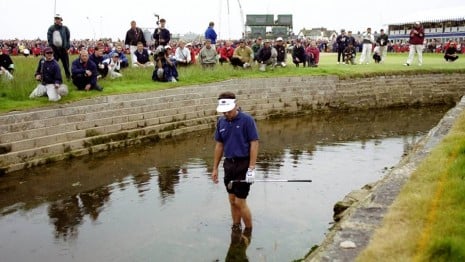
With the golf world turning its attention this week to the famed Carnoustie Golf Links in Scotland, I am reminded of a time about nineteen years ago this week when French sports fans experienced the agony of defeat after their own Jean Van De Velde let the Claret Jug slip his grasp at 1999 Open at Carnoustie.

Known in sports lore as “Carnage at Carnoustie,” Van De Velde’s crushing defeat might have been one of the most painful sports moments I’ve ever watched on TV. (Except, maybe for the Bill Buckner missed ground ball during the 1986 World Series. Ouch!)

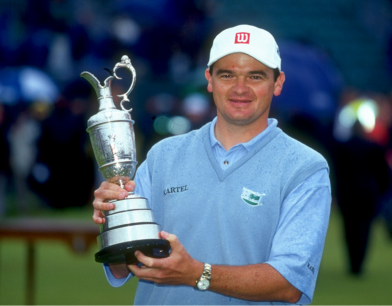
With a three-shot lead and one hole to play, Vand De Velde’s world seemed to unravel right before our eyes. In a slow-motion crash that has been replayed over and over since then, Van De Velde made triple-bogey on 18 to squeak into a playoff, only to watch Paul Lawrie

Getty Images Ross Kinnaird

go on to win in stunning fashion.As a mental game coach, I am always interested in how these kind of epic failures take place. What happened? Did he succumb to the pressure? Did he meltdown on the 18thhole because of the mental stress? Did he choke?

Well, it turns out that what happened to Jean Van De Velde is a little more complex than I once thought. Thanks to a documentary airing this week on The Golf Channel called “Go Down Swinging,” we have a little more insight into what was going on for him.

My big takeaways:

Van De Velde played (and put) incredibly for three straight days.

To me, I interpret this as a golfer who was playing freely. By this, I mean that he was unencumbered by negative thinking, and he allowed himself to PLAY, be creative with his shots and GO FOR the shots he KNEW he could make. (This is how you should play golf ALWAYS.)

In fact, Van De Velde reported that while other participants that week decided in many cases to hit irons off most tees, he felt like he had been hitting his driver well…and so that’s the club he went with off the tee. And with great success.

Also, NOBODY was making the long putts like Van De Velde was making the first three days. Forty, fifty and even sixty-footers. The guy had things DIALED-IN! He was playing great and truly enjoying himself.

He did not have his “A” game on Sunday. Not nearly.

This is super-important. We all remember what happened on the 18th hole. (The “carnage”) It would be easy to say that he LOST it at the 18th. But I believe that many of the things that occurred PRIOR to the last hole sealed his fate.

Here’s what I mean. From the first few holes on Sunday, he struggled to hit clean golf shots. And his putting was off as well. He didn’t have his “A” game. But why not?

Did he FORGET how to hit a golf ball straight, or FORGET how to putt? No. I believe that the brain was cluttered with the idea of potential loss.

Even though he may not have been aware of it at the time, I believe that Van De Velde was playing to Not Lose.

He had NEVER been close to a position like this…leading the championship after 54 holes. My guess is that he was in unchartered territory and his brain’s survival mechanisms kicked in.

There is a funny thing that happens in our brain when we get into these situations. The primitive part of our brain that is designed to keep us alive gets to work. It looks for any threats to survival and works to keep us safe from those threats. The problem is that is cannot distinguish losing a three-shot lead at The Open from a truly mortal threat.

Van De Velde’s struggle on Sunday was a function of his primitive survival brain getting in his way. And all his capabilities that produced terrific results on Thursday through Saturday were inaccessible because of it.

Paul Lawrie made an incredible comeback.

Frankly, one of the most under-reported stories of the 199 Open was that Paul Lawrie began the day TEN SHOTS off the lead. (Did you even remember that Paul Laurie was the eventual winner?) He shot a 67 on a day when the AVERAGE score was ten shots higher than that… that’s right. The average score on Sunday was 77!

What allowed him to thrive on a day when so many others struggled?

First, he began the day with nothing to lose. Yes, he was attempting to shoot a low score so that he could punch a ticket to the 2000 Masters at Augusta, but it was a very different kind of goal than Van De Velde had when starting the day.

Second, he was playing a course he was VERY familiar with. He lived about 45 minutes from Carnoustie at the time…and stayed in his own bed each night during the 1999 Open. This confidence allowed him to tap into all capabilities…and this is what produced such a great shot-making for him that day.

The lesson for all of us is this: When we operate from an ABUNDANCE mentality, rather than a SCARCITY mentality, this game we love so much is WAY easier to play.

If you want to learn more about:

  • How an Abundance Mentality can impact your results on the golf course
  • How you can tap into your best golf more often and play the game more freely
  • Your own mental and emotional dynamics and Performance Energy that can lead to better scores

…then join me at Prairie Landings Golf Course in Chicago on August 31stfor a very special 2-day playing school. Click here for more information: 2-Day Mental Game School

Paul Monahan, PCC is a Peak-Performance coach, single-plane-swing golfer, member of the International Coach Federation and a certified COR.E Performance Dynamics Specialist. He resides in Cleveland, Ohio with his wife Paula and is the proud dad to three young men. He works with elite-level performers and leaders, helping them to expand their awareness so that they perform at their best more consistently.

He can be reached at paul@paulmonahancoaching.com

LEARN

THE

SWING

Join 1M+ Subscribers to get your FREE Video Quick Start Guide that reveals how to hit the ball farther and straighter more consistently from now on…

START YOUR NEW GOLF SWING