Tips for Improving Part #13 – Cultivate Your Grit

Tips for Improving Part #13 – Cultivate Your Grit

This is the 13th and final part of a series of practice tips titled “Tips for Improving”.

In those practice tips we discussed how we work with our students to create new habits rather than breaking old habits. It is essentially impossible to break bad habits (our mind/body is not set up that way) … but we are set up to be able to create new habits and ultimately make changes/create new movements, etc. we want.

We talked about a book we strongly recommend – The Little Book of Talent/52 Tips for Improving Your Skills by Daniel Coyle.

It is described as a manual for building a faster brain and a better you. It is an easy-to-use hand book of scientifically proven, field tested methods to improve your skills – your skills, your kids’ skills, your organization’s skills – in sports, music, art, math and business. The product of five years of reporting from the world’s greatest talent hotbeds and interviews with successful master coaches, it distills the daunting complexity of skill development into 52 clear, concise directives.

Whether you are 10 or 100, this is an essential guide for anyone who ever asked, “How do I get better?”


9780345530257

This book is available at Amazon.com

The last instructional newsletters (Tips for Improvement Part 1 through 12) we discussed 48 tips for improvement from staring a who you want to become, to being willing to be stupid, to finding the sweet spot, to practicing by yourself, to taking a nap…. Again, if you have not reviewed these past practice tips, would recommend.

This instructional newsletter (Part 13) we cover the next 4 tips for improving your skills and relate them to you learning/working on your single plane swing and golf game.

49. When You Get Stuck, Make a Shift

We all know the feeling. You start out a new skill (or creating a new habit), you progress swiftly for a while, and then all of a sudden… you stop. Those are call plateaus.

A plateau happens when your brain achieves a level of automaticity; in other words, when you perform a skill or habit on autopilot, without conscious thought. Our brains love autopilot, because in most situations it makes us feel very comfortable. It allows us to perform multiple tasks without freezing our brains on what we are trying to do. When it comes to developing talent, autopilot is the enemy, because it creates plateaus.

Best way to get past a plateau(s) is to “jostle” yourself beyond it; change your practice method so you disrupt your autopilot. Ways to do this – slow things down, go so slow that you highlight previously undetected mistakes. Do the task/habit in reverse order.

Seek help or another opinion on what you can do to get past the plateau(s) – those that are more proficient then you have also hit the same plateau(s) – ask them what they did to get past those same plateau(s).

50. Cultivate Your Grit

Grit is the mix of passion, perseverance, and self-discipline that keeps us moving forward in spite of obstacles. Grit is what makes the difference in the “long run”.

Grit isn’t inborn. It’s developed, like a muscle, and that development starts with awareness.

When you hit an obstacle – how do you react?

Do you tend to focus on the long-term goal(s) or move from interest to interest?

What you are seeking in the long run?

Grit it the ability to overcome obstacles (no matter how much time), the ability to focus on long term goals without going from one interest to another, and always realizing that you are in it for the “long run”.

If you would like more information in this area – strongly suggest reading Mr. Coyle’s original book – “The Talent Code”.

Opportunities Revisited

Opportunities are Everywhere

Note: Two years ago, following a week at the Alumni Camp in Orlando, I wrote about how we have opportunities all around us to practice tuning-up our mental game. As you get back on the course in more normal settings over the next few weeks – wherever you are – keep in mind that there are LOTS of opportunities to strengthen your mental game:

Just had a great week in Orlando at the GGA 5-Day Alumni Camp.

It was a fun week of learning, instruction, growth, as well as some great conversation about what it takes to perform at a high level.

My job at the camp last week was to help the attendees to expand their awareness of the mental and emotional dynamics that allow them to show up at their best.

Said a little differently, I was there to help them learn how to tune into their energetic presence…the mix of physical, mental emotional and other elements that merge to form what I refer to as performance energy.

I believe that the key to performing at your best consistently over time is to build awareness of self… and a knowledge of how the things around you are impacting your thoughts.

How does the experience of standing on the first tee with an audience of other golfers watching you impact your ability to access your skills? Does it make you feel nervous? And if it does, can you identify the actual thinking that produces that nervousness?

If you can identify the thinking, then you are well on your way toward increased awareness. And then you can do something about thoughts that are unproductive, versus ideas that are supportive of your efforts, goals, objectives…etc.

For example, you might realize that you are nervous because you don’t want to be embarrassed by duffing your tee ball into the woods. You don’t want the harsh judgment of others. Understandable.

But what’s another way to look at that? Perhaps all the guys behind you want nothing better than to see you hit it well. They too are capable of hitting it into the woods – by in their minds, they are behind you, pulling for you to hit a great shot.

Or perhaps, they don’t care that much at all. So then you can forget about all that worry and anxiety. After all, it’s just misplaced energy.

All that is left, then is for you to step up and hit it where you want to. (And accept that you can handle the results…no matter where the ball goes.)

We talked a lot last week about increasing awareness of what is happening on the golf course to play better golf.

But here’s the interesting thing: you can practice increasing your awareness all day long, anywhere you go. In traffic. At work. In your interactions with colleagues or those closest to you. There are opportunities ALL DAY LONG to tune into the thought patterns that are driving how you interpret your experiences.

My message to the group last week is the same message I give you here: if you want to improve how you play on the golf course, practice growing your awareness of self in every moment you can. Not just on the golf course, putting green, or during play, but in every situation you experience.

Try it this week. You will be surprised at how easy it is.

The opportunities are everywhere.

Tips for Improving – Part # 12: Don’t Break Bad Habits, Build New

This is the 12th part of a series of practice tips titled “Tips for Improving”.

In the first 11 practice tips we discussed how we work with our students to create new habits rather than breaking old habits. It is essentially impossible to break bad habits (our mind/body is not set up that way) … but we are set up to be able to create new habits and ultimately make changes/create new movements, etc. we want.

We talked about a book we strongly recommend – The Little Book of Talent / 52 Tips for Improving Your Skills by Daniel Coyle.

It is described as a manual for building a faster brain and a better you. It is an easy-to-use hand book of scientifically proven, field tested methods to improve your skills – your skills, your kids’ skills, your organization’s skills – in sports, music, art, math and business. The product of five years of reporting from the world’s greatest talent hotbeds and interviews with successful master coaches, it distills the daunting complexity of skill development into 52 clear, concise directives.

Whether you are 10 or 100, this is an essential guide for anyone who ever asked, “How do I get better?

9780345530257

This book is available at Amazon.com

The last instructional newsletters (Tips for Improvement Part 1 through 11) we discussed 45 tips for improvement from staring a who you want to become, to being willing to be stupid, to finding the sweet spot, to practicing by yourself, to taking a nap…. Again, if you have not reviewed these past practice tips, would recommend.

This instructional newsletter (Part 12) we cover the next 3 tips for improving your skills and relate them to you learning/working on your single plane swing and golf game.

Sustaining Progress

Developing your skills (and talent) is like taking a cross-country hike. You will encounter challenges, you will hit snags, plateaus and steep paths; motivation will ebb and flow. To sustain progress, it’s necessary to be FLEXIBLE one moment and STUBBORN the next, to deal with immediate obstacles while staying focused on the horizon (or your ultimate goals).

46.  Don’t Waste Time Trying to Break Bad Habits – Instead Build New Ones

I bet I talk about this so many times in our schools, many of our students probably get “sick” of hearing it.

When it comes to dealing with bad habits, many of us attack the problem head-on, by trying to break the habit.  This tactic, of course, doesn’t work.  And we are left with the old truth – habits are tough (if not impossible) to break.  The blame lies with our brains.  While we are really good at building circuits (creating habits), we are awful at unbuilding them. Trying as you might to break a bad habit, it is still there, waiting patiently for a chance to be used.

So, what do we do?

The solution is to ignore the bad habit and put your energy toward building a new habit that will override the old/bad habit.

To build new habits, start slowly. Expect to feel stupid, clumsy, uncomfortable, and even frustrated at first…. after all, the new “wires” in your brain haven’t been built yet. Your brain still wants to follow the old “comfortable” pattern. Build the new habit by gradually increasing the difficulty, little by little. It takes time, but it’s the ONLY way new habits are created and grow.

47.  To Learn it More Deeply, Teach It

I absolutely love this one.

Here is the issue. Every good golfer, every golfer who learns something new/reaches a goal, etc… must be their own best teacher. If you cannot teach yourself, your ability to make changes, create new habits, reach goals, etc. will occur in a much slower rate.

This is not saying you must create everything yourself, but it is saying you must take what you learn and translate into self-teaching.

Think about it – how much time to you spend practicing, and how much of that practice time is with someone teaching you?

If you are like most, 90% + of your practice time is on your own, trying to create new habits, etc. on your own. Meaning, you must be able to make sure you are doing things correct, must be able to make sure you are “going down the correct path”.

A great way to determine if you can teach yourself it ask yourself “Could I teach this (new habit I am trying to learn) to someone else?”

This works because when you communicate a skill to someone, you come to understand it more deeply yourself. Also, when you see someone struggle, and help them through it, you improve your ability to deal with your own struggles.

The saying “Those who can’t do, teach” should be rewritten as “Doers who teach do better!”

48.  Give a New Skill a Minimum of Eight Weeks

When it comes to growing/creating/developing new skills, eight weeks seems to be an important threshold. It’s the length of many top-level training programs around the world, from the Navy Seals’ physical – conditioning program to the mission training for the Mercury astronauts. A recent study at Massachusetts General Hospital showed the practicing meditation for twenty-seven minutes a day created lasting brain changes in (you guessed it) eight weeks.

Of course, this doesn’t mean that you can be proficient in any skill in eight weeks. Rather, it underlines two more basic points:

1)  Constructing and honing new habits takes time, no matter who you are, and

2) Resilience and grit are vital tools, particularly in the early stages of learning. Don’t make judgements too early.

Keep at it, even if you don’t feel immediate improvement. Give your talent (your brain) the time it needs to grow and create new habits.

In the next e-tip (May issue) we will discuss in depth about when you get stuck, making shifts, plus additional tools to help you in your “journey” to great golf.

Please watch upcoming newsletter practice tips for the last of the 52 tips for improving your skills/creating new habits and improving your golf game.

Single Length Clubs / Irons

Single Length Clubs

We have begun to receive many calls and emails in the past couple of months about single length clubs. Whether the increase in curiosity is from Bryson DeChambeau, Cobra Golf’s single length irons, Edel Golf’s new single length irons, or a combination, many people tend to associate the single plane golf swing with single length clubs.

Thought I’d write an article about single length clubs, where we “stand” and maybe debunk some misinformation and some misunderstandings about the clubs.

Some general facts about distance related to clubs. The distance you hit a golf ball is due to many factors. The biggest factors are club head speed at impact (the longer the club, in general the faster you will swing the club) and launch of the golf ball (primarily due to loft of the club). Yes, there are many other factors such as spin of the golf ball, type of club you are hitting, launch angle, etc. etc. But the primary factors are how fast the ball is hit and the club loft that is hitting the ball. So, the golf industry for 100s of years, has set distance between clubs by either decreasing or increasing loft in combination with adding or subtracting length of the shaft. If you compare the two, it has been shown, the loft of the club has a 3x + greater influence on distance then the length of the shaft.

So, with that background, let’s talk about Single Length Clubs.

First – Single Length Clubs – At this time I do not recommend any single length clubs.  As I believe there is some validity to the concept, at this time there is not a set on the market that works as claimed.  We have tried many single length club sets (from new one’s just released, to one’s that have been out for years, to one’s that were produced 30+ years ago) and nothing really works as claimed. There is not the distance difference between the irons as claimed (in combination with the needed height / ball flight) and those that get the clubs are typically disappointed. Typically, most can hit all the irons in the set, but as the iron has less loft (higher irons) – the needed height for proper ball flight is not there.

Second – A point of issue everyone considering single length clubs should understand – those that play / played single length clubs (i.e. Bryson DeChambeau) have numerous lengths of clubs in the bag. There is NOT one length for all clubs. In a “single length club set” there is typically a driver length, fairway wood length, hybrid length, iron length, wedge length and putter length… Meaning, do not confuse single length with all clubs in bag being one length.

Third – Many have claimed, and even stated, they played with Moe and he was using single length irons.

All the years Todd and myself spent with Moe, watching Moe preform demonstrations and play golf, and all the video and pictures of Moe participating in tournaments, we cannot find any evidence he ever played single length irons.

But, even if he did, Moe was known to choke down on his clubs to the suitable length, etc. that then fit him and his shot. So in other words, if Moe ever played single length irons, it can be almost guaranteed they were all long and he choked down on the different clubs in different spots to in essence create the proper length of each club.

Fourth – There is a company working on making a single length iron (with graphite shafting) that has the proper distance difference between the irons. They are working on a system in which you are fit for every iron individually (club head weight, head size, shaft weight, shaft flex, shaft kick, etc…). I believe this will be the only way to truly have an iron system of single length that works. From preliminary information – these clubs (when available) will be very expensive (as each iron is fit individually) and only available in graphite. When looking at the fit system for this company, there are 90 shafts to choose from, 4 different club heads comprising of 8 different weighting in each head…. In other words, every iron will be fit individually with a different shaft (flex, kick point, weight, etc…), different weighted head, etc… So that it is set to go a particular distance and height.

(FYI – this is EXACTLY how Bryson created his irons to work for him. In fact, he stated each iron took him between 30 and 40 hours to build to the specifications he needed. Ten irons in his bag – that’s 300 to 400 hours of work getting the clubs to fit….)

Finally – With that being said, I would strongly recommend getting a set of clubs (multiple lengths) that are fit to you perfect for length, lie angle, shaft flex, grip size, set make up, etc. A perfect fit set of clubs allows you to work on your swing without having to worry about what is in your bag.  You will only get to a point with improperly fit clubs – it is impossible to reach ideal (or close to ideal) impact with an improperly fit club.

We are happy to help you get a perfect fitted set of clubs for your single plane swing.

We offer a free single plane individualized club fitting and assessment at:  CLICK HERE

http://moenormangolf.com/clubs/free-club-fittings/

An informational club fitting webinar was produced about the importance of a proper fit:  CLICK HERE

I would also suggest reading the single plane swing article on proper club fitting:  CLICK HERE

Please feel free to contact me at timg@moenormangolf.com with additional questions, comments, etc…

Moe Norman’s Lead Thumb – The Long and Short of It

The lead hand grip is more than just where you place the club in the hand. How you place the hand is just as important. If the golf swing were a jigsaw puzzle, I would consider the lead hand position my final piece.

When I first learned Moe’s Single Plane swing, was always intrigued by how comfortable he appeared at address.  He was neither relaxed nor was he tense.  it seemed that he was both.  His lead arm was straight and rod-like as it aligned and extended with the club.  His trial arm was straight but more underneath and soft.

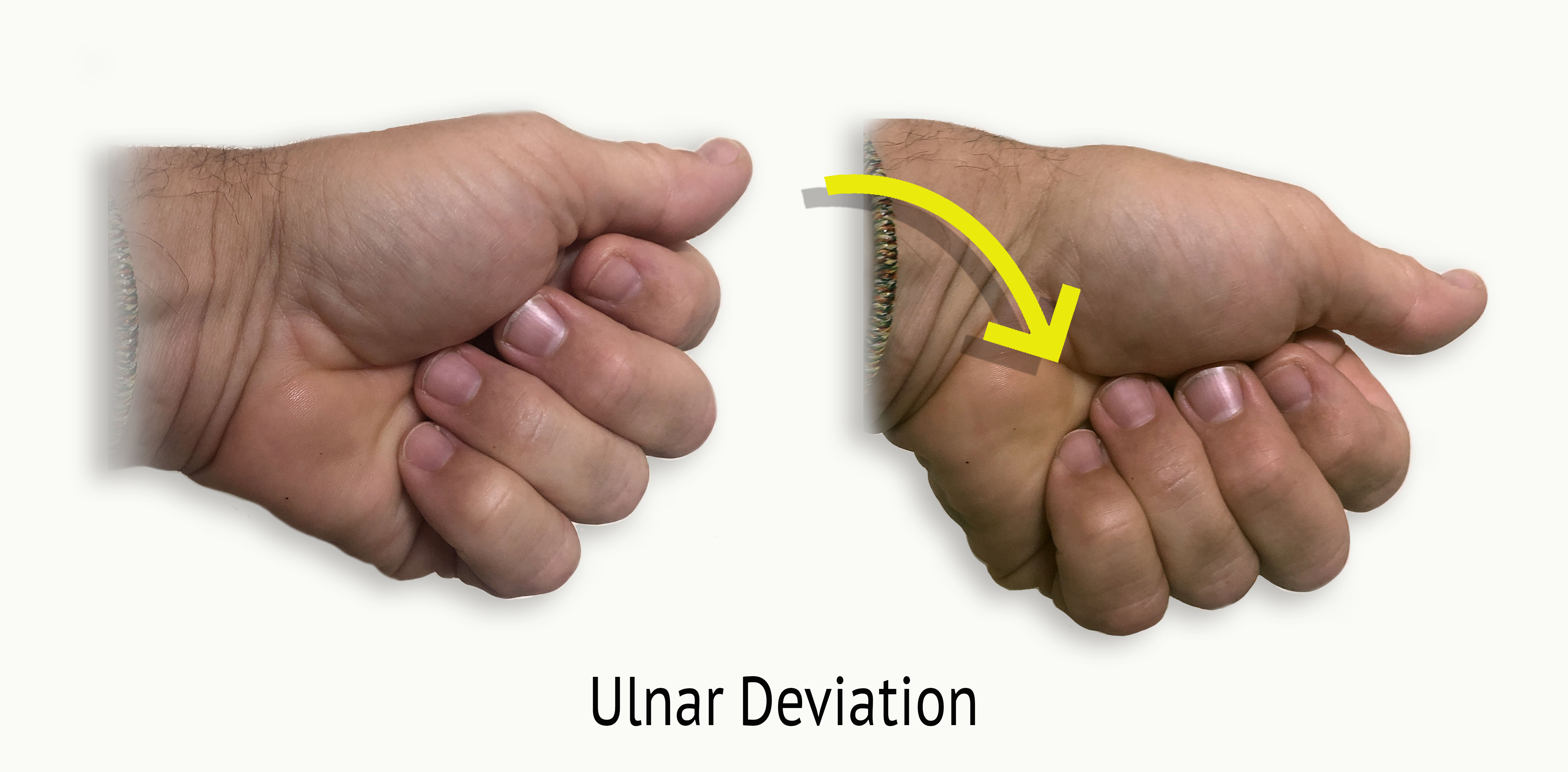
The tilt of his body created a perfect alignment of the club to his lead shoulder as he lead arm extended. Much of his lead arm alignment was related to his unhinged or ulnar deviation and lead thumb positioned down the grip.

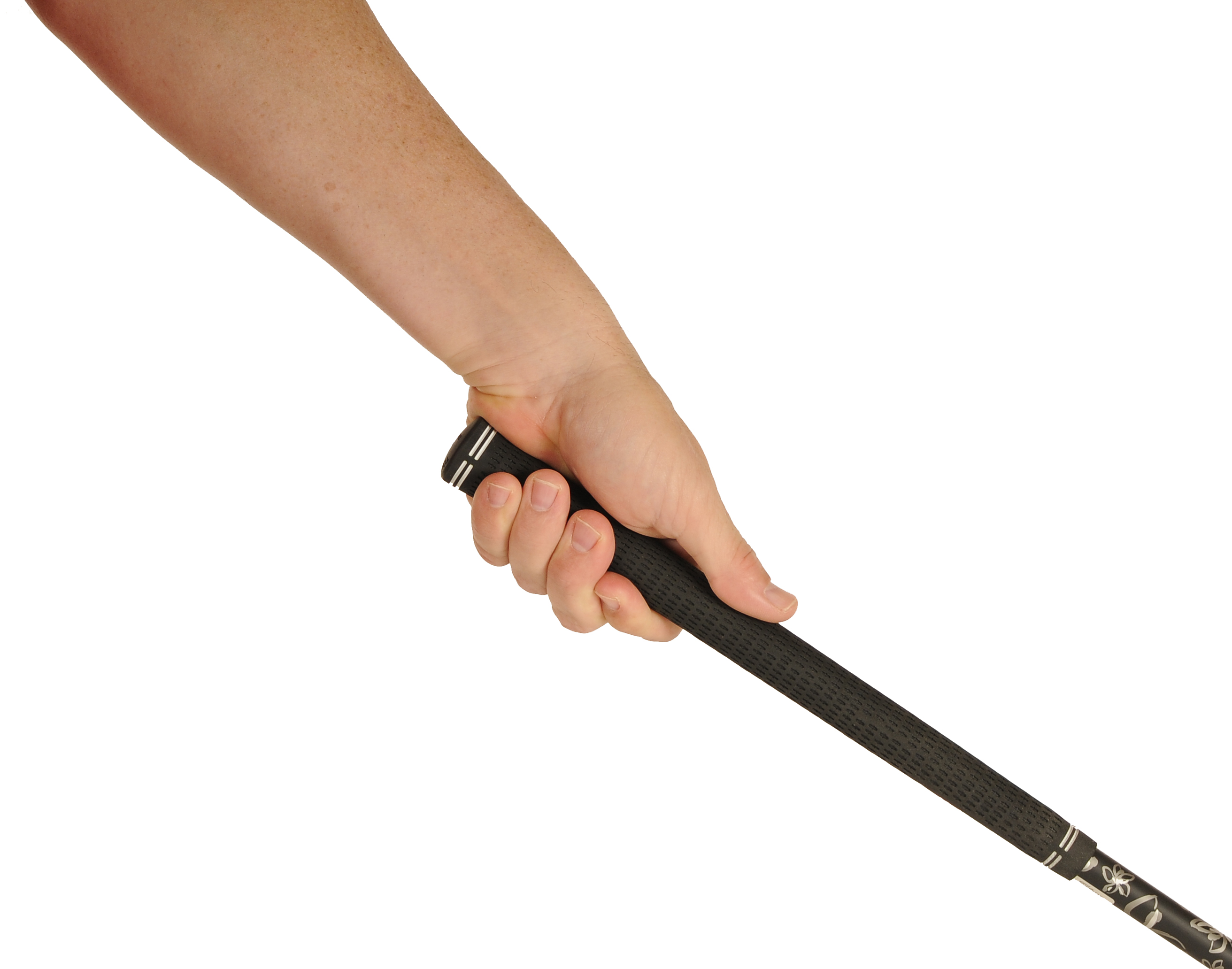
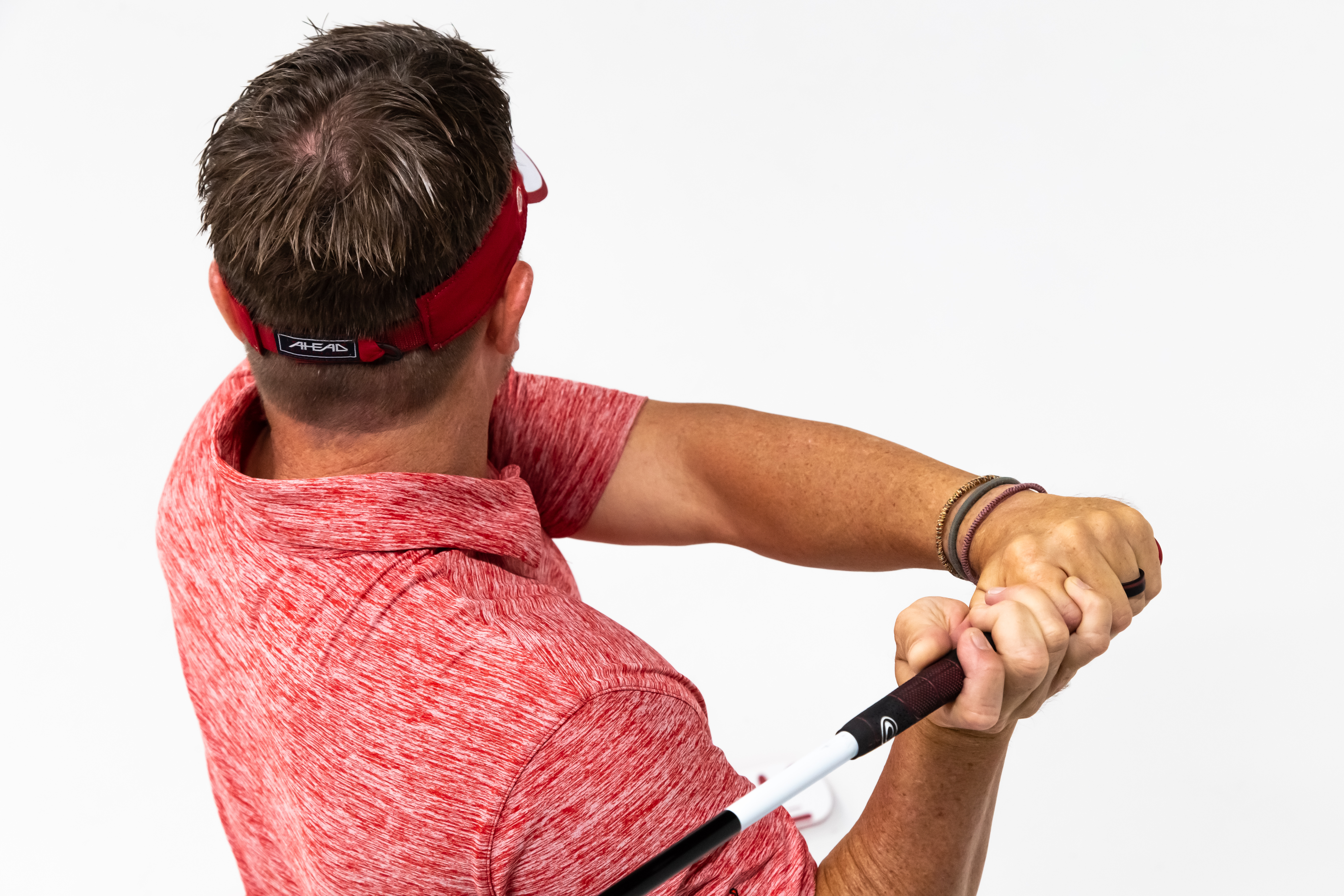
Here is a picture of the Single Plane address where you can see the extension of his lead arm.


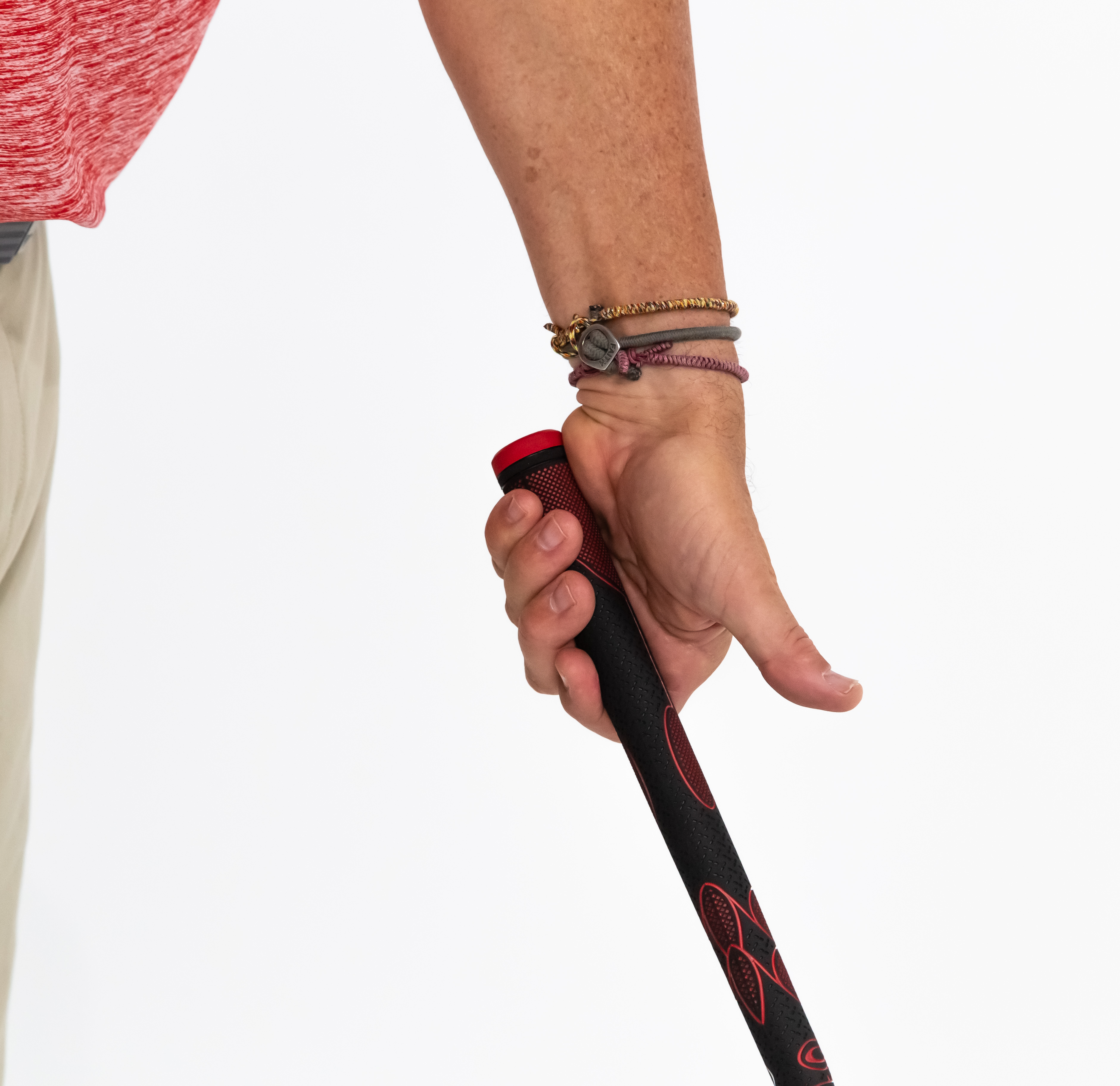
Single Plane Address Todd GravesAnd how the hand is positioned when holding the club.

When the wrist is in the proper position, there should be no stress on the top of the wrist due to the  extended lead thumb position. The thumb is long but not extended too far down the shaft.  There is a gap between the thumb and the knuckle of the index finger where the fingers are tightly wrapped together under the club.When the wrist is in the proper position, there should be no stress on the top of the wrist due to the  extended lead thumb position. The thumb is long but not extended too far down the shaft.  There is a gap between the thumb and the knuckle of the index finger where the fingers are tightly wrapped together under the club.When the wrist is in the proper position, there should be no stress on the top of the wrist due to the  extended lead thumb position. The thumb is long but not extended too far down the shaft.  There is a gap between the thumb and the knuckle of the index finger where the fingers are tightly wrapped together under the club.


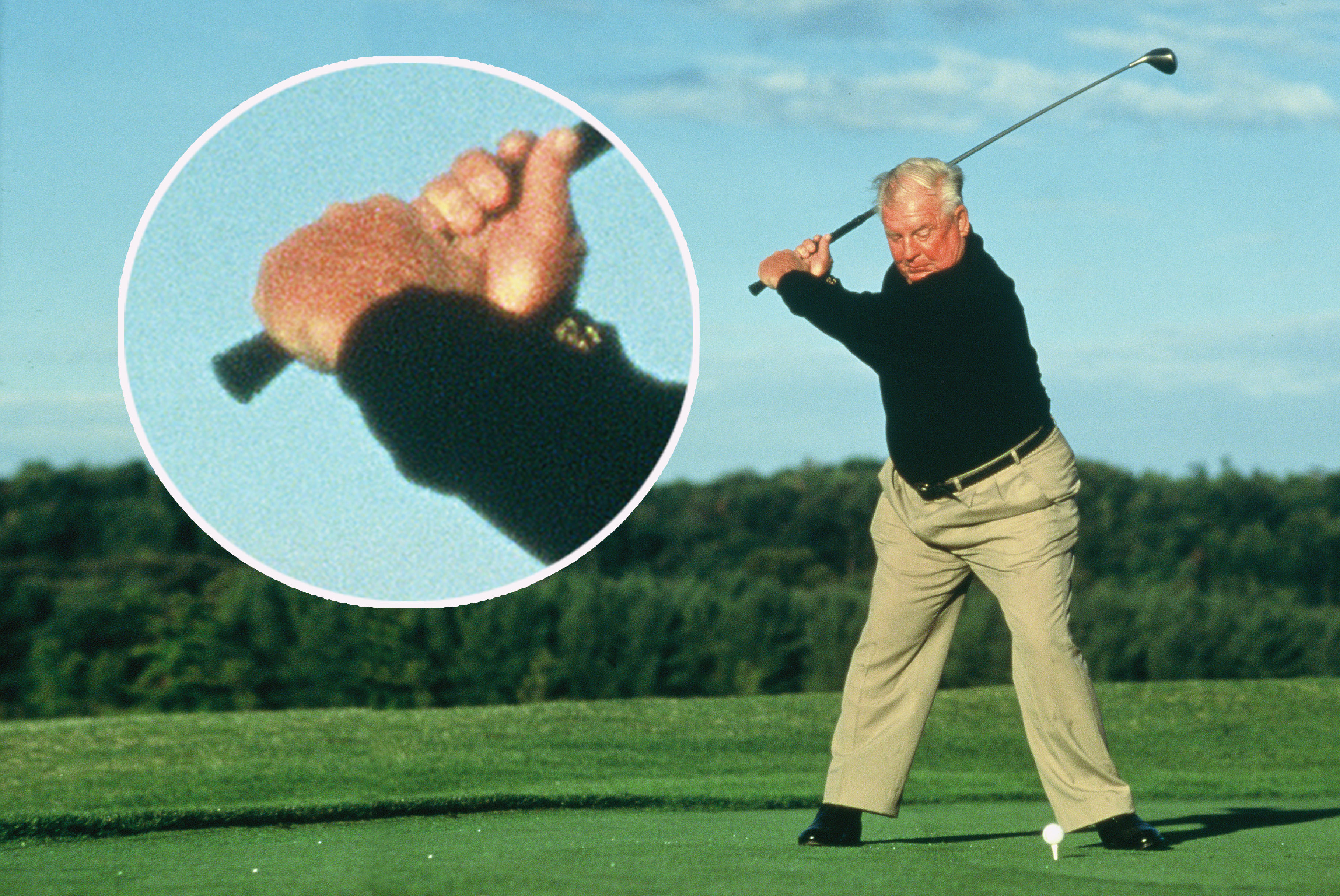
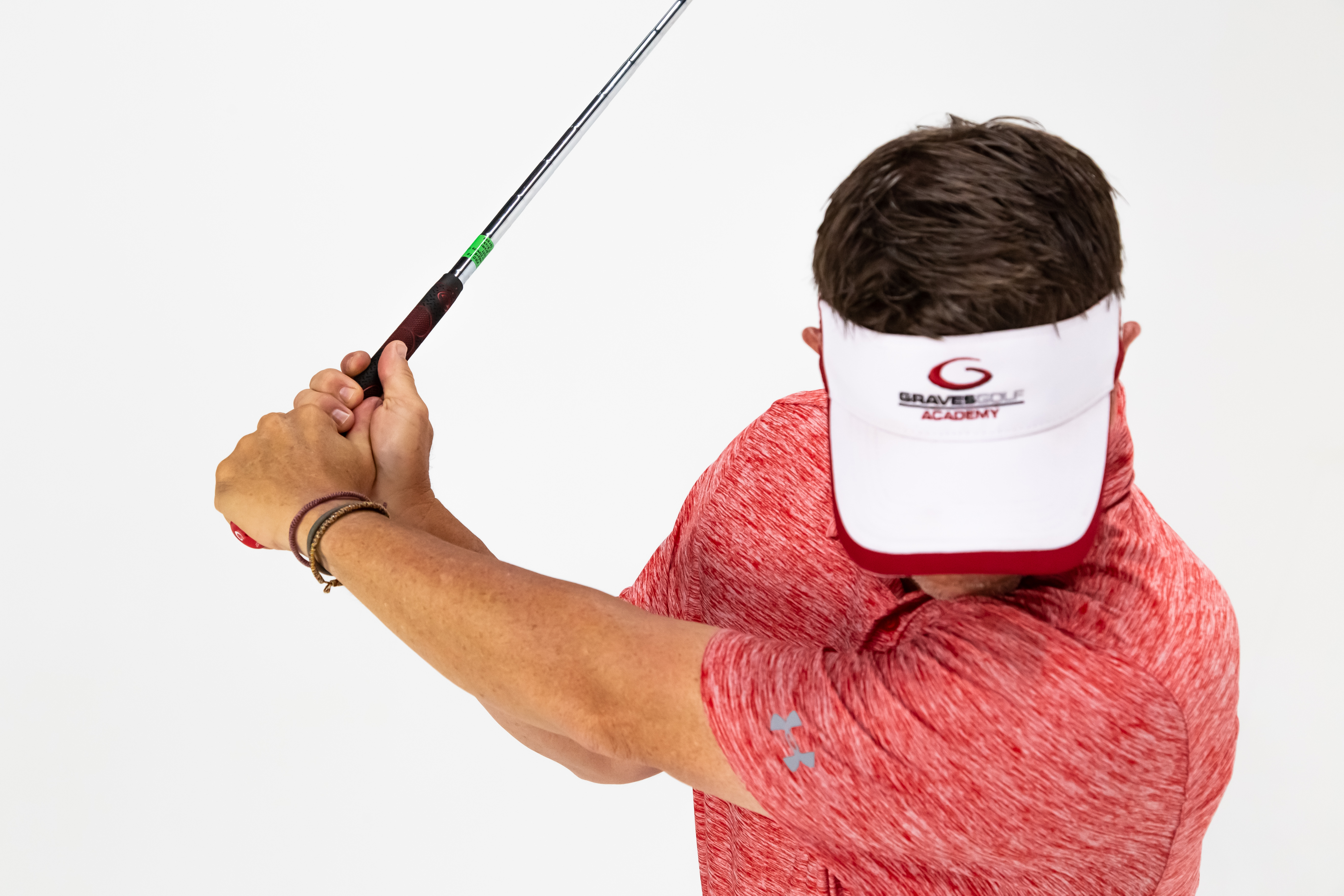
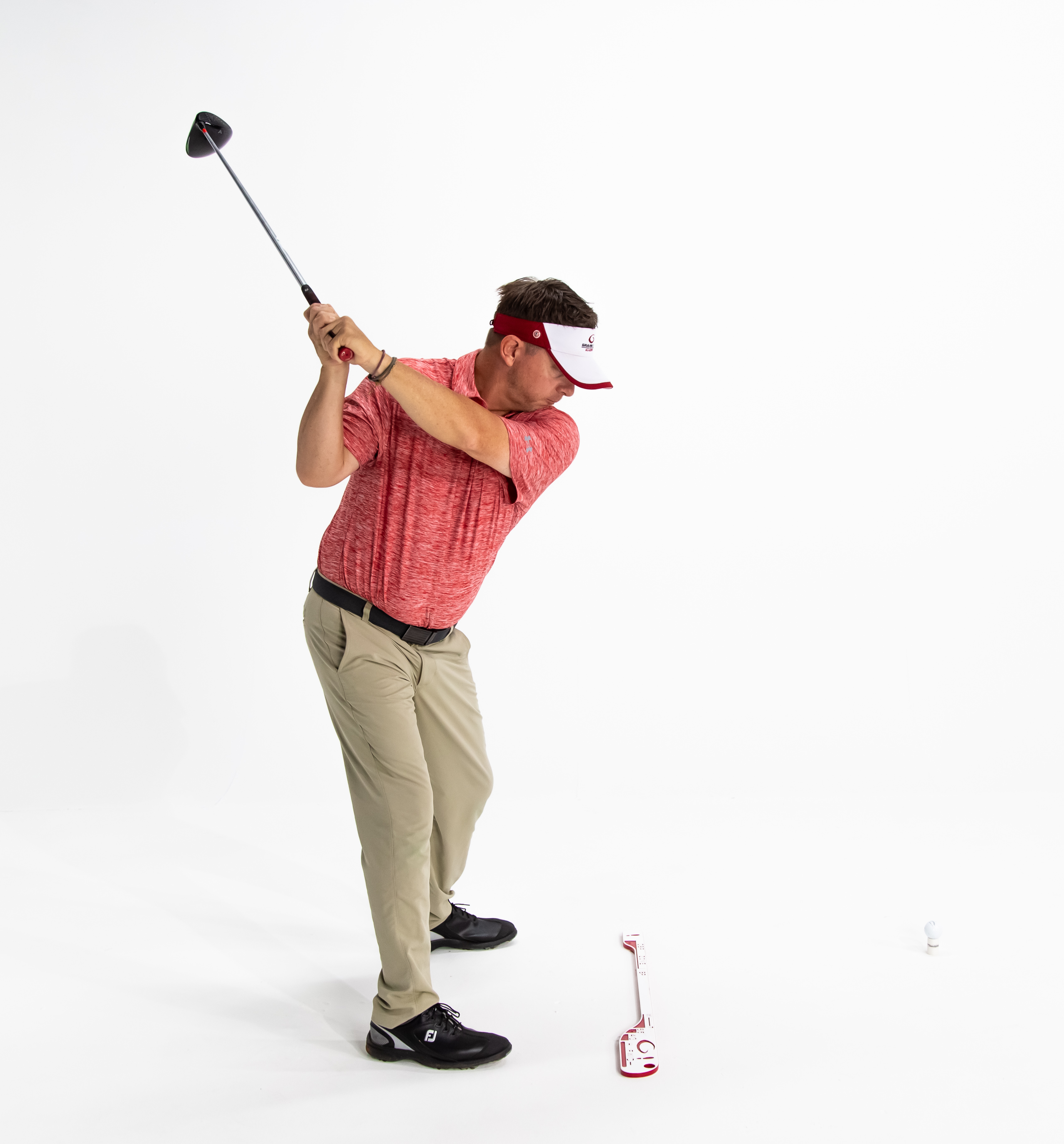
The extended thumb and wrist position at address translate into the proper hand action at the top of the backswing where the hinge of the hands leverage and support the club.


Moe Norman Backswing

Another view of the hand position at the top of the backswing shows the pressure in the trail hand as well.

When the hands are positioned correctly they can work together and hinge correctly to the top of the swing.  This allows the club face to move correctly where it moves in rotation with the lead arm.Single Plane Backswing - Todd Graves

Achieving the ideal lead hand position was the final piece of my Single Plane puzzle.  With a little attention to the detail of where you place your lead hand, it might be your final piece too.

You can find out more about the lead hand position and every detail of the Single Plane Golf Swing in my latest DVD product, The Domino Effect – Back to Basics.

The Domino Effect – Back to Basics DVD


Embrace Repetition, Tips for Improving (Part 11)

This is the 11th part of a series of practice tips titled “Tips for Improving”.

In those practice tips we discussed how we work with our students to create new habits rather than breaking old habits.  It is essentially impossible to break bad habits (our mind/body is not set up that way) … but we are set up to be able to create new habits and ultimately make changes/create new movements, etc.  we want.

We talked about a book we strongly recommend – The Little Book of Talent / 52 Tips for Improving Your Skills by Daniel Coyle.

It is described as a manual for building a faster brain and a better you. It is an easy-to-use hand book of scientifically proven, field tested methods to improve your skills – your skills, your kids’ skills, your organization’s skills – in sports, music, art, math and business. The product of five years of reporting from the world’s greatest talent hotbeds and interviews with successful master coaches, it distills the daunting complexity of skill development into 52 clear, concise directives.

Whether you are 10 or 100, this is an essential guide for anyone who ever asked, “How do I get better?

9780345530257

This book is available at Amazon.com

The last instructional newsletters (Tips for Improvement Part 1 through 10) we discussed 41 tips for improvement from staring a who you want to become, to being willing to be stupid, to finding the sweet spot, to practicing by yourself, to taking a nap….  Again, if you have not reviewed these past practice tips, would recommend.

This instructional newsletter (Part 11) we cover the next tip for improving your skills and relate them to you learning/working on your single plane swing and golf game.

Sustaining Progress

Developing your skills (and talent) is like taking a cross-country hike. You will encounter challenges, you will hit snags, plateaus and steep paths; motivation will ebb and flow. To sustain progress, it’s necessary to be FLEXIBLE one moment and STUBBORN the next, to deal with immediate obstacles while staying focused on the horizon (or your ultimate goals).

43.  Embrace Repetition

Repetition has a bad reputation. We tend to think of it as dull and uninspiring. But this perception cannot be more wrong. Repetition is the single most power lever we have to improve our skills and create new habits.

The Little Book of Talent talks about Moe in this chapter:

Moe Norman was a shy Canadian who played briefly on the professional golf tour in the 1960’s and 70s. He was also, in most estimations, the most accurate golfer in history. Norman had seventeen holes in one, three scores of 59 and, in Tiger Wood’s estimation, ranked as one of two golfers in history who “owned their swing” (the other was Ben Hogan). Norman was also a likely autistic who, at a young age, became enraptured by the power of repetition. From the age of sixteen onward, Norman hit eight hundred to a thousand balls a day, five days a week, calluses grew so thick on his hands he had to pare them with a knife. Because of emotional struggles, Norman had difficulty competing in tournaments. But at a demonstration in 1995, he hit fifteen hundred drives in a row, all of them landing within fifteen yards of each other. As Woods put it, Norman “Woke up every day and knew he was going to hit it well. Every day. It’s frightening how straight he hits it.”

Embracing repetition means changing your mindset; instead of viewing it as a chore, view it as your most powerful tool. As martial artist and actor Bruce Lee said, “I fear not the man who has practiced ten thousand kicks once, I fear the man who has practiced on kick ten thousand times.”

44.  Have a Blue-Collar Mind Set

From a distance, top performers, or those who are the best at their skill, seem to have charmed, “cushy” lives. But when you look closer, you will find they spend vast portions of their life intensively practicing their craft. Their mind-set is not entitled, but rather “blue collar”. They get up in the morning and go to work every day, whether they feel like it or not, working on their craft, working to get better, working to find a way to improve.

As you are working on creating new habits, improving your game, think about taking a “blue collar” approach.

45.  For Every Hour of Competition, Spend Five Hours Practicing (at least)

Games are fun. Tournaments are exciting. Contests are thrilling. They also slow development, for four reasons:

  1. The presence of other people diminishes an appetite for risks, nudging you away from the sweet spot.
  2. Games reduce the number of quality reps.
  3. The presence of games distorts priorities, encouraging shortcuts in technique.
  4. Games encourage players, coaches and parents (and one self) to judge success by the scoreboard (scorecard in golf) rather than by how much was learned.

Competition is a great thing. It helps built emotional control, is exciting, is challenging, and it’s fun. But it’s also, in many cases, an ineffective way to improve skill.

One solution to this problem is to make performance a “special occasion” not a routine. A five-to-one or even a ten-to-one ratio of practice time to performance time is a good starting point.

This might even be considered when just playing a round or two if you are going to use the results to judge progress.

In the next e-tip we will discuss in depth about building new habits instead of breaking bad ones plus additional tools to help you in your “journey” to great golf.

Please watch upcoming newsletter practice tips for continuation of the tips for improving your skills/creating new habits and improving your golf game.

LEARN

THE

SWING

Join 1M+ Subscribers to get your FREE Video Quick Start Guide that reveals how to hit the ball farther and straighter more consistently from now on…

START YOUR NEW GOLF SWING